• ES
  • EN
Fundeps
  • About Fundeps
  • Team
  • Working areas
    • Environment
    • Democracy
    • Gender
    • Global Gorvernance
    • Health
  • News
  • Publications
  • DONATE
  • Click to open the search input field Click to open the search input field Search
  • Menu Menu
News

We participated in the regional hearing of the IACHR in pursuit of compliance with the DESCA
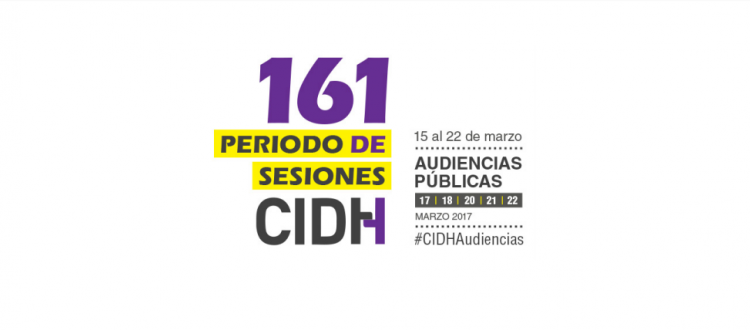
We were part of one of the public hearings convened by the Inter-American Commission on Human Rights (CIDH), held on March 17, 18, 20, 21, and 22 of the current day in Washington.

“Below, we offer a google translate version of the original article in Spanish. This translation may not be accurate but serves as a general presentation of the article. For more accurate information, please switch to the Spanish version of the website. In addition, feel free to directly contact in English the person mentioned at the bottom of this article with regards to this topic.”

In the framework of public hearings, the one that calls us is about “Right to access relevant information for the enforceability of economic, social, cultural and environmental rights.” This was requested from the IACHR in conjunction with organizations in the region such as Fundación Construir (Bolivia); Institute of Legal and Social Studies of Uruguay (Ielsur, Uruguay); Regional Alliance for Free Expression and Information (Uruguay); ARTICLE 19 (Brazil); Archives Center and Access to Public Information (CAinfo, Uruguay); Fundar – Analysis and Research Center (Mexico); and Civil Association for Equality and Justice (ACIJ, Argentina).

The audience of which we were a part, exposed to the Inter-American System of Human Rights (SIDH) the need to consolidate standards regarding production and access to information that allow progress towards the effective implementation and enforceability of economic, social, cultural and environmental (DESCA). There are international and regional commitments in this area that show clear obligations regarding production and access to information, which are necessary to comply with the requirements to enforce and exercise these rights. However, in the countries of the region there are serious shortcomings in their compliance.

Several international organizations have not found the necessary information to be able to determine if DESCA are respected in the countries of the region. Specifically, they have noted deficiencies related to the collection and systematization of information on the exercise of women’s rights to education, employment, health and social security; children and adolescents; People with disabilities; indigenous Afro-descendants and migrant workers and their families. In this same line, is that they have specified that it is a state obligation to produce information from which the validation of indicators is possible and, in general, access to many of the guarantees covered by each social right.

Argentina and Cordoba are not the exception in this aspect. The case of contamination by the Bajo Grande WWTP plant, which affects the Chacras de la Merced community, is a clear example of the human rights violations aggravated by the deficiency in access to information. The State does not provide data on the levels of air and soil pollution, as well as the information collected on the effects on the health of the people of the neighborhood, mainly women and children. In this way, obstacles to the enforceability of the rights of the people affected are placed.

That is why it is fundamental to strengthen the implementation of standards around the scope of the state obligations of production, availability and timely access to information on DESCA. The latter, in addition to being essential for the design, implementation and evaluation of public policies, allows strengthening the enforceability strategies of civil society, generating the conditions for many violations of rights to be repaired.

More information

  • Calendar of sessions of the IACHR

Contact

Juan Carballo – juanmcarballo@fundeps.org

17 de March de 2017
Share this entry
  • Share on Facebook
  • Share on X
  • Share on WhatsApp
  • Share on LinkedIn
  • Share by Mail
https://fundeps.org/wp-content/uploads/2017/06/audiencias_cidh-1.png 330 750 Fundeps.org https://fundeps.org/wp-content/uploads/2026/04/logo-2026-300x120.png Fundeps.org2017-03-17 18:44:252024-06-30 16:04:10We participated in the regional hearing of the IACHR in pursuit of compliance with the DESCA

Tags

Access to Information Access to Justice BID Chinese Investments Citizen Participation Democracy ENTs Environment Environmental Democracy Gender Global Governance Health Healthy nutrition IFIs Infrastructure Financing Legal Interruption of Pregnancy Sexual and Reproductive Rights Social and Environmental Standards Tobacco Control Transparency
See all tags

Acuerdo de Escazú

Emergencia Agroquímica

MOCI - monitoreo ciudadano en proyectos de infraestructura

{el entramado} Contamos historias. Acercamos Realidades.

Instagram

fundepsargentina

Trabajamos para que se garanticen los derechos humanos 🌱⚖️🗣️🌈💜🚭🍎
Promovemos la equidad de #genero, el derecho a la #salud y un #ambiente sano.

📱Cuando pensamos en los riesgos que enfrentan las 📱Cuando pensamos en los riesgos que enfrentan las y los adolescentes en redes sociales, solemos hablar de ciberacoso, apuestas o del tiempo frente a la pantalla.
 
💨Pero hay uno del que casi no se habla: la publicidad ilegal de vapers y bolsas de nicotina.

Instagram es la red más usada entre los 15 y los 17 años. Ahí, la industria tabacalera les llega con los mismos códigos que usan todos los días: influencers que admiran, deportistas, recitales, sabores y formatos de tendencia. A veces ni siquiera parece publicidad, pero lo es. Y está prohibida.

❗En nuestro último monitoreo comprobamos que no son casos aislados: es una estrategia para enganchar a una nueva generación. Y son las propias marcas las que infringen la ley: 8 de cada 10 anuncios de bolsas de nicotina se hacen desde sus cuentas oficiales. 

Cuidar a adolescentes en el entorno digital también es saber qué les venden, quién lo hace y con qué fin. 

Exijamos que el Estado haga cumplir la ley para proteger la salud de adolescentes y jóvenes.

📲 Compartí este posteo y leé el informe completo en el link de nuestra bio.
#ControlDeTabaco #BolsasDeNicotina #Vapeadores #Salud
Hay ideas que escuchamos tantas veces que a veces Hay ideas que escuchamos tantas veces que a veces ni nos detenemos a pensarlas.

¿Los celos son una forma de cuidado? ¿El silencio significa consentimiento? ¿Poner límites puede arruinar una relación?

Salimos a la calle con una consigna simple: 👍 o 👎
Pero lo más interesante vino después: escuchar por qué.

Porque hablar de ESI también es revisar lo que pensamos sobre los vínculos, el consentimiento, los límites y el cuidado.

¿Vos qué pulgar levantarías?

#CrecíConESI #20AñosDeESI
🫂 El derecho a cuidar, a cuidarnos y a recibir cui 🫂 El derecho a cuidar, a cuidarnos y a recibir cuidados. El acceso a la salud integral con perspectiva de diversidad.

Compartimos un ateneo en el Hospital Aurelio Crespo, de Cruz del Eje, junto a 30 promotoras de salud que abarcan con su trabajo un territorio habitado por alrededor de 500 familias.

🏥Durante el encuentro, reflexionamos sobre lo que implica una «comunidad sana», las desigualdades estructurales que afectan a diferentes poblaciones y conceptos centrales para comprender la diversidad. También abordamos los acompañamientos, las responsabilidades de cada sector y las barreras que persisten para garantizar el acceso a derechos, especialmente en las zonas rurales.

La actividad se realizó en el marco del programa Familia rural sana y de la diplomatura que las promotoras cursan en articulación con la Facultad de Ciencias Médicas de la UNC.

Agradecemos la invitación y la oportunidad de seguir construyendo colectivamente el acceso a la salud integral en el norte de Córdoba.

En el Día Internacional de los Cuidados y el Apoyo, reivindicamos la tarea, muchas veces invisibilizada, que sostienen las promotoras de salud en los distintos territorios de la provincia.
¿Cómo se traduce una ley en la vida cotidiana? ¿Qu ¿Cómo se traduce una ley en la vida cotidiana? ¿Qué aprendizajes nos dejó la ESI en estos 20 años?

A 20 años de la Ley de Educación Sexual Integral, salimos a las calles para conocer qué huellas dejó la ESI, qué nos hubiera gustado aprender antes y qué conversaciones siguen pendientes.

Lo que aprendemos sobre nuestros cuerpos, nuestros vínculos y nuestros derechos también cambia la forma en que nos relacionamos, ponemos límites y tomamos decisiones. ¿Qué lugar tuvo la ESI en tu vida?

#CrecíConESI #ESI20Años
Follow on Instagram

Twitter

Tweets por @fundeps

Newsletter Subscription

    Fundeps. Córdoba (CP X5000JZH), Argentina. info@fundeps.org
    • Link to X
    • Link to Facebook
    • Link to Instagram
    • Link to Mail
    • Link to Youtube
    • Link to LinkedIn
    • Link to TikTok
    Link to: Civil Society Organizations’ critics to bank interpretations on human rights responsibilities Link to: Civil Society Organizations’ critics to bank interpretations on human rights responsibilities Civil Society Organizations’ critics to bank interpretations on human rights... Link to: Regional thematic hearing of the IACHR in the fulfillment of the DESCA Link to: Regional thematic hearing of the IACHR in the fulfillment of the DESCA Regional thematic hearing of the IACHR in the fulfillment of the DESCA
    Scroll to top Scroll to top Scroll to top