Tag Archive for: Human Rights Defenders

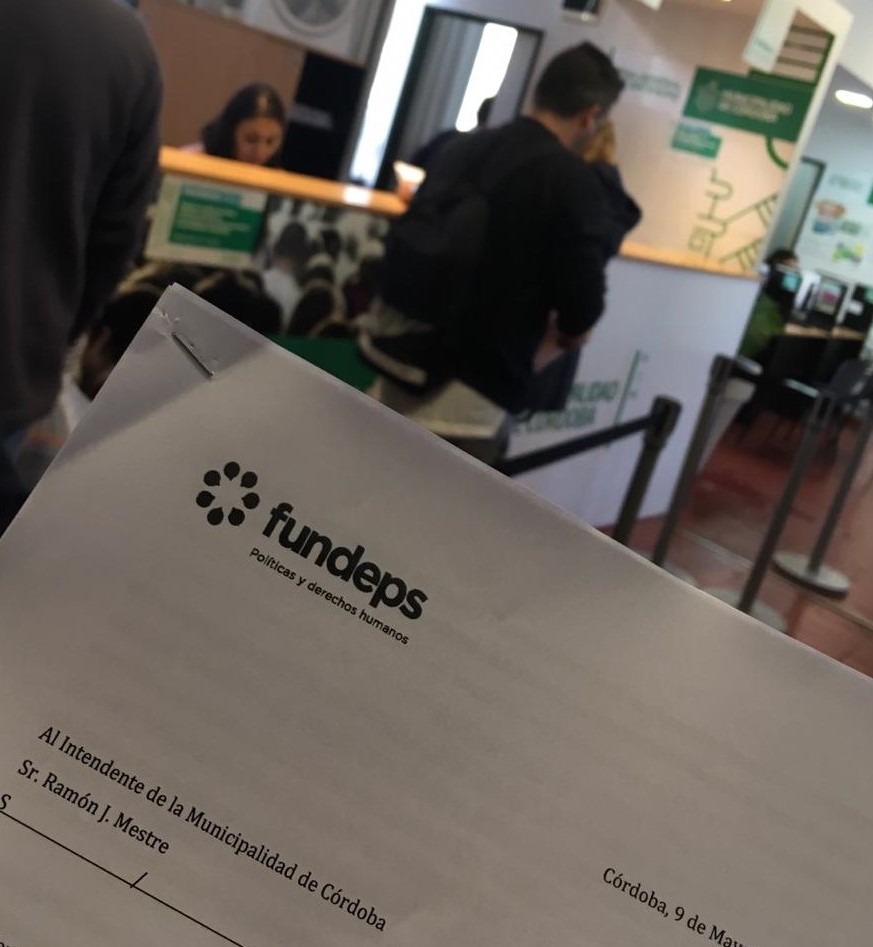
Along with the Omas and neighbors of the Chacras de la Merced neighborhoods, Villa La Merced, Ciudad Mi Esperanza and Parque 9 de Julio, we filed a complaint against the mayor Ramón Mestre in which we denounced the non-compliance with the mitigation plan for the Bajo WWTP Large and the neighborhoods located downstream and we demand their effective execution.

“Below, we offer a google translate version of the original article in Spanish. This translation may not be accurate but serves as a general presentation of the article. For more accurate information, please switch to the Spanish version of the website. In addition, feel free to directly contact in English the person mentioned at the bottom of this article with regards to this topic”.

The communities of Chacras de la Merced, Villa La Merced, Ciudad Mi Esperanza and Parque 9 de Julio, live a few meters away from the sewage treatment plant in the city of Córdoba on the banks of the Suquía river, and have been living with pollution for years. of water, air and soil due to the poor functioning of the Bajo Grande plant.

Derived from this contamination, neighbors must face every day an infinity of problems, the most serious being those related to health (skin, respiratory and gastrointestinal diseases). Similarly, the environment vitiated by the smell of cloacal water overturned raw, makes life more difficult in that place.

The contamination problem of the Suquía river as a direct consequence of the excess of sewage liquids, by virtue of the dumping with minimal treatments or without treatments, carried out by the Bajo Grande WWTP is public knowledge. Even recognized by the Municipality of Córdoba at least since 2014 when it declares for the first time the environmental and sanitary emergency of the EDAR plant and of the areas located downstream. The measure was extended every year being the last extension in the past month of November.

Within the framework of this emergency, the Intendant implemented a Mitigation Plan by virtue of which a number of actions are entrusted to different areas of the Municipality of Córdoba to mitigate the effects of the pollution produced by the plant on the population, particularly in the Suquía and surrounding areas.

The departments included are the Secretariat of Government, Citizen Participation and Social Development, the General Secretariat, the Public Services Secretariat, the Ministry of Health and the Secretariat of Planning and Infrastructure.

Regarding the mitigation measures contemplated in the plan, these are: a) Update of the socioeconomic survey of the affected population downstream of the plant; b) Update of the survey of the health status of the population; c) Distribution of safe drinking water for different uses in areas where provision by network is not possible; d) Preventive sanitary cord; e) Management of the effluents of the E.D.A.R. Under Large; e) Resource monitoring plan and f) Awareness campaign.

Last year, we presented together with Alida Weht, neighbor of the Chacras de las Merced district and member of the Las Omas Civil Association, requests for information addressed to these Secretariats, so that they could inform us about the status of the Mitigation Plan, without receiving answer. Therefore, this year we insist on the orders, as it is public information to which every citizen has the right to access and the Municipal State has the obligation to make known, not only because the actions committed by the municipality have an impact on the health and quality of life of the people living in the neighborhoods surrounding the plant, but of all the people of Cordoba as the Suquía river – at least at one time – one of the sources of most important drinking water in the entire province.

The only distribution that responded was the Ministry of Health and it did so deficiently and with information that does not fit with the reality that exists in the community of Chacras de la Merced.
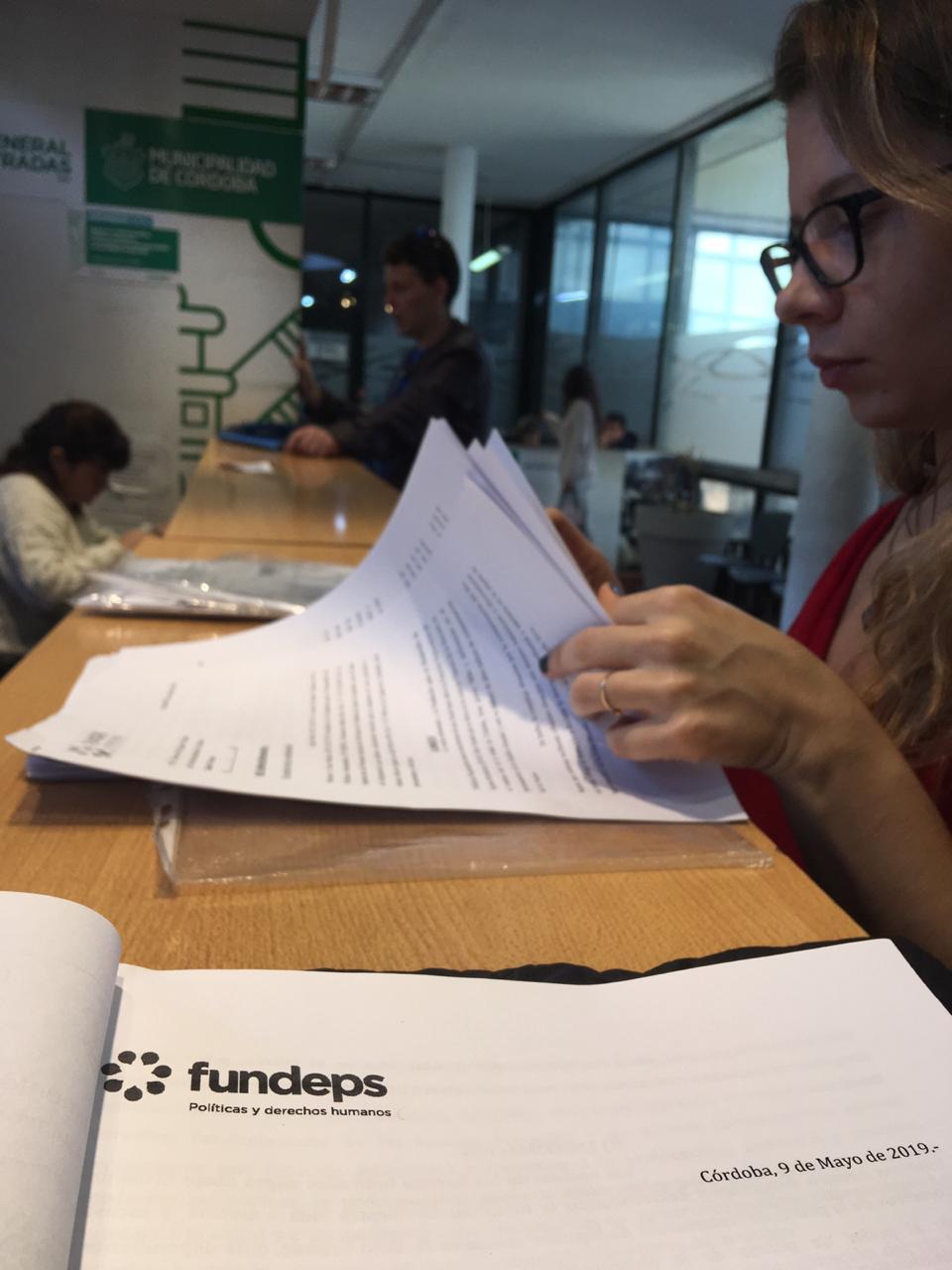
Motivated by this, and the lack of execution of the successive mitigation plans, is that together with the Omas andneighbors of the neighborhoods located downstream of the plant, we initiated a claim against the Municipality of Córdoba denouncing each of these breaches and demanding their adequate and effective execution.

With respect to the health needs of the area, the deficient infrastructure of the neighborhood Health Center is denounced, which lacks adequate facilities for patient care; It has only two rooms, the spaces are very small, there is no heating, there is only one doctor who can not supply it and he attends only in the morning, sometimes there are not enough medicines to deal with tracer diseases in the area, particularly dermatitis, which leads to the people of the neighborhoods tending to naturalize their ailments due to the deficient medical attention provided by the municipality.

Another of the mitigation measures whose compliance is required is the “Awareness Campaign” under the responsibility of the Ministry of Health – DAPS and the Directorate of Sanitary and Gas Networks. The actions included are: a) Continue actions in favor of improving the communication of environmental risks, b) Continue with informative and educational talks to the school population of the sector and c) Installation of informative posters on the risk of use and consumption of the river water. None of these actions has been carried out, there is widespread misinformation in the sector about the real risks of contamination of the Suquía River. In addition, all along the path of Chacra de la Merced there is a single sign in the area warning that it is forbidden to bathe in the river. In any case, such ignorance is that children continue to bathe in certain sectors of the Suquía and in the lagoons, putting their health and their lives at risk.

In addition, it is reported that there are sectors of the Chacras de la Merced neighborhood where there is no potable water network. Neighbors and neighbors are forced to connect in an irregular manner to the only network that is exclusive to the Bajo Grande WWTP plant, which is also not safe water. Taking into account the health and environmental crisis declared in the area by the pollution of the Suquía River, it is inadmissible that the population lacks safe drinking water.

In short none of the mitigation measures is or has been adequately met by the municipality, which leads to the emergency being extended every 180 days, becoming a formal declaration without being able to give the affected communities a structural solution and definitive to the environmental and health problems that have been going on for years.
The area where these communities are located 40 years ago was part of the “greenbelt” of the city of Córdoba, from there came the fruits and vegetables that supplied the markets, jobs now prohibited by the high levels of contamination of the Suquía River. The neglect of the State transformed this area into a marginal community, with multiple sources of contamination (quarries, tanneries, garbage), which every day struggles to survive and to fight for its human rights to health, a healthy environment and life , all this despite the indifference of the municipal authorities.

The expansion works of the EDAR plant and the refunctioning of the current one, do not matter the improvement of the quality of life of the people who live downstream of the plant. Nor do they result in the termination of the environmental and sanitary state of emergency in the area, while the mitigation actions have not been carried out by the Municipality of Córdoba, which is why we demand that the Mayor take the corresponding measures so that execute the Mitigation Plan prepared for the Bajo Grande plant and the zones located downstream.

The municipality has a pending debt with the population of this sector of the city, and therefore we demand a definitive solution to the contamination of the Suquía River and especially for the guarantee of the rights of those who have been affected.

“Below, we offer a google translate version of the original article in Spanish. This translation may not be accurate but serves as a general presentation of the article. For more accurate information, please switch to the Spanish version of the website. In addition, feel free to directly contact in English the person mentioned at the bottom of this article with regards to this topic”


“Through its financing and technical support, a complex range of public and private institutions continue to be involved in attacks against defenders,” cites the report of the UN Special Rapporteur on the situation of human rights defenders, Michel Forst.

According to Forst, “there is a deep crisis linked to the imposition of development models that seem to favor short-term benefits and commodification on the needs and aspirations of local populations.” The report found that in many cases, violations of rights and conflict stem from the exclusion of potentially affected communities from decisions about their lands and natural resources. “Only by guaranteeing the right of those communities to grant or deny their Free, prior and informed consent, as foreseen in international agreements, can avoid these origins of the conflict.

The Special Rapporteur’s analysis echoes some of the critical trends and challenges highlighted in a brief submittedby the Coalition for Human Rights in Development in response to the Special Rapporteur’s call for the report. These include the growing role of the private sector in development, the lack of due diligence on human rights by development banks, the increasing use of financial intermediaries and the poor execution of consultation and consent processes.

The report of the Special Rapporteur highlights the “urgency” for development banks and other investors to use due diligence on human rights issues to identify potential risks for defenders and identify mitigation measures before making investment decisions. Taking into account the commitments of the States in matters of sustainable development, the Rapporteur stressed that “now is the time to ‘lead by example’ and ensure that no one can be killed or threatened for the mere fact of defending human rights.

The report recommends several concrete policies and practices that development banks and other investors should adopt to safeguard defenders:

– Conduct ex ante impact assessments on the enabling environment for human rights and fundamental freedoms in host countries, as well as on the risks of projects for human rights defenders.

– Conduct on-site monitoring with human rights experience for all projects;

Use contractual provisions to require clients to ensure that defenders can publicly and securely disclose their claims;

– Demand accessible and independent complaints mechanisms with experience in human rights;

– Monitor projects closely for reprisals and, if they do occur, respond promptly and publicly, including exercising influence over governments to investigate and hold accountable those who use force against protesters or threaten critics of projects;

– Disclose all final users of loans from financial intermediaries and ensure compliance with safeguards and human rights;

– Retain investments where impact evaluations reveal serious threats to civil liberties and to defenders.

The Special Rapporteur’s findings echo many of the priorities and recommendations of the Defenders in Development campaign led by the Coalition along with civil society groups from around the world. The campaign is working to ensure that development activities respect human rights, that development funders promote an environment conducive to public participation, and that defenders can defend their rights and hold development actors accountable. fear.

SourceCoalición para los Derechos Humanos en el Desarrollo

source of the imageAccountability Counsel

During 2016 more than 280 human rights and environmental activists were murdered in 25 countries, marking a growing radicalization of violence towards them. The murders that occurred during the first weeks of 2017 have ratified this worrying trend. From FUNDEPS we join the widespread demand for a change in the situation of those who have seen their rights vulnerable due to the protection of the environment, the territory, the rights of indigenous peoples, among others.

“Below, we offer a google translate version of the original article in Spanish. This translation may not be accurate but serves as a general presentation of the article. For more accurate information, please switch to the Spanish version of the website. In addition, feel free to directly contact in English the person mentioned at the bottom of this article with regards to this topic”


“On March 2, 2016, gunmen stormed the house of environmental activist Berta Cáceres in the middle of the night and shot her dead. Cáceres had spent several years attempting to stop the construction of a hydroelectric dam in the land of his community in Intibucá, in western Honduras, which endangered a vital and sacred water source for the indigenous Lenca people. Less than a year before his death, he had delivered a poignant address to a crowded auditorium when he was awarded the Goldman Environment Award of 2015 for his exceptional courage in the field of environmental activism”

So begins the latest report by Global Witness, an organization that exposes the hidden links between the demand for natural resources, corruption, armed conflict and the destruction of the environment. The reason for this report is to expose the situation of human rights defenders in Honduras, identified by the report as “the deadliest country in the world for environmental activism”. The appalling levels of violence and intimidation suffered by rural communities are documented as opposing the imposition of dams, mines, logging or agriculture on their land, projects controlled by rich and powerful elites, including members of the political class. The root causes of these abuses are widespread corruption and failure to provide adequate consultation to those affected by these projects.

According to Global Witness’s research, since the coup d’état of 2009, 123 land and environmental activists have been killed in Honduras; Many others have been threatened, attacked or imprisoned. Throughout 2016, human rights defenders from all regions of the world have faced attacks because of their work to improve and defend the human rights of their communities. They have been persecuted by both state and non-state actors who sought to discourage, discredit and disrupt their non-violent activities.

According to FrontLine Defenders in its latest report of late 2016 the number of murders in 2016 was an increase over the previous year’s figure. About 281 people were killed in 25 countries. 49% of these defenders worked to defend the environment, the territory and the rights of indigenous peoples. Some of the cases occurred when local defenders launched campaigns against multinational corporations and resisted the occupation of their land and forced relocations, which were often carried out without adequate consultation or compensation.

In addition to the above, ProtectDefenders.eu, the European Union’s defense mechanism, recognized that human rights defenders throughout the world are frequently subjected to harassment and false criminal accusations aimed at paralyzing, Intimidate and delegitimize their activities for human rights. They have difficulties in developing their work in increasingly restrictive environments in which the right to freedom of association, expression and peaceful assembly; they do not exist. Permits are permanently revoked by human rights NGOs, bank accounts are seized and their right to access foreign funds is violated. An increasing number of States have also developed a systematic pattern of obstacles to the freedom of movement (through the use of travel bans) of human rights defenders, with the clear intention of isolating them.

The murder of the defenders impacts in a way that goes even further than their own death. They affect the entire human rights community. Organizations that have been in charge of investigating the situation of defenders around the world have often come across that their killings have usually been framed in previous protests against multinational companies. It also highlights the role of complicity of governments in these attitudes that have resulted in the deaths of hundreds of people throughout the world.

Land rich in natural resources in Central and South America, Africa and Asia continue to be a source of conflict between the extractive industry and indigenous peoples in the context of projects frequently financed by international financial institutions (IFIs) or by Western and Chinese companies. The lack of checks and balances on human rights issues within these institutions, often accompanied by the abovementioned complicity of the current government, has resulted in intimidation of the local population and other more serious things, Has led them to consider that their concerns have not been adequately addressed.

So far this year 2017, new murders have been visualized to defenders. Isidro Baldenegro, an indigenous ecologist, defender of forests in the Tarahumara sierra, Mexico, was killed during the month of January. Two weeks later Juan Ontiveros Ramos, Mexican defender was brutally beaten along with other members of his family and taken to the force. On 1 February, the activist’s body was found. Likewise, on Tuesday, January 17, demonstrators led a peaceful demonstration against a hydroelectric plant in Guatemala. But the event ended with death after the paramilitaries killed and 72-year-old activist Sebastián Alonso.

From FUNDEPS we join in the widespread demand to prevent this type of behavior against environmental and human rights defenders from being perpetuated in 2017. Our work has been closely related to the monitoring of projects financed by international financial institutions, as well as Also a good part of those projects that have counted on Chinese financing. We emphasize the need for civil society to continue with its control tasks on this type of projects, while ensuring respect for the rights of those who exercise this type of task.

More information

Contact

Gonzalo Roza – gon.roza@fundeps.org