Tag Archive for: Open Government

“Below, we offer a google translate version of the original article in Spanish. This translation may not be accurate but serves as a general presentation of the article. For more accurate information, please switch to the Spanish version of the website. In addition, feel free to directly contact in English the person mentioned at the bottom of this article with regards to this topic”


In the absence of answers, the claim was brought to the Inter-American Commission on Human Rights and to the Human Rights Committee of the United Nations, and both agencies urged the Argentine State to appoint the Ombudsman promptly. It should be noted that it is a key institution for the defense of human rights.

In accordance with the principles of the inter-American human rights system, States undertake to adopt legislative or other measures that are necessary to give effect to the rights and freedoms recognized in the American Convention on Human Rights. Among the measures mentioned, there are those tending to effect the establishment and regular operation of the Ombudsman’s Office.

The Ombudsman has basically two functions: 1) Defense and protection of the rights of the people before acts or omissions of the public administration; and 2) Control of the exercise of public administrative functions. However, this definition of the Defender may become limited since it does not contemplate its more procedural and human dimension: the idea and aspiration to create an entity capable of being receptive to the needs of the population. The Ombudsman’s Office plays a fundamental role not only in the protection of human rights and control of the exercise of public functions, but also as a key institution in direct communication between the State and individuals.

During the month of August 2017, 55 civil society organizations again called for the end of this situation and the designation of the Ombudsman. The complaint also included a proposal for the appointment that included both legal and constitutional requirements, as well as suggestions for the selection process. It was requested that the necessary measures be adopted so that the Bicameral Ombudsman’s Commission immediately begins the appointment procedure, which ensures 1) transparency and citizen participation in the process and 2) the suitability of the candidates.

The selection process of the Defender must follow rigorous criteria that guarantee the moral suitability and technical suitability. The moral suitability in this case not only refers to the absence of disciplinary offenses or conduct contrary to public ethics; but it refers to the need to prove a true commitment to human rights. The technical suitability, on the other hand, has to do essentially with the knowledge about the problems of Human Rights and the means to remedy them.

Another point to highlight in how the designation of the Ombudsman should be carried out, has to do with the independence of criteria. The CN in its article 86 emphasizes the autonomous character of the figure of the Defender and the independence of criteria. This refers to the non-partisanship of the figure and the absence of economic ties or interest that may interfere with the activities of the Ombudsman.

These selection criteria must be accompanied by a transparent and participatory procedure governed by publicity and openness in all stages of the process. The presentation made by the civil society detailed the proposal for the implementation of a selection process that should include: 1) Proposal of the candidates, 2) Publication of background, 3) Observations, challenges and questions, 4) Written responses from the candidates , 5) Public hearing before the bicameral commission, 6) Observations, 7) Decision of the bicameral commission.

This organ since 2009 lacks real leadership and since then it is operating under interim mandates because Congress has not yet agreed on the appointment of a director. Since 2015, undersecretary-general Juan José Böckel has been in charge of this unit, a man who answers the former intervener of that entity, the deputy governor of Jujuy, Carlos Haquim. Currently, the Ombudsman’s Office has been immersed in corruption cases after anonymous reports of irregularities in the organization.

According to reports, on Wednesday, November 8, the Bicameral Commission of the Ombudsman would sign the proposal of three candidates to the Ombudsman, with a view to having the Chambers designate it before the end of the year. This has been done without convoking the civil society and if this agreement were reached without the participation of the citizens in the formation of the shortlist, it will affect the proper institutional functioning of the Ombudsman, once their new holder is designated. .

The importance of the prompt designation of the Ombudsman is that it is one of the agencies in charge of the horizontal control of the State (called Horizontal Accountability). It is about the control exercised by the same institutions over the acts and / or omissions emanating from the State. In this sense, it is essential that the mechanisms that guarantee horizontal accountability work correctly. We join the claim of civil society for the prompt appointment of the Ombudsman.

More information

– Without citizen participation, the Ombudsman will not be for the People

– 55 organizations ask Congress for the designation of the Ombudsman

– Contributions for the regulation of the nomination process of the nation’s Ombudsman

Contact
agustinapalencia@fundeps.org

During the past Wednesday, April 12 and 19, the Open Government Office of the Province of Cordoba summoned civil society organizations at a dialogue table. This, in the framework of the elaboration of the provincial goal that will be part of the National Plan of Action of Argentina before OGP during the years 2017 to 2019.

“Below, we offer a google translate version of the original article in Spanish. This translation may not be accurate but serves as a general presentation of the article. For more accurate information, please switch to the Spanish version of the website. In addition, feel free to directly contact in English the person mentioned at the bottom of this article with regards to this topic.”

Within the framework of the Open Government Alliance (OGP), Argentina will have to submit a new National Action Plan in July 2017, which will contemplate new commitments regarding transparency, accountability and citizen participation.

The Open Government Alliance was launched in 2011 to provide an international platform for domestic reformers committed to making their governments accountable, more open and improving their responsiveness to their citizens. Since then, OGP has moved from 8 participating countries to the 64 countries indicated on the map below. In all these countries, government and civil society work together to develop and implement ambitious reforms around open government.

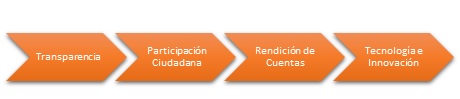
The concept of “open government” is based on 3 fundamental pillars: transparency, participation and collaboration. It implies a new paradigm, under which decision-makers put citizens at the center of public policy and include them in their design, understanding that greater citizen participation in the formulation of public policies contributes to a more open government and that Accountable to citizens.

The last plan of action presented by our country was in 2015, and included commitments assumed both by the administration of Cristina Fernandez and by the current management of Mauricio Macri. For this 2017, from the Ministry of Modernization of the Nation, it was decided to incorporate a section in the plan that is made up of subnational commitments.

In this regard, the provinces are invited to add a goal to this new plan. During the end of 2016, federal meetings were organized by the federal executive, explaining the methodology for the elaboration of commitments. In this sense and according to the process explained, the goals had to be co-created with civil society.

The relevance of the Open Government as a new cultural paradigm in the sphere of state management lies in the possibility of incorporating the citizenry in the decision-making processes of the government. A more transparent and accountable administration of society translates into stronger and more legitimate institutions.

The past Wednesday, April 12 and 19, from the Secretariat of the Governorate of the Province of Cordoba, civil society organizations were summoned to participate in two dialogue panels. During both meetings we worked on the creation of the commitment that the Province of Cordoba will assume in the National Action Plan of Argentina before OGP 2017-2019.

Among the organizations that participated in these tables are the AGA Association, the Nuestra Córdoba Citizen Network, the Córdoba Environmental Forum, FUNDEPS, the Federal Government Institute, Open Data Córdoba, among others. The debate was essentially about the need to achieve the institutionalization of the paradigm of Open Government within the government of the Province of Cordoba. Also discussed was the possibility of creating an Open Government Portal belonging to the province.

From FUNDEPS we consider this one, as an important step in the progress toward the establishment of Open Government policies in the province. The institutionalization of spaces with these characteristics would achieve, in the future, greater and better mechanisms of citizen participation. Consequently, the levels of accountability and transparency of government management in Córdoba would increase.

More information

We participated in the Open Government Partnership Summit in Paris

Climate Change and Open Government at the Global TAI Meeting

Participation in the Regional Meeting of Subnational Entities by the Open Government

Contact

Agustina Palencia – agustinapalencia@fundeps.org

The 6th Global Meeting of The Access Initiative (TAI) was held in Paris on 5 and 6 December, in which representatives of civil society from around the world met to discuss the importance of open government in relation to The challenges of climate change.

“Below, we offer a google translate version of the original article in Spanish. This translation may not be accurate but serves as a general presentation of the article. For more accurate information, please switch to the Spanish version of the website. In addition, feel free to directly contact in English the person mentioned at the bottom of this article with regards to this topic”


In view of the Open Government Partnership (OGP) Summit, which takes place from 7 to 9 December in Paris, the TAI Network held its Global Meeting to explore the linkages between two agendas: climate change and open government. TO

During two days, experiences, opinions and ideas were exchanged between experts and experts on both issues, to strengthen the capacities of civil society to influence these issues. Among the issues that have emerged from this is the link between transparency, open data and participation with climate finance, Nationally Determined Projected Contributions (INDC) under the Paris Agreement, among others. In this context, issues that were transversal to the agendas of civil society, such as human rights, gender, environmental advocates, were also addressed.

The results of this meeting are expected to be reflected in the OGP Summit, which this year focuses on climate change. The priority is then to achieve the synergy between these two agendas, in order to be able to advocate for transversal public policies.

Contact

Carolina Tamagnini – carotamagnini@fundeps.org