• ES
  • EN
Fundeps
  • About Fundeps
  • Team
  • Working areas
    • Environment
    • Democracy
    • Gender
    • Global Gorvernance
    • Health
  • News
  • Publications
  • DONATE
  • Click to open the search input field Click to open the search input field Search
  • Menu Menu
Gender, News

Serious setback for judicial independence and institutional quality in the Supreme Court

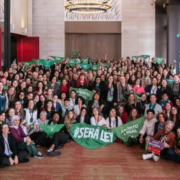
The decision of the Executive Branch to appoint two men to the Supreme Court of Justice of the Nation by decree, without the agreement of the Senate and through appointments on commission, constitutes an undue advance by the president over the Legislative Branch, a serious attack on judicial independence and a clear offense to the duty to guarantee gender equality in the highest court, which seriously impacts its legitimacy and institutional quality.

“Below, we offer a google translate version of the original article in Spanish. This translation may not be accurate but serves as a general presentation of the article. For more accurate information, please switch to the Spanish version of the website. In addition, feel free to directly contact in English the person mentioned at the bottom of this article with regards to this topic”.

The appointment made by Decree 137/2025 deviates from the procedure established by the Constitution, and constitutes a clear abuse of a controversial power of the Executive to “fill vacancies in positions that require the approval of the Senate and that occur during its recess” by decree. The aggravated two-thirds majority provided for by the National Constitution to give agreement to the proposal of candidates is intended precisely to prevent the representative of a single political party from being able to appoint a judge. The division of powers is at the very essence of our republican system of government, and can never be overridden by not reaching political agreements regarding particular candidates. The Senate has the power not to give agreement when it considers that the conditions for proceeding with an appointment are not met, that is precisely what the Constitution orders it to do. Silence in no way enables an institutional abuse of this magnitude.

Furthermore, moving forward in this direction ignores the many citizen objections expressed during the public evaluation process of the candidates, which was enabled in compliance with Decree 222/03. The various objections raised the issue of the candidates’ lack of suitability and independence, as well as concerns about some of their views, and raised concerns about the fact that only three women, compared to 104 men, managed to reach the position of Supreme Court judge in its entire history, emphasizing the constitutional and conventional duty of the Executive Branch to nominate women who had the highest qualities to occupy the position.

Constitutional rules do not exist as a mere formality, but as a mechanism to safeguard the balance of powers. Bypassing the constitutional process for the appointment of judges compromises the legitimacy of the Supreme Court, by leaving two of its five members in a temporary and precarious situation, which exposes them to pressure and affects their credibility among citizens.

The search for political consensus for the integration of the Court is essential for its legitimacy and key to the legal security on which social and economic progress is based. Furthermore, if the concern is the efficient functioning of the Court with only three members, this court has the necessary institutional mechanisms to function in this way until its due and necessary integration.

The judiciary, especially the Supreme Court, must be a pillar of respect and trust for society. Argentina does not deserve a court appointed by decree, nor a justice system that disregards the value of independence and impartiality.


Abogados y Abogadas del Noroeste Argentino en derechos humanos y estudios sociales (Andhes)
Amnistía Internacional
Área Salud, Economía y Sociedad de CEDES
Asociación Civil Líbera, abogacía feminista
Asociación Civil por el Cumplimiento de los Derechos Humanos (ACuDH)
Asociación Civil por la Igualdad y la Justicia (ACIJ)
Asociación Pensamiento Penal
Asociación por los Derechos Civiles (ADC)
Asuntos del Sur
Campaña Gqual
Católicas por el Derecho a Decidir
Centro de Estudios Legales y Sociales (CELS)
Centro por la Justicia y el Derecho Internacional (CEJIL)
Colectiva Feminista La Revuelta, Neuquén, Patagonia Argentina
Democracia en Red
Directorio Legislativo
Equipo Latinoamericano de Justicia y Género (ELA)
Foro Pampeano por el Derecho al Aborto Legal, Seguro y Gratuito
Fundación Ambiente y Recursos Naturales (FARN)
Fundación Mujeres en Igualdad
Fundación Mujeres x Mujeres
Fundación para el desarrollo de políticas sustentables (Fundeps)
Fundación para el Estudio e Investigación de la Mujer (FEIM)
Fundación Poder Ciudadano
Fundación Sergio Karakachoff
Fundación Sur
FUSA AC
Instituto de Estudios Comparados en Ciencias Penales y Sociales (INECIP)
Laboralistas Platenses
Liderar Mujer
Multi-Palabras Santa Fe
Programa Género y Derecho, Facultad de Derecho, UBA
Red de Profesoras de Derecho, UBA
Red de profesoras, Facultad de Ciencias Jurídicas y Sociales, UNLP
Red Mujeres para la Justicia
Salta Transparente

27 de February de 2025
Tags: Gender, Gender and participation
Share this entry
  • Share on Facebook
  • Share on X
  • Share on WhatsApp
  • Share on LinkedIn
  • Share by Mail
https://fundeps.org/wp-content/uploads/2025/02/Garcia-Mansilla-Lijo.png 375 710 Admi2024FunDEPS https://fundeps.org/wp-content/uploads/2026/04/logo-2026-300x120.png Admi2024FunDEPS2025-02-27 12:47:572025-02-27 12:47:57Serious setback for judicial independence and institutional quality in the Supreme Court
You might also like
Rosario received us at the Third Meeting on Women and Ecology
Feminist economics as a tool for change: life at the center
Salta: the doctor guaranteed the rights of the young woman to a legal interruption of pregnancy
We participated in the XVI Regional Conference on Women in Latin America and the Caribbean
Call Open to Join a Collective Legal Action in Defense of the Right to Abortion
We participated in the consultation of UN Women for Beijing + 25
Other‌ ‌economies: the‌ ‌self-management‌ ‌from‌ a‌ ‌perspective of‌ ‌la‌ Sustainability‌ ‌of‌ la‌ ‌Life
Half a year of legal abortion: progress and challenges

Tags

Access to Information Access to Justice BID Chinese Investments Citizen Participation Democracy ENTs Environment Environmental Democracy Gender Global Governance Health Healthy nutrition IFIs Infrastructure Financing Legal Interruption of Pregnancy Sexual and Reproductive Rights Social and Environmental Standards Tobacco Control Transparency
See all tags

Acuerdo de Escazú

Emergencia Agroquímica

MOCI - monitoreo ciudadano en proyectos de infraestructura

{el entramado} Contamos historias. Acercamos Realidades.

Instagram

fundepsargentina

Trabajamos para que se garanticen los derechos humanos 🌱⚖️🗣️🌈💜🚭🍎
Promovemos la equidad de #genero, el derecho a la #salud y un #ambiente sano.

🌎 Hace un año, la @corteidhoficial emitió su histó 🌎 Hace un año, la @corteidhoficial emitió su histórica Opinión Consultiva sobre la emergencia climática.

✊ Una victoria para quienes defienden el ambiente en América Latina y el Caribe: la Corte confirmó que proteger a las personas defensoras del ambiente no es opcional. Es una obligación legal.

⚖️ Para explicar qué exige esa protección, la Corte se apoyó en el Acuerdo de Escazú. Resultado: la gran mayoría de Estados de América Latina y el Caribe no pueden ignorar los estándares de Escazú, incluso si aún no han ratificado el tratado.

🔎 La implicación es clara: los países de la región deben fortalecer el acceso a la información, la participación pública, la justicia ambiental y la protección de quienes defienden el ambiente. 

📝 La Opinión abre nuevas rutas para frenar la criminalización de personas defensoras, responder a las restricciones al espacio cívico y defender la participación pública en países como Costa Rica, Guatemala y Perú. Compartimos el análisis de  @manizalmigrante del @ciel_org

📣 La discusión ya no es si los países de América Latina y el Caribe deben proteger a quienes defienden el ambiente. Eso ya está claro. Ahora hay que usar la Opinión: en tribunales, reformas, debates públicos y procesos de movilización para exigir mejores garantías y mayor protección.

🔗 Lee el análisis completo en el link en www.ciel.org/corte-idh-escazu-personas-defensoras/
Seguimos compartiendo algunos momentos del 3° Encu Seguimos compartiendo algunos momentos del 3° Encuentro Provincial de Redes de Compromiso y Cuidados 🧡

Creemos que no hay mejor manera de cerrar una jornada de formación, intercambio y construcción colectiva que encontrándonos también desde el arte. Porque la música y la poesía también nos invitan a imaginar otros mundos posibles.

Así vivimos Revuelo Sur, Íntimas, el espectáculo de Susy Shock junto al Dúo Bazán-Bonillo, que acompañó el cierre de este encuentro.

Gracias a todas las personas que se acercaron y fueron parte de esta jornada.
Preguntas, experiencias y saberes compartidos 💭 A Preguntas, experiencias y saberes compartidos 💭

Así vivimos el 3° Encuentro Provincial de Redes de Compromiso y Cuidados, una jornada dedicada a reflexionar sobre salud integral con perspectiva de diversidad y a fortalecer redes para la promoción de derechos.

Les compartimos algunos momentos de este encuentro que reunió a más de 170 personas de distintos puntos de la provincia.
El litio está en el centro de la transición energé El litio está en el centro de la transición energética global. Y Argentina, con los salares, principalmente de Jujuy, Salta y Catamarca, es protagonista de esa historia.

Pero hay preguntas que no siempre se hacen: ¿quién se beneficia realmente? ¿qué pasa con el agua? ¿qué derechos están en juego en los territorios donde se extrae?

Acá respondemos las más importantes. Accedé al documento completo en nuestra bio.
Follow on Instagram

Twitter

Tweets por @fundeps

Newsletter Subscription

    Fundeps. Córdoba (CP X5000JZH), Argentina. info@fundeps.org
    • Link to X
    • Link to Facebook
    • Link to Instagram
    • Link to Mail
    • Link to Youtube
    • Link to LinkedIn
    • Link to TikTok
    Link to: More than a health problem: the multiple impacts of smoking. An intersectional approach Link to: More than a health problem: the multiple impacts of smoking. An intersectional approach More than a health problem: the multiple impacts of smoking. An intersectional... Link to: Communities and civil society advocate to influence the BID meeting in Chile Link to: Communities and civil society advocate to influence the BID meeting in Chile Evento paralelo del Grupo de Trabajo sobre el BID en ChileCommunities and civil society advocate to influence the BID meeting in Chil...
    Scroll to top Scroll to top Scroll to top