• ES
  • EN
Fundeps
  • About Fundeps
  • Team
  • Working areas
    • Environment
    • Democracy
    • Gender
    • Global Gorvernance
    • Health
  • News
  • Publications
  • DONATE
  • Click to open the search input field Click to open the search input field Search
  • Menu Menu
Global Governance

Communities and civil society advocate to influence the BID meeting in Chile

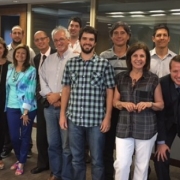
Evento paralelo del Grupo de Trabajo sobre el BID en Chile

At the BID’s 2025 Annual Meetings in Chile, organizations and communities affected by projects financed by the institution are demanding greater transparency, participation, and respect for human rights and the environment, in response to the impacts of megaprojects in the region.

“Below, we offer a google translate version of the original article in Spanish. This translation may not be accurate but serves as a general presentation of the article. For more accurate information, please switch to the Spanish version of the website. In addition, feel free to directly contact in English the person mentioned at the bottom of this article with regards to this topic”.

Chile is hosting the sixty-fifth Annual Meeting of the Boards of Governors of the Inter-American Development Bank (IDB) and IDB Invest. The event began on March 20 in Punta Arenas, Magallanes, as part of the Investment Forum and the meeting of authorities, and continues in Santiago until March 30. It brings together the Ministers of Economy, Treasury, and Finance of the Bank’s 48 member countries, who define the main financing policies and strategies for the region.

In this context, communities affected by IDB-financed projects and civil society organizations are organizing to present our demands and highlight the resistance to the development model promoted by the institution.

The main demands include:

  • Full and understandable access to information about projects and their impacts
  • Effective participation of affected communities in decision-making
  • Protection of human rights and nature defenders to avoid retaliation
  • Financing aligned with climate justice and human rights
  • Guaranteeing the prevention, mitigation, and reparation of harm caused by their investments, through policies or frameworks for remediation and responsible exit

For years, resistance networks have denounced the harmful effects of projects financed by the BID and other Multilateral Development Banks (MDBs). Wind farms, lithium and copper mines, and mega-infrastructure projects have transformed ecosystems and ways of life without consultation or consent from affected communities. In Punta Arenas, the site of pre-Annual Meetings activities, opposition is growing to green hydrogen mega-projects, promoted without real public debate or consideration of Indigenous and local rights.

The BID Working Group, a network of civil society organizations of which we are a part, has been key in opening up advocacy spaces within the Annual Meetings. Thanks to their pressure, the Bank committed to reintroducing civil society participation in 2023, having eliminated it in 2013. The 2025 edition in Chile is a crucial opportunity to strengthen coordination among affected communities and reinforce advocacy strategies to challenge the BID’s role in the region.

The Voice of Communities and Organizations

  • On a Just Energy Transition and the Protection of Indigenous Peoples and the Environment:

“They need to study the places where they promote projects and who lives there. They should take the time to understand local customs and ways of life. It is not right for them to arrive in a place and disrupt communities that are used to living in peace, caring for and protecting nature and biodiversity.” — Spokesperson for the Chango People, Antofagasta (requested anonymity)

  • On the IDB’s Access to Information Policy:

“The BID must ensure effective and timely access to information about the projects it finances so that affected communities and populations can fully understand the status of a given project and participate in decision-making in an informed manner.” — Gonzalo Roza, Coordinator of the Global Governance Area, FUNDEPS (Argentina)

  • On the Protection of Civic Space:

“Multilateral Development Banks (MDBs) have a responsibility to respect human rights in their operations and to use their influence to ensure that their clients—governments and companies—create and maintain an enabling and safe environment for the exercise and defense of those rights. The BID Group must guarantee the effective implementation of its policies and improve its practices to fulfill this responsibility, ensuring they are systematically enforced.” — Suhayla Bazbaz, Director, Community Cohesion and Social Innovation–CCIS (Mexico)

  • On Remedy and Responsible Exit:

“Repairing the harm caused by the projects it finances must be a priority for the BID Group. It is time for the Bank to be at the forefront of best practices and policies, following the example of other development banks. The International Finance Corporation (the private sector arm of the World Bank) has already published its Responsible Exit Principles and is about to approve the Remedy Framework—two instruments aimed at preventing, mitigating, and repairing the harm caused by its investments. Like any financial institution, the IDB has the responsibility to remedy the harm inflicted on communities and the planet.” — Luisa Gómez, Senior Attorney, Center for International Environmental Law–CIEL (United States)


Agenda for Resistance and Advocacy in Chile

Civil society organizations and affected communities have outlined an action plan that includes:

  • Workshops and meetings in Santiago and Punta Arenas with local organizations, affected communities, and strategic allies to analyze the IDB’s impact on the energy transition and development financing.

  • A public discussion on the role of development banks in a just energy transition, as well as Chile’s case in the green hydrogen and mining industries.

  • Advocacy activities during the Annual Meetings aimed at creating spaces for dialogue with BID representatives and other key stakeholders.

  • Engagement with local and international networks to strengthen resistance strategies and globally highlight the impacts of projects promoted by the Bank.

The fight of communities against extractivist projects promoted by the BID is not new, but in a context where financing for strategic sectors such as energy and mining is expanding, amplifying our voices and demanding a just energy transition is more urgent than ever—one that prioritizes community rights and territorial protection.

Contact
Gonzalo Roza, gon.roza@fundeps.org
27 de March de 2025
Tags: Access to Information, BID, Energy transition, Global Governance
Share this entry
  • Share on Facebook
  • Share on X
  • Share on WhatsApp
  • Share on LinkedIn
  • Share by Mail
https://fundeps.org/wp-content/uploads/2025/03/Foto-nota-web.png 375 710 Comunicaciones Fundeps https://fundeps.org/wp-content/uploads/2026/04/logo-2026-300x120.png Comunicaciones Fundeps2025-03-27 11:59:472025-03-27 11:59:47Communities and civil society advocate to influence the BID meeting in Chile
You might also like
The IDB’s Gender Policy and the International Standards on Women’s Rights: A Comparative Analysis
Drinking water in Alta Gracia: we present an injunction due to lack of public information
Impact of COVID-19 on the Sustainable Development Goals
Argentina en el AIIB What does joining the Asian Infrastructure Investment Bank imply for Argentina?
IDB Invest presented a revised version of the Implementation Manual for its Sustainability Policy
We participate in an event on Business, Sustainability and Human Rights
The Asian Bank approved its first infrastructure project in Argentina
IDB Annual Meetings were held with limited civil society participation

Tags

Access to Information Access to Justice BID Chinese Investments Citizen Participation Democracy ENTs Environment Environmental Democracy Gender Global Governance Health Healthy nutrition IFIs Infrastructure Financing Legal Interruption of Pregnancy Sexual and Reproductive Rights Social and Environmental Standards Tobacco Control Transparency
See all tags

Acuerdo de Escazú

Emergencia Agroquímica

MOCI - monitoreo ciudadano en proyectos de infraestructura

{el entramado} Contamos historias. Acercamos Realidades.

Instagram

fundepsargentina

Trabajamos para que se garanticen los derechos humanos 🌱⚖️🗣️🌈💜🚭🍎
Promovemos la equidad de #genero, el derecho a la #salud y un #ambiente sano.

Este viernes 31 de julio realizamos un nuevo encue Este viernes 31 de julio realizamos un nuevo encuentro de formación en derechos sexuales y (no) reproductivos. 

En articulación con el Consultorio de Salud Integral y con el aval de la DAJA, compartimos la jornada de capacitación con profesionales del Hospital Vicente Agüero de Jesús María.

Más de 15 profesionales de diversas disciplinas se dieron cita, para conocer diferentes aspectos de la práctica de AMEU y fortalecer su trabajo diario, en pos del acceso al aborto legal, seguro y gratuito.

Como en cada instancia, celebramos el compromiso de cada participante y agradecemos especialmente a la Dra. Kenia Torres y al Director del Hospital, Dr. Javier Díaz, por la predisposición para recibirnos.
La información como herramienta ya está disponible La información como herramienta ya está disponible en Aprender con Fundeps.

Aprendé a ejercer el derecho de acceso a la información pública y a usarlo para defender derechos, monitorear decisiones e impulsar procesos de incidencia.

En este curso vas a aprender:

📌 Cómo hacer solicitudes de acceso a la información pública.
📌 Qué hacer cuando un organismo no responde.
📌 Cómo acceder a información sobre proyectos financiados por organismos internacionales.

💻 Curso virtual, gratuito y autoadministrado.
🔗 Inscribite en aprender.fundeps.org
🌎 Hace un año, la @corteidhoficial emitió su histó 🌎 Hace un año, la @corteidhoficial emitió su histórica Opinión Consultiva sobre la emergencia climática.

✊ Una victoria para quienes defienden el ambiente en América Latina y el Caribe: la Corte confirmó que proteger a las personas defensoras del ambiente no es opcional. Es una obligación legal.

⚖️ Para explicar qué exige esa protección, la Corte se apoyó en el Acuerdo de Escazú. Resultado: la gran mayoría de Estados de América Latina y el Caribe no pueden ignorar los estándares de Escazú, incluso si aún no han ratificado el tratado.

🔎 La implicación es clara: los países de la región deben fortalecer el acceso a la información, la participación pública, la justicia ambiental y la protección de quienes defienden el ambiente. 

📝 La Opinión abre nuevas rutas para frenar la criminalización de personas defensoras, responder a las restricciones al espacio cívico y defender la participación pública en países como Costa Rica, Guatemala y Perú. Compartimos el análisis de  @manizalmigrante del @ciel_org

📣 La discusión ya no es si los países de América Latina y el Caribe deben proteger a quienes defienden el ambiente. Eso ya está claro. Ahora hay que usar la Opinión: en tribunales, reformas, debates públicos y procesos de movilización para exigir mejores garantías y mayor protección.

🔗 Lee el análisis completo en el link en www.ciel.org/corte-idh-escazu-personas-defensoras/
Seguimos compartiendo algunos momentos del 3° Encu Seguimos compartiendo algunos momentos del 3° Encuentro Provincial de Redes de Compromiso y Cuidados 🧡

Creemos que no hay mejor manera de cerrar una jornada de formación, intercambio y construcción colectiva que encontrándonos también desde el arte. Porque la música y la poesía también nos invitan a imaginar otros mundos posibles.

Así vivimos Revuelo Sur, Íntimas, el espectáculo de Susy Shock junto al Dúo Bazán-Bonillo, que acompañó el cierre de este encuentro.

Gracias a todas las personas que se acercaron y fueron parte de esta jornada.
Follow on Instagram

Twitter

Tweets por @fundeps

Newsletter Subscription

    Fundeps. Córdoba (CP X5000JZH), Argentina. info@fundeps.org
    • Link to X
    • Link to Facebook
    • Link to Instagram
    • Link to Mail
    • Link to Youtube
    • Link to LinkedIn
    • Link to TikTok
    Link to: Serious setback for judicial independence and institutional quality in the Supreme Court Link to: Serious setback for judicial independence and institutional quality in the Supreme Court Serious setback for judicial independence and institutional quality in the Supreme... Link to: Marketing of substitutes and rights at risk Link to: Marketing of substitutes and rights at risk Marketing of substitutes and rights at risk
    Scroll to top Scroll to top Scroll to top