• ES
  • EN
Fundeps
  • About Fundeps
  • Team
  • Working areas
    • Environment
    • Democracy
    • Gender
    • Global Gorvernance
    • Health
  • News
  • Publications
  • DONATE
  • Click to open the search input field Click to open the search input field Search
  • Menu Menu
News

FUNDEPS presented report at the 65th session of the United Nations CEDAW Committee
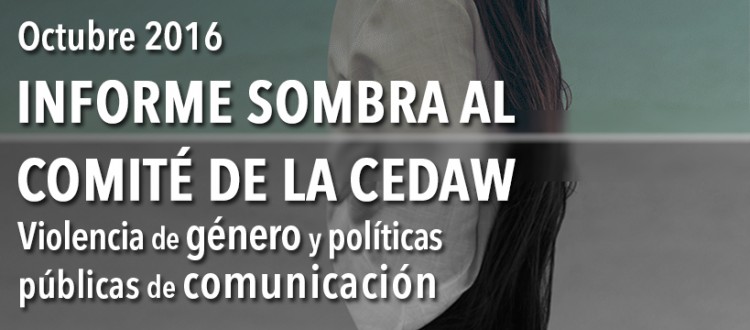
Our team will be present at the 65th session of the Committee on the Elimination of Discrimination against Women, in which the result of work done on gender violence and public policy communication will be presented.

The Committee on the Elimination of Discrimination against Women is a body of independent United Nations experts that monitors implementation of the Convention on the Elimination of All Forms of Discrimination Against Women (CEDAW English). All States parties must submit periodic reports to the Committee to account for compliance with international obligations assumed by signing CEDAW.

Organizations of each country, according to their experience and work performed, can submit a “shadow report” to account for the reality of women in the state, so that the Committee have the necessary for the development of tools the final recommendations made.

The report presented by FUNDEPS, along with the Civil Association for Equality Communication, focuses on the degree of compliance of Argentina Article 5 of the Convention, which commits States to “Modify the social and cultural patterns of conduct of men and women, with a view to achieving the elimination of prejudices and customary and all other practices which are based on the idea of ​​the inferiority or superiority of either of the sexes or on stereotyped roles practices of men and women. ”

The data provided in this “report shadow” are the result of monitoring of public communication policies and gender, in force in Argentina, which was made using requests for access to information, surveys and interviews with members of organizations, and monitoring media by the signatory organizations. This monitoring was reflected in the publication entitled “Gender violence and public communication policies“.

Also, our teams participated in and supported the development of two reports: one submitted by the InterAmerican Heart Foundation, FEIM and other organizations on public policy on the control of snuff that currently allow the development of industry strategies aimed specifically at women; and another by the Plurales Foundation in coalition with Fundapaz, Chaco and other networks on access to natural resources by rural and peasant women of the Gran Chaco.

More information:

– Publication: “Gender violence and public communication policies”

– Shadow report to the CEDAW Committee

Contact:

Virginia Pedraza – Coordinadora del Área de Derechos Humanos – Eje de género y diversidad sexual

vir.pedraza@fundeps.org

28 de October de 2016
Share this entry
  • Share on Facebook
  • Share on X
  • Share on WhatsApp
  • Share on LinkedIn
  • Share by Mail
https://fundeps.org/wp-content/uploads/2017/06/informe_sombra_para_el_comite_de_la_cedaw-1.jpg 330 750 Fundeps.org https://fundeps.org/wp-content/uploads/2026/04/logo-2026-300x120.png Fundeps.org2016-10-28 13:20:142024-06-30 16:04:13FUNDEPS presented report at the 65th session of the United Nations CEDAW Committee

Tags

Access to Information Access to Justice BID Chinese Investments Citizen Participation Democracy ENTs Environment Environmental Democracy Gender Global Governance Health Healthy nutrition IFIs Infrastructure Financing Legal Interruption of Pregnancy Sexual and Reproductive Rights Social and Environmental Standards Tobacco Control Transparency
See all tags

Acuerdo de Escazú

Emergencia Agroquímica

MOCI - monitoreo ciudadano en proyectos de infraestructura

{el entramado} Contamos historias. Acercamos Realidades.

Instagram

fundepsargentina

Trabajamos para que se garanticen los derechos humanos 🌱⚖️🗣️🌈💜🚭🍎
Promovemos la equidad de #genero, el derecho a la #salud y un #ambiente sano.

TE NECESITAMOS 🧡 Para seguir de cerca el Plan de TE NECESITAMOS 🧡

Para seguir de cerca  el Plan de Saneamiento del Lago San Roque, hay que mirar de cerca todo el proceso. Revisamos información técnica, hacemos seguimiento de la causa y elaboramos informes públicos sobre el cumplimiento del Plan.

Sostener este trabajo en el tiempo requiere recursos. Tu aporte hace posible que continúe.

Doná hoy! (link en bio)
Y todo esto quedó en un papel? No. Ya hay avances. Y todo esto quedó en un papel? No. Ya hay avances. Pero tampoco está resuelto.

Hay plantas de tratamiento que comenzaron a funcionar, obras de cloacas terminadas y establecimientos que fueron auditados por posible contaminación.

➡️ También quedan medidas por cumplir y avances que necesitan seguimiento. Porque mostrar lo que se hizo también sirve para saber qué falta.

Para seguir acompañando este proceso y sosteniendo el trabajo que todavía queda, necesitamos tu apoyo.

Doná hoy.
La Justicia no solo dijo que el lago está contamin La Justicia no solo dijo que el lago está contaminado. También ordenó qué tiene que hacer el Estado para empezar a sanearlo.

La sentencia establece medidas concretas, con plazos y obligaciones que involucran a la Provincia y a los municipios de la cuenca.

Entre ellas: avanzar con las obras cloacales, controlar los vertidos contaminantes, fortalecer la fiscalización y garantizar espacios de participación y transparencia.

Deslizá para conocer qué tiene que pasar para que el saneamiento avance.

Ayudanos a seguir trabajando para que estas medidas se cumplan. Doná hoy.
Hoy, 4 de septiembre, es el Día Mundial de la Salu Hoy, 4 de septiembre, es el Día Mundial de la Salud Sexual. Una fecha que nos invita a volver sobre las discusiones que atraviesan el acceso a la salud sexual y (no) reproductiva: condiciones de acceso para que sea integral y de calidad, desde un enfoque de derechos y con perspectiva de diversidad.

En el mes de junio nos encontramos en el 3° Encuentro Provincial de Redes de Compromiso y Cuidados: Salud sexual Integral con Perspectiva de Diversidad para poner en común experiencias y preguntas sobre estos desafíos.

Hoy recuperamos algunas de las voces que fueron parte de las exposiciones de ese encuentro para volver sobre dos preguntas que siguen abiertas:
¿Cuál es hoy el debate más urgente cuando hablamos de salud integral y diversidad?
¿Por qué es importante encontrarnos en este contexto?

Porque garantizar el derecho a la salud también implica seguir encontrándonos para pensar, discutir y construir respuestas colectivas.
Follow on Instagram

Twitter

Tweets por @fundeps

Newsletter Subscription

    Fundeps. Córdoba (CP X5000JZH), Argentina. info@fundeps.org
    • Link to X
    • Link to Facebook
    • Link to Instagram
    • Link to Mail
    • Link to Youtube
    • Link to LinkedIn
    • Link to TikTok
    Link to: Lack of information from the World Bank Project on non-communicable diseases Link to: Lack of information from the World Bank Project on non-communicable diseases Lack of information from the World Bank Project on non-communicable disease... Link to: Participation in discussions on the legal framework of native forests in Córdoba Link to: Participation in discussions on the legal framework of native forests in Córdoba Participation in discussions on the legal framework of native forests in C...
    Scroll to top Scroll to top Scroll to top