• ES
  • EN
Fundeps
  • About Fundeps
  • Team
  • Working areas
    • Environment
    • Democracy
    • Gender
    • Global Gorvernance
    • Health
  • News
  • Publications
  • DONATE
  • Click to open the search input field Click to open the search input field Search
  • Menu Menu
News

The IADB Changes Its Structure during a Meeting that Excluded Civil Society
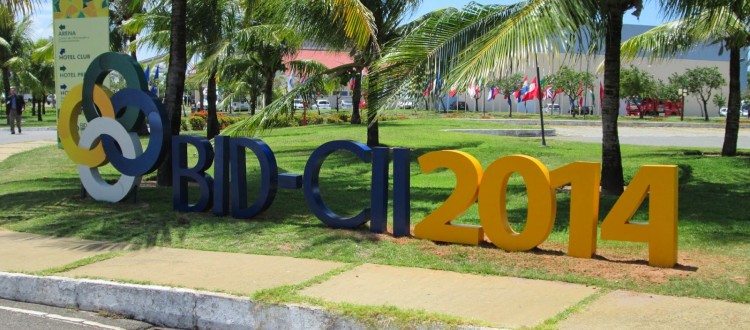
Without the participation of civil society, the Board of Governors of the IBD decided to approve an historic institutional restructuring with the intention of consolidating its private sector activities.

As part of the 2014 Annual Meeting of the Board of Governors of the Inter-American Development Bank (IADB) held on March 27 and 30 in the city of Bahía, Brazil, the governors of the Bank (finance ministers, central bank presidents, and high-level public officials of the member countries) decided to approve a major internal restructuring that aims to expand and improve its focus on the private sector.

With the restructuring approved in Bahía, “the Bank’s relationship to the private sector will be assumed by the Inter-American Investment Corporation (IIC), which we are calling ‘New Corp’ or ‘New Corporation,’ that will assume the four windows of the IBD that currently serve the private sector,” explained Brazil’s Planning, Budget and Management Minister, Miriam Belchior. “Although the main role of the IDB has been and will be to work with the public sector of its borrowing countries, the time has come to take a fundamental step in regard to the IBD’s work with the private sector,” she added. In this manner, this “New Corporation” will have a role and relevance similar to the International Finance Corporation (IFC), the institution of the World Bank Group responsible for directing funding to the private sector.

In turn, the governors decided to capitalize on this “New Corporation” and provide it with a structure to increase its efficiency. In addition, they considered that its main area of activity should be infrastructure investment, a current regional context where private investment has been gaining strength in recent decades. With these considerations, it will be an area that will have to be closely monitored in order to ensure transparent mechanisms of decision-making and respect for human rights and environmental protection standards.

Important Decisions without the Participation of Civil Society

One extremely disturbing aspect is that the approval of this historic restructuring took place in a context where civil society was excluded from the possibility of participating in the Annual Meeting for the first time since 2006, which led to serious questioning on behalf of a group of Civil Society Organizations, including FUNDEPS.

According to Patricia Miranda (Latindadd) y María José Romero (Eurodad): “Controversially, the IDB decided to instead organise a forum two weeks before  in the same city, just for civil society organisations, thus denying CSOs access to decision-makers, finance ministers and even the media. This is despite the fact that CSOs have participated in previous IDB annual meetings when key decisions were made, including on IDB replenishment and debt relief.”  Miranda and Romero added that “no matter what issues are on this year’s agenda, the IDB is a regional development bank whose processes are expected to follow the highest standards in terms of democratic participation and accountability. The lack of proper implementation of such standards by suddenly excluding civil society undermines the credibility of the Bank and poses an important reputational risk. This also brings up concerns about how the bank will address its future actions considering its goal is the implementation of an inclusive and sustainable development model, which is extremely worrying. CSOs will continue to advocate for an open and accountable process.”

For more information, see the following:

  • BID excluye a sociedad civil de su asamblea (“The IBD Excludes Civil Society from Its Meeting”) (28-03-2014) – by Patricia Miranda (Latindadd) and María José Romero (Eurodad).
  • IDB Group advances towards consolidation of its private sector activities (30-03-2014) – IBD Press Release.
  • El BID crea la “Nueva Corporación” para atender al sector privado (“The IBD creates the ‘New Corporation’ to serve the private sector”) (30-03-2014) – Agencia EFE.

Contact:

Gonzalo Roza / Global Governance Program Coordinator
gon.roza@fundeps.org

Translated by: Jeremy Orloski

15 de April de 2014
Share this entry
  • Share on Facebook
  • Share on X
  • Share on WhatsApp
  • Share on LinkedIn
  • Share by Mail
https://fundeps.org/wp-content/uploads/2014/04/bid_2014._logo_chevere-1.jpg 330 750 Fundeps.org https://fundeps.org/wp-content/uploads/2026/04/logo-2026-300x120.png Fundeps.org2014-04-15 17:45:502024-06-30 16:04:16The IADB Changes Its Structure during a Meeting that Excluded Civil Society

Tags

Access to Information Access to Justice BID Chinese Investments Citizen Participation Democracy ENTs Environment Environmental Democracy Gender Global Governance Health Healthy nutrition IFIs Infrastructure Financing Legal Interruption of Pregnancy Sexual and Reproductive Rights Social and Environmental Standards Tobacco Control Transparency
See all tags

Acuerdo de Escazú

Emergencia Agroquímica

MOCI - monitoreo ciudadano en proyectos de infraestructura

{el entramado} Contamos historias. Acercamos Realidades.

Instagram

fundepsargentina

Trabajamos para que se garanticen los derechos humanos 🌱⚖️🗣️🌈💜🚭🍎
Promovemos la equidad de #genero, el derecho a la #salud y un #ambiente sano.

Post pluri seguimos trabajando. Nos encontramos du Post pluri seguimos trabajando. Nos encontramos durante dos días con compañeres de diferentes organizaciones del país, con quienes articulamos diferentes acciones en torno a la agenda de salud sexual y reproductiva 
Nos tenemos! 💜
20 años de ESI, miles de experiencias. Poner un l 20 años de ESI, miles de experiencias.

Poner un límite, poder decir lo que nos pasa, reconocer una situación que no está bien: muchas de las herramientas que deja la ESI aparecen después, en nuestros vínculos y decisiones cotidianas.

Por eso, hablar de ESI también es hablar de herramientas que nos acompañan para cuidarnos, expresarnos y reconocer violencias.

¿Qué aprendizaje de la ESI te acompaña hoy?
💬 Te leemos.
El Pluri también es todo lo que nos pasa cuando no El Pluri también es todo lo que nos pasa cuando nos encontramos.

Son las experiencias que compartimos, las discusiones que nos incomodan, los dolores que traemos y las ausencias que sentimos. Es reconocernos en otres, sabernos parte de una historia común y descubrir todo lo que podemos construir desde nuestras diferencias.

En un contexto de retrocesos y amenazas a nuestros derechos, encontrarnos también es celebrar lo que construimos, compartir saberes, tejer nuevas alianzas y renovar las ganas de seguir organizándonos.

Nos quedan las conversaciones, los abrazos, las risas y las ideas que nos llevamos. También la certeza de que nuestras luchas son diversas, que hay muchas formas de encontrarnos y que seguimos construyendo, desde el transfeminismo, otros futuros posibles.
Ya se siente el Pluri 🔥 Una vez más, miles de muj Ya se siente el Pluri 🔥

Una vez más, miles de mujeres y diversidades nos encontramos en Córdoba para intercambiar saberes y experiencias, debatir y organizarnos.

En un contexto de constantes ataques a nuestros derechos y de un desmantelamiento de políticas públicas sin precedentes, la organización colectiva hoy es más que nunca nuestra herramienta para defender lo conquistado y transformar nuestras realidades.

Para esta ocasión, trabajamos estas ilustraciones junto a @macattorres 🧡, que vamos a compartir durante el Encuentro.

Este finde, nos encontramos en las calles.
Follow on Instagram

Twitter

Tweets por @fundeps

Newsletter Subscription

    Fundeps. Córdoba (CP X5000JZH), Argentina. info@fundeps.org
    • Link to X
    • Link to Facebook
    • Link to Instagram
    • Link to Mail
    • Link to Youtube
    • Link to LinkedIn
    • Link to TikTok
    Link to: Documento de Trabajo 01/2015: “La intervención de las IFIs, ¿altera las Obligaciones Extraterritoriales de los Estados?” – April 2015 Link to: Documento de Trabajo 01/2015: “La intervención de las IFIs, ¿altera las Obligaciones Extraterritoriales de los Estados?” – April 2015 Documento de Trabajo 01/2015: “La intervención de las IFIs, ¿altera... Link to: FUNDEPS Joins European Representatives from the World Bank on a Delegation to Shape Future Safeguarding Policies Link to: FUNDEPS Joins European Representatives from the World Bank on a Delegation to Shape Future Safeguarding Policies FUNDEPS Joins European Representatives from the World Bank on a Delegation to...
    Scroll to top Scroll to top Scroll to top