• ES
  • EN
Fundeps
  • About Fundeps
  • Team
  • Working areas
    • Environment
    • Democracy
    • Gender
    • Global Gorvernance
    • Health
  • News
  • Publications
  • DONATE
  • Click to open the search input field Click to open the search input field Search
  • Menu Menu
News

FUNDEPS Joins European Representatives from the World Bank on a Delegation to Shape Future Safeguarding Policies
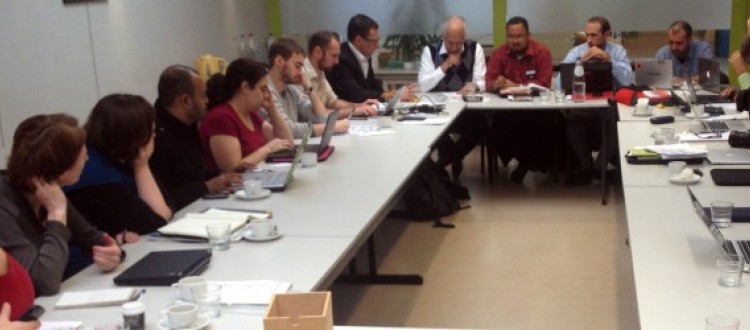
The civil society delegation held meetings in various European cities with government officials and delegates from the World Bank as part of the revision process of the Institution’s safeguards.

From 10th to 18th March, FUNDEPS took its place on a civil society delegation which was made up of representatives from South American, Central American and African organisations and supported by the Bank Information Centre, or BIC. The delegation travelled to various European cities (London, Brussels, The Hague and Paris) to participate in a series of work and advocacy meetings as part of therevision process of the social and environmental safeguards which is currently being carried out by the World Bank. These safeguards consist of a series of regulations and procedures which both the Bank and borrowing country must comply with when applying for funding from the Institution and which aim to guarantee that the operations financed by the Bank don’t have social and/or environmental impacts on the places where they’re carried out. (See World Bank Safeguard Policies).

There are two opposing perspectives in the revision process of the social and environmental safeguards. On the one hand, civil society organisations are looking to raise these standards to ensure that operations carried out by the World Bank respect human rights and guarantee environmental protection. And on the other hand, the Bank is looking to improve its competitiveness against other financial institutions which are supporting increasingly larger projects.

As well as holding private meetings with government officials, European representatives and executive directors of the World Bank, the delegation took part in meetings and forums within civil society, such as the international meeting, EuroIFInet, which was held on 12th and 13th March in the city of Brussels. The emphasis in those meetings was placed, amongst other things, on the need for the safeguards to adopt the highest international regulations and standards and to cover all of the Bank’s operations in a comprehensive manner.

Gonzalo Roza, the Coordinator for FUNDEPS’ Global Governance Programme, stated that, “The main objective behind FUNDEPS’ involvement on this delegation was to communicate to the Bank’s representatives and European officials the concerns and perspectives that exist in Latin America regarding the revision process of the Institution’s safeguards. Amongst these concerns, what stands out above all is the potential for the World Bank’s safeguarding framework to become diluted or weakened to facilitate the approval of funding given to projects and, in doing so, to recover part of the land that the World Bank is losing as a result of the increase in the number of investments from new development banks which have less stringent safeguarding regulations (or which have none at all), such as, for example, the Brazilian Development Bank (BNDES), the Development Bank of Latin America (CAF) and the China Development Bank (CDB). Let’s not forget that a large amount of the projects financed by this kind of institution have strong social and environmental impacts on the countries in which they’re undertaken. Hence the importance acquired by a safeguarding framework which is robust and effective enough to be able to ensure that human rights are respected and the environment is protected”.

It’s worth pointing out that a potential dilution of the World Bank’s safeguards would have a negative impact on Latin American civil society, not only concerning the projects financed by the World Bank in the region, but also with respect to the funding from other institutions like those mentioned above, because the World Bank is generally seen as a role model by other financial institutions.

In this sense, it’s important that civil society makes its voice heard loud and clear in this revision process by demanding that the World Bank adopt safeguards that are even more robust and comprehensive than the existing ones, including issues which aren’t considered by the current safeguards, such as human rights and climate change, to name a few.

For more information:

– BIC Coordinates Series of Safeguards Meetings in Europe with Southern Civil Society Partners (31-03-2014) – BIC

– World Bank Safeguards Review – BIC

Contact:

Gonzalo Roza – Coordinator for the Global Governance Programme

gon.roza@fundeps.org

Translated by: Thomas McGuinn

16 de April de 2014
Share this entry
  • Share on Facebook
  • Share on X
  • Share on WhatsApp
  • Share on LinkedIn
  • Share by Mail
https://fundeps.org/wp-content/uploads/2014/04/european-advocacy-trip-march-2014-1.jpg 330 750 Fundeps.org https://fundeps.org/wp-content/uploads/2026/04/logo-2026-300x120.png Fundeps.org2014-04-16 17:52:112024-06-30 16:04:16FUNDEPS Joins European Representatives from the World Bank on a Delegation to Shape Future Safeguarding Policies

Tags

Access to Information Access to Justice BID Chinese Investments Citizen Participation Democracy ENTs Environment Environmental Democracy Gender Global Governance Health Healthy nutrition IFIs Infrastructure Financing Legal Interruption of Pregnancy Sexual and Reproductive Rights Social and Environmental Standards Tobacco Control Transparency
See all tags

Acuerdo de Escazú

Emergencia Agroquímica

MOCI - monitoreo ciudadano en proyectos de infraestructura

{el entramado} Contamos historias. Acercamos Realidades.

Instagram

fundepsargentina

Trabajamos para que se garanticen los derechos humanos 🌱⚖️🗣️🌈💜🚭🍎
Promovemos la equidad de #genero, el derecho a la #salud y un #ambiente sano.

Y todo esto quedó en un papel? No. Ya hay avances. Y todo esto quedó en un papel? No. Ya hay avances. Pero tampoco está resuelto.

Hay plantas de tratamiento que comenzaron a funcionar, obras de cloacas terminadas y establecimientos que fueron auditados por posible contaminación.

➡️ También quedan medidas por cumplir y avances que necesitan seguimiento. Porque mostrar lo que se hizo también sirve para saber qué falta.

Para seguir acompañando este proceso y sosteniendo el trabajo que todavía queda, necesitamos tu apoyo.

Doná hoy.
La Justicia no solo dijo que el lago está contamin La Justicia no solo dijo que el lago está contaminado. También ordenó qué tiene que hacer el Estado para empezar a sanearlo.

La sentencia establece medidas concretas, con plazos y obligaciones que involucran a la Provincia y a los municipios de la cuenca.

Entre ellas: avanzar con las obras cloacales, controlar los vertidos contaminantes, fortalecer la fiscalización y garantizar espacios de participación y transparencia.

Deslizá para conocer qué tiene que pasar para que el saneamiento avance.

Ayudanos a seguir trabajando para que estas medidas se cumplan. Doná hoy.
Hoy, 4 de septiembre, es el Día Mundial de la Salu Hoy, 4 de septiembre, es el Día Mundial de la Salud Sexual. Una fecha que nos invita a volver sobre las discusiones que atraviesan el acceso a la salud sexual y (no) reproductiva: condiciones de acceso para que sea integral y de calidad, desde un enfoque de derechos y con perspectiva de diversidad.

En el mes de junio nos encontramos en el 3° Encuentro Provincial de Redes de Compromiso y Cuidados: Salud sexual Integral con Perspectiva de Diversidad para poner en común experiencias y preguntas sobre estos desafíos.

Hoy recuperamos algunas de las voces que fueron parte de las exposiciones de ese encuentro para volver sobre dos preguntas que siguen abiertas:
¿Cuál es hoy el debate más urgente cuando hablamos de salud integral y diversidad?
¿Por qué es importante encontrarnos en este contexto?

Porque garantizar el derecho a la salud también implica seguir encontrándonos para pensar, discutir y construir respuestas colectivas.
🕰Han pasado 84 años… y seguimos hablando del Lago 🕰Han pasado 84 años… y seguimos hablando del Lago San Roque.
Bueno, no tanto. Pero sí llevamos más de cuatro años trabajando para que el saneamiento de la cuenca deje de ser una promesa y se convierta en una realidad.

En 2022 presentamos un amparo colectivo junto a la comunidad de la cuenca. En abril de 2025, la Justicia reconoció el daño ambiental y ordenó sanear el lago.

❗¿El problema? Un fallo no alcanza por sí solo. El Plan de Saneamiento ya está en marcha y todavía queda mucho por hacer.

En este carrusel te contamos qué pasó y por qué seguimos hablando del Lago San Roque.

Si querés que este trabajo continúe, podés sumarte con una donación. [link en bio]
Follow on Instagram

Twitter

Tweets por @fundeps

Newsletter Subscription

    Fundeps. Córdoba (CP X5000JZH), Argentina. info@fundeps.org
    • Link to X
    • Link to Facebook
    • Link to Instagram
    • Link to Mail
    • Link to Youtube
    • Link to LinkedIn
    • Link to TikTok
    Link to: The IADB Changes Its Structure during a Meeting that Excluded Civil Society Link to: The IADB Changes Its Structure during a Meeting that Excluded Civil Society The IADB Changes Its Structure during a Meeting that Excluded Civil Society Link to: Implementation of a Freedom of Information Policy for The Brazilian Development Bank Link to: Implementation of a Freedom of Information Policy for The Brazilian Development Bank Implementation of a Freedom of Information Policy for The Brazilian Development...
    Scroll to top Scroll to top Scroll to top