• ES
  • EN
Fundeps
  • About Fundeps
  • Team
  • Working areas
    • Environment
    • Democracy
    • Gender
    • Global Gorvernance
    • Health
  • News
  • Publications
  • DONATE
  • Click to open the search input field Click to open the search input field Search
  • Menu Menu
Global Governance, News

The IDB approves a New Access to Information Policy
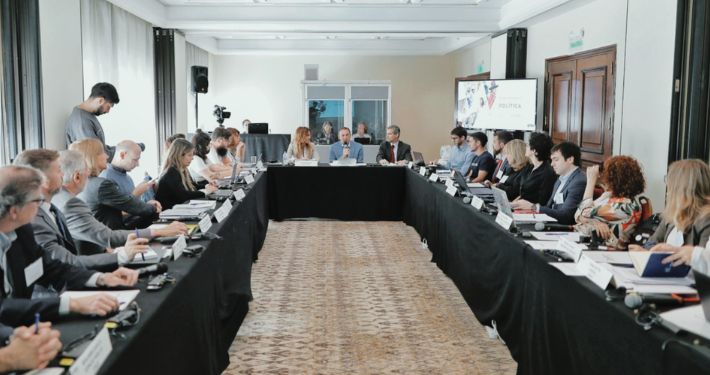
The Inter-American Development Bank (IDB) took the final step of a process that lasted several years and culminated with the approval of a new Access to Information Policy (PAI) by the Board of Executive Directors.

“Below, we offer a google translate version of the original article in Spanish. This translation may not be accurate but serves as a general presentation of the article. For more accurate information, please switch to the Spanish version of the website. In addition, feel free to directly contact in English the person mentioned at the bottom of this article with regards to this topic”.

The new policy, approved on July 26, 2024, which updates the current IDB policy, will go into effect on September 1, 2025

At Fundeps, together with other regional organizations, we actively participate in the process of updating and adapting the IDB’s PAI, sending comments and suggestions to each of the previous versions, as well as participating in various public consultations to strengthen the right. access to information and transparency in the Bank.

As improvements introduced to the new Bank Policy, mention can be made of the possibility of making anonymous information requests, the reduction in the IDB’s response times to information requests and the work that the institution is doing to increase the usability of the information. and the use of more accessible formats. Even so, it is imperative to consider that access to Information and Communications Technologies (ICTs) is not universal or uniform.

Likewise, there are essential aspects that the PAI, or its next updates, must incorporate, such as:

  • The approach to access to information as a fundamental human right and, therefore, a pillar of the PAI itself.
  • The harmonization of the Access to Information Policy with the Escazú Agreement.
  • Eliminate ambiguities in the language of the standard, mainly in the “Exceptions” section, which must be more precise and establish clear criteria for its application.

Likewise, it is worrying that some criteria and parameters that will make the PAI effective are addressed in the Implementation Guidelines. In this way, the effectiveness and strength of the PAI will depend greatly on these Guidelines, which do not require mandatory compliance, as the PAI itself does.

Likewise, it should be mentioned that there were significant delays in the PAI review process. At the end of 2019, the IDB began this process that was suspended months later. Subsequently, in April 2022, it was resumed and the Bank presented a new policy proposal to the Board of Executive Directors, which was approved for public consultation with interested parties. It was only in January 2024 when the final version of the New Information Access Policy was approved, which did not take into account many of the comments and suggestions raised by civil society within the framework of the in-person and virtual consultations organized by the own bank.

As a next step, after the approval of the Access to Information Policy, the Implementation Guidelines for its application will be prepared, which, according to the IDB, will be circulated in a timely manner for comments from the public and civil society organizations. Given the great importance of these Guidelines, especially in this case, we hope that this will be the case and we reiterate the importance of the Bank placing people at the center and using the possibility of making effective and full the exercise of the right of access to information , also strengthening in this process the effective participation of civil society organizations, communities and people affected by their projects and populations in vulnerable situations.


More Information

  • New IDB Access to Information Policy (2024)
  • IDB | Update of the access to information policy (2024)
  • IDB launches new Access to Information Policy to improve transparency and accountability – IDB (2024)
  • Comments to strengthen the IDB’s Access to Information Policy – Fundeps (2023)
  • Recommendations and comments from Civil Society to the Draft Access to Information Policy of the Inter-American Development Bank – Fundeps (2022)
  • IDB began public consultation for the new Access to Information Policy – Fundeps (2022)
  • Shortcomings in the Access to Information Policy of the Inter-American Development Bank (2022)

Contact

Gonzalo Roza, gon.roza@fundeps.org

26 de July de 2024
Tags: Access to Information, BID, Global Governance, IFIs
Share this entry
  • Share on Facebook
  • Share on X
  • Share on WhatsApp
  • Share on LinkedIn
  • Share by Mail
https://fundeps.org/wp-content/uploads/2024/07/Web-1-3.jpg 375 710 Admi2024FunDEPS https://fundeps.org/wp-content/uploads/2026/04/logo-2026-300x120.png Admi2024FunDEPS2024-07-26 17:19:222024-11-14 13:14:00The IDB approves a New Access to Information Policy
You might also like
Concerns on the ICIM potential weakening in the review process being carried out by the IDB
Argentina seeks to agree with China an investment plan for 30 billion dollars
Lithium and Transparency in Argentina
Historic: The Inter-American Court recognizes the human right to a healthy climate
Virtual meetings on Gender and International Financial Institutions
What the G20 summit in Argentina left us
We participate in the consultations of the new IDB Environmental and Social Policy Framework
The V Regional Forum on Business and Human Rights for Latin America and the Caribbean was held

Tags

Access to Information Access to Justice BID Chinese Investments Citizen Participation Democracy ENTs Environment Environmental Democracy Gender Global Governance Health Healthy nutrition IFIs Infrastructure Financing Legal Interruption of Pregnancy Sexual and Reproductive Rights Social and Environmental Standards Tobacco Control Transparency
See all tags

Acuerdo de Escazú

Emergencia Agroquímica

MOCI - monitoreo ciudadano en proyectos de infraestructura

{el entramado} Contamos historias. Acercamos Realidades.

Instagram

fundepsargentina

Trabajamos para que se garanticen los derechos humanos 🌱⚖️🗣️🌈💜🚭🍎
Promovemos la equidad de #genero, el derecho a la #salud y un #ambiente sano.

Y todo esto quedó en un papel? No. Ya hay avances. Y todo esto quedó en un papel? No. Ya hay avances. Pero tampoco está resuelto.

Hay plantas de tratamiento que comenzaron a funcionar, obras de cloacas terminadas y establecimientos que fueron auditados por posible contaminación.

➡️ También quedan medidas por cumplir y avances que necesitan seguimiento. Porque mostrar lo que se hizo también sirve para saber qué falta.

Para seguir acompañando este proceso y sosteniendo el trabajo que todavía queda, necesitamos tu apoyo.

Doná hoy.
La Justicia no solo dijo que el lago está contamin La Justicia no solo dijo que el lago está contaminado. También ordenó qué tiene que hacer el Estado para empezar a sanearlo.

La sentencia establece medidas concretas, con plazos y obligaciones que involucran a la Provincia y a los municipios de la cuenca.

Entre ellas: avanzar con las obras cloacales, controlar los vertidos contaminantes, fortalecer la fiscalización y garantizar espacios de participación y transparencia.

Deslizá para conocer qué tiene que pasar para que el saneamiento avance.

Ayudanos a seguir trabajando para que estas medidas se cumplan. Doná hoy.
Hoy, 4 de septiembre, es el Día Mundial de la Salu Hoy, 4 de septiembre, es el Día Mundial de la Salud Sexual. Una fecha que nos invita a volver sobre las discusiones que atraviesan el acceso a la salud sexual y (no) reproductiva: condiciones de acceso para que sea integral y de calidad, desde un enfoque de derechos y con perspectiva de diversidad.

En el mes de junio nos encontramos en el 3° Encuentro Provincial de Redes de Compromiso y Cuidados: Salud sexual Integral con Perspectiva de Diversidad para poner en común experiencias y preguntas sobre estos desafíos.

Hoy recuperamos algunas de las voces que fueron parte de las exposiciones de ese encuentro para volver sobre dos preguntas que siguen abiertas:
¿Cuál es hoy el debate más urgente cuando hablamos de salud integral y diversidad?
¿Por qué es importante encontrarnos en este contexto?

Porque garantizar el derecho a la salud también implica seguir encontrándonos para pensar, discutir y construir respuestas colectivas.
🕰Han pasado 84 años… y seguimos hablando del Lago 🕰Han pasado 84 años… y seguimos hablando del Lago San Roque.
Bueno, no tanto. Pero sí llevamos más de cuatro años trabajando para que el saneamiento de la cuenca deje de ser una promesa y se convierta en una realidad.

En 2022 presentamos un amparo colectivo junto a la comunidad de la cuenca. En abril de 2025, la Justicia reconoció el daño ambiental y ordenó sanear el lago.

❗¿El problema? Un fallo no alcanza por sí solo. El Plan de Saneamiento ya está en marcha y todavía queda mucho por hacer.

En este carrusel te contamos qué pasó y por qué seguimos hablando del Lago San Roque.

Si querés que este trabajo continúe, podés sumarte con una donación. [link en bio]
Follow on Instagram

Twitter

Tweets por @fundeps

Newsletter Subscription

    Fundeps. Córdoba (CP X5000JZH), Argentina. info@fundeps.org
    • Link to X
    • Link to Facebook
    • Link to Instagram
    • Link to Mail
    • Link to Youtube
    • Link to LinkedIn
    • Link to TikTok
    Link to: Marcos Juárez’s health remains at risk: statement on fumigation protection Link to: Marcos Juárez’s health remains at risk: statement on fumigation protection Marcos Juárez’s health remains at risk: statement on fumigation prot... Link to: Good practices in the care of pregnancy termination Link to: Good practices in the care of pregnancy termination Good practices in the care of pregnancy termination
    Scroll to top Scroll to top Scroll to top