• ES
  • EN
Fundeps
  • About Fundeps
  • Team
  • Working areas
    • Environment
    • Democracy
    • Gender
    • Global Gorvernance
    • Health
  • News
  • Publications
  • DONATE
  • Click to open the search input field Click to open the search input field Search
  • Menu Menu
Global Governance, News

We were present at the Conference: ‘Rethinking the role of foreign investment and the New Silk Road in Latin America’

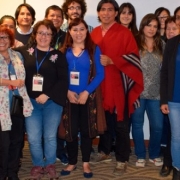
On March 2-3, the conference on foreign investment and the New Silk Road in Latin America and the Caribbean was held on the campus of the National University of San Martín in Buenos Aires.

“Below, we offer a google translate version of the original article in Spanish. This translation may not be accurate but serves as a general presentation of the article. For more accurate information, please switch to the Spanish version of the website. In addition, feel free to directly contact in English the person mentioned at the bottom of this article with regards to this topic”.

On March 2 and 3, the conference ‘Rethinking the role of foreign investment and the New Silk Road in Latin America and the Caribbean‘ organized by Transnational was held on the campus of the National University of San Martín (UNSAM). Institute (TNI) and UNSAM.

Both days, exponents participated not only from Argentina, but also the presence of specialists from Chile, Bolivia, Brazil, Mexico and Peru. On the first day of the conference, issues such as the role of foreign direct investment (FDI) for sustainable development in the current context of climate crisis were addressed; FDI in Latin America, including Chinese investments and the key sectors in which they are located. In addition, the potential implications of the region for the New Silk Road were discussed.

As the main conclusions of the first day, we can mention China’s need for extractive primary resources, the main reason for its relationship with Latin America and the Caribbean. The transfer of Foreign Direct Investment (FDI) of environmental impacts to the countries of the region. Finally, the continued violation of Chinese investments to Convention 169 of the International Labor Organization (ILO) on the right to free, prior and informed consultation for indigenous peoples.

On the other hand, on the second day there was a greater exchange of opinions between the speakers and the public present, respecting the topics agreed in the Program, such as Chinese FDI in the region, specifically the characteristics, impacts and challenges they face. Latin American countries, with emphasis on Argentina, Brazil, Mexico, Bolivia and Chile. Lastly, the topics that generated the greatest exchange of opinions were the relationship FDI-sustainable development models and, on the other hand, what is the type of FDI that we want, that is, if it can contribute to national development taking into account ecological sustainability .

Regarding the second day, the questions that had great force were those regarding which pattern China follows in the different countries of the region. Thus, issues such as the growing demand for lithium by China, its association with companies from other states to obtain their technology (technology transfer), the expansion of bi-oceanic projects, hydroelectric dam projects and the increase in ecoterritorial conflicts, due to mention some.

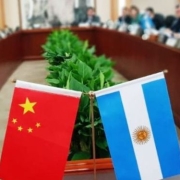
In our region, in recent decades, Chinese investments have grown exponentially, exceeding investments by traditional multilateral organizations (such as the World Bank and IDB). With these investments comes the lack of controls, environmental and social impacts, and human rights violations. However, the asymmetric relationship that exists between the region and the Asian country cannot be overlooked, reproducing the classic unequal patterns of relationships that have characterized Latin America and the Caribbean, formerly with the United States and Europe, now with the People’s Republic from China.

Consequently, it is important to create greater articulation between civil society, academia, affected communities and all those interested parties to demand a more egalitarian form of relationship and compliance with environmental and social standards, absent so far. It is within this framework that our participation in the conference and Fundeps’ interest in strengthening ties with both national and international academic institutions that address the issue of Chinese investment and its impact on the environment and human rights are framed.

More information

  • Overview of Chinese investments in Latin America: The cases of Argentina, Colombia, Mexico and Peru – GREFI
  • China-Argentina relations under Macri administration: do we change? – Fundeps
  • Projects with Chinese financing in Argentina: 8 emblematic cases – Fundeps
  • Analysis of the China China-Argentina Comprehensive Five-Year Plan for Cooperation in Infrastructure (2017-2021) ’- Fundeps
  • AIIB’s role in the New Green Silk Road – Fundeps

Author

  • Sofia Brocanelli

Contact

  • Gonzalo Roza, gon.roza@fundeps.org
18 de March de 2020
Tags: Chinese Investments, Global Governance, Infrastructure Financing
Share this entry
  • Share on Facebook
  • Share on X
  • Share on WhatsApp
  • Share on LinkedIn
  • Share by Mail
0 0 Comunicaciones Fundeps https://fundeps.org/wp-content/uploads/2026/04/logo-2026-300x120.png Comunicaciones Fundeps2020-03-18 14:50:382024-08-14 19:51:15We were present at the Conference: ‘Rethinking the role of foreign investment and the New Silk Road in Latin America’
You might also like
The end of a historical tradition in the IDB presidency?
Regulation of Public-Private Partnerships in Argentina: risks and opportunities
We participated in the workshop on advocacy actions against Chinese investments in the region
China-driven financial initiatives: access to information and accountability
Position towards the new Environmental and Social Framework of the WB.
IDB: the president was dismissed and the possibility opens for a Latin American woman
IDB Invest’s Access to Information Policy Implementation Guidelines Comments and Recommendations
Nuclear cooperation between Argentina and China advances

Tags

Access to Information Access to Justice BID Chinese Investments Citizen Participation Democracy ENTs Environment Environmental Democracy Gender Global Governance Health Healthy nutrition IFIs Infrastructure Financing Legal Interruption of Pregnancy Sexual and Reproductive Rights Social and Environmental Standards Tobacco Control Transparency
See all tags

Acuerdo de Escazú

Emergencia Agroquímica

MOCI - monitoreo ciudadano en proyectos de infraestructura

{el entramado} Contamos historias. Acercamos Realidades.

Instagram

fundepsargentina

Trabajamos para que se garanticen los derechos humanos 🌱⚖️🗣️🌈💜🚭🍎
Promovemos la equidad de #genero, el derecho a la #salud y un #ambiente sano.

TE NECESITAMOS 🧡 Para seguir de cerca el Plan de TE NECESITAMOS 🧡

Para seguir de cerca  el Plan de Saneamiento del Lago San Roque, hay que mirar de cerca todo el proceso. Revisamos información técnica, hacemos seguimiento de la causa y elaboramos informes públicos sobre el cumplimiento del Plan.

Sostener este trabajo en el tiempo requiere recursos. Tu aporte hace posible que continúe.

Doná hoy! (link en bio)
Y todo esto quedó en un papel? No. Ya hay avances. Y todo esto quedó en un papel? No. Ya hay avances. Pero tampoco está resuelto.

Hay plantas de tratamiento que comenzaron a funcionar, obras de cloacas terminadas y establecimientos que fueron auditados por posible contaminación.

➡️ También quedan medidas por cumplir y avances que necesitan seguimiento. Porque mostrar lo que se hizo también sirve para saber qué falta.

Para seguir acompañando este proceso y sosteniendo el trabajo que todavía queda, necesitamos tu apoyo.

Doná hoy.
La Justicia no solo dijo que el lago está contamin La Justicia no solo dijo que el lago está contaminado. También ordenó qué tiene que hacer el Estado para empezar a sanearlo.

La sentencia establece medidas concretas, con plazos y obligaciones que involucran a la Provincia y a los municipios de la cuenca.

Entre ellas: avanzar con las obras cloacales, controlar los vertidos contaminantes, fortalecer la fiscalización y garantizar espacios de participación y transparencia.

Deslizá para conocer qué tiene que pasar para que el saneamiento avance.

Ayudanos a seguir trabajando para que estas medidas se cumplan. Doná hoy.
Hoy, 4 de septiembre, es el Día Mundial de la Salu Hoy, 4 de septiembre, es el Día Mundial de la Salud Sexual. Una fecha que nos invita a volver sobre las discusiones que atraviesan el acceso a la salud sexual y (no) reproductiva: condiciones de acceso para que sea integral y de calidad, desde un enfoque de derechos y con perspectiva de diversidad.

En el mes de junio nos encontramos en el 3° Encuentro Provincial de Redes de Compromiso y Cuidados: Salud sexual Integral con Perspectiva de Diversidad para poner en común experiencias y preguntas sobre estos desafíos.

Hoy recuperamos algunas de las voces que fueron parte de las exposiciones de ese encuentro para volver sobre dos preguntas que siguen abiertas:
¿Cuál es hoy el debate más urgente cuando hablamos de salud integral y diversidad?
¿Por qué es importante encontrarnos en este contexto?

Porque garantizar el derecho a la salud también implica seguir encontrándonos para pensar, discutir y construir respuestas colectivas.
Follow on Instagram

Twitter

Tweets por @fundeps

Newsletter Subscription

    Fundeps. Córdoba (CP X5000JZH), Argentina. info@fundeps.org
    • Link to X
    • Link to Facebook
    • Link to Instagram
    • Link to Mail
    • Link to Youtube
    • Link to LinkedIn
    • Link to TikTok
    Link to: We participate in the consultations of the new IDB Environmental and Social Policy Framework Link to: We participate in the consultations of the new IDB Environmental and Social Policy Framework We participate in the consultations of the new IDB Environmental and Social... Link to: A quarantine with rights Link to: A quarantine with rights A quarantine with rights
    Scroll to top Scroll to top Scroll to top