• ES
  • EN
Fundeps
  • About Fundeps
  • Team
  • Working areas
    • Environment
    • Democracy
    • Gender
    • Global Gorvernance
    • Health
  • News
  • Publications
  • DONATE
  • Click to open the search input field Click to open the search input field Search
  • Menu Menu
Gender, News

Care as an autonomous human right: contributions for its interpretation
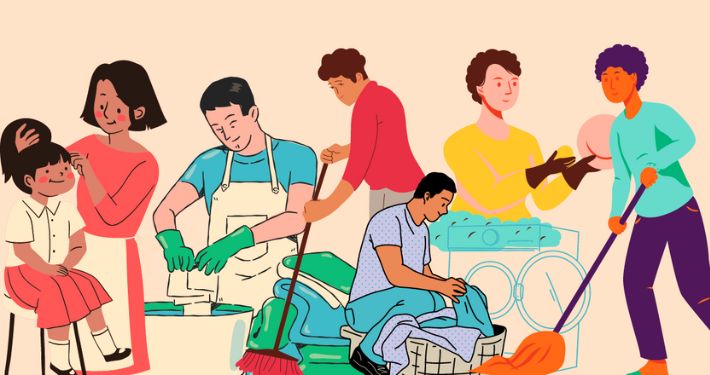
We present three amicus curiae before the Inter-American Court of Human Rights to offer some considerations regarding care as a human right. Our participation was part of a collective process that synthesizes specialized knowledge.

“Below, we offer a google translate version of the original article in Spanish. This translation may not be accurate but serves as a general presentation of the article. For more accurate information, please switch to the Spanish version of the website. In addition, feel free to directly contact in English the person mentioned at the bottom of this article with regards to this topic”.

In January, the Argentine State asked the Inter-American Court of Human Rights (IAC Court) to issue a ruling regarding “The content and scope of the right to care and its interrelation with other rights.” What motivated this request, according to the different ministries involved, was the opportunity to address gender inequalities by building more fair and equitable standards in terms of care.

Based on this request, the Inter-American Court will issue an Advisory Opinion, previously allowing the involvement of other actors in the interpretative process of this right. At Fundeps we have taken part, along with other spaces, in the construction of a judicial tool called amicus curiae, which enables voluntary participation through a technical-legal opinion. Likewise, we have adhered to the documents prepared by the CLACAI Legal Network and the Red DESC.

This collective work process brought together activists, professors from Latin American and European universities, people from academia and experts from different committees, feminist and human rights organizations. The document presented seeks to provide elements to the court regarding care as a human right: to care, to be cared for, and to self-care.

The document reconstructs the conception of care as a need that transcends interpersonal relationships, in order to consider it “as an inherent process linked to the sustainability of life and well-being.” From this position, the amicus maintains the right to care as an autonomous right that, at the same time, maintains interdependencies with other rights. Thus, considerations were offered regarding its connection with the right to health, sexual and (non) reproductive health, sexual diversity, social security, a healthy environment, the territories and the city. Furthermore, the amicus explained the importance of having systems of indicators – quantitative and qualitative – of human rights, which allow States to produce complete and systematized information, for monitoring compliance with the right to care.

Regarding the enforceability of the State’s obligations, it was stated that the respect, protection and fulfillment of women’s right to non-discrimination and the enjoyment of equality is an obligation derived from this autonomous right. However, it was expressed that it becomes necessary to take into account, from an intersectional perspective, those obligations derived from the right to care in sectors most exposed to vulnerability: people with disabilities and mental health problems, migrants and indigenous peoples.

As a point to highlight, our presentation also raised the importance of community care work, establishing that it takes particular forms in soup kitchens and soup kitchens, picnic areas, kindergartens, medical rooms, among others, to face economic crises. In this sense, the organization mainly of women and dissidents in territories where social inequalities are evident, this type of care allows social reproduction and the sustainability of life.

In conclusion, we maintained that the right to care is an autonomous right that must be guaranteed by States under conditions of universality, equality and non-discrimination. This means the revaluation of care as an independent right that requires both enforceability towards the State, as well as co-responsibility and distribution, involving both society as a whole and the market.


See Amicus Curiae

See Amicus Curiae – Red DESC

See Amicus Curiae – CLACAI


Author

Carola Bertona

Contacto

Cecilia Bustos Moreschi, cecilia.bustos.moreschi@fundeps.org.
18 de December de 2023
Tags: Gender
Share this entry
  • Share on Facebook
  • Share on X
  • Share on WhatsApp
  • Share on LinkedIn
  • Share by Mail
https://fundeps.org/wp-content/uploads/2023/12/W-1.jpg 375 710 Admi2024FunDEPS https://fundeps.org/wp-content/uploads/2026/04/logo-2026-300x120.png Admi2024FunDEPS2023-12-18 16:04:012024-11-14 13:14:07Care as an autonomous human right: contributions for its interpretation
You might also like
The United Nations CEDAW Committee listened to civil society organizations
The acquittal of “Belén”
Practices taken care of for the care of the interruption of pregnancy
Reverse the update of the ILE protocol
Encuentro de profesionales de la salud sobre aborto seguro con enfoque de diversidad y derecho We held the second meeting “Networks of Commitment and Care”
Aborting is legal and accompanying too
Blame it on the media
Aborting with rights during the pandemic: Legal Termination of Pregnancy as an essential service

Tags

Access to Information Access to Justice BID Chinese Investments Citizen Participation Democracy ENTs Environment Environmental Democracy Gender Global Governance Health Healthy nutrition IFIs Infrastructure Financing Legal Interruption of Pregnancy Sexual and Reproductive Rights Social and Environmental Standards Tobacco Control Transparency
See all tags

Acuerdo de Escazú

Emergencia Agroquímica

MOCI - monitoreo ciudadano en proyectos de infraestructura

{el entramado} Contamos historias. Acercamos Realidades.

Instagram

fundepsargentina

Trabajamos para que se garanticen los derechos humanos 🌱⚖️🗣️🌈💜🚭🍎
Promovemos la equidad de #genero, el derecho a la #salud y un #ambiente sano.

TE NECESITAMOS 🧡 Para seguir de cerca el Plan de TE NECESITAMOS 🧡

Para seguir de cerca  el Plan de Saneamiento del Lago San Roque, hay que mirar de cerca todo el proceso. Revisamos información técnica, hacemos seguimiento de la causa y elaboramos informes públicos sobre el cumplimiento del Plan.

Sostener este trabajo en el tiempo requiere recursos. Tu aporte hace posible que continúe.

Doná hoy! (link en bio)
Y todo esto quedó en un papel? No. Ya hay avances. Y todo esto quedó en un papel? No. Ya hay avances. Pero tampoco está resuelto.

Hay plantas de tratamiento que comenzaron a funcionar, obras de cloacas terminadas y establecimientos que fueron auditados por posible contaminación.

➡️ También quedan medidas por cumplir y avances que necesitan seguimiento. Porque mostrar lo que se hizo también sirve para saber qué falta.

Para seguir acompañando este proceso y sosteniendo el trabajo que todavía queda, necesitamos tu apoyo.

Doná hoy.
La Justicia no solo dijo que el lago está contamin La Justicia no solo dijo que el lago está contaminado. También ordenó qué tiene que hacer el Estado para empezar a sanearlo.

La sentencia establece medidas concretas, con plazos y obligaciones que involucran a la Provincia y a los municipios de la cuenca.

Entre ellas: avanzar con las obras cloacales, controlar los vertidos contaminantes, fortalecer la fiscalización y garantizar espacios de participación y transparencia.

Deslizá para conocer qué tiene que pasar para que el saneamiento avance.

Ayudanos a seguir trabajando para que estas medidas se cumplan. Doná hoy.
Hoy, 4 de septiembre, es el Día Mundial de la Salu Hoy, 4 de septiembre, es el Día Mundial de la Salud Sexual. Una fecha que nos invita a volver sobre las discusiones que atraviesan el acceso a la salud sexual y (no) reproductiva: condiciones de acceso para que sea integral y de calidad, desde un enfoque de derechos y con perspectiva de diversidad.

En el mes de junio nos encontramos en el 3° Encuentro Provincial de Redes de Compromiso y Cuidados: Salud sexual Integral con Perspectiva de Diversidad para poner en común experiencias y preguntas sobre estos desafíos.

Hoy recuperamos algunas de las voces que fueron parte de las exposiciones de ese encuentro para volver sobre dos preguntas que siguen abiertas:
¿Cuál es hoy el debate más urgente cuando hablamos de salud integral y diversidad?
¿Por qué es importante encontrarnos en este contexto?

Porque garantizar el derecho a la salud también implica seguir encontrándonos para pensar, discutir y construir respuestas colectivas.
Follow on Instagram

Twitter

Tweets por @fundeps

Newsletter Subscription

    Fundeps. Córdoba (CP X5000JZH), Argentina. info@fundeps.org
    • Link to X
    • Link to Facebook
    • Link to Instagram
    • Link to Mail
    • Link to Youtube
    • Link to LinkedIn
    • Link to TikTok
    Link to: Marcos Juárez: we present a protection for the use of pesticides in populated areas Link to: Marcos Juárez: we present a protection for the use of pesticides in populated areas Marcos Juárez: we present a protection for the use of pesticides in populated... Link to: Two OTP opinions and the Supreme Court’s responsibility to act according to law Link to: Two OTP opinions and the Supreme Court’s responsibility to act according to law Two OTP opinions and the Supreme Court’s responsibility to act according...
    Scroll to top Scroll to top Scroll to top