China-driven financial initiatives: access to information and accountability
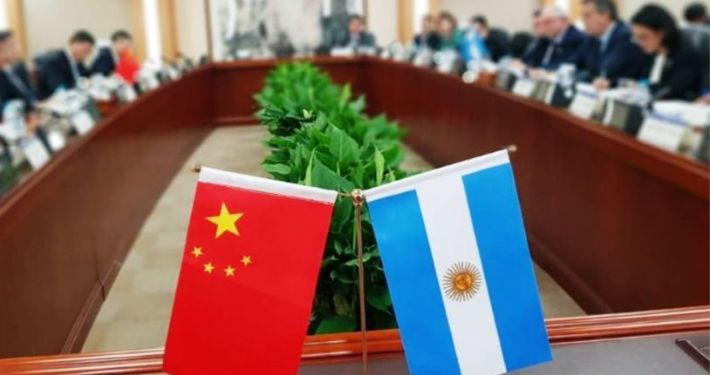
Much of what happens in Argentine foreign policy is linked to China, hand in hand with its growing global influence, which is why it is important to know initiatives such as the Asian Infrastructure Investment Bank and the Belt and Road Initiative. , in which China is its main promoter. At Fundeps we share documents with basic and accessible information about these initiatives, placing emphasis on practical resources to access information and their accountability mechanisms.
“Below, we offer a google translate version of the original article in Spanish. This translation may not be accurate but serves as a general presentation of the article. For more accurate information, please switch to the Spanish version of the website. In addition, feel free to directly contact in English the person mentioned at the bottom of this article with regards to this topic”.
The Belt and Road Initiative (BRI) represents China’s flagship global connectivity and infrastructure development program that aims to boost trade and new political and economic ties with participating nations, primarily emerging and “developing” countries. ”. For its part, the Asian Infrastructure Investment Bank (AIIB) is a multilateral development bank created in 2015 at the initiative of China that currently has more than 100 member countries around the world and finances projects in other regions, such as Latin America and the Caribbean or Africa.
The AIIB is closely linked to the Belt and Road Initiative not only because the processes of formation of these two instruments were promoted by Chinese President Xi Jinping and occurred simultaneously, but also because the AIIB constitutes the main tool financing for projects that are part of the IFR. Likewise, both are part of a process of geopolitical reconfiguration where the center of gravity of the world economy turns towards the Asia Pacific. Furthermore, both have been the subject of criticism since their inception in relation to the negative environmental and social impacts that their projects have generated and the lack of transparency, accountability and citizen participation in their design and implementation.
The role that the AIIB and the IFR play – and will play in the medium-short term – in Argentina is much closer and more tangible than we believe: although they seem like initiatives or actors that are distant and unrelated to the local reality, through Their actions promote or facilitate the implementation of large infrastructure and energy projects in the country that, in turn, have – or may have – a direct or indirect impact on people’s daily lives and may affect social and/or environmental rights. , especially from the populations and communities linked to the projects. In fact, there is already a first approved project in Tierra del Fuego that will be financed by the AIIB for an amount of 65 million dollars and, within the framework of the IFR, there are various projects committed in our country. For this reason, it is essential to monitor them, know how to access information about the projects and how to file a complaint with the Bank’s accountability mechanism.
In addition to this and given the frequent lack of transparency of Chinese banking and the general lack of knowledge about it, at Fundeps we share these updated brochures with summarized information about the AIIB and the Belt and Road Initiative. We also added instructions on how to make a complaint to the Project Affected Persons Mechanism (PPM), the AIIB’s accountability mechanism.
How does the situation influence?
During the current government of Javier Milei, diplomatic ties between both countries have been strained due to the reconfiguration of the new administration’s foreign policy, with greater geopolitical alignment with the United States and the West. We can also mention certain measures such as the decision of the Argentine government to visit the Chinese space base in Neuquén or renounce Argentina’s membership in the BRICS bloc, the brake on infrastructure works with Chinese financing or even statements by the President himself or of Foreign Minister Diana Mondino. This has been reflected, among other things, in the difficulties in the negotiations to renew the swap with China – currency exchange between the central banks of both countries – or in the weakening of the commercial link, which has moved China to fourth place. place as Argentina’s trading partner, currently positioning itself behind Brazil, the European Union (EU) and the United States.
However, it is worth highlighting that the link between Argentina and China continues to be very important, and will continue to be so in the future, regardless of the government in power.
A bilateral relationship of a strategic nature
The bilateral relationship between the People’s Republic of China and Argentina has been strengthening in recent decades and has acquired greater relevance since the 2000s, becoming established, almost 10 years ago, as a Comprehensive Strategic Association. It includes an expansion in the areas of cooperation and covers not only economic and financial aspects but also political, commercial, technological, cultural, health and investment matters. This strengthening of ties was reflected in the incorporation of Argentina to the two initiatives mentioned here.
The signing of a Joint Declaration in 2004 and the Comprehensive Strategic Association in 2014 have been, at the diplomatic level, two unavoidable antecedents to understand Argentina’s entry into the IFR and the AIIB. Given the continuity and long-term projection of the Sino-Argentine link, it can be said that Argentina’s entry into the IFR (in 2022) and the AIIB (from 2021, as a non-regional member), are consistent with the rapprochement and consolidation of bilateral relations since their normalization in 1972 and crystallize this long-standing bond between both countries, posing both opportunities and challenges for our country.
- Document: The Asian Infrastructure Investment Bank and the Belt and Road Initiative: what are they and why do they matter in Argentina?
- Document: How to access information and make a complaint at the Asian Infrastructure Investment Bank and the Belt and Road Initiative?
- Infographic on the Asian Infrastructure Investment Bank.
- Infographic on the Belt and Road Initiative (or “New Silk Road”).
Contact
Gonzalo Roza, gon.roza@fundeps.org