Healthy environments in municipalities: regulatory advances to protect children
Within the framework of the alliance with UNICEF Argentina, Fundeps visited the municipalities of Villaguay, Ezeiza, and Río Tercero, which are part of the Healthy Environments program under the Municipalities United for Children and Adolescents (MUNA) initiative. Each team is making steady progress in developing regulations to strengthen children’s well-being and nutrition, thereby consolidating a local agenda committed to protecting and promoting healthy environments.
Fundeps, in alliance with UNICEF Argentina, supported a key regulatory-strengthening process throughout 2025 to promote health-enhancing environments in various communities across the country.
During September and October, we visited the municipalities of Villaguay (Entre Ríos), Ezeiza (Buenos Aires), and Río Tercero (Córdoba) with the aim of deepening our work with the MUNA teams that sustain on-the-ground actions focused on promoting health and adequate nutrition, especially for children. At these meetings, we shared with local authorities the progress made and the challenges faced in designing local legal tools that seek to give solidity, continuity, and reach to public policies linked to health-promoting environments.
Municipalities leading the way
The experiences of Villaguay, Ezeiza, and Río Tercero show the commitment of local governments to moving forward with comprehensive policies that improve community well-being. Each municipality is implementing actions to promote physical activity, expand access to healthy foods in educational institutions and public spaces, and strengthen food and nutritional education processes.
In 2025, these localities took on the challenge of developing local legal instruments that would allow them to consolidate and expand these initiatives with a rights-based, child-centered approach. Fundeps and UNICEF provided technical guidance, offering evidence, regulatory references, and relevant examples.
These municipalities now have the opportunity to chart a path toward stronger protection of the right to health and adequate nutrition, ensuring that future generations grow up in healthier, safer, and more equitable environments.
The importance of promoting healthy environments
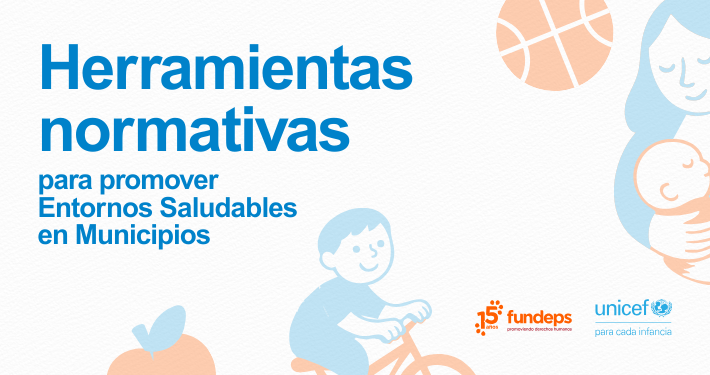
Fundeps, together with UNICEF, developed the technical document “Regulatory tools to promote healthy environments in municipalities,” aimed at guiding local regulatory processes to protect the rights to health, adequate nutrition, and a dignified childhood.
This document, based on recommendations from human rights organizations and the best available scientific evidence, recognizes that creating environments that support health is a public health priority due to its direct impact on quality of life and on the prevention of non-communicable chronic diseases (NCDs), the leading cause of death in Argentina.
According to the World Health Organization (WHO), healthy environments are those that reduce risks, strengthen people’s care capacities, and promote autonomy in the spaces where they live, study, work, and play.
Dietary patterns in Argentina show high consumption of ultra-processed products and low intake of fruits and vegetables. According to UNICEF and FIC Argentina (2023), only 20% of children and adolescents meet the recommended consumption of fruits and vegetables, while ultra-processed products account for more than 35% of daily calories. Added to this is a high level of sedentary behavior: 64% of the population does not engage in sufficient physical activity, and more than 80% of adolescents do not meet WHO recommendations.
In this context, municipalities play a strategic role in driving policies that transform everyday environments and make it easier to adopt healthy lifestyles.
Why are local ordinances essential?
The report highlights that municipalities are the level of government closest to the population, capable of adapting national and provincial policies to local realities. Having an ordinance on healthy environments allows for:
• Strengthening actions already being carried out by health, education, and social development departments, based on the highest protection standards and a human-rights approach.
• Ensuring the sustainability and continuity of policies beyond changes in administration.
• Defining obligations and responsibilities for each actor involved, as well as sanctions and compliance mechanisms.
• Facilitating the allocation of resources and specific budgets for the issue.
• Promoting intersectoral coordination and citizen participation, ensuring that policies respond to real territorial needs.
Thus, municipal regulations function as tools to institutionalize and protect the progress made in health, nutrition, and child development, creating conditions that endure over time.
Toward sustainable, rights-based local policy
Building healthy environments requires a comprehensive, long-term approach. It involves not only transforming physical spaces but also institutional frameworks, everyday practices, and food culture.
At Fundeps, we continue to support municipalities in this effort, providing technical assistance, training, and reference materials that strengthen their institutional capacities and promote social participation.
Promoting healthy environments ultimately means building fairer, healthier communities where all people—especially children—can fully exercise their rights to health, adequate nutrition, and a dignified life.
Authors:
María Laura Fons
Victoria Sibila
Contact:
Maga Merlo: magamerlov@fundeps.org