• ES
  • EN
Fundeps
  • About Fundeps
  • Team
  • Working areas
    • Environment
    • Democracy
    • Gender
    • Global Gorvernance
    • Health
  • News
  • Publications
  • DONATE
  • Click to open the search input field Click to open the search input field Search
  • Menu Menu
Health, News

Healthy environments in municipalities: regulatory advances to protect children
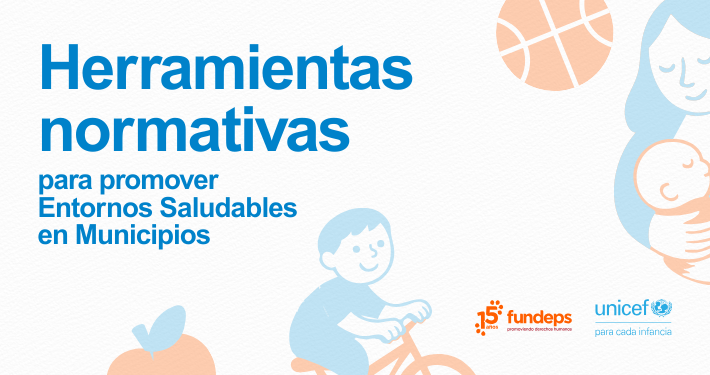
Within the framework of the alliance with UNICEF Argentina, Fundeps visited the municipalities of Villaguay, Ezeiza, and Río Tercero, which are part of the Healthy Environments program under the Municipalities United for Children and Adolescents (MUNA) initiative. Each team is making steady progress in developing regulations to strengthen children’s well-being and nutrition, thereby consolidating a local agenda committed to protecting and promoting healthy environments.

Fundeps, in alliance with UNICEF Argentina, supported a key regulatory-strengthening process throughout 2025 to promote health-enhancing environments in various communities across the country.

During September and October, we visited the municipalities of Villaguay (Entre Ríos), Ezeiza (Buenos Aires), and Río Tercero (Córdoba) with the aim of deepening our work with the MUNA teams that sustain on-the-ground actions focused on promoting health and adequate nutrition, especially for children. At these meetings, we shared with local authorities the progress made and the challenges faced in designing local legal tools that seek to give solidity, continuity, and reach to public policies linked to health-promoting environments.

Municipalities leading the way

The experiences of Villaguay, Ezeiza, and Río Tercero show the commitment of local governments to moving forward with comprehensive policies that improve community well-being. Each municipality is implementing actions to promote physical activity, expand access to healthy foods in educational institutions and public spaces, and strengthen food and nutritional education processes.

In 2025, these localities took on the challenge of developing local legal instruments that would allow them to consolidate and expand these initiatives with a rights-based, child-centered approach. Fundeps and UNICEF provided technical guidance, offering evidence, regulatory references, and relevant examples.

These municipalities now have the opportunity to chart a path toward stronger protection of the right to health and adequate nutrition, ensuring that future generations grow up in healthier, safer, and more equitable environments.

The importance of promoting healthy environments

Fundeps, together with UNICEF, developed the technical document “Regulatory tools to promote healthy environments in municipalities,” aimed at guiding local regulatory processes to protect the rights to health, adequate nutrition, and a dignified childhood.

This document, based on recommendations from human rights organizations and the best available scientific evidence, recognizes that creating environments that support health is a public health priority due to its direct impact on quality of life and on the prevention of non-communicable chronic diseases (NCDs), the leading cause of death in Argentina.

According to the World Health Organization (WHO), healthy environments are those that reduce risks, strengthen people’s care capacities, and promote autonomy in the spaces where they live, study, work, and play.

Dietary patterns in Argentina show high consumption of ultra-processed products and low intake of fruits and vegetables. According to UNICEF and FIC Argentina (2023), only 20% of children and adolescents meet the recommended consumption of fruits and vegetables, while ultra-processed products account for more than 35% of daily calories. Added to this is a high level of sedentary behavior: 64% of the population does not engage in sufficient physical activity, and more than 80% of adolescents do not meet WHO recommendations.

In this context, municipalities play a strategic role in driving policies that transform everyday environments and make it easier to adopt healthy lifestyles.

Why are local ordinances essential?

The report highlights that municipalities are the level of government closest to the population, capable of adapting national and provincial policies to local realities. Having an ordinance on healthy environments allows for:

• Strengthening actions already being carried out by health, education, and social development departments, based on the highest protection standards and a human-rights approach.
• Ensuring the sustainability and continuity of policies beyond changes in administration.
• Defining obligations and responsibilities for each actor involved, as well as sanctions and compliance mechanisms.
• Facilitating the allocation of resources and specific budgets for the issue.
• Promoting intersectoral coordination and citizen participation, ensuring that policies respond to real territorial needs.

Thus, municipal regulations function as tools to institutionalize and protect the progress made in health, nutrition, and child development, creating conditions that endure over time.

Toward sustainable, rights-based local policy

Building healthy environments requires a comprehensive, long-term approach. It involves not only transforming physical spaces but also institutional frameworks, everyday practices, and food culture.

At Fundeps, we continue to support municipalities in this effort, providing technical assistance, training, and reference materials that strengthen their institutional capacities and promote social participation.

Promoting healthy environments ultimately means building fairer, healthier communities where all people—especially children—can fully exercise their rights to health, adequate nutrition, and a dignified life.

Authors:
María Laura Fons
Victoria Sibila

Contact:
Maga Merlo: magamerlov@fundeps.org

26 de November de 2025
Tags: Health, Healthy nutrition
Share this entry
  • Share on Facebook
  • Share on X
  • Share on WhatsApp
  • Share on LinkedIn
  • Share by Mail
https://fundeps.org/wp-content/uploads/2025/11/14.png 375 710 Paula Hernández https://fundeps.org/wp-content/uploads/2026/04/logo-2026-300x120.png Paula Hernández2025-11-26 17:43:112025-11-26 17:51:02Healthy environments in municipalities: regulatory advances to protect children
You might also like
Actions that transform: see our Annuary 2023
The Ministry of Health of the Nation promotes the ratification of the Framework Convention on Tobacco Control
Collective Monitoring: Detect, Record, and Report Illegal Tobacco and Nicotine Advertising on Social Media
Complaint against the Arcor campaign “Your fair share” before the Ombudsman for Children and Adolescents
Impact of COVID-19 on the Sustainable Development Goals
Regulatory tools to promote Healthy Environments in Municipalities
More than 15 Latin American countries requested presidents measures to protect health
Foundation for the Development of Sustainable Policy (FUNDEPS) submits Amicus Curiae in tobacco-related cases in Argentina and Colombia

Tags

Access to Information Access to Justice BID Chinese Investments Citizen Participation Democracy ENTs Environment Environmental Democracy Gender Global Governance Health Healthy nutrition IFIs Infrastructure Financing Legal Interruption of Pregnancy Sexual and Reproductive Rights Social and Environmental Standards Tobacco Control Transparency
See all tags

Acuerdo de Escazú

Emergencia Agroquímica

MOCI - monitoreo ciudadano en proyectos de infraestructura

{el entramado} Contamos historias. Acercamos Realidades.

Instagram

fundepsargentina

Trabajamos para que se garanticen los derechos humanos 🌱⚖️🗣️🌈💜🚭🍎
Promovemos la equidad de #genero, el derecho a la #salud y un #ambiente sano.

Y todo esto quedó en un papel? No. Ya hay avances. Y todo esto quedó en un papel? No. Ya hay avances. Pero tampoco está resuelto.

Hay plantas de tratamiento que comenzaron a funcionar, obras de cloacas terminadas y establecimientos que fueron auditados por posible contaminación.

➡️ También quedan medidas por cumplir y avances que necesitan seguimiento. Porque mostrar lo que se hizo también sirve para saber qué falta.

Para seguir acompañando este proceso y sosteniendo el trabajo que todavía queda, necesitamos tu apoyo.

Doná hoy.
La Justicia no solo dijo que el lago está contamin La Justicia no solo dijo que el lago está contaminado. También ordenó qué tiene que hacer el Estado para empezar a sanearlo.

La sentencia establece medidas concretas, con plazos y obligaciones que involucran a la Provincia y a los municipios de la cuenca.

Entre ellas: avanzar con las obras cloacales, controlar los vertidos contaminantes, fortalecer la fiscalización y garantizar espacios de participación y transparencia.

Deslizá para conocer qué tiene que pasar para que el saneamiento avance.

Ayudanos a seguir trabajando para que estas medidas se cumplan. Doná hoy.
Hoy, 4 de septiembre, es el Día Mundial de la Salu Hoy, 4 de septiembre, es el Día Mundial de la Salud Sexual. Una fecha que nos invita a volver sobre las discusiones que atraviesan el acceso a la salud sexual y (no) reproductiva: condiciones de acceso para que sea integral y de calidad, desde un enfoque de derechos y con perspectiva de diversidad.

En el mes de junio nos encontramos en el 3° Encuentro Provincial de Redes de Compromiso y Cuidados: Salud sexual Integral con Perspectiva de Diversidad para poner en común experiencias y preguntas sobre estos desafíos.

Hoy recuperamos algunas de las voces que fueron parte de las exposiciones de ese encuentro para volver sobre dos preguntas que siguen abiertas:
¿Cuál es hoy el debate más urgente cuando hablamos de salud integral y diversidad?
¿Por qué es importante encontrarnos en este contexto?

Porque garantizar el derecho a la salud también implica seguir encontrándonos para pensar, discutir y construir respuestas colectivas.
🕰Han pasado 84 años… y seguimos hablando del Lago 🕰Han pasado 84 años… y seguimos hablando del Lago San Roque.
Bueno, no tanto. Pero sí llevamos más de cuatro años trabajando para que el saneamiento de la cuenca deje de ser una promesa y se convierta en una realidad.

En 2022 presentamos un amparo colectivo junto a la comunidad de la cuenca. En abril de 2025, la Justicia reconoció el daño ambiental y ordenó sanear el lago.

❗¿El problema? Un fallo no alcanza por sí solo. El Plan de Saneamiento ya está en marcha y todavía queda mucho por hacer.

En este carrusel te contamos qué pasó y por qué seguimos hablando del Lago San Roque.

Si querés que este trabajo continúe, podés sumarte con una donación. [link en bio]
Follow on Instagram

Twitter

Tweets por @fundeps

Newsletter Subscription

    Fundeps. Córdoba (CP X5000JZH), Argentina. info@fundeps.org
    • Link to X
    • Link to Facebook
    • Link to Instagram
    • Link to Mail
    • Link to Youtube
    • Link to LinkedIn
    • Link to TikTok
    Link to: Regulatory tools to promote Healthy Environments in Municipalities Link to: Regulatory tools to promote Healthy Environments in Municipalities Regulatory tools to promote Healthy Environments in Municipalities Link to: Reform of the Intelligence System: A Regulation That Puts Basic Constitutional Guarantees at Risk Link to: Reform of the Intelligence System: A Regulation That Puts Basic Constitutional Guarantees at Risk Reform of the Intelligence System: A Regulation That Puts Basic Constitutional...
    Scroll to top Scroll to top Scroll to top