• ES
  • EN
Fundeps
  • About Fundeps
  • Team
  • Working areas
    • Environment
    • Democracy
    • Gender
    • Global Gorvernance
    • Health
  • News
  • Publications
  • DONATE
  • Click to open the search input field Click to open the search input field Search
  • Menu Menu
Global Governance, News

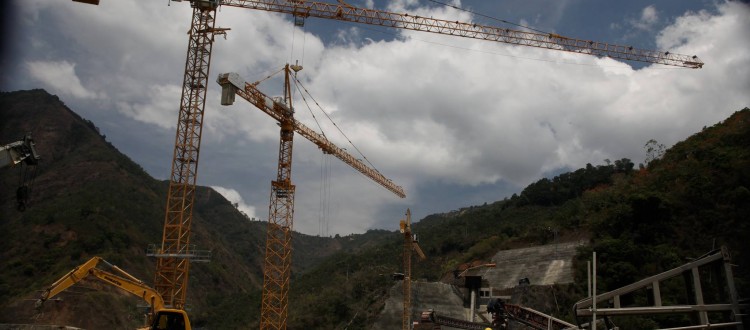
Claim for higher standards of protection of DD.HH. in infrastructure megaprojects
“Below, we offer a google translate version of the original article in Spanish. This translation may not be accurate but serves as a general presentation of the article. For more accurate information, please switch to the Spanish version of the website. In addition, feel free to directly contact in English the person mentioned at the bottom of this article with regards to this topic”

Currently, the Latin American region has witnessed a resounding change in the area of ​​large investments for development. Traditionally, international financial institutions (IFIs) played a fundamental role in supporting development projects in the region. The World Bank Group and the Inter-American Development Bank Group were behind the large investments in the infrastructure area.

This situation has been modified by the increase in the presence of the People’s Republic of China as the main investor in this matter. In this regard, it is necessary to highlight that this situation has brought about a strong discussion regarding social and environmental standards. Traditional IFIs have regulations that, while far from functioning properly in practice, minimally seek to ensure compliance with certain environmental, social and human rights standards in their projects. In the case of Chinese institutions, on the contrary, the situation is more complex, since in most cases these institutions lack transparency or clear and robust regulations in socio-environmental matters.

The consequence of the coexistence of these two groups of institutions – the traditional IFIs and the Chinese ones – has given a negative balance and this has been evidenced in the retreat of the safeguards in organisms such as the World Bank. In this sense, the current financing structure in Latin America has seen its standards fall, generating serious situations of violation of rights when launching large infrastructure projects. During 2016, 200 environmental defenders lost their lives claiming their rights before the advance of major oil and mining projects. 60% of those deaths occurred in Latin America and 40% belonged to indigenous peoples.

From this framework, the Regional Coalition for Transparency and Participation, brought together a group of civil society organizations with the aim of influencing the improvement of socio-environmental standards in infrastructure megaprojects. At the Fourth Regional Meeting on Human Rights, Transparency and Investments, held in Lima on August 30 and 31, the organizations gathered spoke for the urgent need to ensure the rights of environmental defenders. Likewise, the growing cases of corruption around the megaprojects and the lack of access to public information were highlighted.

The statement after the meeting noted that: “several governments have been addressing the right of access to public information as a mere administrative procedure, without taking into account that it is an instrumental human right to other fundamental rights, such as the right to life, to health, to freedom of expression, which contributes to the adequate and timely citizen participation and free and informed prior consultation. In this line, it is worrying that several international initiatives on transparency and access to information can not continue to advance adequately because there is a risk that we seek to lower the standards, as in the case of the Regional Agreement of Principle 10.” The large infrastructure projects then, today remain the scenario for the problematization of issues such as transparency and accountability.

Several governments in Latin America have joined the Open Government Partnership (OGP) and have therefore committed to implementing policies that promote transparency, access to information, accountability and participation. citizen This necessarily implies that these efforts to ‘open the State’ must expand to the environmental and infrastructure branch. Currently this is a pending debt and of the 3000 commitments assumed before OGP, only 54 belong to the field of infrastructure. Chile, Colombia, Costa Rica, the Dominican Republic, El Salvador, Guatemala, Mexico, Panama and Uruguay are the Latin American and Caribbean nations that have elaborated goals in relation to this matter. However, the problems persist and the situation of human rights around the megaprojects has been getting worse. In addition, after the Fourth Meeting of the Regional Coalition, it was highlighted that “it is important that the processes for the elaboration of the Work Plans of the Alliance for Open Government of the countries be truly participatory and with ambitious, measurable and relevant “. This is especially important when it comes to achieving the involvement and monitoring of society in public works processes (throughout the project cycle).

In Argentina this reality is replicated. Currently, large infrastructure projects are being developed that have been involved in corruption cases and whose information was not shared with citizens. We can mention among them: the hydroelectric dams in the Province of Santa Cruz and the trunk gas pipelines in the province of Córdoba.

The generalized situation of human rights around infrastructure megaprojects is alarming. There continue to be numerous cases in which nearby communities are harmed by this type of work. Added to this, the killing of environmental defenders has worsened in the last two years. In this context, we adhere to the Lima Declaration and urge Latin American governments to move towards more transparent policies on this issue.

More information

– Declaration of Lima

Author

Agustina Palencia, agustinapalencia@fundeps.org

Contact

Gonzalo Roza gon.roza@fundeps.org
5 de December de 2017
Tags: Chinese Investments, Global Governance, Infrastructure Financing, Open Government, Transparency
Share this entry
  • Share on Facebook
  • Share on X
  • Share on WhatsApp
  • Share on LinkedIn
  • Share by Mail
https://fundeps.org/wp-content/uploads/2018/01/ds_2-1.jpg 330 750 Fundeps.org https://fundeps.org/wp-content/uploads/2026/04/logo-2026-300x120.png Fundeps.org2017-12-05 00:04:552024-08-14 19:54:35Claim for higher standards of protection of DD.HH. in infrastructure megaprojects
You might also like
Fifth session of the UN on the binding treaty of Companies and Human Rights.
Concerns on the ICIM potential weakening in the review process being carried out by the IDB
The Seventh session was held on the binding Treaty on Human Rights and companies
Organizations promote an Open State law in Salta
China’s growing role in funding the development of Latin America
IFIs and climate change: The role of the Green Climate Fund
Argentina and the Asian Infrastructure Investment Bank: Characteristics of the First Loan Approved in the Country
The United States candidate, Mauricio Claver-Carone, was elected as the new president of the IDB

Tags

Access to Information Access to Justice BID Chinese Investments Citizen Participation Democracy ENTs Environment Environmental Democracy Gender Global Governance Health Healthy nutrition IFIs Infrastructure Financing Legal Interruption of Pregnancy Sexual and Reproductive Rights Social and Environmental Standards Tobacco Control Transparency
See all tags

Acuerdo de Escazú

Emergencia Agroquímica

MOCI - monitoreo ciudadano en proyectos de infraestructura

{el entramado} Contamos historias. Acercamos Realidades.

Instagram

fundepsargentina

Trabajamos para que se garanticen los derechos humanos 🌱⚖️🗣️🌈💜🚭🍎
Promovemos la equidad de #genero, el derecho a la #salud y un #ambiente sano.

Así vivimos la Primera Jornada de Salud y Derechos Así vivimos la Primera Jornada de Salud y Derechos con Perspectiva de Diversidad en el Valle de Calamuchita 🏳️‍🌈

Desde Fundeps y Orgullo Calamuchita realizamos este primer encuentro regional en Santa Rosa de Calamuchita, más de 80 personas involucradas en total, entre expositoras, invitadas y equipo organizador, provenientes de distintas localidades del Valle.

✏️Durante la jornada compartimos experiencias y herramientas para reconocer barreras en el acceso a la salud, abordar las experiencias trans, travestis y no binarias en las distintas etapas de la vida, y transformar prácticas atravesadas por prejuicios y violencias.

También construimos colectivamente un Mapa de Compromisos, identificando acciones posibles desde nuestros distintos espacios de trabajo.

Porque garantizar el acceso a la salud sexual integral con perspectiva de diversidad es un derecho y una responsabilidad de todo el sistema sanitario. Necesitamos equipos que se formen, instituciones comprometidas y redes de trabajo que construyan respuestas en cada territorio.

Celebramos el aval y acompañamiento de la Secretaría de Derechos Humanos y Diversidad de la provincia, y de la Municipalidad de Santa Rosa de Calamuchita, así como la presencia del Programa Provincial de Acceso a la Salud Integral LGTTBIQ+ perteneciente a la DAJA del Ministerio de Salud de Córdoba. Agradecemos también a la Comisión del Centro de Fomento Villa Río Santa Rosa y al Estudio BLÁ por su apoyo incondicional y el registro audiovisual.

Y a todas las personas, organizaciones e instituciones que hicieron posible este encuentro y que se sumaron a construir colectivamente una salud más inclusiva, respetuosa y libre de discriminación. GRACIAS!

📸 @bla.comunicacion
¡Cumplimos 17 años! Nos llena de orgullo mirar to ¡Cumplimos 17 años!

Nos llena de orgullo mirar todo lo que fuimos construyendo y el impacto que logramos impulsar a lo largo de estos años.

Detrás de cada logro  hay años de trabajo, compromiso y muchas personas que hicieron posible que Fundeps siga creciendo: quienes forman y formaron parte del equipo, las organizaciones con las que articulamos, las comunidades que nos abrieron sus puertas y quienes nos acompañan y apoyan.

17 años defendiendo derechos y construyendo colectivamente.

Gracias por ser parte de esta historia. Vamos por mucho más!
¡Es broma, pero no es mentira! La industria tabac ¡Es broma, pero no es mentira!

La industria tabacalera usa las redes sociales para captar a una nueva generación de consumidores, principalmente adolescentes y jóvenes.

Su principal estrategia es la promoción de bolsas de nicotina y vapers. 

🚫 Aunque hoy se permite vender estos productos, publicitarlos sigue siendo ilegal. Sin embargo, las propias marcas lo hacen de forma sistemática y a la vista de todo el mundo, porque nadie las controla ni las sanciona.

🕵🏻‍♀️Lo comprobamos en nuestra última investigación, en la que monitoreamos publicaciones de Instagram durante 2 meses. 

Exijamos que el Estado haga cumplir la ley para proteger la salud de adolescentes y jóvenes. ✊

📲 Compartí este posteo y leé el informe completo en el link de nuestra bio.

#ControlDeTabaco #BolsasDeNicotina #Vapers #Salud
¡Las Pérez Correa + conversatorio femi = planazo! ¡Las Pérez Correa + conversatorio femi = planazo!

¡TENEMOS NUEVA FECHA! El jueves 19 de noviembre nos encontramos para hablar de aborto, derechos y autonomías feministas, con una intervención artística de Las Pérez Correa para arrancar la tarde.

Después, panel con referentes para conversar sobre el acceso al aborto y los desafíos que tenemos por delante en Córdoba.

19/11 · 18 h · Auditorio del CePIA, Facultad de Artes UNC

Actividad libre y gratuita.

¡Ahora sí, agendalo! Nos vemos ahí.
Follow on Instagram

Twitter

Tweets por @fundeps

Newsletter Subscription

    Fundeps. Córdoba (CP X5000JZH), Argentina. info@fundeps.org
    • Link to X
    • Link to Facebook
    • Link to Instagram
    • Link to Mail
    • Link to Youtube
    • Link to LinkedIn
    • Link to TikTok
    Link to: Transparency in the gasification project of localities in the interior of the province of Córdoba – December 2017 Link to: Transparency in the gasification project of localities in the interior of the province of Córdoba – December 2017 Transparency in the gasification project of localities in the interior of the... Link to: Release of the NGO the selection of the person responsible for the Ombudsman’s Office Link to: Release of the NGO the selection of the person responsible for the Ombudsman’s Office Release of the NGO the selection of the person responsible for the Ombudsman’s...
    Scroll to top Scroll to top Scroll to top