The 4th session for the discussion of a binding treaty on companies and human rights ended.
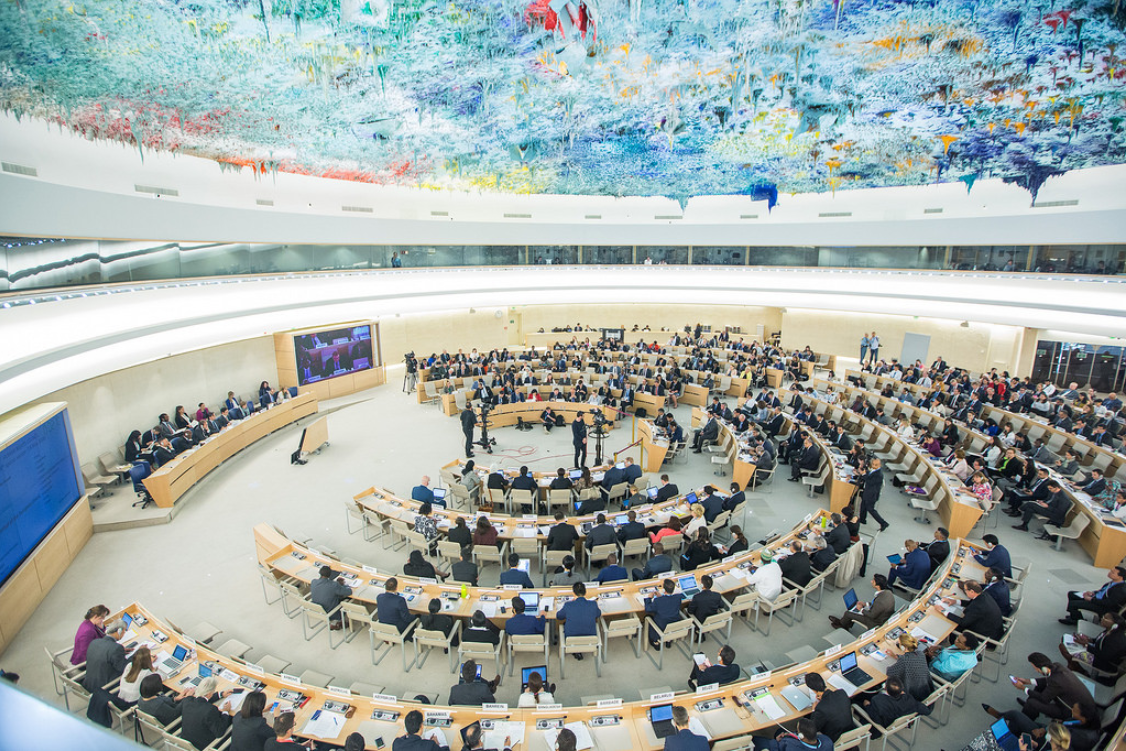
During the week of October 15 to 19, the sessions of the Intergovernmental Working Group of the Human Rights Council of the United Nations took place. This group meets for the fourth time, and the discussions around a draft for the adoption of a binding treaty that seeks to regulate the activity of transnational corporations and their effects on human rights.
“Below, we offer a google translate version of the original article in Spanish. This translation may not be accurate but serves as a general presentation of the article. For more accurate information, please switch to the Spanish version of the website. In addition, feel free to directly contact in English the person mentioned at the bottom of this article with regards to this topic”
A draft text for the ‘Binding Treaty on Business and Human Rights’ was finally submitted in mid July. This document was launched in Geneva, within the framework of the mandate of the Intergovernmental Working Group on Business and Human Rights, which indicated that a binding treaty on this matter should be developed. The sessions in October, took as a starting point for the debate, that ‘Zero Draft’.
The immediate antecedent of this draft was the document known as “Elements of the Treaty” that circulated at the end of 2017 and was discussed at the third session of the Intergovernmental Group in October of that same year. Subsequently, these ‘Elements’ were submitted for public consultation and comments were received until February 2018. Once the process was closed, the construction of a text for the 4th session was left.
About the ‘Zero Draft’
At first glance, the essential difference between both documents (the treaty and the elements), is the disappearance of the term ‘other companies’ when it refers to the subjects susceptible of judicial responsibility. The debate over the inclusion of other companies besides those of a transnational nature was strongly opposed. This, since it was considered that this treaty should only focus on those companies that have activities in two or more national jurisdictions because those that only acted in one State, were subject to national regulatory regimes. However, it should be noted that Article 4 of the draft defines ‘transnational business activities’ as any productive or commercial activity that takes place in two or more national jurisdictions. This reference could also be interpreted for those business activities carried out in a single State but that could be transnationalized due to their inclusion in a value chain.
Likewise, the preamble of the document does not include in its entirety what had been proposed in the draft elements of the treaty. The document published at the end of last year mentioned, among other things, the importance of referencing the Guiding Principles, the rules on the responsibility of transnational corporations and the pressing situation regarding the negative impacts of business activity on human rights. The draft treaty, in its preamble, fails to recognize all the elements that frame the process of creating this binding instrument.
In a second instance, it is important to mention that the draft text highlights the responsibility of the State as the first and only protector of Fundamental Rights in the face of corporate actions, although it ignores the possible damage caused to the commercial activity of nations. In this sense, those commercial activities that are supported by the States (generally public private investments) do not have a reception in this treaty.
The draft also surprises because of the relevance given to the remediation of damages and the rights of the victims, given the urgent need to prevent companies from violating human rights. This disparity between the remedy and prevention was noted by civil society in the ‘Elements’ document, and criticized as it is necessary that the damages caused by business activity be prevented in the same way as the provision of compensation to the victims.
Despite the strong focus on the ‘effective remedy’, the draft adopts an article on prevention; in which it is important to mention the obligation to establish legislation that obliges companies to take due diligence actions. Including environmental and human rights assessments to analyze their activities and take the necessary actions to prevent damage.
Now, it is clear that the draft proposes a binding component for the States, in the sense that it forces them to adopt legislation that ensures respect for Human Rights against business activity. However, the text does not evidence the responsibility of the companies and this is because the treaty will not make them obligated subjects but through the laws that the States will implement. In this regard, the possibility of creating a ‘tribunal’ or another similar institution that has the capacity to judge and penalize the actions of transnational companies disappears.
The draft of the treaty did not include the chapter on ‘Obligations of companies’ that was found in the ‘Elements’; nor were the obligations of international organizations included.
An important element that appears in the draft is the ‘International Fund for Victims’, whose objective is to collaborate with the effective remediation to the damages caused by the business activity.
About the 4th session
After the 4th session of the Intergovernmental Working Group, the polarization of opinions between the countries of the ‘north’ and the global ‘south’ has become evident.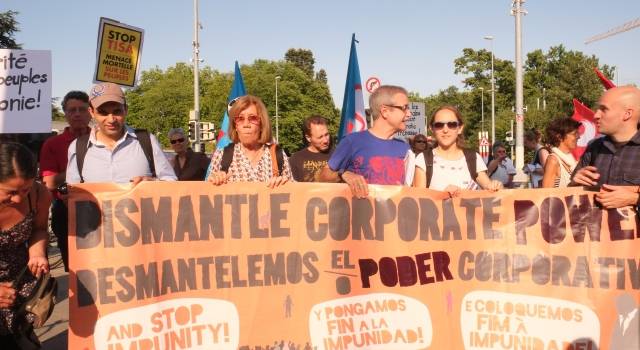 The countries belonging to the BRICS block, together with most of the African continents and Latin American; have shown a positive response to the initiative of a legally binding instrument. However, representatives of the European Union, the United States of America, Japan, Australia and Canada, in addition to not having been present at the negotiations, have made clear their refusal to endorse the creation of the aforementioned treaty.
This polarization has relevant effects on the effective force that an instrument of these characteristics can have. Since most of the transnational corporations that would be forced by this text, stay in the States that today pronounce themselves in a manner opposite to the treaty, the protection of human rights against the activity of transnational corporations would not be completely insured .
There are still no certainties about how the process will continue after this fourth session and it is also not clear how civil society will be included in it. According to the ‘Global Campaign to Stop Corporate Impunity’, the following are the points recommended to the Intergovernmental Group, to give continuity to the negotiations:
- The future treaty should be aimed at Transnational Corporations (TNCs) and other companies with transnational activities, in accordance with the mandate given to the Intergovernmental Working Group in resolution 26/9.
- The future treaty must contain direct obligations for NCDs. It must also establish the joint and several liability of the parent companies with the entities throughout its global production chain (subsidiaries, subcontractors, suppliers, etc.).
- The future treaty should provide for an international enforcement mechanism with effective and binding enforcement powers. In this regard, the Global Campaign proposes the creation of an International Court to prosecute TNCs that commit human rights violations and an International Monitoring Center for TNCs.
- The future treaty must clearly establish the primacy of human rights obligations over trade or investment agreements.
- The future treaty should include concrete measures against the influence of TNCs in the process of formulating public policies at the international and national levels.
- The effective participation of civil society in all stages of negotiations on the draft treaty and the safeguarding of the process of influence of TNCs and their representatives.
Writer:
Agustina Palencia
Contacts:
More Information:
We present comments on the draft treaty on business and human rights.
Advancing towards a binding treaty on transnational corporations and human rights.