
Considerations on the Environmental Policy bill continue in the provincial legislature of Córdoba
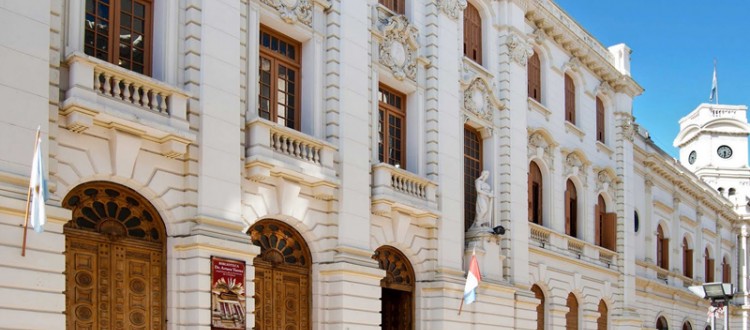
Representatives of FUNDEPS took part in the latest meeting of the Environmental Issues Commission of the provincial legislature of Córdoba, during which the topic of mechanisms for civic participation in the Environmental Policy bill for the province, was discussed at great length.
Within the framework of the parliamentary process of the Environmental Policy Bill, launched by the Executive Committee, and in which FUNDEPS has participated since the start, a further meeting of the Environmental Issues Committee was called for the 20th May. The purpose of the meeting was for the different political parties to exhibit their work to date on the bill, and to present their proposals for instruments in environmental policy, which would be regulated by the legislation currently being debated.
The main focus of the meeting was regarding the establishment of civil participation in the provisions of the legislation, the scope of participation with regards to environmental issues and the ongoing importance of civil participation since the constitutional reforms of 1994. Specifically, the discussion focussed on which mechanisms for civil participation should be established by the bill, which body would have the legal authority and obligation to require participation, who can request participation, which segment of the population should participate, under which circumstances, for which type of projects participation should be used, how civil participation would work on a practical level, what would be the legal consequences of decisions taken under public consultation, under what context would they be considered, how negotiations would be held, and how would civil participation interact with other political mechanisms and environmental governance. In summary, matters which are extremely relevant when devising public policy, taking into account the growing social conflict in the province.
The mechanisms for civic participation discussed during the meeting, many of which are provided for in national as well as provincial laws, were as follows: unrestricted access to information, the obligation for public bodies as well as private entities to make public complete and accurate information about the project to be carried out, public surveys, public consultation by way of workshops in the neighbourhoods or localities which could be affected by the execution of activities of relevant environmental impact, public meetings as a part of the proceedings between the authorities and the citizens, and consultation with the public as an innovative mechanism at a provincial level.
The main focus of the political dispute was regarding the definition of “public consultation”; of what this consists and its’ implications, despite what is already provided in Law No. 7811 of 1989. The representative of the Civic Front, Santiago Clavijo, expressed that further legislation was needed regarding public consultations concerning the authorisation of projects of high environmental impact as provided for in Annexe 1 of the Regulatory Decree 2131/00 of Law No. 7343, as per the administrative proceedings of Evaluation of Environmental Impact. The legislator Cintia Frencia, of the Left and Worker’s Front (FIT), explained that the call to public consultation does not imply the prohibition of certain activities, rather that these activities are subject to approval of the public, as well as the legal requirements that the activities must meet. Alfredo Leytes, also from the FIT, agreed that in most cases the public welcomes the arrival of productive activities, given that they provide jobs and community development, as long as they do not bring any major disadvantages. Dante Heredia, president of the commission and representative of the officialist Union for Cordoba Party, was of the opinion that the criteria for legislating a public consultation were excessive and inflexible.
Since the beginning of the legislative discussions there have been two examples of projects which have been considered with most practical importance for the processing of the bill. The first is the bio fuel factory, whose location within the city limits has had a negative impact on bordering residential districts. Also, the conflict created by the location of Monsanto SAIC’s seed processing plant has caused several controversies on a scientific level, numerous judicial resolutions and uncertainty with regards to the permissions for its location.
It is expected that in June the bill will be voted in the unicameral legislature, provided that all political groups can agree upon a single bill. In this context, from FUNDEPS we are advocating for the establishment of the highest possible standards in order to ensure that the right to civil participation can be carried out effectively, especially for those who are directly affected by public decisions such as those mentioned during the debate. For this reason, we want to highlight our concern with regards to the risk of the restriction of civil participation at the beginning of this process, by conditions which can be waived at the discretion of the Environmental Authority, as stated in our document “Contributions to the debate for the bill for environmental policy for the province of Cordoba”.
Translated by: Richard Marsden

