• ES
  • EN
Fundeps
  • About Fundeps
  • Team
  • Working areas
    • Environment
    • Democracy
    • Gender
    • Global Gorvernance
    • Health
  • News
  • Publications
  • DONATE
  • Click to open the search input field Click to open the search input field Search
  • Menu Menu
Democracy, Gender, News

Serious setback in access to justice: they order the closure of 81 care centers throughout the country
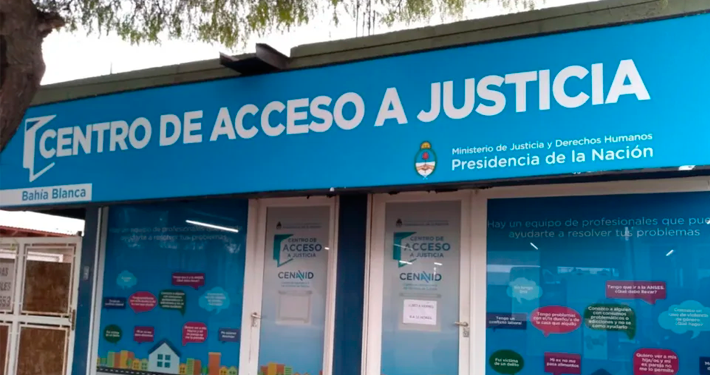
Yesterday, June 10, a resolution from the Ministry of Justice was published in the Official Gazette ordering the dissolution of 81 Access to Justice Centers. In this way, there will be only one Center per province and remote care will be privileged, which dismantles a primary legal care system linked to decentralizing and breaking down the geographical barriers that the most vulnerable people face when accessing justice. Civil society organizations and different people and institutions committed to access to justice agree on the loss that the reduction of this service means.

“Below, we offer a google translate version of the original article in Spanish. This translation may not be accurate but serves as a general presentation of the article. For more accurate information, please switch to the Spanish version of the website. In addition, feel free to directly contact in English the person mentioned at the bottom of this article with regards to this topic”.

For 15 years, the Access to Justice Centers (CAJ) have been extended as a federal policy throughout the country that brings answers to all citizens, but particularly to the most vulnerable groups in society. The focus is precisely on popular neighborhoods and/or rural areas, places that historically have had greater barriers to accessing their rights. CAJs are devices that provide primary legal care: it is about providing services that specifically address the daily legal needs of vulnerable communities: access to personal documentation, advice on family or work issues, assistance to crime victims, among others. issues. It is the first line of care, located in the territories, that allows removing historical barriers linked to the distance between those most vulnerable people and the state responses they require.

The traditional institutions of the justice sector do not deal – or arrive very late, in a fragmented manner and through long, rigid, winding, expensive and generally ineffective paths – to provide answers to many of the problems that communities face. Faced with this, having decentralized centers, with a territorial approach, that can fully accompany people in resolving the needs they experience is essential.

According to data from the Ministry’s own website, from 2016 to 2022, the Access to Justice Centers attended more than 1,300,000 queries.

What is the current situation of the CAJs?

According to official information from the Ministry of Justice provided in response to a request for access to information made by the Civil Association for Equality and Justice (ACIJ), six Centers had been closed so far this year (going from 109 to 103 ). However, today, a resolution from the Ministry of Justice was published in the Official Gazette that resolves that there will be only one Center per province and remote care will be privileged, which violates a first principle of primary legal care linked to decentralize and break down the geographical barriers that people face. At the same time, it does not take into account the need for support that the most vulnerable people face or the technological barriers.

The cost of Access to Justice

Simultaneously with the announcement of the Official Gazette, the Executive Branch issued a statement that ignores, on the one hand, the most basic premises of access to justice and, on the other, some obvious facts such as that in Argentina there has been no Ombudsman for a long time. 15 years or that the Crime Victim Assistance Centers (CENAVID) operate precisely in the CAJ or remotely through telephone service.

In the same statement, reference is made to the cost that this policy has for the country. The first thing to say is that it is not possible to verify the figure of 8 billion pesos that the Ministry of Justice mentions regarding the cost of maintaining the CAJs. However, it is necessary to highlight that, if that were the correct number, it would correspond to only 0.01% of public spending. In comparative terms, it is equivalent, for example, to 8% of the tax benefits granted to the Mercado Libre company in 2023 or 0.18% of what Argentina has paid in external debt services so far.

At the same time, it is important to highlight that the use of the law by people in situations of greater vulnerability and early attention and resolution
of legal consultations and conflicts result in better economic results in general, avoiding the loss of resources and the aggravation and escalation of the problems they face. Investment in Access to Justice ends up reducing State expenses. Currently, international organizations such as the OECD encourage the implementation of this type of device, in part, with arguments of this type.

Concern about the current situation is transversal. Civil society organizations and different people and institutions committed to access to justice agree on the loss that the reduction of this service means. In the current situation of socioeconomic crisis, these territorial and people-centered policies are a fundamental instrument for effective access to justice.

FIRMS

  • ACIJ – Asociación Civil por la Igualdad y la Justicia
  • ELA – Equipo Latinoamericano de Justicia y Género
  • INECIP – Instituto de Estudios Comparados en Ciencias Penales y Sociales
  • CELS – Centro de Estudios Legales y Sociales
  • Fundeps
  • Capibara
  • Xumek
  • RAAC – Red Argentina de Abogacía Comunitaria
  • Curas Villeros
  • Andhes – Abogados y Abogadas del Noroeste Argentino en derechos humanos y
    estudios sociales.
  • Observatorio de justicia sanitaria y climática

About access to justice

Access to justice is an internationally recognized human right and is also considered instrumental, that is, it allows access to others rights. It includes guaranteeing the effectiveness of the rights of all people, which includes not only being able to access judicial actions but not finding non-judicial, administrative and alternative responses to conflicts that affect people’s daily lives.


Contact
Mayca Balaguer, maycabalaguer@fundeps.org
11 de June de 2024
Tags: Access to Justice, Democracy, Gender
Share this entry
  • Share on Facebook
  • Share on X
  • Share on WhatsApp
  • Share on LinkedIn
  • Share by Mail
https://fundeps.org/wp-content/uploads/2024/07/CAJs.png 375 710 Admi2024FunDEPS https://fundeps.org/wp-content/uploads/2026/04/logo-2026-300x120.png Admi2024FunDEPS2024-06-11 17:46:452024-11-14 13:14:03Serious setback in access to justice: they order the closure of 81 care centers throughout the country
You might also like
Presupuesto Público Public budget: the debate and approval stage began in the Legislature
International Day for the Fight against Corruption: We need comprehensive public policies
Call Open to Join a Collective Legal Action in Defense of the Right to Abortion
Breaking the mold: advocacy from a feminist perspective
Presentation of the Declaration by Academia within the framework of Cartagena +30
We request the intervention as amicus curiae in the Porta Hnos case.
ABC of the public budget in the provinces of Mendoza, Salta, Tucumán and Córdoba
Various sectors of Córdoba met to talk about the rollback of rights

Tags

Access to Information Access to Justice BID Chinese Investments Citizen Participation Democracy ENTs Environment Environmental Democracy Gender Global Governance Health Healthy nutrition IFIs Infrastructure Financing Legal Interruption of Pregnancy Sexual and Reproductive Rights Social and Environmental Standards Tobacco Control Transparency
See all tags

Acuerdo de Escazú

Emergencia Agroquímica

MOCI - monitoreo ciudadano en proyectos de infraestructura

{el entramado} Contamos historias. Acercamos Realidades.

Instagram

fundepsargentina

Trabajamos para que se garanticen los derechos humanos 🌱⚖️🗣️🌈💜🚭🍎
Promovemos la equidad de #genero, el derecho a la #salud y un #ambiente sano.

La Legislatura de Córdoba otorgó a Fundeps un bene La Legislatura de Córdoba otorgó a Fundeps un beneplácito por el Tercer encuentro Redes de compromiso y cuidados: “Acceso a la salud sexual integral. Debates urgentes”. El encuentro se realizó el pasado 20 de junio y reunió a más de cien profesionales de toda la provincia.

La mención (aprobada por unanimidad) fue iniciativa de la Legisladora Karen Acuña, en coautoría con las legisladoras Silvina Jurich, Ariela Szpanin, Doris Mansilla y Julieta Rinaldi. La misma expresa: “iniciativas con estas características, impulsadas por organizaciones de la sociedad civil, resultan fundamentales para fortalecer la protección y el ejercicio efectivo de los derechos ciudadanos, al tiempo que contribuyen a la construcción de una sociedad más justa, inclusiva e igualitaria".

Recibir este reconocimiento nos llena de orgullo y fortalece sin dudas los vínculos y el camino conjunto en pos del acceso a derechos en nuestra provincia.
Este viernes 31 de julio realizamos un nuevo encue Este viernes 31 de julio realizamos un nuevo encuentro de formación en derechos sexuales y (no) reproductivos. 

En articulación con el Consultorio de Salud Integral y con el aval de la DAJA, compartimos la jornada de capacitación con profesionales del Hospital Vicente Agüero de Jesús María.

Más de 15 profesionales de diversas disciplinas se dieron cita, para conocer diferentes aspectos de la práctica de AMEU y fortalecer su trabajo diario, en pos del acceso al aborto legal, seguro y gratuito.

Como en cada instancia, celebramos el compromiso de cada participante y agradecemos especialmente a la Dra. Kenia Torres y al Director del Hospital, Dr. Javier Díaz, por la predisposición para recibirnos.
La información como herramienta ya está disponible La información como herramienta ya está disponible en Aprender con Fundeps.

Aprendé a ejercer el derecho de acceso a la información pública y a usarlo para defender derechos, monitorear decisiones e impulsar procesos de incidencia.

En este curso vas a aprender:

📌 Cómo hacer solicitudes de acceso a la información pública.
📌 Qué hacer cuando un organismo no responde.
📌 Cómo acceder a información sobre proyectos financiados por organismos internacionales.

💻 Curso virtual, gratuito y autoadministrado.
🔗 Inscribite en aprender.fundeps.org
🌎 Hace un año, la @corteidhoficial emitió su histó 🌎 Hace un año, la @corteidhoficial emitió su histórica Opinión Consultiva sobre la emergencia climática.

✊ Una victoria para quienes defienden el ambiente en América Latina y el Caribe: la Corte confirmó que proteger a las personas defensoras del ambiente no es opcional. Es una obligación legal.

⚖️ Para explicar qué exige esa protección, la Corte se apoyó en el Acuerdo de Escazú. Resultado: la gran mayoría de Estados de América Latina y el Caribe no pueden ignorar los estándares de Escazú, incluso si aún no han ratificado el tratado.

🔎 La implicación es clara: los países de la región deben fortalecer el acceso a la información, la participación pública, la justicia ambiental y la protección de quienes defienden el ambiente. 

📝 La Opinión abre nuevas rutas para frenar la criminalización de personas defensoras, responder a las restricciones al espacio cívico y defender la participación pública en países como Costa Rica, Guatemala y Perú. Compartimos el análisis de  @manizalmigrante del @ciel_org

📣 La discusión ya no es si los países de América Latina y el Caribe deben proteger a quienes defienden el ambiente. Eso ya está claro. Ahora hay que usar la Opinión: en tribunales, reformas, debates públicos y procesos de movilización para exigir mejores garantías y mayor protección.

🔗 Lee el análisis completo en el link en www.ciel.org/corte-idh-escazu-personas-defensoras/
Follow on Instagram

Twitter

Tweets por @fundeps

Newsletter Subscription

    Fundeps. Córdoba (CP X5000JZH), Argentina. info@fundeps.org
    • Link to X
    • Link to Facebook
    • Link to Instagram
    • Link to Mail
    • Link to Youtube
    • Link to LinkedIn
    • Link to TikTok
    Link to: Protection against gender violence is a commitment to the entire society Link to: Protection against gender violence is a commitment to the entire society Protection against gender violence is a commitment to the entire society Link to: Concern about the situation of people detained in the demonstration against the Bases Law Link to: Concern about the situation of people detained in the demonstration against the Bases Law Concern about the situation of people detained in the demonstration against...
    Scroll to top Scroll to top Scroll to top