• ES
  • EN
Fundeps
  • About Fundeps
  • Team
  • Working areas
    • Environment
    • Democracy
    • Gender
    • Global Gorvernance
    • Health
  • News
  • Publications
  • DONATE
  • Click to open the search input field Click to open the search input field Search
  • Menu Menu
Health, News

We present a report to the IACHR on the rights of the elderly
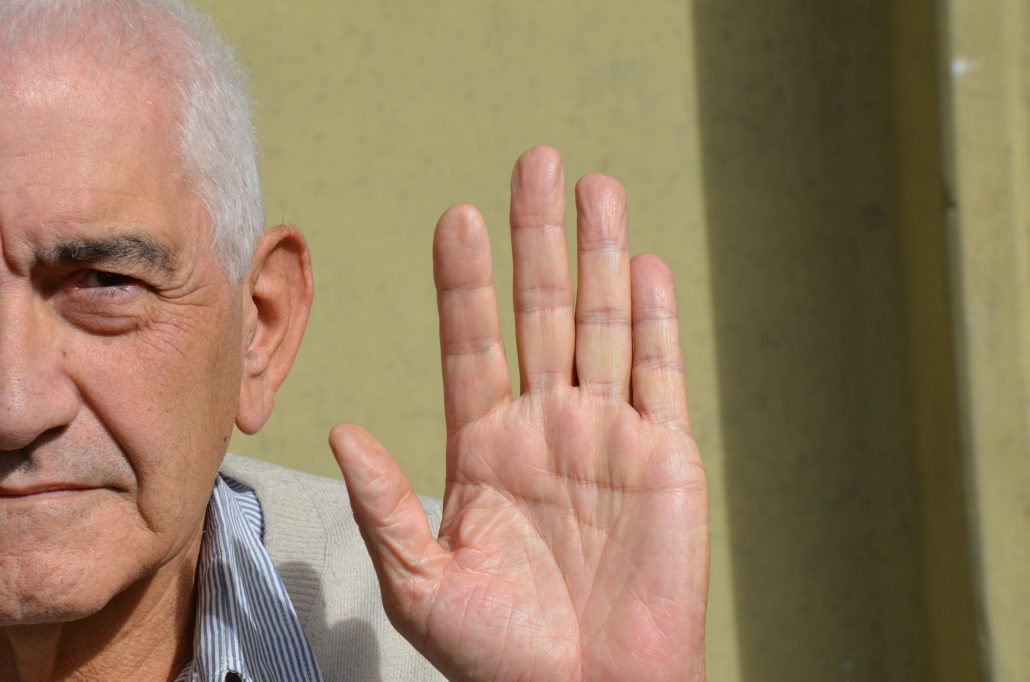
In the framework of the public consultation carried out by the Unit on the Rights of Older Persons of the IACHR, Fundeps, together with other civil society organizations, presented a report on national systems for the protection of the rights of older persons at the beginning of this year. the elderly in America.

“Below, we offer a google translate version of the original article in Spanish. This translation may not be accurate but serves as a general presentation of the article. For more accurate information, please switch to the Spanish version of the website. In addition, feel free to directly contact in English the person mentioned at the bottom of this article with regards to this topic”.

In its 2017-2021 Strategic Plan, the Inter-American Commission on Human Rights prioritized the theme of the elderly. To that end, it considered it necessary to identify synergies to advance in the construction of inter-American standards in this area, as well as the development of new working mechanisms, especially to promote the ratification and implementation of the Inter-American Convention on the Protection of Human Rights. Humans of the Elderly and make visible the situation of this population group.

For this reason, in order to prepare a regional report on the rights of older persons, he called for sending information from the member states of the Organization of American States on national systems for the protection of the rights of older persons. America.

The report was presented by Fundeps, the Inter-American Heart Foundation Argentina (FIC Argentina), the Commission specializing in the Rights of Older Adults of the Bar Association of the Province of Córdoba, the Center for Research in the Law of Old Age -National University of Rosario -, the Permanent Seminar on Research on the Law of Old Age -University of Buenos Aires-, the Research Institute on the Law of Elderly and Disability -Universidad Nacional del Centro de la Provincia de Buenos Aires and the Master’s program in Law de la Vejez -Universidad Nacional de Córdoba.

It made explicit the norms and programs that recognize or develop the rights of the elderly in Argentina, making special mention of the Province of Córdoba. Some of the obstacles and challenges for the protection of the rights of the elderly were highlighted, such as: the absence of intersectoral and articulated policies for the promotion of physical activity, the absence of human rights perspective in the regulations of the residences of long stay, the lack of publicity of the residences of long stay enabled.

Likewise, the report included the identification of the institutions and competency frameworks in the promotion of physical activity for the elderly and long-stay residences and the survey of a good practice at the local level -Córdoba- as is the development of the action research project on access to justice for vulnerable sectors – Project AJuV-, carried out through the Office of Human Rights and Justice of the Judicial Branch of Córdoba, from which contextual action strategies are developed to guarantee the effective access to justice for the elderly.

Finally, emphasis was placed on the absence of mechanisms for data collection and analysis of information regarding older persons and the need to have indicators to measure the results of the (few) public policies implemented, in order to monitor and assess progress and challenges.

In this way, the report gives an account – partially – of the situation of the rights of older persons in Argentina, revealing the regulatory insufficiency in an integral manner and the situation of vulnerability to which the elderly are exposed in the country, making it essential to have public policies with a focus on prioritization and inclusion in order to avoid non-compliance with international standards assumed by the Argentine State.

More information

  • Report to the IACHR on the protection of the rights of the elderly

Author

Laura Alesso

Contact

Agustina Mozzoni, <agustinamozzoni@fundeps.org>
28 de March de 2019
Tags: Health, Old People
Share this entry
  • Share on Facebook
  • Share on X
  • Share on WhatsApp
  • Share on LinkedIn
  • Share by Mail
https://fundeps.org/wp-content/uploads/2019/03/LUC_1510-scaled.jpg 1696 2560 Comunicaciones Fundeps https://fundeps.org/wp-content/uploads/2026/04/logo-2026-300x120.png Comunicaciones Fundeps2019-03-28 14:29:092024-07-28 00:10:41We present a report to the IACHR on the rights of the elderly
You might also like
World Day of Awareness of Abuse and Abuse in Old Age
“Let’s not let it pass” campaign: promote the first citizen report on the labeling law
What is happening with the labeling law?
Tobacco Control Framework Convention – Infographic 1
Lack of information from the World Bank Project on non-communicable diseases
Report on the human rights situation in Argentina before the IACHR
The fight for decent food in Argentina: perspectives and challenges
New 2015 Annual Report

Tags

Access to Information Access to Justice BID Chinese Investments Citizen Participation Democracy ENTs Environment Environmental Democracy Gender Global Governance Health Healthy nutrition IFIs Infrastructure Financing Legal Interruption of Pregnancy Sexual and Reproductive Rights Social and Environmental Standards Tobacco Control Transparency
See all tags

Acuerdo de Escazú

Emergencia Agroquímica

MOCI - monitoreo ciudadano en proyectos de infraestructura

{el entramado} Contamos historias. Acercamos Realidades.

Instagram

fundepsargentina

Trabajamos para que se garanticen los derechos humanos 🌱⚖️🗣️🌈💜🚭🍎
Promovemos la equidad de #genero, el derecho a la #salud y un #ambiente sano.

Y todo esto quedó en un papel? No. Ya hay avances. Y todo esto quedó en un papel? No. Ya hay avances. Pero tampoco está resuelto.

Hay plantas de tratamiento que comenzaron a funcionar, obras de cloacas terminadas y establecimientos que fueron auditados por posible contaminación.

➡️ También quedan medidas por cumplir y avances que necesitan seguimiento. Porque mostrar lo que se hizo también sirve para saber qué falta.

Para seguir acompañando este proceso y sosteniendo el trabajo que todavía queda, necesitamos tu apoyo.

Doná hoy.
La Justicia no solo dijo que el lago está contamin La Justicia no solo dijo que el lago está contaminado. También ordenó qué tiene que hacer el Estado para empezar a sanearlo.

La sentencia establece medidas concretas, con plazos y obligaciones que involucran a la Provincia y a los municipios de la cuenca.

Entre ellas: avanzar con las obras cloacales, controlar los vertidos contaminantes, fortalecer la fiscalización y garantizar espacios de participación y transparencia.

Deslizá para conocer qué tiene que pasar para que el saneamiento avance.

Ayudanos a seguir trabajando para que estas medidas se cumplan. Doná hoy.
Hoy, 4 de septiembre, es el Día Mundial de la Salu Hoy, 4 de septiembre, es el Día Mundial de la Salud Sexual. Una fecha que nos invita a volver sobre las discusiones que atraviesan el acceso a la salud sexual y (no) reproductiva: condiciones de acceso para que sea integral y de calidad, desde un enfoque de derechos y con perspectiva de diversidad.

En el mes de junio nos encontramos en el 3° Encuentro Provincial de Redes de Compromiso y Cuidados: Salud sexual Integral con Perspectiva de Diversidad para poner en común experiencias y preguntas sobre estos desafíos.

Hoy recuperamos algunas de las voces que fueron parte de las exposiciones de ese encuentro para volver sobre dos preguntas que siguen abiertas:
¿Cuál es hoy el debate más urgente cuando hablamos de salud integral y diversidad?
¿Por qué es importante encontrarnos en este contexto?

Porque garantizar el derecho a la salud también implica seguir encontrándonos para pensar, discutir y construir respuestas colectivas.
🕰Han pasado 84 años… y seguimos hablando del Lago 🕰Han pasado 84 años… y seguimos hablando del Lago San Roque.
Bueno, no tanto. Pero sí llevamos más de cuatro años trabajando para que el saneamiento de la cuenca deje de ser una promesa y se convierta en una realidad.

En 2022 presentamos un amparo colectivo junto a la comunidad de la cuenca. En abril de 2025, la Justicia reconoció el daño ambiental y ordenó sanear el lago.

❗¿El problema? Un fallo no alcanza por sí solo. El Plan de Saneamiento ya está en marcha y todavía queda mucho por hacer.

En este carrusel te contamos qué pasó y por qué seguimos hablando del Lago San Roque.

Si querés que este trabajo continúe, podés sumarte con una donación. [link en bio]
Follow on Instagram

Twitter

Tweets por @fundeps

Newsletter Subscription

    Fundeps. Córdoba (CP X5000JZH), Argentina. info@fundeps.org
    • Link to X
    • Link to Facebook
    • Link to Instagram
    • Link to Mail
    • Link to Youtube
    • Link to LinkedIn
    • Link to TikTok
    Link to: Report to the IACHR on the protection of the rights of the elderly Link to: Report to the IACHR on the protection of the rights of the elderly Report to the IACHR on the protection of the rights of the elderly Link to: China is committed to respecting human rights in its foreign investments Link to: China is committed to respecting human rights in its foreign investments China is committed to respecting human rights in its foreign investments
    Scroll to top Scroll to top Scroll to top