• ES
  • EN
Fundeps
  • About Fundeps
  • Team
  • Working areas
    • Environment
    • Democracy
    • Gender
    • Global Gorvernance
    • Health
  • News
  • Publications
  • DONATE
  • Click to open the search input field Click to open the search input field Search
  • Menu Menu
Global Governance, News

We participate in the consultations of the new IDB Environmental and Social Policy Framework

In the framework of the process of reviewing the environmental and social policies of the Inter-American Development Bank, we participated in public consultations held in the cities of Buenos Aires and Washington DC. Together with a group of civil society organizations, we raised certain concerns and recommendations regarding the review and consultation process, as well as the content of the draft of the proposed Environmental and Social Policy Framework.

“Below, we offer a google translate version of the original article in Spanish. This translation may not be accurate but serves as a general presentation of the article. For more accurate information, please switch to the Spanish version of the website. In addition, feel free to directly contact in English the person mentioned at the bottom of this article with regards to this topic”.
In January, the IDB began the public consultation process on a new Environmental and Social Policy Framework (MPAS), which has included, up to now, face-to-face and virtual consultations in the cities of Brussels (Belgium), City of Panama (Panama), Kingston (Jamaica), Lima (Peru), Buenos Aires (Argentina) and Washington DC (United States). In addition, the reception of a first round of virtual comments regarding the draft is contemplated until April 20.

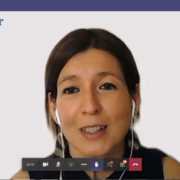
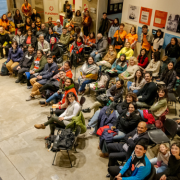
From Fundeps, we participated both in the face-to-face public consultation carried out on March 10 in the City of Buenos Aires and in the consultation carried out on March 13 in the city of Washington DC. In turn, we plan to send written comments regarding the draft released by the Bank in the framework of a joint work we have been carrying out with a group of civil society organizations in the region.

In general terms, the draft MPAS proposes two different sections: a Policy Statement that basically establishes the roles and responsibilities that will correspond to the IDB in terms of compliance with the socio-environmental provisions and requirements of the new Framework; and a second section that includes the detail of the Environmental and Social Performance Standards with which the borrowers must comply. The draft proposes the inclusion of ten Standards: 1. Assessment and management of environmental and social risks and impacts; 2. Work and working conditions; 3. Efficiency in the use of resources and pollution prevention; 4. Community health and safety; 5. Land acquisition and resettlement; 6. Conservation of biodiversity and sustainable management of natural resources; 7. Indigenous peoples; 8. Cultural heritage; 9. Gender equality; and 10. Stakeholder participation and disclosure of information.

The IDB has argued that the proposed MPAS is based on five guiding principles: the non-dilution of current policies; results orientation (that is, effective implementation); the proportionality of the responsibilities and the established requirements regarding the level of risk of the project; transparency and the idea of ​​”doing good” beyond “doing no harm”.

However, the analysis that we have carried out together with the rest of the organizations involved in this process allows us to glimpse that, at least as proposed, the current draft is far from effectively complying with each of these guiding principles. In general terms, a dilution of policies and socio-environmental protection can be seen in many of the Performance Standards; it is not clear how effective the implementation of said MPAS will be; The idea of ​​proportionality is not reflected in many sections of the draft; and practically no sections can be identified in the draft that propose “doing good” in the sense that the Bank proposes: that of facilitating more sustainable social and environmental results.

In turn, the entire review process being carried out by the Bank is far from being transparent and “offering significant opportunities for participation by all interested parties” as established by the IDB. Precisely, as usually happens with the consultation processes carried out by the IDB, this process has had important shortcomings, especially in the objective of achieving effective participation by stakeholders.

We have duly expressed all these criticisms and problems to the Bank’s representatives in each of the consultations in which we participate and we accompany them with specific recommendations and suggestions that they should take into account when preparing the next draft of the Framework. In addition, these recommendations will be sent in writing in advance before the expiration of the term to send comments virtually.

Having completed the public consultations and once the period for receiving comments and suggestions virtually ends, the Bank must prepare a new draft of the Environmental and Social Policy Framework to be presented to the Board of Directors. Subsequently, the new Draft will be published for a new round of virtual comments for a period of 30 days, according to the Public Consultation Plan approved by the Bank’s Executive Board. Upon completion of this period, the IDB will develop the final version of the Framework that will be submitted to the Policy and Evaluation Committee of the IDB Board for final evaluation.

The IDB is a member of the IDB Group. It is a source of long-term financing for the economic, social, and institutional development of Latin America and the Caribbean and, unlike IDB Invest that invests in private sector projects, the IDB is responsible for investment in the public sector.

More information

  • Public consultations begin on the new IDB environmental and social policy – Fundeps

  • The IDB and the IDB Invest review their environmental and social policies – Fundeps

  • Environment policy and safeguard compliance (2006) – IDB
  • Environmental and Social Safeguards Assessment – IDB

  • Modernization of the IDB’s environmental and social policies

  • Policy Profile – Modernization of IDB Environmental and Social Policies
  • Additional information on the Environmental and Social Policy Framework
  • Sectoral operational policies and sectoral framework document

Contact

Gonzalo Roza, gon.roza@fundeps.org

16 de March de 2020
Tags: BID, Global Governance, IFIs, Social and Environmental Standards
Share this entry
  • Share on Facebook
  • Share on X
  • Share on WhatsApp
  • Share on LinkedIn
  • Share by Mail
0 0 Admi2024FunDEPS https://fundeps.org/wp-content/uploads/2026/04/logo-2026-300x120.png Admi2024FunDEPS2020-03-16 15:27:032024-06-30 16:01:51We participate in the consultations of the new IDB Environmental and Social Policy Framework
You might also like
We participated in a discussion with the new MICI director, Andrea Repetto
Various sectors of Córdoba met to talk about the rollback of rights
The National Baseline of the Business and Human Rights Plan is presented
Binding Treaty on Business and Human Rights: Comments from Fundeps and the new revised Draf
We make comments and observations on the IDB’s Environmental and Social Policy Framework from a gender perspective
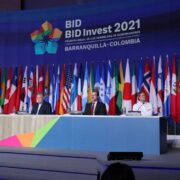
The 2021 Annual Meeting of Governors of the IDB and IDB Invest was held
Trunk Gas Pipelines and the difficulty of accessing public information in the province
Status of the emblematic projects with Chinese financing in Argentina

Tags

Access to Information Access to Justice BID Chinese Investments Citizen Participation Democracy ENTs Environment Environmental Democracy Gender Global Governance Health Healthy nutrition IFIs Infrastructure Financing Legal Interruption of Pregnancy Sexual and Reproductive Rights Social and Environmental Standards Tobacco Control Transparency
See all tags

Acuerdo de Escazú

Emergencia Agroquímica

MOCI - monitoreo ciudadano en proyectos de infraestructura

{el entramado} Contamos historias. Acercamos Realidades.

Instagram

fundepsargentina

Trabajamos para que se garanticen los derechos humanos 🌱⚖️🗣️🌈💜🚭🍎
Promovemos la equidad de #genero, el derecho a la #salud y un #ambiente sano.

¡Es broma, pero no es mentira! La industria tabac ¡Es broma, pero no es mentira!

La industria tabacalera usa las redes sociales para captar a una nueva generación de consumidores, principalmente adolescentes y jóvenes.

Su principal estrategia es la promoción de bolsas de nicotina y vapers. 

🚫 Aunque hoy se permite vender estos productos, publicitarlos sigue siendo ilegal. Sin embargo, las propias marcas lo hacen de forma sistemática y a la vista de todo el mundo, porque nadie las controla ni las sanciona.

🕵🏻‍♀️Lo comprobamos en nuestra última investigación, en la que monitoreamos publicaciones de Instagram durante 2 meses. 

Exijamos que el Estado haga cumplir la ley para proteger la salud de adolescentes y jóvenes. ✊

📲 Compartí este posteo y leé el informe completo en el link de nuestra bio.

#ControlDeTabaco #BolsasDeNicotina #Vapers #Salud
¡Las Pérez Correa + conversatorio femi = planazo! ¡Las Pérez Correa + conversatorio femi = planazo!

¡TENEMOS NUEVA FECHA! El jueves 19 de noviembre nos encontramos para hablar de aborto, derechos y autonomías feministas, con una intervención artística de Las Pérez Correa para arrancar la tarde.

Después, panel con referentes para conversar sobre el acceso al aborto y los desafíos que tenemos por delante en Córdoba.

19/11 · 18 h · Auditorio del CePIA, Facultad de Artes UNC

Actividad libre y gratuita.

¡Ahora sí, agendalo! Nos vemos ahí.
Nos sorprende? No nos sorprende. 🕵🏻‍♀️Monitoream Nos sorprende? No nos sorprende. 

🕵🏻‍♀️Monitoreamos durante 2 meses publicidades de tabaco y nicotina en Instagram y comprobamos que son las propias marcas las que infringen la ley: desde sus cuentas oficiales y a la vista de todo el mundo.
3 de cada 4 publicaciones que relevamos son publicidad directa.

‼️En el caso de las bolsas de nicotina, 8 de cada 10 anuncios salen de las cuentas de las propias marcas, que pertenecen a dos de las tabacaleras más grandes del mundo.

Lo hacen sabiendo que en Argentina cualquier publicidad de tabaco y nicotina está prohibida, también en redes sociales. Y lo hacen porque nadie las controla ni las sanciona, mientras sus mensajes llegan todos los días a adolescentes y jóvenes. 😡

📢Exijamos que el Estado haga cumplir la ley para proteger su salud.

📲 Compartí este video y leé el informe completo en el link de nuestra bio.

#ControlDeTabaco #BolsasDeNicotina #Vapers #Salud
📱Cuando pensamos en los riesgos que enfrentan las 📱Cuando pensamos en los riesgos que enfrentan las y los adolescentes en redes sociales, solemos hablar de ciberacoso, apuestas o del tiempo frente a la pantalla.
 
💨Pero hay uno del que casi no se habla: la publicidad ilegal de vapers y bolsas de nicotina.

Instagram es la red más usada entre los 15 y los 17 años. Ahí, la industria tabacalera les llega con los mismos códigos que usan todos los días: influencers que admiran, deportistas, recitales, sabores y formatos de tendencia. A veces ni siquiera parece publicidad, pero lo es. Y está prohibida.

❗En nuestro último monitoreo comprobamos que no son casos aislados: es una estrategia para enganchar a una nueva generación. Y son las propias marcas las que infringen la ley: 8 de cada 10 anuncios de bolsas de nicotina se hacen desde sus cuentas oficiales. 

Cuidar a adolescentes en el entorno digital también es saber qué les venden, quién lo hace y con qué fin. 

Exijamos que el Estado haga cumplir la ley para proteger la salud de adolescentes y jóvenes.

📲 Compartí este posteo y leé el informe completo en el link de nuestra bio.
#ControlDeTabaco #BolsasDeNicotina #Vapeadores #Salud
Follow on Instagram

Twitter

Tweets por @fundeps

Newsletter Subscription

    Fundeps. Córdoba (CP X5000JZH), Argentina. info@fundeps.org
    • Link to X
    • Link to Facebook
    • Link to Instagram
    • Link to Mail
    • Link to Youtube
    • Link to LinkedIn
    • Link to TikTok
    Link to: Analysis of the BRICS New Development Bank Link to: Analysis of the BRICS New Development Bank Analysis of the BRICS New Development Bank Link to: We were present at the Conference: ‘Rethinking the role of foreign investment and the New Silk Road in Latin America’ Link to: We were present at the Conference: ‘Rethinking the role of foreign investment and the New Silk Road in Latin America’ We were present at the Conference: ‘Rethinking the role of foreign investment...
    Scroll to top Scroll to top Scroll to top