The IDB approved its new Environmental and Social Policy Framework
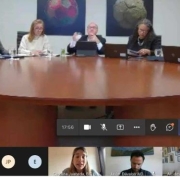
The process of modernizing the IDB’s environmental and social policies began in January of this year with the first stage of face-to-face and virtual public consultations in the different countries. In Argentina, the face-to-face consultation was held in March in Buenos Aires and the process for submitting comments ended in mid-April. From Fundeps, we prepared and presented to the IDB a document with comments to the MPAS from a gender perspective. In addition, with more than 50 civil society organizations in the region, we sent the IDB a document with recommendations to the MPAS.
“Below, we offer a google translate version of the original article in Spanish. This translation may not be accurate but serves as a general presentation of the article. For more accurate information, please switch to the Spanish version of the website. In addition, feel free to directly contact in English the person mentioned at the bottom of this article with regards to this topic”.
In mid-July, the IDB published the second draft of the MPAS and began the second stage of virtual consultations for a period of 30 days. In this second stage of consultations, we sent a new document with comments on the second draft of the MPAS from a gender perspective.
The process of modernizing the Bank’s environmental and social policies ended on September 16 when the IDB’s Board of Executive Directors approved the new Environmental and Social Policy Framework -MPAS-. From now on, the IDB begins a period of one year to prepare clients for the implementation of the new framework.
With the new MPAS already approved, it is pertinent to analyze which have been the main modifications incorporated during the process, based on the intervention and active participation of an important group of civil society organizations in the region.
Thus, according to the analysis carried out by the Bank Information Center, the main modifications incorporated in the new Framework have been, in part, the product of the recommendations and suggestions made by the CSOs that make up the Working Group on the IDB. In general terms, one of the main changes in the MPAS Political Declaration stands out as the Bank’s commitment to improve stakeholder participation in accordance with the obligation to respect the right of access to information, participation and justice in environmental issues consistent with the principles of the Escazú Agreement.
Another positive point is the incorporation of the principle of “doing good beyond causing harm” which implies increasing the benefits of sustainable development by asking the borrower to report how the project design will improve the environment and the social issue. In addition, the Bank will carry out its own due diligence taking into account the commitment, history and capacity of the borrower in the development and implementation of the financial operation.
In terms of supervision and monitoring, in the event of noncompliance with social and environmental performance standards, the IDB will work with the borrower by providing technical assistance and greater monitoring of the Bank and stakeholders to achieve compliance with the standards of MPAS performance. On the other hand, regarding the complaint and accountability mechanisms, the Bank added a new provision to the MPAS in which it undertakes not to tolerate any type of retaliation against those who express their opinion and / or opposition to a project financed by the IDB. Thus, a complaint mechanism is established at the project level, in which the borrower must take into account physical, sensory, and cognitive needs of the people who participate.
An important addition to the new MPAS is the exclusion list of activities consistent with the commitments adopted by the IDB to address climate change, that is, it will not finance activities that involve the exploration of oil and gas or the production of energy from the use of the Coal.
Main additions to performance standards
General and gender modifications are highlighted in the Performance Standards (ND), namely:
- PS 1 Evaluation and Management of Environmental and Social Risks and Impacts: must be applied to all projects financed by the IDB. In addition, the borrower must consider risks and impacts related to human rights, gender, natural hazards, and climate change. In identifying risks and impacts, the borrower has to consider the direct, indirect and cumulative environmental and social impacts of the project. It must also identify the various historically disadvantaged cross-cutting groups in Latin America and the Caribbean, such as women, people of diverse sexual and gender orientation, people with disabilities, Afro-descendants, and indigenous peoples, and implement measures to avoid differentiated impacts on them. The description of the types of risks that the standard makes is highlighted, since by mentioning each of the possible risks, it helps to make them visible and makes the borrower responsible for taking action in this regard.
- PS 2 Work and Working Conditions: special measures for protection and assistance were incorporated and to address violence, harassment, intimidation and exploitation towards women and people with different sexual orientations and gender identity, people with disabilities, children and migrant workers . In addition, the borrower has the obligation to provide a grievance mechanism for workers in which they can express their concerns and so that they can make complaints of sexual and gender-based violence. On the other hand, this standard, despite the recommendations made, is narrated from an androcentric perspective that does not integrate the needs of girls, adolescents, women and LGTTTBIQ + people. This highlights the lack of a gender perspective that is transversal to all performance standards.
- PS 3 Resource Efficiency and Pollution Prevention: greater emphasis is placed on the mitigation hierarchy and the “polluter pays” principle. The concept and practice of the circular economy is also recognized. On the other hand, this norm recognizes the disproportionate impact that pollution has on women, children, the elderly, and the poor and vulnerable, however, it continues without making reference to norm 9 on gender equality.
- PS 4 Community Health and Safety: includes the requirement for the borrower to perform a more detailed analysis of the risk assessment and make adjustments to prevent injuries and illnesses when there are risks that may be adverse to the health, safety and well-being of the people. Regarding gender, the standard refers to PS 9 regarding the requirements to address the risks of sexual and gender-based violence in cases of communal conflict and influx of external workers.
- PS 5 Land Acquisition and Involuntary Resettlement: in the case of this rule, there is inconsistency with respect to the concept of involuntary resettlement found in the glossary and the one described in the rule. The definition of the glossary is the product of the recommendation made by CSOs where it is defined as “involuntary resettlement when the people affected by the project do not have or cannot exercise the right to reject the acquisition of land or restrictions on the use of land that resulting from a physical or economic displacement ”, on the other hand, in this PS it is defined as“ involuntary when the people affected by the project do not have the right to reject the acquisition of land… ”. On the other hand, the recognition of women as owners in the event of displacement has been an advance. Another limitation in the regulation is that it should not be limited to considering the requirements related to Indigenous Peoples, gender equality and stakeholder participation in accordance with PS 7, 9 and 10, but must include them.
- PS 6 Biodiversity Conservation and Sustainable Management of Living Natural Resources: highlights that PS 1’s risk and impact identification process must consider project-related cumulative impacts on biodiversity and the ecosystem and identify any significant residual impacts . In addition, it provides a more complete definition of critical habitat as it includes legally protected areas or internationally recognized areas of high biodiversity value. Regarding the issue of the gender perspective, this standard continues to require its mainstreaming and the incorporation of the reference to PS 9.
- PS 7 Indigenous Peoples: is aligned with internationally recognized standards. In addition, it adds that the borrower must respect the rights of indigenous peoples in accordance with national legislation, international law, or indigenous legal systems. On the other hand, in accordance with participation and consent, the requirement is included to use indigenous consultation and participation protocols to ensure their representation as well as that of indigenous women and people of diverse sexual orientation and gender identities. Also, in the evaluation and documentation of the resources of the indigenous communities affected by a project, it is required that it be inclusive in gender and consider the role of women in the management and use of resources.
- PS 9 Gender Equality: the term Gender Violence was replaced by a more comprehensive and comprehensive term: Sexual and Gender Violence. The recognition that unpaid care work falls on women is highlighted, which hinders the achievement of gender equality and the economic empowerment of women. Another point to note is that the borrower should evaluate the project for potential gender-based impacts and risks that disproportionately affect women, girls, and sexual and gender minorities, and if risks and impacts are identified, the borrower should conduct a Gender Analysis as part of environmental and social due diligence. On the other hand, regarding consultations, the borrower is required to identify and address the obstacles faced by women and people of different sexual orientation and gender identities, ensuring equitable participation.
- PS 10 Stakeholder Participation and Disclosure of Information: the new PS 10 is consistent with the implementation of rights of access to environmental information, public participation in environmental decision-making as well as access to environmental justice of the Escazú Agreement. Like PS 1, this rule should be applied to all projects financed by the Bank. Regarding gender, the incorporation of PS 9 is considered a great advance in mainstreaming the gender perspective.
The balance that can be made with respect to the new IDB Environmental and Social Policy Framework, compared to the initial version proposed by the Bank at the beginning of the review process, could be considered quite positive, since it is widely incorporated of the recommendations made by CSOs to MPAS during the consultation process. This, despite the shortcomings and problems presented by the public consultation process carried out by the Bank and which was repeatedly highlighted by CSOs in the region as a necessary aspect to improve.
It remains to be seen whether the positive changes introduced in the new MPAS will effectively result in a strengthening of the institution’s social and environmental standards, a necessary issue due to the context of weakening environmental and social standards that the region is going through, and the challenges and threats looming in this regard in a context of post-pandemic Covid-19 economic reactivation. In this sense, the way in which this new framework is implemented and how its application will work in practice will be key. In this regard, it is a priority for the Bank to improve the way in which it engages and relates to civil society and affected communities, and makes them active participants in the process of implementing the new environmental and social framework.
More information
- Environmental and Social Policy Framework – IDB
- Comments on the second draft of the IDB Environmental and Social Policy Framework, from a gender perspective – Fundeps
- We make comments and observations on the IDB’s Environmental and Social Policy Framework from a gender perspective – Fundeps
- We participate in the consultations of the new IDB Environmental and Social Policy Framework – Fundeps
- Analysis of the main improvements of the IDB’s Environmental and Social Policy Framework (ESPF) – Bank Information Center
Author
- Sofia Brocanelli
Contact
- Gonzalo Roza, gon.roza@fundeps.org