• ES
  • EN
Fundeps
  • About Fundeps
  • Team
  • Working areas
    • Environment
    • Democracy
    • Gender
    • Global Gorvernance
    • Health
  • News
  • Publications
  • DONATE
  • Click to open the search input field Click to open the search input field Search
  • Menu Menu
Health, News

History not to repeat: in Uruguay the industry managed to accommodate the labeling in its favor
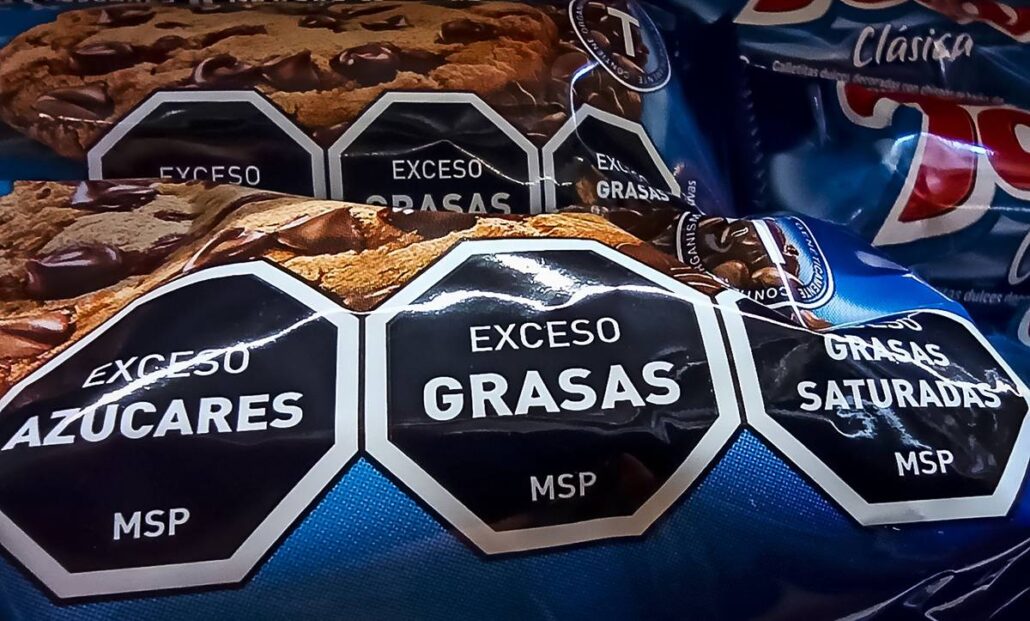
Through a regulatory decree, Uruguay modified the criteria established for the application of warning stamps on food products. With the new resolution, the limits to critical nutrients were relaxed and companies will be able to sell their products with high levels of sodium, sugar and fat, without being reached by the regulations.

“Below, we offer a google translate version of the original article in Spanish. This translation may not be accurate but serves as a general presentation of the article. For more accurate information, please switch to the Spanish version of the website. In addition, feel free to directly contact in English the person mentioned at the bottom of this article with regards to this topic”

By 2018, Uruguay became the third country in the Americas to adopt the frontal labeling system for food warnings. This public health measure, widely celebrated by the Pan American Health Organization (PAHO), was intended to be part of the response to malnutrition that affects 34% of Uruguayan children of school age. For its part, Decree 272/2018, within its clauses, granted companies an adaptation period of 18 months, enough time for the food industry to accommodate the political scenario in its favor. Thus, the entry into force and inspection of the measure was only set for March 1, 2020.

However, when the time came, the implementation of Decree 272 was not a priority. After many twists and turns, the government approved another decree (246/020) which not only extended the effective date of mandatory labeling to February 2021, but also established important variations to the original rule.

In Uruguay, the strategies used by the industry were the same as those used in other countries where front labeling was also discussed (Peru, Chile, Mexico and currently Argentina). The dilation of times, the sponsorship of specialists for the dissemination of biased research, as well as the denial and proposal of alternatives without scientific basis, are part of their best-known tactics that seek to protect only their economic interests.

Thus, far from being the Ministry of Public Health the one that proposed and announced modifications based on scientific evidence free of conflict of interest, the one in charge of doing so was the Ministry of Industry, Energy and Mining. Hence, it is not surprising to observe that the changes made by the government have revolved around the PAHO nutrient profile system, giving rise to a more flexible and friendly regulation with the food industry, and in evident damage to public health .

In this way, food companies in Uruguay today have the possibility of selling as stamp-free products those that contain 20% more sodium (from 400 to 500mg), 30% more sugars (from 10 to 13g) , 45% more saturated fat (9 to 13g) and 50% more total fat (4 to 6g), in portions of 100 grams or 100 milliliters.

For this reason, according to a statement from the Civil Society Alliance for the control of Non-Communicable Diseases, “the main products benefiting from this flexibility will be those with excess sugars and fats, in particular dairy products and desserts. , which are often advertised as healthy and with which the Food Industry carries out an aggressive marketing strategy, aimed at boys and girls. This (vulnerable) population will be the main recipient of these changes, given that many of these products will no longer have the label despite continuing to be just as harmful to their health ”.

In a critical context of the increase in Noncommunicable Diseases, the complicity of the Uruguayan government with the interests of the industry is not understood. According to PAHO statistics, Uruguay is among the Latin American countries that registered the highest increase in the consumption of ultra-processed products between 2000 and 2013, translating into an increase of 146%.

Given that the consumption of these products with excesses, are the main contributors to the generation of these diseases, it becomes necessary the existence and application of public policies that effectively protect the right to health of the population, especially those groups in a situation vulnerability, as are children and adolescents. Likewise, the importance of ensuring that public health policy-making processes are free of conflict of interest and industry interference is highlighted. Well, these must be based on the best available scientific evidence and not on the economic interests of a particular sector.

From Fundeps and SANAR, we join the claims of Civil Society Organizations that require the Uruguayan government to implement a frontal food labeling that protects and guarantees the right of access to information by consumers, as well as the right to health of Uruguayans.

22 de February de 2021
Tags: ENTs, Front Labeling, Health, Healthy nutrition
Share this entry
  • Share on Facebook
  • Share on X
  • Share on WhatsApp
  • Share on LinkedIn
  • Share by Mail
https://fundeps.org/wp-content/uploads/2021/02/2-3-etiquetados-20200923JC_0908_1200w.jpg 723 1200 Comunicaciones Fundeps https://fundeps.org/wp-content/uploads/2026/04/logo-2026-300x120.png Comunicaciones Fundeps2021-02-22 13:46:452024-11-14 13:27:46History not to repeat: in Uruguay the industry managed to accommodate the labeling in its favor
You might also like
Social representations of youth, adolescents and children on the different types of tobacco and nicotine product consumption
MERCOSUR and Front-of-Pack Labeling: Legal Arguments to Preserve Argentina’s Protection Standards
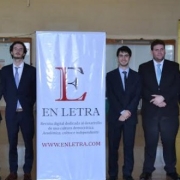
FUNDEPS participated in the Presentation of the Special Health Issue of Revista En Letra
The right to health in times of pandemic
Civil society organizations call for public policies free from interference from the tobacco industry
We filed a complaint against the AFA and Vaporesso for illegal electronic cigarette advertising
The Deliberative Council of Córdoba would prohibit the display of ultra-processed products in checkout lines
Healthy Eating Promotion Law: Responsibilities of entities and sectors involved in the marketing chain

Tags

Access to Information Access to Justice BID Chinese Investments Citizen Participation Democracy ENTs Environment Environmental Democracy Gender Global Governance Health Healthy nutrition IFIs Infrastructure Financing Legal Interruption of Pregnancy Sexual and Reproductive Rights Social and Environmental Standards Tobacco Control Transparency
See all tags

Acuerdo de Escazú

Emergencia Agroquímica

MOCI - monitoreo ciudadano en proyectos de infraestructura

{el entramado} Contamos historias. Acercamos Realidades.

Instagram

fundepsargentina

Trabajamos para que se garanticen los derechos humanos 🌱⚖️🗣️🌈💜🚭🍎
Promovemos la equidad de #genero, el derecho a la #salud y un #ambiente sano.

Post pluri seguimos trabajando. Nos encontramos du Post pluri seguimos trabajando. Nos encontramos durante dos días con compañeres de diferentes organizaciones del país, con quienes articulamos diferentes acciones en torno a la agenda de salud sexual y reproductiva 
Nos tenemos! 💜
20 años de ESI, miles de experiencias. Poner un l 20 años de ESI, miles de experiencias.

Poner un límite, poder decir lo que nos pasa, reconocer una situación que no está bien: muchas de las herramientas que deja la ESI aparecen después, en nuestros vínculos y decisiones cotidianas.

Por eso, hablar de ESI también es hablar de herramientas que nos acompañan para cuidarnos, expresarnos y reconocer violencias.

¿Qué aprendizaje de la ESI te acompaña hoy?
💬 Te leemos.
El Pluri también es todo lo que nos pasa cuando no El Pluri también es todo lo que nos pasa cuando nos encontramos.

Son las experiencias que compartimos, las discusiones que nos incomodan, los dolores que traemos y las ausencias que sentimos. Es reconocernos en otres, sabernos parte de una historia común y descubrir todo lo que podemos construir desde nuestras diferencias.

En un contexto de retrocesos y amenazas a nuestros derechos, encontrarnos también es celebrar lo que construimos, compartir saberes, tejer nuevas alianzas y renovar las ganas de seguir organizándonos.

Nos quedan las conversaciones, los abrazos, las risas y las ideas que nos llevamos. También la certeza de que nuestras luchas son diversas, que hay muchas formas de encontrarnos y que seguimos construyendo, desde el transfeminismo, otros futuros posibles.
Ya se siente el Pluri 🔥 Una vez más, miles de muj Ya se siente el Pluri 🔥

Una vez más, miles de mujeres y diversidades nos encontramos en Córdoba para intercambiar saberes y experiencias, debatir y organizarnos.

En un contexto de constantes ataques a nuestros derechos y de un desmantelamiento de políticas públicas sin precedentes, la organización colectiva hoy es más que nunca nuestra herramienta para defender lo conquistado y transformar nuestras realidades.

Para esta ocasión, trabajamos estas ilustraciones junto a @macattorres 🧡, que vamos a compartir durante el Encuentro.

Este finde, nos encontramos en las calles.
Follow on Instagram

Twitter

Tweets por @fundeps

Newsletter Subscription

    Fundeps. Córdoba (CP X5000JZH), Argentina. info@fundeps.org
    • Link to X
    • Link to Facebook
    • Link to Instagram
    • Link to Mail
    • Link to Youtube
    • Link to LinkedIn
    • Link to TikTok
    Link to: Fundeps was elected to be part of the National Open Government Roundtable Link to: Fundeps was elected to be part of the National Open Government Roundtable Fundeps was elected to be part of the National Open Government Roundtable Link to: Fundeps is part of the Alliance for the Framework Convention on Global Health Link to: Fundeps is part of the Alliance for the Framework Convention on Global Health Fundeps is part of the Alliance for the Framework Convention on Global Heal...
    Scroll to top Scroll to top Scroll to top