• ES
  • EN
Fundeps
  • About Fundeps
  • Team
  • Working areas
    • Environment
    • Democracy
    • Gender
    • Global Gorvernance
    • Health
  • News
  • Publications
  • DONATE
  • Click to open the search input field Click to open the search input field Search
  • Menu Menu
Gender, News

They ask the Senate to guarantee a composition of the Supreme Court that includes women
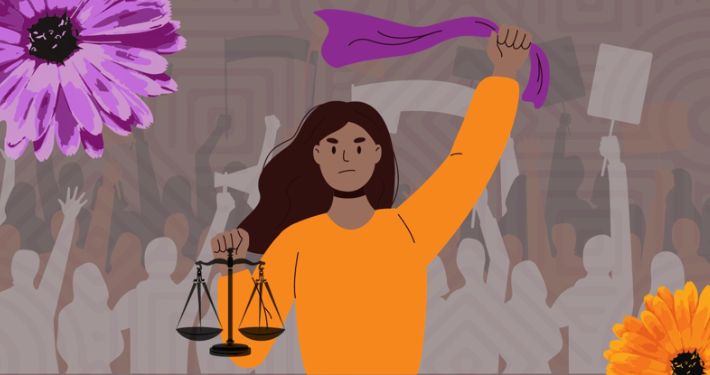
Given the absence of women in the presidential proposal to fill the vacancies in the Supreme Court of Justice of the Nation, a group of 12 civil society organizations sent a letter to the president of the Agreements Commission of the Chamber of Senators, Guadalupe Tagliaferri, so that the public hearing for the appointment of the two male judges proposed by the Executive Branch does not begin because it is unconstitutional and discriminatory based on gender. Likewise, it implies a strong setback in the diversity that the highest court must have, with a serious impact on its legitimacy.

“Below, we offer a google translate version of the original article in Spanish. This translation may not be accurate but serves as a general presentation of the article. For more accurate information, please switch to the Spanish version of the website. In addition, feel free to directly contact in English the person mentioned at the bottom of this article with regards to this topic”.

In all of Argentine history there were only three women in the Court compared to 104 men. Instead of reversing this alarming reality, the Executive Branch decided to integrate this court only with men. Today it is the Agreements Commission of the Upper House, the body that has the historic opportunity to prevent us from having an absolutely male Court for at least 7 years, leaving out women who meet the conditions to occupy that position and reinforcing the stereotypes that block their access to places of power and decision-making.

The moments of greatest political participation of women in these spaces also coincided with important advances in gender matters. The creation of the Court’s Women’s Office and the Domestic Violence Office, fundamental organizations for documenting and reversing discrimination and violence, took place when Carmen Argibay and Elena Highton de Nolasco were part of the highest judiciary.

An equal integration of the Supreme Court and equal access to public positions, especially in hierarchical and power bodies, are political rights of women and the State has the obligation to make them effective, in accordance with the commitments assumed in international rights treaties. humans with constitutional hierarchy. Likewise, Decree 222/03 includes these standards for the process of appointing judges to the Court and establishes that a diverse gender composition must be promoted when defining appointments.

Although in the Argentine Judiciary 57% of the staff is made up of women, they occupy only 31% of the positions of judges in the national and federal justice system and only 29% of the highest authorities there.

It is the duty of the Executive Branch to propose women for the Court who have the qualities, suitability and commitment to the rights required for such a function and, of the Legislative Branch, to promote and ensure that said obligation is fulfilled.

For this reason, Amnesty International, the Latin American Justice and Gender Team (ELA), the Women’s Network for Justice, the Foundation for the Development of Sustainable Policies (Fundeps), Women in Equality (MEI), the Foundation for Study and Research of Women (FEIM), Fundación Poder Ciudadano, the Center for Justice and International Law (CEJIL), the Institute of Comparative Studies in Criminal and Social Sciences (INECIP), the Center for Legal and Social Studies (CELS), the Civil Association for Equality and Justice (ACIJ), the GQUAL Campaign and the Association for Civil Rights (ADC), ask the Senate not to begin the discussion of the specifications to appoint two judges to the Court in order to guarantee gender equality in the Argentine Justice.


Contact

Mayca Balaguer, maycabalaguer@fundeps.org


*Image taken from a publication of the Gender with Class Foundation
12 de July de 2024
Tags: Access to Justice, Gender, Gender and participation
Share this entry
  • Share on Facebook
  • Share on X
  • Share on WhatsApp
  • Share on LinkedIn
  • Share by Mail
https://fundeps.org/wp-content/uploads/2024/07/Web-1-2.jpg 375 710 Admi2024FunDEPS https://fundeps.org/wp-content/uploads/2026/04/logo-2026-300x120.png Admi2024FunDEPS2024-07-12 19:05:072024-11-14 13:14:01They ask the Senate to guarantee a composition of the Supreme Court that includes women
You might also like
The legalization of abortion is a matter of equality, health and human rights
On March 8, we stop again
MAR 8: FUNDEPS accompanies the International Women’s Strike
Reporte sombra para el Comité de la CEDAW – Violencia Mediática – November 2016
ESCAZÚ AGREEMENT: Access to Information, Public Participation and Justice in Environmental Matters
Considerations on the crime of abortion and injuries to the unborn person in the preliminary draft reform of the Penal Code
Business activity and women’s rights in the United Nations agenda
We launched the Network of Organizations against Corruption

Tags

Access to Information Access to Justice BID Chinese Investments Citizen Participation Democracy ENTs Environment Environmental Democracy Gender Global Governance Health Healthy nutrition IFIs Infrastructure Financing Legal Interruption of Pregnancy Sexual and Reproductive Rights Social and Environmental Standards Tobacco Control Transparency
See all tags

Acuerdo de Escazú

Emergencia Agroquímica

MOCI - monitoreo ciudadano en proyectos de infraestructura

{el entramado} Contamos historias. Acercamos Realidades.

Instagram

fundepsargentina

Trabajamos para que se garanticen los derechos humanos 🌱⚖️🗣️🌈💜🚭🍎
Promovemos la equidad de #genero, el derecho a la #salud y un #ambiente sano.

Y todo esto quedó en un papel? No. Ya hay avances. Y todo esto quedó en un papel? No. Ya hay avances. Pero tampoco está resuelto.

Hay plantas de tratamiento que comenzaron a funcionar, obras de cloacas terminadas y establecimientos que fueron auditados por posible contaminación.

➡️ También quedan medidas por cumplir y avances que necesitan seguimiento. Porque mostrar lo que se hizo también sirve para saber qué falta.

Para seguir acompañando este proceso y sosteniendo el trabajo que todavía queda, necesitamos tu apoyo.

Doná hoy.
La Justicia no solo dijo que el lago está contamin La Justicia no solo dijo que el lago está contaminado. También ordenó qué tiene que hacer el Estado para empezar a sanearlo.

La sentencia establece medidas concretas, con plazos y obligaciones que involucran a la Provincia y a los municipios de la cuenca.

Entre ellas: avanzar con las obras cloacales, controlar los vertidos contaminantes, fortalecer la fiscalización y garantizar espacios de participación y transparencia.

Deslizá para conocer qué tiene que pasar para que el saneamiento avance.

Ayudanos a seguir trabajando para que estas medidas se cumplan. Doná hoy.
Hoy, 4 de septiembre, es el Día Mundial de la Salu Hoy, 4 de septiembre, es el Día Mundial de la Salud Sexual. Una fecha que nos invita a volver sobre las discusiones que atraviesan el acceso a la salud sexual y (no) reproductiva: condiciones de acceso para que sea integral y de calidad, desde un enfoque de derechos y con perspectiva de diversidad.

En el mes de junio nos encontramos en el 3° Encuentro Provincial de Redes de Compromiso y Cuidados: Salud sexual Integral con Perspectiva de Diversidad para poner en común experiencias y preguntas sobre estos desafíos.

Hoy recuperamos algunas de las voces que fueron parte de las exposiciones de ese encuentro para volver sobre dos preguntas que siguen abiertas:
¿Cuál es hoy el debate más urgente cuando hablamos de salud integral y diversidad?
¿Por qué es importante encontrarnos en este contexto?

Porque garantizar el derecho a la salud también implica seguir encontrándonos para pensar, discutir y construir respuestas colectivas.
🕰Han pasado 84 años… y seguimos hablando del Lago 🕰Han pasado 84 años… y seguimos hablando del Lago San Roque.
Bueno, no tanto. Pero sí llevamos más de cuatro años trabajando para que el saneamiento de la cuenca deje de ser una promesa y se convierta en una realidad.

En 2022 presentamos un amparo colectivo junto a la comunidad de la cuenca. En abril de 2025, la Justicia reconoció el daño ambiental y ordenó sanear el lago.

❗¿El problema? Un fallo no alcanza por sí solo. El Plan de Saneamiento ya está en marcha y todavía queda mucho por hacer.

En este carrusel te contamos qué pasó y por qué seguimos hablando del Lago San Roque.

Si querés que este trabajo continúe, podés sumarte con una donación. [link en bio]
Follow on Instagram

Twitter

Tweets por @fundeps

Newsletter Subscription

    Fundeps. Córdoba (CP X5000JZH), Argentina. info@fundeps.org
    • Link to X
    • Link to Facebook
    • Link to Instagram
    • Link to Mail
    • Link to Youtube
    • Link to LinkedIn
    • Link to TikTok
    Link to: Organizations reject the president’s speech in favor of the exploitation of natural resources without considering the environmental dimension Link to: Organizations reject the president’s speech in favor of the exploitation of natural resources without considering the environmental dimension Organizations reject the president’s speech in favor of the exploitation... Link to: MapaInversiones Argentina Platform: Strengths and Aspects to Improve Link to: MapaInversiones Argentina Platform: Strengths and Aspects to Improve MapaInversiones Argentina Platform: Strengths and Aspects to Improve
    Scroll to top Scroll to top Scroll to top