• ES
  • EN
Fundeps
  • About Fundeps
  • Team
  • Working areas
    • Environment
    • Democracy
    • Gender
    • Global Gorvernance
    • Health
  • News
  • Publications
  • DONATE
  • Click to open the search input field Click to open the search input field Search
  • Menu Menu
Gender, News

Public Hearings of the Public Defender’s Office: “The media and information in the pandemic”

During the year 2021, faced with a pandemic context, we participated in the first Public Hearings of the Public Defender’s Office in virtual mode, through a videoconference platform and, at the beginning of this year, the reports resulting from the process were published.

Below, we offer a google translate version of the original article in Spanish. This translation may not be accurate but serves as a general presentation of the article. For more accurate information, please switch to the Spanish version of the website. In addition, feel free to directly contact in English the person mentioned at the bottom of this article with regards to this topic.

Communication during the pandemic

The Public Hearings of the Public Defender’s Office have been held every year since 2013, with the exception of the 2019-2020 period, fulfilling the mandate of the Audiovisual Communication Services Law to evaluate the functioning of the body through citizen participation.

The theme that governed the conversations of the last Hearing was “The media and information in the pandemic”. The meetings that were held were of the utmost importance since it was an issue that has affected not only the country but also the world in a transversal way. Approaching communication from a rights and gender approach implies conceiving all citizens as subjects of law and commits the State to guarantee their participation and incidence in political decisions. This becomes urgent in a context in which information is a fundamental human right for survival, which is why this Hearing allowed the Public Defender’s Office to internalize the needs and claims of the different actors in society regarding this issue. and all those who touch us as communicational citizens.

The thematic axes that were debated were: right to communication and Law 26,522 of Audiovisual Communication Services; access to audiovisual communication services in coverage of the pandemic; information and disinformation in the audiovisual media about the Covid-19 pandemic; specific considerations in the audiovisual coverage of the pandemic on historically marginalized sectors; State and public communication policies linked to the operation of audiovisual communication services in a pandemic; situation of the workers of the press, regulation and organization of work; proposals, suggestions and requests addressed to the Public Defender’s Office in relation to audiovisual media in a pandemic.

Our intervention

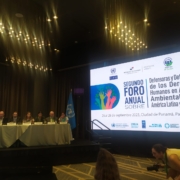
Organized by regions, the first virtual audience was that of the Central Region, which includes the provinces of Córdoba, Santa Fé and Entre Ríos, divided into two days due to the large call. Through the participation of Mayca Balaguer, coordinator of the areas of Legal Affairs and Gender and Sexual Diversity, we participated in this Public Hearing contributing from a human rights and gender perspective.

In reference to the aspects that we consider positive and negative in the media coverage of the pandemic, we highlight that the media served and had a fundamental role as a channel for transmitting information related to Covid-19 and health measures. However, we express our concern about some cases of fake news, disinformation and even bad examples.

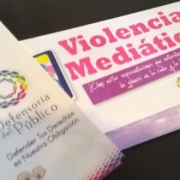
Likewise, regarding media and symbolic gender violence, we state that during the pandemic we observed that in many cases the media reinforced gender stereotypes, fundamentally through a strong stigmatization of fat bodies, motivated by changes in habits in diet and sedentary lifestyle caused by isolation. Far from promoting healthy habits in a way that respects body diversity, we noticed that many media outlets fell into fat-phobic and stereotyping discourses.

Regarding the role of the State, we highlight the need to develop visibility strategies for alternative, self-managed, community media from different parts of the country, which are dedicated to reporting from the territories. We believe that the contribution of these media is key to recovering the voices and perspectives of non-hegemonic sectors from a perspective that respects human rights, especially those that are made up of women and dissidents, people with disabilities, racialized, fat, etc. At this point, a more equitable distribution of the official guideline may be a key factor in sustaining these media, which, due to the socioeconomic consequences derived from social isolation, may cease to exist, fueling the monopolization of information in the hands of hegemonic media.

The importance of citizen participation in communication policies

The Public Defender’s Office’s main objective is to promote and guarantee the rights of audiences in pursuit of democratic communication throughout the country. To achieve this, it holds public hearings that seek to actively participate and involve citizens in decision-making so that these are made in a transparent manner and, ultimately, a more informed and participatory society is generated that has access to its right to communication.

In these public hearings, they function as a mechanism for the State to carry out an updated diagnosis on the operation of the audiovisual media, recovering different points of view, opinions, experiences and studies provided by citizens. This makes it possible to inform, design and implement public policies aimed at the recognition and exercise of the rights of the audience.

For this reason, we celebrate this space for citizen participation in which we participate, since it is essential to guarantee equal access to information and to expand the diversity of voices in the government decision-making process. This promotes the construction of informed, inclusive, more democratic, fair and equitable public policies that incorporate a rights approach.

Autor

Irene Aguirre

Contact

Cecilia Bustos Moreschi, cecilia.bustos.moreschi@fundeps.org

28 de March de 2022
Tags: Citizen Participation, Communication and Gender, Gender and participation, Media violence
Share this entry
  • Share on Facebook
  • Share on X
  • Share on WhatsApp
  • Share on LinkedIn
  • Share by Mail
https://fundeps.org/wp-content/uploads/2022/03/nota-genero.jpg 375 710 Admi2024FunDEPS https://fundeps.org/wp-content/uploads/2026/04/logo-2026-300x120.png Admi2024FunDEPS2022-03-28 16:22:172024-11-14 13:14:42Public Hearings of the Public Defender’s Office: “The media and information in the pandemic”
You might also like
Demystifying development financing
Comments and observations on the draft IDB Environmental and Social Policy Framework from a gender perspective
Workshops: How to access environmental rights? Escazú agreement for communities
ABC of Public Budget
Córdoba moves forward in designing a new access-to-information law
We make comments and observations on the IDB’s Environmental and Social Policy Framework from a gender perspective
National Women’s Council and INAM: what could have been, what was and how will it continue?
Rosario received us at the Third Meeting on Women and Ecology

Tags

Access to Information Access to Justice BID Chinese Investments Citizen Participation Democracy ENTs Environment Environmental Democracy Gender Global Governance Health Healthy nutrition IFIs Infrastructure Financing Legal Interruption of Pregnancy Sexual and Reproductive Rights Social and Environmental Standards Tobacco Control Transparency
See all tags

Acuerdo de Escazú

Emergencia Agroquímica

MOCI - monitoreo ciudadano en proyectos de infraestructura

{el entramado} Contamos historias. Acercamos Realidades.

Instagram

fundepsargentina

Trabajamos para que se garanticen los derechos humanos 🌱⚖️🗣️🌈💜🚭🍎
Promovemos la equidad de #genero, el derecho a la #salud y un #ambiente sano.

La Legislatura de Córdoba otorgó a Fundeps un bene La Legislatura de Córdoba otorgó a Fundeps un beneplácito por el Tercer encuentro Redes de compromiso y cuidados: “Acceso a la salud sexual integral. Debates urgentes”. El encuentro se realizó el pasado 20 de junio y reunió a más de cien profesionales de toda la provincia.

La mención (aprobada por unanimidad) fue iniciativa de la Legisladora Karen Acuña, en coautoría con las legisladoras Silvina Jurich, Ariela Szpanin, Doris Mansilla y Julieta Rinaldi. La misma expresa: “iniciativas con estas características, impulsadas por organizaciones de la sociedad civil, resultan fundamentales para fortalecer la protección y el ejercicio efectivo de los derechos ciudadanos, al tiempo que contribuyen a la construcción de una sociedad más justa, inclusiva e igualitaria".

Recibir este reconocimiento nos llena de orgullo y fortalece sin dudas los vínculos y el camino conjunto en pos del acceso a derechos en nuestra provincia.
Este viernes 31 de julio realizamos un nuevo encue Este viernes 31 de julio realizamos un nuevo encuentro de formación en derechos sexuales y (no) reproductivos. 

En articulación con el Consultorio de Salud Integral y con el aval de la DAJA, compartimos la jornada de capacitación con profesionales del Hospital Vicente Agüero de Jesús María.

Más de 15 profesionales de diversas disciplinas se dieron cita, para conocer diferentes aspectos de la práctica de AMEU y fortalecer su trabajo diario, en pos del acceso al aborto legal, seguro y gratuito.

Como en cada instancia, celebramos el compromiso de cada participante y agradecemos especialmente a la Dra. Kenia Torres y al Director del Hospital, Dr. Javier Díaz, por la predisposición para recibirnos.
La información como herramienta ya está disponible La información como herramienta ya está disponible en Aprender con Fundeps.

Aprendé a ejercer el derecho de acceso a la información pública y a usarlo para defender derechos, monitorear decisiones e impulsar procesos de incidencia.

En este curso vas a aprender:

📌 Cómo hacer solicitudes de acceso a la información pública.
📌 Qué hacer cuando un organismo no responde.
📌 Cómo acceder a información sobre proyectos financiados por organismos internacionales.

💻 Curso virtual, gratuito y autoadministrado.
🔗 Inscribite en aprender.fundeps.org
🌎 Hace un año, la @corteidhoficial emitió su histó 🌎 Hace un año, la @corteidhoficial emitió su histórica Opinión Consultiva sobre la emergencia climática.

✊ Una victoria para quienes defienden el ambiente en América Latina y el Caribe: la Corte confirmó que proteger a las personas defensoras del ambiente no es opcional. Es una obligación legal.

⚖️ Para explicar qué exige esa protección, la Corte se apoyó en el Acuerdo de Escazú. Resultado: la gran mayoría de Estados de América Latina y el Caribe no pueden ignorar los estándares de Escazú, incluso si aún no han ratificado el tratado.

🔎 La implicación es clara: los países de la región deben fortalecer el acceso a la información, la participación pública, la justicia ambiental y la protección de quienes defienden el ambiente. 

📝 La Opinión abre nuevas rutas para frenar la criminalización de personas defensoras, responder a las restricciones al espacio cívico y defender la participación pública en países como Costa Rica, Guatemala y Perú. Compartimos el análisis de  @manizalmigrante del @ciel_org

📣 La discusión ya no es si los países de América Latina y el Caribe deben proteger a quienes defienden el ambiente. Eso ya está claro. Ahora hay que usar la Opinión: en tribunales, reformas, debates públicos y procesos de movilización para exigir mejores garantías y mayor protección.

🔗 Lee el análisis completo en el link en www.ciel.org/corte-idh-escazu-personas-defensoras/
Follow on Instagram

Twitter

Tweets por @fundeps

Newsletter Subscription

    Fundeps. Córdoba (CP X5000JZH), Argentina. info@fundeps.org
    • Link to X
    • Link to Facebook
    • Link to Instagram
    • Link to Mail
    • Link to Youtube
    • Link to LinkedIn
    • Link to TikTok
    Link to: Argentina in the AIIB Link to: Argentina in the AIIB Argentina in the AIIBArgentina en el AIIB Link to: Is Argentina closer to saying #ByeTransFats? Link to: Is Argentina closer to saying #ByeTransFats? Is Argentina closer to saying #ByeTransFats?
    Scroll to top Scroll to top Scroll to top