Communities and civil society advocate to influence the BID meeting in Chile

At the BID’s 2025 Annual Meetings in Chile, organizations and communities affected by projects financed by the institution are demanding greater transparency, participation, and respect for human rights and the environment, in response to the impacts of megaprojects in the region.
“Below, we offer a google translate version of the original article in Spanish. This translation may not be accurate but serves as a general presentation of the article. For more accurate information, please switch to the Spanish version of the website. In addition, feel free to directly contact in English the person mentioned at the bottom of this article with regards to this topic”.
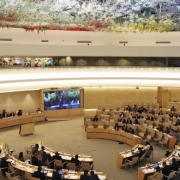
Chile is hosting the sixty-fifth Annual Meeting of the Boards of Governors of the Inter-American Development Bank (IDB) and IDB Invest. The event began on March 20 in Punta Arenas, Magallanes, as part of the Investment Forum and the meeting of authorities, and continues in Santiago until March 30. It brings together the Ministers of Economy, Treasury, and Finance of the Bank’s 48 member countries, who define the main financing policies and strategies for the region.
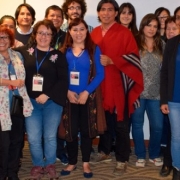
In this context, communities affected by IDB-financed projects and civil society organizations are organizing to present our demands and highlight the resistance to the development model promoted by the institution.
The main demands include:
- Full and understandable access to information about projects and their impacts
- Effective participation of affected communities in decision-making
- Protection of human rights and nature defenders to avoid retaliation
- Financing aligned with climate justice and human rights
- Guaranteeing the prevention, mitigation, and reparation of harm caused by their investments, through policies or frameworks for remediation and responsible exit
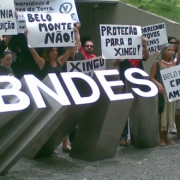
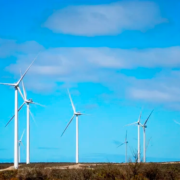
For years, resistance networks have denounced the harmful effects of projects financed by the BID and other Multilateral Development Banks (MDBs). Wind farms, lithium and copper mines, and mega-infrastructure projects have transformed ecosystems and ways of life without consultation or consent from affected communities. In Punta Arenas, the site of pre-Annual Meetings activities, opposition is growing to green hydrogen mega-projects, promoted without real public debate or consideration of Indigenous and local rights.
The BID Working Group, a network of civil society organizations of which we are a part, has been key in opening up advocacy spaces within the Annual Meetings. Thanks to their pressure, the Bank committed to reintroducing civil society participation in 2023, having eliminated it in 2013. The 2025 edition in Chile is a crucial opportunity to strengthen coordination among affected communities and reinforce advocacy strategies to challenge the BID’s role in the region.
The Voice of Communities and Organizations
-
On a Just Energy Transition and the Protection of Indigenous Peoples and the Environment:
“They need to study the places where they promote projects and who lives there. They should take the time to understand local customs and ways of life. It is not right for them to arrive in a place and disrupt communities that are used to living in peace, caring for and protecting nature and biodiversity.” — Spokesperson for the Chango People, Antofagasta (requested anonymity)
-
On the IDB’s Access to Information Policy:
“The BID must ensure effective and timely access to information about the projects it finances so that affected communities and populations can fully understand the status of a given project and participate in decision-making in an informed manner.” — Gonzalo Roza, Coordinator of the Global Governance Area, FUNDEPS (Argentina)
-
On the Protection of Civic Space:
“Multilateral Development Banks (MDBs) have a responsibility to respect human rights in their operations and to use their influence to ensure that their clients—governments and companies—create and maintain an enabling and safe environment for the exercise and defense of those rights. The BID Group must guarantee the effective implementation of its policies and improve its practices to fulfill this responsibility, ensuring they are systematically enforced.” — Suhayla Bazbaz, Director, Community Cohesion and Social Innovation–CCIS (Mexico)
-
On Remedy and Responsible Exit:
“Repairing the harm caused by the projects it finances must be a priority for the BID Group. It is time for the Bank to be at the forefront of best practices and policies, following the example of other development banks. The International Finance Corporation (the private sector arm of the World Bank) has already published its Responsible Exit Principles and is about to approve the Remedy Framework—two instruments aimed at preventing, mitigating, and repairing the harm caused by its investments. Like any financial institution, the IDB has the responsibility to remedy the harm inflicted on communities and the planet.” — Luisa Gómez, Senior Attorney, Center for International Environmental Law–CIEL (United States)
Agenda for Resistance and Advocacy in Chile
Civil society organizations and affected communities have outlined an action plan that includes:
-
Workshops and meetings in Santiago and Punta Arenas with local organizations, affected communities, and strategic allies to analyze the IDB’s impact on the energy transition and development financing.
-
A public discussion on the role of development banks in a just energy transition, as well as Chile’s case in the green hydrogen and mining industries.
-
Advocacy activities during the Annual Meetings aimed at creating spaces for dialogue with BID representatives and other key stakeholders.
-
Engagement with local and international networks to strengthen resistance strategies and globally highlight the impacts of projects promoted by the Bank.
The fight of communities against extractivist projects promoted by the BID is not new, but in a context where financing for strategic sectors such as energy and mining is expanding, amplifying our voices and demanding a just energy transition is more urgent than ever—one that prioritizes community rights and territorial protection.
Contact
Gonzalo Roza, gon.roza@fundeps.org