• ES
  • EN
Fundeps
  • About Fundeps
  • Team
  • Working areas
    • Environment
    • Democracy
    • Gender
    • Global Gorvernance
    • Health
  • News
  • Publications
  • DONATE
  • Click to open the search input field Click to open the search input field Search
  • Menu Menu
Gender, News

We presented amicus curiae before the Inter-American Court in the case “Beatriz vs. The Savior”
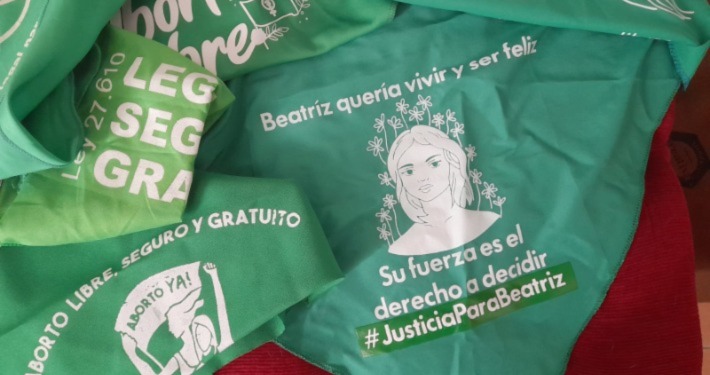
On April 4, we appeared as amicus curiae before the Inter-American Court of Human Rights, in the case “Beatriz vs. El Salvador”, in which the violations of the rights of Beatriz and her family are denounced due to the absolute prohibition of voluntary interruption of pregnancy in that country.

“Below, we offer a google translate version of the original article in Spanish. This translation may not be accurate but serves as a general presentation of the article. For more accurate information, please switch to the Spanish version of the website. In addition, feel free to directly contact in English the person mentioned at the bottom of this article with regards to this topic”.

Beatriz was 22 years old in 2013, when she demanded access to a therapeutic abortion before the courts of El Salvador, since her life was at risk due to having an anencephalic pregnancy (without a brain), with no chance of survival, added to a series of previous illnesses. The abortion request was finally denied by the Salvadoran courts.

Given this refusal from the Constitutional Chamber of that country, the organizations that accompanied the young woman took the case to the Inter-American Human Rights System, and both the Commission and the Court respectively granted precautionary and provisional measures. On June 3, Beatriz began labor, so she had to undergo a cesarean section. The anencephalic fetus died five hours later. The event had wide international repercussions due to the tragedy and violation of rights it meant.

The Inter-American Commission on Human Rights (IACHR) determined that El Salvador was responsible for the violation of Beatriz’s rights and recommended that the State adopt measures to guarantee real access to abortion in situations where the fetus is not viable with extrauterine life. and risk to the health and life of the mother. In January 2022, the case was elevated to the Inter-American Court of Human Rights.

One of the axes of our work is the promotion of the human rights of women and other identities, such as the right to health. In addition, we have actively participated through communication campaigns and political advocacy activities in the process of legislative discussion and subsequent sanction of the national Law 27,610 on Voluntary Interruption of Pregnancy in Argentina.

Through our amicus, in addition to maintaining that there has been an impact on the human right to health in light of international law, we seek to contribute our experience as an organization that works on the issue in Argentina, maintaining that the criminalization of abortion is a form of violence against women, and that the criminalization of abortion is a deficient response by States. Therefore, there is a need to review the restrictive legislation that still exists in other countries in the region.

In this sense, it has been shown that laws that prohibit abortion do not reduce the number of abortions that are performed. According to the World Health Organization (WHO), nearly 6.5 million abortions are performed annually in Latin America and the Caribbean, despite the fact that in most countries in the region abortion is illegal or strongly restricted. . The criminalization of abortion only makes the procedures clandestine and unsafe, which puts women’s health and lives at risk.

The Inter-American Court has the opportunity to establish an important precedent in this case, confirming that the absolute criminalization of abortion is a violation of human rights and that States have the obligation to guarantee access to safe and legal abortion in certain circumstances. We hope that the Court gives rise to what was proposed by the Commission and sends a clear message to the States of the region about the need to protect the human rights of women and other identities with the capacity to bear children.

Access the complete Amicus


Author

Vanina Piccardo

Contact

Mayca Balaguer, maycabalaguer@fundeps.org
23 de April de 2023
Tags: Gender, Legal Interruption of Pregnancy, Sexual and Reproductive Rights, Voluntary Termination of Pregnancy
Share this entry
  • Share on Facebook
  • Share on X
  • Share on WhatsApp
  • Share on LinkedIn
  • Share by Mail
https://fundeps.org/wp-content/uploads/2023/04/Mi-proyecto.jpg 375 710 Sofia Rubiano Eckert https://fundeps.org/wp-content/uploads/2026/04/logo-2026-300x120.png Sofia Rubiano Eckert2023-04-23 01:33:062024-11-14 13:14:14We presented amicus curiae before the Inter-American Court in the case “Beatriz vs. The Savior”
You might also like
The Consultative Council of the INAM met
STRENGTHENING OTHER ECONOMY(S): Guide for self-managing organizations
Presentation of the Declaration by Academia within the framework of Cartagena +30
Comments and observations on the draft IDB Environmental and Social Policy Framework from a gender perspective
We launched the guide for reflection and transformation “Rethinking the economy: a feminist perspective”
Discrimination: the failures of virtual “denunciations” before the INADI
Córdoba has a non-punishable abortion
Territorial Feminisms for a Popular Ecology

Tags

Access to Information Access to Justice BID Chinese Investments Citizen Participation Democracy ENTs Environment Environmental Democracy Gender Global Governance Health Healthy nutrition IFIs Infrastructure Financing Legal Interruption of Pregnancy Sexual and Reproductive Rights Social and Environmental Standards Tobacco Control Transparency
See all tags

Acuerdo de Escazú

Emergencia Agroquímica

MOCI - monitoreo ciudadano en proyectos de infraestructura

{el entramado} Contamos historias. Acercamos Realidades.

Instagram

fundepsargentina

Trabajamos para que se garanticen los derechos humanos 🌱⚖️🗣️🌈💜🚭🍎
Promovemos la equidad de #genero, el derecho a la #salud y un #ambiente sano.

Este viernes 31 de julio realizamos un nuevo encue Este viernes 31 de julio realizamos un nuevo encuentro de formación en derechos sexuales y (no) reproductivos. 

En articulación con el Consultorio de Salud Integral y con el aval de la DAJA, compartimos la jornada de capacitación con profesionales del Hospital Vicente Agüero de Jesús María.

Más de 15 profesionales de diversas disciplinas se dieron cita, para conocer diferentes aspectos de la práctica de AMEU y fortalecer su trabajo diario, en pos del acceso al aborto legal, seguro y gratuito.

Como en cada instancia, celebramos el compromiso de cada participante y agradecemos especialmente a la Dra. Kenia Torres y al Director del Hospital, Dr. Javier Díaz, por la predisposición para recibirnos.
La información como herramienta ya está disponible La información como herramienta ya está disponible en Aprender con Fundeps.

Aprendé a ejercer el derecho de acceso a la información pública y a usarlo para defender derechos, monitorear decisiones e impulsar procesos de incidencia.

En este curso vas a aprender:

📌 Cómo hacer solicitudes de acceso a la información pública.
📌 Qué hacer cuando un organismo no responde.
📌 Cómo acceder a información sobre proyectos financiados por organismos internacionales.

💻 Curso virtual, gratuito y autoadministrado.
🔗 Inscribite en aprender.fundeps.org
🌎 Hace un año, la @corteidhoficial emitió su histó 🌎 Hace un año, la @corteidhoficial emitió su histórica Opinión Consultiva sobre la emergencia climática.

✊ Una victoria para quienes defienden el ambiente en América Latina y el Caribe: la Corte confirmó que proteger a las personas defensoras del ambiente no es opcional. Es una obligación legal.

⚖️ Para explicar qué exige esa protección, la Corte se apoyó en el Acuerdo de Escazú. Resultado: la gran mayoría de Estados de América Latina y el Caribe no pueden ignorar los estándares de Escazú, incluso si aún no han ratificado el tratado.

🔎 La implicación es clara: los países de la región deben fortalecer el acceso a la información, la participación pública, la justicia ambiental y la protección de quienes defienden el ambiente. 

📝 La Opinión abre nuevas rutas para frenar la criminalización de personas defensoras, responder a las restricciones al espacio cívico y defender la participación pública en países como Costa Rica, Guatemala y Perú. Compartimos el análisis de  @manizalmigrante del @ciel_org

📣 La discusión ya no es si los países de América Latina y el Caribe deben proteger a quienes defienden el ambiente. Eso ya está claro. Ahora hay que usar la Opinión: en tribunales, reformas, debates públicos y procesos de movilización para exigir mejores garantías y mayor protección.

🔗 Lee el análisis completo en el link en www.ciel.org/corte-idh-escazu-personas-defensoras/
Seguimos compartiendo algunos momentos del 3° Encu Seguimos compartiendo algunos momentos del 3° Encuentro Provincial de Redes de Compromiso y Cuidados 🧡

Creemos que no hay mejor manera de cerrar una jornada de formación, intercambio y construcción colectiva que encontrándonos también desde el arte. Porque la música y la poesía también nos invitan a imaginar otros mundos posibles.

Así vivimos Revuelo Sur, Íntimas, el espectáculo de Susy Shock junto al Dúo Bazán-Bonillo, que acompañó el cierre de este encuentro.

Gracias a todas las personas que se acercaron y fueron parte de esta jornada.
Follow on Instagram

Twitter

Tweets por @fundeps

Newsletter Subscription

    Fundeps. Córdoba (CP X5000JZH), Argentina. info@fundeps.org
    • Link to X
    • Link to Facebook
    • Link to Instagram
    • Link to Mail
    • Link to Youtube
    • Link to LinkedIn
    • Link to TikTok
    Link to: Summary of the report ‘Business and Human Rights: Inter-American standards’ Link to: Summary of the report ‘Business and Human Rights: Inter-American standards’ Summary of the report ‘Business and Human Rights: Inter-American stan... Link to: IDB Annual Meetings were held with limited civil society participation Link to: IDB Annual Meetings were held with limited civil society participation IDB Annual Meetings were held with limited civil society participation
    Scroll to top Scroll to top Scroll to top