Collective Monitoring: Detect, Record, and Report Illegal Tobacco and Nicotine Advertising on Social Media
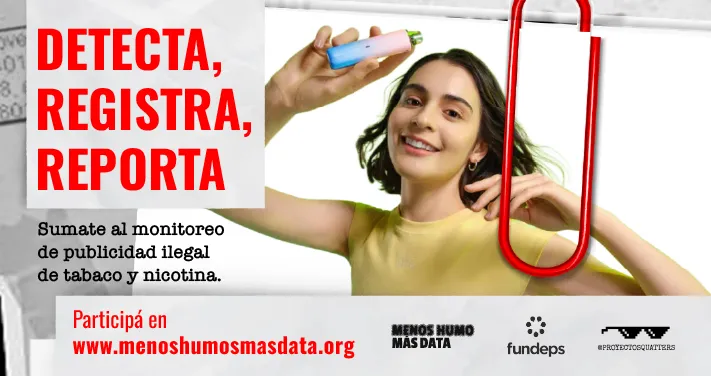
Together with Proyecto Squatters, we launched a collective monitoring campaign to identify and expose illegal advertising of tobacco and nicotine products in digital environments. The initiative aims to gather evidence to demand compliance with current regulations and protect the health of children and adolescents.
On social media, tobacco, and nicotine advertising is widespread, often in subtle and disguised forms. This includes traditional and electronic cigarettes, nicotine pouches, heated tobacco products, and their accessories, which appear integrated into posts, videos, or content designed to seem spontaneous.
Despite the recent regulatory changes authorizing the commercialization of these products, advertising of tobacco and nicotine products remains prohibited in Argentina, both in traditional media and in digital environments. The amendments introduced by these new regulations represent a clear setback in the frameworks designed to protect public health, particularly the health of younger generations.
However, under the new resolution, electronic cigarettes, heated tobacco products, and even nicotine pouches are now expressly covered by the National Tobacco Control Law. Therefore, although the commercialization of these emerging products is now permitted, their sale to individuals under the age of 18 remains strictly prohibited, and marketing restrictions continue to apply. In this context, it is now more important than ever to demand proper implementation of the national law, ensuring effective oversight and enforcement against deceptive tobacco industry advertising strategies that constantly seek to reach younger generations and normalize the consumption of these products.
We already knew that the tobacco industry’s efforts to expand its market among younger generations had succeeded in positioning electronic cigarettes among the most commonly used substances among students, even while their commercialization remained prohibited. This was evidenced in a 2025 SEDRONAR study, which found that 35.5% of adolescents had already tried electronic cigarettes—then still illegal products—while 28.7% reported having tried conventional cigarettes (either manufactured or hand-rolled), despite the fact that their sale to individuals under 18 is prohibited. In addition, a study conducted by CEDES that same year found that nicotine pouch consumption among adolescents had already reached approximately 4.3%.
The promotion of these products is framed as part of aspirational lifestyles, associated with enjoyment, belonging, or freedom. Through influencers, cultural events, giveaways, or sponsored content, brands manage to reduce risk perception and normalize consumption, especially among young people and adolescents.
In response to this situation, at Fundeps we are promoting a collective monitoring campaign that invites people to detect, record, and report illegal advertising on social media and digital platforms. The goal is to gather evidence to expose these practices and strengthen the enforcement of regulations that protect the right to health.
What can be reported?
Different types of content can be reported, including:
- Direct advertising of tobacco and nicotine products by brands, businesses, or influencers
- Display or sale of vapes, nicotine pouches, or heated tobacco products
- Influencer content showing or promoting these products
- Promotions, discounts, giveaways, or games linked to these products
- Sponsorship of music, sports, or recreational events
- Invitations to establish direct contact with brands or companies
- Ads or banners on websites
Where can these be found?
These types of advertisements circulate on websites, streaming channels, and social media platforms such as Instagram, Facebook, TikTok, YouTube, and X.
How to participate?
To participate, record the advertisement you see and complete the form available on the website. The data is collected anonymously and does not constitute a formal complaint.
Each report contributes to building collective evidence about these practices, exposing non-compliance with the law, and strengthening actions to protect public health, especially that of children and adolescents.
To learn more about how to identify these violations, you can consult the guide also available on the platform.
Contact:
Maga Merlo Vijarra, magamerlov@fundeps.org