CSOs point out the weaknesses of the new IDB Invest’s Environmental and Social Sustainability Policy
On December 15, the new IDB Invest Environmental and Social Sustainability Policy will take effect. Civil Society Organizations in the region issued a Public Declaration warning about the weaknesses that the new Policy presents.
“Below, we offer a google translate version of the original article in Spanish. This translation may not be accurate but serves as a general presentation of the article. For more accurate information, please switch to the Spanish version of the website. In addition, feel free to directly contact in English the person mentioned at the bottom of this article with regards to this topic”.
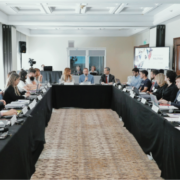
On April 10, IDB Invest approved the new Environmental and Social Sustainability Policy that takes effect tomorrow, December 15. After the process of face-to-face and virtual public consultations that the Bank carried out last year in which civil society organizations, peasant communities, indigenous peoples, and Afro-descendant peoples participated, at the end of May the new policy of the private arm of the IDB Group was presented.
Despite the participation, through the sending of comments, of interested parties in the period of face-to-face and virtual public consultations, in the new Policy there is little or even no incorporation of issues considered relevant. For this reason, and in the face of the weaknesses and limitations that the new Environmental and Social Sustainability Policy presents, the CSOs of the region issued a Public Declaration warning about the precariousness of the policy, the consequences that it would bring to the countries of the region and the setback it means compared to the previous Policy.
Among the main points that we highlight in the Declaration on the limitations of the new Policy are, firstly, the direct adoption of the Environmental and Social Performance Standards of the International Finance Corporation -CFI- dating from 2012, not including changes or adaptations to new realities, making them obsolete in the current context of environmental and social challenges faced by Latin America and the Caribbean.
Another important limitation is the absence of subsidiary and joint liability on the part of IDB Invest regarding the actions of the actors over whom it has influence, that is, it is detached from institutional responsibility in the face of the possible negative impacts that the activities it finances may cause where the responsibility will fall solely on the client. This means the weakening of environmental and social protections created in order to avoid the adverse impacts caused by the projects. Along these lines, IDB Invest omits its duty to “enforce”, which means that it reserves the right to decide in which cases it will apply corrective measures and in which not.
In addition, the Public Declaration highlights the vagueness and ambiguity of the language used in the new Policy since it favors the Bank to act according to what it deems pertinent as well as increases the risk of non-compliance by customers.
Finally, one of the most alarming points are the gaps in the commitments regarding the environment and the social. Regarding the environment, the commitment to mitigation is fragile since there are no express restrictions on greenhouse gas emissions -GEI-, just to mention one case. With regard to social matters, although the policy makes clear its commitment to promote good international practices, in matters such as Human Rights, Retaliation, Gender Risk Management and Equality, as well as Participation of Interested Parties and Disclosure of Information , a superficial and weak commitment is evident when addressing them. For example, in relation to human rights, essential rights such as economic, social and cultural rights or the right to a pollution-free environment are not mentioned.
Then, regarding stakeholder participation, no commitment is made to ensure timely, meaningful and culturally appropriate participation. The Policy undertakes to establish a system for receiving and monitoring complaints of retaliation, it does not detail a procedure to resolve them, nor does it follow the recommendations of the specialized guide prepared by the MICI for the management of retaliation and protection of environmental defenders and activists.
Finally, in gender risk management and equality, the Policy does incorporate the promotion of good practices but excludes the IDB Group’s Operational Policy on Gender Equality in Development, a significant setback that will increase inequality and risks for women. women and LGBTQ + people.
Among many other issues that are addressed in the Public Statement, it is extremely necessary for IDB Invest to be relentless in demanding compliance with environmental, social and transparency standards from its clients if it is truly to promote sustainable growth, reduce poverty. and the inequality of the region. With the current pandemic context and looking at the post-pandemic situation, IDB Invest cannot be flexible in the procedures of social and environmental evaluation and due diligence in the approvals of financing operations since this is the only way to achieve sustainable development and reduce the environmental and social crisis in which Latin America and the Caribbean finds itself.
More information
- Public Statement: Civil Society Organizations warn of weaknesses in the new Environmental and Social Sustainability Policy of IDB Invest
- We participate in the review of the socio-environmental sustainability policy of the IDB Invest – Fundeps
- Recommendations and Comments on the draft of the IDB Invest’s Environmental and Social Sustainability Policy – Fundeps
- Observations on IDB Invest’s Environmental and Social Sustainability Policy draft from a gender-sensitive perspective – Fundeps
Author
Sofia Brocanelli
Contact
Gonzalo Roza, gon.roza@fundeps.org