Reporting to the DESC Committee
In collaboration with other civil society organizations, we made several reports to the Committee on Economic, Social and Cultural Rights (DESC) for its session No. 64. Through them we intend to bring critical observations and recommendations on issues related to DESC that have been part of the work agenda of our organization, and so give an update of the report presented at the instance of sessions of the Preparatory Working Group, in 2017.
“Below, we offer a google translate version of the original article in Spanish. This translation may not be accurate but serves as a general presentation of the article. For more accurate information, please switch to the Spanish version of the website. In addition, feel free to directly contact in English the person mentioned at the bottom of this article with regards to this topic”
Argentina has ratified the International Covenant on Economic and Cultural Rights (PIDESC), committing itself to comply with the obligations derived from this pact. The ICESCR, like other human rights treaties, establishes a set for monitoring its level of compliance: the Committee on Economic, Social and Cultural Rights (CESCR). In this sense, the Supreme Court has recognized this committee as an “authorized interpreter” of the Covenant, which sometimes has a constitutional hierarchy.
The monitoring mechanism established in the same includes, in turn, the possibility of participating in civil society in different stages, through the presentation of reports: the Committee receives reports from the State as well as from civil society and evaluates them, for Then issue your Final observations. The importance of these observations is that they are used as tools to demand compliance with human rights standards in the matter of ESCR.
In this context, we have presented several reports that warn about the situations of rights being affected in different areas.
Health:
- Situation of chronic noncommunicable diseases in Argentina:

We recommend urging the State to adopt some measures to reduce the consumption of tobacco products and unhealthy foods.
Among them, the limitation of advertising aimed at children, the adoption of a more simple and understandable nutrition labeling, the raising of taxes, the ratification by the Argentine State of the Framework Convention on Tobacco Control and the adoption of measures that protect especially vulnerable groups.
- Current situation regarding marketing practices of milk formulas:
In this regard, we recommend urge the Argentine government to regulate and restrict the marketing strategies of formulas of breast milk, to continue to promote breastfeeding beyond awareness campaigns, to prevent interference from industry processes related to the field of public health and to promote transparency in the sponsorship of academic events and research.
- Situation of the regulations of geriatric residences:
We recommend the enactment of a national law that establishes minimum budgets to be guaranteed in all nursing homes in the country, in accordance with the rights and paradigm established in the Inter-American Convention for the Protection of Older Persons, as well as local laws that accept this paradigm. Likewise, it is recommended to urge the Argentine State to publicize the data related to the authorizations and controls of said residences.
- Lack of access to sexual and reproductive rights:

The situation of low access to contraceptives and abortion practices is worrisome in cases allowed by law. We recommend then to urge the State to provide the necessary supplies to comply with sexual and reproductive rights, as well as to ensure that conscientious objection does not impede access to them. Finally, we recommend urging the State to train health professionals, in accordance with the international standards set by WHO for access to safe abortion, and the promotion of legislative discussion for the legalization of abortion.
Democracy
- Current situation of the Ombudsman’s Office:
This institution continues to abide by it for 11 years, which is configured as a weakening of the DESC protection system. In this regard, we have recommended, among other things, to designate as soon as possible a person in charge of the Office of the Ombudsman of the Nation and to reformulate the procedures for selecting it.
- Access to public information on environmental matters:
We recommend that the Committee urge the State to guarantee access to public information on environmental matters in view of the progress of major infrastructure projects, extractive industries and Chinese investments; promoting the creation of instances and / or mechanisms of citizen participation. In addition to promoting the protection of those who defend their rights and oppose the advancement of large infrastructure projects.
- Draft Bill of Collective Proceedings:
We recommend that the State abstain from promoting the Draft Bill of collective actions before the National Congress and promote a regulation that conforms to current international and constitutional standards in terms of access to justice and effective judicial protection of groups in vulnerable situations.
Ambient
- Use and application of agrochemicals:
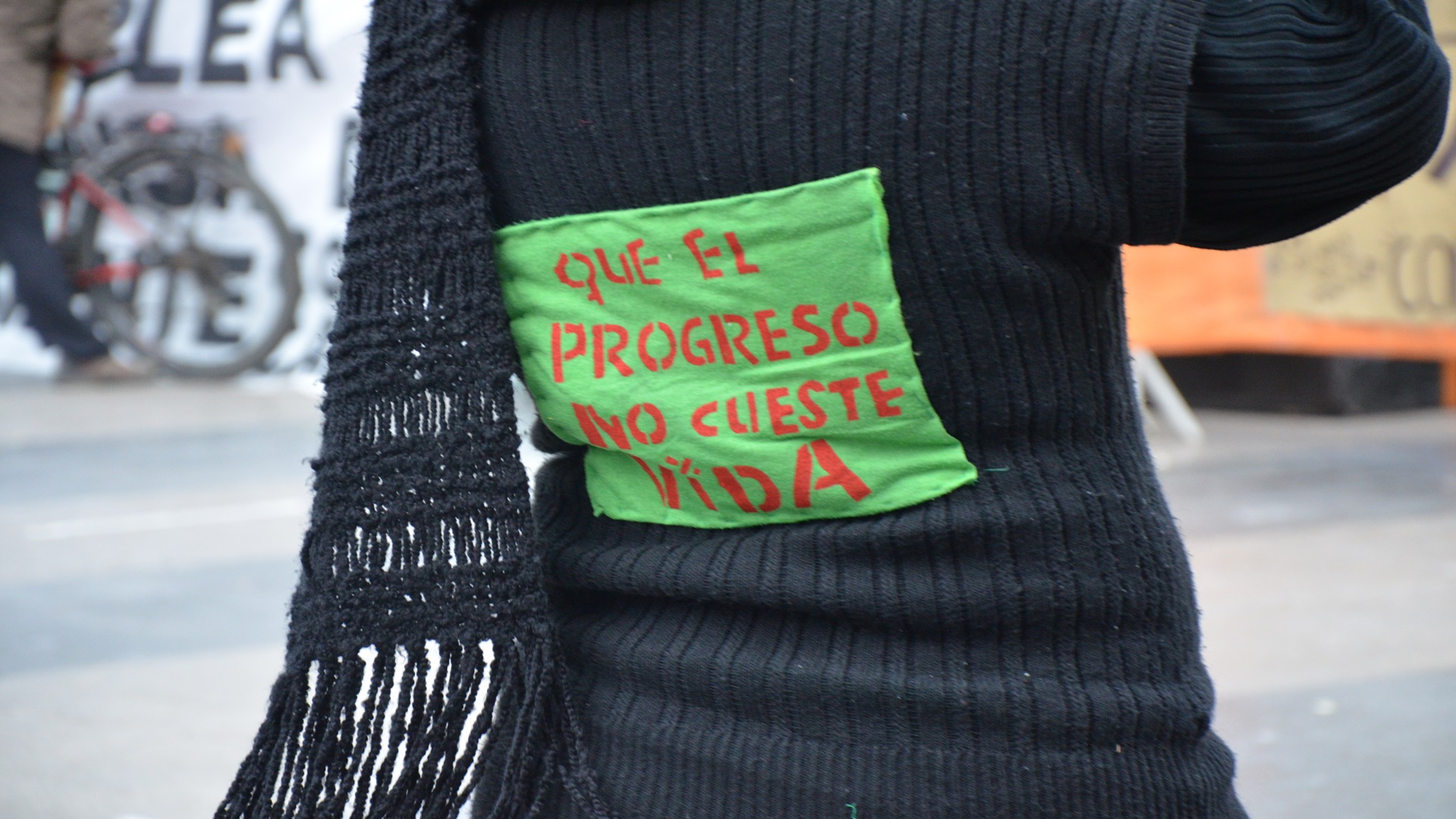
We warn about the effects on the right to health derived from the use of agrochemicals; recommending the adoption of a national regulation that regulates the use and application of agrochemicals and requesting the revision and adaptation of national and provincial regulations to the new categories established by the WHO regarding the classification of phytosanitary products. In addition, the adoption of measures to minimize the impact of the use of agrochemicals and periodic epidemiological evaluations is recommended.
More Information
- Shadow report presented by FUNDEPS
- Joint report on chronic noncommunicable diseases
- Joint report on collective processes
- Joint report on sexual and reproductive rights
Contacts
Agustina Mozzoni: agustinamozzoni@fundeps.org
Carolina Tamagnini: carotamagnini@fundeps.org