• ES
  • EN
Fundeps
  • About Fundeps
  • Team
  • Working areas
    • Environment
    • Democracy
    • Gender
    • Global Gorvernance
    • Health
  • News
  • Publications
  • DONATE
  • Click to open the search input field Click to open the search input field Search
  • Menu Menu
Democracy, Environment, News

Requests for public information by the Bajo Grande plant

Yesterday, FUNDEPS with the Organization Las Omas represented by Alida and Ester Weht presented four requests for information in the Municipality of Córdoba, two requests to the Province of Córdoba and two requests to the company Coniferal de Transporte.

“Below, we offer a google translate version of the original article in Spanish. This translation may not be accurate but serves as a general presentation of the article. For more accurate information, please switch to the Spanish version of the website. In addition, feel free to directly contact in English the person mentioned at the bottom of this article with regards to this topic.”

Since the beginning of this year, the environment axis of the Human Rights Area and the Democratic Strengthening Area of ​​FUNDEPS have been working together with the Civil Association for Equality and Justice (ACIJ) in the Chacras de la Merced District of the Province of Córdoba, in particular with the Las Omas women’s organization. Two workshops were carried out by these organizations in order to identify socio-political problems that affect the community of La Chacra and based on what was identified, an advocacy action proposal was defined to work in the year. Likewise, access to information tools and strategies for monitoring public policies were worked on.

The work seeks to promote the development and implementation of strategies linked to the monitoring and advocacy of public policies in the Chacra de la Merced community, in order to support the work of the Las Omas women’s organization in the strengthening of social and environmental rights violated product of the malfunction of the Bajo Grande sewage treatment plant.

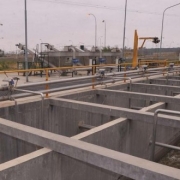
In this context, on Monday, May 30, representatives of the OMAs and members of FUNDEPS presented four requests for public information in different departments of the Municipality of Córdoba (Ministry of Health, Undersecretary of the Environment, Undersecretary of Transportation and the Liquids Treatment Station) Residuals) of the Province of Córdoba (Ministry of Investment and Financing and Secretariat of Environment) and in the company Coniferal SACIF. The purpose of these orders is to have official information on the status and operation of the sewage treatment plant and the environmental and health situation of the area affected by the contamination.

The requests for information submitted are made within the framework of the right to request and receive information, Art. 16 et seq. of Law 25,675, Art. 41 of the National Constitution, Art. 13.1 of the American Convention on Human Rights, Art. XXIV of the American Declaration of Rights and Duties of Man, instruments incorporated into the National Constitution, through its articles 75 inc . 22, Art. 19 inc. 10. Likewise, the Environmental Policy Act of Cordoba prescribes in article 61 that:

All requests for information required under the terms of this Law must be satisfied within a period not exceeding ten (10) business days. The term may be extended exceptionally for another ten (10) business days in the event of circumstances that make it difficult to obtain the information requested, and the requested body must communicate – before the expiration of the ten (10) day period – the reasons for the which makes use of the exceptional extension …

And finally, in accordance with the regulation of Law No. 8803 Right to Access to Knowledge of State Acts, which also provides a period of ten (10) working days to answer the information requested.

We hope to obtain a response to the requested information within the framework of the explicit deadlines, and thus continue fighting in pursuit of demanding and protecting the economic, social, cultural and environmental rights that are being violated, due to the malfunctioning of the liquid treatment plant. Cloacal of Bajo Grande.

Contact

Carolina Juaneda – Area of ​​Democratic Strengthening and Institutional Quality
carojuaneda@fundeps.org

1 de June de 2016
Tags: Health
Share this entry
  • Share on Facebook
  • Share on X
  • Share on WhatsApp
  • Share on LinkedIn
  • Share by Mail
https://fundeps.org/wp-content/uploads/2017/06/whatsapp-image-20160530_1-1.jpg 330 750 Fundeps.org https://fundeps.org/wp-content/uploads/2026/04/logo-2026-300x120.png Fundeps.org2016-06-01 18:55:552024-06-30 16:04:13Requests for public information by the Bajo Grande plant
You might also like
“Let’s not let it pass” campaign: promote the first citizen report on the labeling law
The fight for decent food in Argentina: perspectives and challenges
The impact of the pandemic on school food programs
Public purchases of food for school environments
The Court of Colombia removed a censorship on a pro-health campaign
Exchange of views around the Bajo Grande project
Health at risk: government decisions that affect us
Regulatory Map of Front Labeling in Argentina

Tags

Access to Information Access to Justice BID Chinese Investments Citizen Participation Democracy ENTs Environment Environmental Democracy Gender Global Governance Health Healthy nutrition IFIs Infrastructure Financing Legal Interruption of Pregnancy Sexual and Reproductive Rights Social and Environmental Standards Tobacco Control Transparency
See all tags

Acuerdo de Escazú

Emergencia Agroquímica

MOCI - monitoreo ciudadano en proyectos de infraestructura

{el entramado} Contamos historias. Acercamos Realidades.

Instagram

fundepsargentina

Trabajamos para que se garanticen los derechos humanos 🌱⚖️🗣️🌈💜🚭🍎
Promovemos la equidad de #genero, el derecho a la #salud y un #ambiente sano.

📱Cuando pensamos en los riesgos que enfrentan las 📱Cuando pensamos en los riesgos que enfrentan las y los adolescentes en redes sociales, solemos hablar de ciberacoso, apuestas o del tiempo frente a la pantalla.
 
💨Pero hay uno del que casi no se habla: la publicidad ilegal de vapers y bolsas de nicotina.

Instagram es la red más usada entre los 15 y los 17 años. Ahí, la industria tabacalera les llega con los mismos códigos que usan todos los días: influencers que admiran, deportistas, recitales, sabores y formatos de tendencia. A veces ni siquiera parece publicidad, pero lo es. Y está prohibida.

❗En nuestro último monitoreo comprobamos que no son casos aislados: es una estrategia para enganchar a una nueva generación. Y son las propias marcas las que infringen la ley: 8 de cada 10 anuncios de bolsas de nicotina se hacen desde sus cuentas oficiales. 

Cuidar a adolescentes en el entorno digital también es saber qué les venden, quién lo hace y con qué fin. 

Exijamos que el Estado haga cumplir la ley para proteger la salud de adolescentes y jóvenes.

📲 Compartí este posteo y leé el informe completo en el link de nuestra bio.
#ControlDeTabaco #BolsasDeNicotina #Vapeadores #Salud
Hay ideas que escuchamos tantas veces que a veces Hay ideas que escuchamos tantas veces que a veces ni nos detenemos a pensarlas.

¿Los celos son una forma de cuidado? ¿El silencio significa consentimiento? ¿Poner límites puede arruinar una relación?

Salimos a la calle con una consigna simple: 👍 o 👎
Pero lo más interesante vino después: escuchar por qué.

Porque hablar de ESI también es revisar lo que pensamos sobre los vínculos, el consentimiento, los límites y el cuidado.

¿Vos qué pulgar levantarías?

#CrecíConESI #20AñosDeESI
🫂 El derecho a cuidar, a cuidarnos y a recibir cui 🫂 El derecho a cuidar, a cuidarnos y a recibir cuidados. El acceso a la salud integral con perspectiva de diversidad.

Compartimos un ateneo en el Hospital Aurelio Crespo, de Cruz del Eje, junto a 30 promotoras de salud que abarcan con su trabajo un territorio habitado por alrededor de 500 familias.

🏥Durante el encuentro, reflexionamos sobre lo que implica una «comunidad sana», las desigualdades estructurales que afectan a diferentes poblaciones y conceptos centrales para comprender la diversidad. También abordamos los acompañamientos, las responsabilidades de cada sector y las barreras que persisten para garantizar el acceso a derechos, especialmente en las zonas rurales.

La actividad se realizó en el marco del programa Familia rural sana y de la diplomatura que las promotoras cursan en articulación con la Facultad de Ciencias Médicas de la UNC.

Agradecemos la invitación y la oportunidad de seguir construyendo colectivamente el acceso a la salud integral en el norte de Córdoba.

En el Día Internacional de los Cuidados y el Apoyo, reivindicamos la tarea, muchas veces invisibilizada, que sostienen las promotoras de salud en los distintos territorios de la provincia.
¿Cómo se traduce una ley en la vida cotidiana? ¿Qu ¿Cómo se traduce una ley en la vida cotidiana? ¿Qué aprendizajes nos dejó la ESI en estos 20 años?

A 20 años de la Ley de Educación Sexual Integral, salimos a las calles para conocer qué huellas dejó la ESI, qué nos hubiera gustado aprender antes y qué conversaciones siguen pendientes.

Lo que aprendemos sobre nuestros cuerpos, nuestros vínculos y nuestros derechos también cambia la forma en que nos relacionamos, ponemos límites y tomamos decisiones. ¿Qué lugar tuvo la ESI en tu vida?

#CrecíConESI #ESI20Años
Follow on Instagram

Twitter

Tweets por @fundeps

Newsletter Subscription

    Fundeps. Córdoba (CP X5000JZH), Argentina. info@fundeps.org
    • Link to X
    • Link to Facebook
    • Link to Instagram
    • Link to Mail
    • Link to Youtube
    • Link to LinkedIn
    • Link to TikTok
    Link to: Violencia de Género y Políticas Publicas de Comunicación – May 2016 Link to: Violencia de Género y Políticas Publicas de Comunicación – May 2016 Violencia de Género y Políticas Publicas de Comunicación – May 201... Link to: Civil society organizations call for transparency in World Bank safeguards review Link to: Civil society organizations call for transparency in World Bank safeguards review Civil society organizations call for transparency in World Bank safeguards ...
    Scroll to top Scroll to top Scroll to top