• ES
  • EN
Fundeps
  • About Fundeps
  • Team
  • Working areas
    • Environment
    • Democracy
    • Gender
    • Global Gorvernance
    • Health
  • News
  • Publications
  • DONATE
  • Click to open the search input field Click to open the search input field Search
  • Menu Menu
Democracy, News

The Way of the Vote

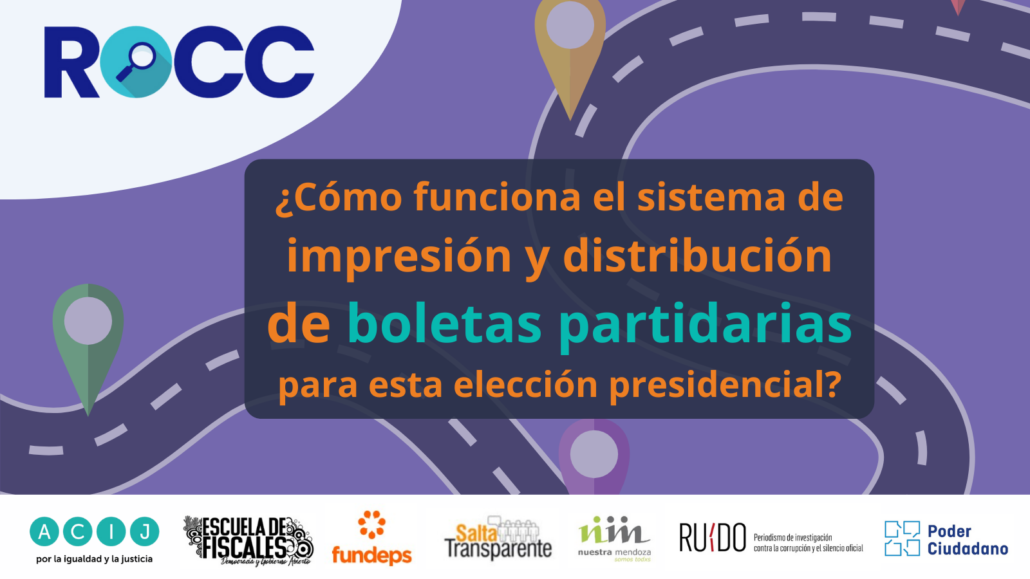
A few days before the elections this Sunday, November 19, a new controversy has entered the public agenda: one of the parties competing in the runoff decided to deliver fewer ballots to the Electoral Justice to be distributed at the polling stations, alleging the fear that the ballots would disappear and citizens would not be able to exercise their right to vote. However, this claim has several inconsistencies.

The political parties are responsible for the printing of the ballots and their distribution, for which the State grants them the necessary funds to do so. For these elections, the National Electoral Directorate valued each ballot at $2.92, granting each party the equivalent of 2 and a half padrones. This means that 2 and a half ballots per party are printed for each voter.

For example, only for the category of presidency and vice-presidency in the PASO 2023, each party was granted a little more than 103 million pesos to be used exclusively for the printing of ballots. Although the parties may decide to print fewer ballots than those established by the Law, if they do so, they are obliged to return the unearned amount.

The parties may choose to distribute the ballots on their own or give them to the Electoral Board to take them to the voting centers, distributing bundles of 350 ballots for each table plus 2 extra bundles for contingencies, or four more if the center has more than 9 tables.

Even if the Electoral Justice were given a bundle of 350 ballots per table -which would be enough to cover all the people who are going to vote-, the party would retain a total of one and a half ballot lists to dispose of freely, either by distributing them the days prior to the election or by using them as contingency ballots during the electoral process, with which not only would there be no lack of ballots, but there would be ballots left over.

The problem lies elsewhere. The system ensures that each voter has his or her party ballot available to vote, but why would the parties not deliver the necessary ballots to the electoral authorities? Wouldn’t this be a waste of resources and, above all, a possible “black box”? According to an investigation by El Ruido and Connectas, in this year’s PASO only one list out of the 1,818 that ran for election returned the surplus of unprinted ballots. Moreover, 8 billion pesos went to ballots of parties that did not exceed 1.5% of the votes.

It is because of things like these that many organizations have been asking, for a long time, for a Single Paper Ballot system. But it is also true that the current procedure is reliable and has so far reflected the will of the electorate, and there is not a single indication of fraud. In fact, sometimes there are those who prefer to raise the specter of fraud rather than accept that they were not an option for the citizens.

17 de November de 2023
Tags: Democracy, Elections
Share this entry
  • Share on Facebook
  • Share on X
  • Share on WhatsApp
  • Share on LinkedIn
  • Share by Mail
https://fundeps.org/wp-content/uploads/2023/11/1.png 900 1600 Admi2024FunDEPS https://fundeps.org/wp-content/uploads/2026/04/logo-2026-300x120.png Admi2024FunDEPS2023-11-17 16:40:482024-11-14 13:14:07The Way of the Vote
You might also like
Participation in the public hearing for the expansion of the Bajo Grande sewage plant
Journalists and NGOs meet to talk about transparency and access to information
A quarantine with rights
Concern about the situation of people detained in the demonstration against the Bases Law
We join the UNC Social Advisory Council
What is the national anti-corruption plan that seeks to consolidate “transparency and integrity”?
Budget and Rights: Working group on budget analysis
ABC of the public budget in the provinces of Mendoza, Salta, Tucumán and Córdoba

Tags

Access to Information Access to Justice BID Chinese Investments Citizen Participation Democracy ENTs Environment Environmental Democracy Gender Global Governance Health Healthy nutrition IFIs Infrastructure Financing Legal Interruption of Pregnancy Sexual and Reproductive Rights Social and Environmental Standards Tobacco Control Transparency
See all tags

Acuerdo de Escazú

Emergencia Agroquímica

MOCI - monitoreo ciudadano en proyectos de infraestructura

{el entramado} Contamos historias. Acercamos Realidades.

Instagram

fundepsargentina

Trabajamos para que se garanticen los derechos humanos 🌱⚖️🗣️🌈💜🚭🍎
Promovemos la equidad de #genero, el derecho a la #salud y un #ambiente sano.

TE NECESITAMOS 🧡 Para seguir de cerca el Plan de TE NECESITAMOS 🧡

Para seguir de cerca  el Plan de Saneamiento del Lago San Roque, hay que mirar de cerca todo el proceso. Revisamos información técnica, hacemos seguimiento de la causa y elaboramos informes públicos sobre el cumplimiento del Plan.

Sostener este trabajo en el tiempo requiere recursos. Tu aporte hace posible que continúe.

Doná hoy! (link en bio)
Y todo esto quedó en un papel? No. Ya hay avances. Y todo esto quedó en un papel? No. Ya hay avances. Pero tampoco está resuelto.

Hay plantas de tratamiento que comenzaron a funcionar, obras de cloacas terminadas y establecimientos que fueron auditados por posible contaminación.

➡️ También quedan medidas por cumplir y avances que necesitan seguimiento. Porque mostrar lo que se hizo también sirve para saber qué falta.

Para seguir acompañando este proceso y sosteniendo el trabajo que todavía queda, necesitamos tu apoyo.

Doná hoy.
La Justicia no solo dijo que el lago está contamin La Justicia no solo dijo que el lago está contaminado. También ordenó qué tiene que hacer el Estado para empezar a sanearlo.

La sentencia establece medidas concretas, con plazos y obligaciones que involucran a la Provincia y a los municipios de la cuenca.

Entre ellas: avanzar con las obras cloacales, controlar los vertidos contaminantes, fortalecer la fiscalización y garantizar espacios de participación y transparencia.

Deslizá para conocer qué tiene que pasar para que el saneamiento avance.

Ayudanos a seguir trabajando para que estas medidas se cumplan. Doná hoy.
Hoy, 4 de septiembre, es el Día Mundial de la Salu Hoy, 4 de septiembre, es el Día Mundial de la Salud Sexual. Una fecha que nos invita a volver sobre las discusiones que atraviesan el acceso a la salud sexual y (no) reproductiva: condiciones de acceso para que sea integral y de calidad, desde un enfoque de derechos y con perspectiva de diversidad.

En el mes de junio nos encontramos en el 3° Encuentro Provincial de Redes de Compromiso y Cuidados: Salud sexual Integral con Perspectiva de Diversidad para poner en común experiencias y preguntas sobre estos desafíos.

Hoy recuperamos algunas de las voces que fueron parte de las exposiciones de ese encuentro para volver sobre dos preguntas que siguen abiertas:
¿Cuál es hoy el debate más urgente cuando hablamos de salud integral y diversidad?
¿Por qué es importante encontrarnos en este contexto?

Porque garantizar el derecho a la salud también implica seguir encontrándonos para pensar, discutir y construir respuestas colectivas.
Follow on Instagram

Twitter

Tweets por @fundeps

Newsletter Subscription

    Fundeps. Córdoba (CP X5000JZH), Argentina. info@fundeps.org
    • Link to X
    • Link to Facebook
    • Link to Instagram
    • Link to Mail
    • Link to Youtube
    • Link to LinkedIn
    • Link to TikTok
    Link to: Public Budget in Córdoba: reflections on the Public Hearing Link to: Public Budget in Córdoba: reflections on the Public Hearing Public Budget in Córdoba: reflections on the Public Hearing Link to: We accompany La Casita Trans in a lawsuit for discriminatory content Link to: We accompany La Casita Trans in a lawsuit for discriminatory content We accompany La Casita Trans in a lawsuit for discriminatory content
    Scroll to top Scroll to top Scroll to top