Favorable tax ruling on access to public information
Within the framework of an amparo for default due to the lack of response from the Municipality of Córdoba in a request for public information, the attorney general stressed that “The plaintiff Foundation was forced to go to court to obtain action on the part of the Management.”
“Below, we offer a google translate version of the original article in Spanish. This translation may not be accurate but serves as a general presentation of the article. For more accurate information, please switch to the Spanish version of the website. In addition, feel free to directly contact in English the person mentioned at the bottom of this article with regards to this topic”.
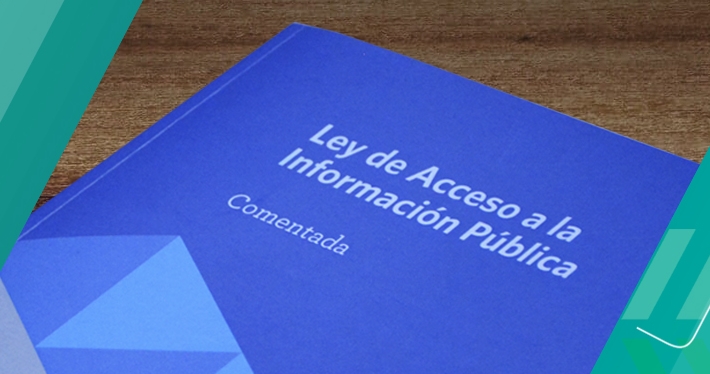
On May 2, we obtained an important judicial pronouncement regarding the right of access to public information, in the context of the injunction for default filed due to non-compliance with four requests for information filed in different areas of the Municipality of Córdoba. Before delving into the pronouncement, we recall some basic issues on the subject:
What is considered public information?
It is all types of data contained in documents of any format that are generated, obtained, transformed, controlled or safeguarded by the Public Administration at its different levels and by those subjects who have received public funds.
What does the right of access to public information imply?
It includes the possibility of any person to freely search, access, request, receive, copy, analyze, reprocess, reuse and redistribute public information. This right applies in a broad sense to all information in the possession of public bodies, including all controlled and archived information in any format or medium. It is important to mention that this right has an instrumental nature for the exercise of other rights, especially by those who are in subordinate or vulnerable positions, since it is only through precise knowledge of the content of human rights and their forms and means. of exercise that can be effectively accessed to its full enjoyment and enjoyment.
So anyone can request public information?
Yes, Law 27275 on the Right to Access to Public Information establishes that “Every human or legal person, public or private, has the right to request and receive public information.” In Córdoba there is an important precedent of the Superior Court of Justice that also establishes that “the human right of access to public information must be analyzed from a broad and holistic perspective.” and that “this right corresponds to every person without the need to prove any interest or special legal situation, accepting a broad legitimacy that includes both action in administrative and judicial courts.” The way to access it is through a request for public information.
And what is a public information request?
It is that request that is made in writing or by electronic means and without any formality, of all that information generated, administered or in possession of the organs of the Executive, Legislative, Judicial State, Municipalities and Autonomous, local Political Parties and any organization that engage in public spending.
The only requirement that is imposed is that the request for information must be submitted to the regulated entity that possesses it or is presumed to possess it. It can be done in writing or by electronic means and without any formality, it is only enough to indicate the identity of the requesting person, the clear identification of the information requested and the contact details, in order to send the information or announce that it is available.
All requests for public information must be satisfied within a certain period: in the case of national organizations it is 15 business days, while in the Province and the Municipality of Córdoba it is 10 days. In all cases, the Administration may request extensions, and must justify it.
But what happens in practice?
Our experience with the request for public information at the different levels and state areas is very uneven. While at the national level, and thanks to the mechanisms provided for by Law 27275, requests for information are usually answered in a timely manner, at the provincial and municipal level, in most cases, we do not receive a response within the stipulated period. This lack of response forces us to prosecute requests for information through the filing of injunctions for default.
Given this situation, once the demand is admitted, it is transferred to the Administration so that it can present a report explaining why it is in arrears, that is, why it did not provide the requested information. In most cases, faced with this transfer, the Administration produces the information that had been requested, notifies the petitioner, and then reports it in the file, requesting that the legal case become abstract, because the information has already been delivered. . In this type of case, the court usually resolves in this sense, declaring the cause abstract and imposing the “costs by order”. This means that the Administration should not bear any type of expense when requests for information are prosecuted, even when it is its attitude that forces the petitioners to initiate an amparo proceeding.
A change of criteria in the tax opinion
Through Opinion No. 344 issued on May 2 in the case “Foundation for the Development of Sustainable Policies C/ Municipalidad de Córdoba – Amparo Ley 8803”, File. No. 10221471, the Public Prosecutor’s Office ruled establishing an important criterion in terms of amparos for default and right of access to public information. In this trial, the Municipality of Córdoba filed an appeal against the Chamber’s ruling, for disagreeing with what was resolved on costs.
The prosecutor understood that “at the discretion of this Public Ministry, there is a winner and a loser by the force of the facts, and in direct relation to the object pursued by the applicant; because however it may be, the Administration complied with the dictation of the administrative act, but outside the term that the law contemplates and due to a judicial process. And therefore, his situation is equal to that of the vanquished.”
In this sense, it affirmed that “The plaintiff Foundation was forced to go to court to obtain action on the part of the Administration. It does not seem fair or reasonable that the claimant should bear the expenses and fees accrued by him for the processing of a case whose origin is negligent conduct on the part of the Administration and the exercise of a constitutional right. It is for this reason that the theft of judiciary matter produced in the proceedings does not imply in any way the displacement of the objective principle of defeat as a criterion for the imposition of costs”.
We welcome the Attorney General’s decision, as it sets an important precedent in terms of the right of access to public information. Thus, the exercise of a constitutional right cannot entail that the applicant bears the costs of a process that would not have existed if the administration had responded within the legal term. It is important to mention that this is not an isolated event, but rather a systematic practice of the Administration that limits access to information to those who have the economic and legal means to demand a response to information requests before the courts.
More information
Author
Noelia Salvia
Contact
Mayca Balaguer, maycabalaguer@fundeps.org