Tag Archive for: Global Governance

The Argentine Ombudsman’s Office presented the National Baseline on Business and Human Rights. This input will be used to design the National Action Plan on this issue.

“Below, we offer a google translate version of the original article in Spanish. This translation may not be accurate but serves as a general presentation of the article. For more accurate information, please switch to the Spanish version of the website. In addition, feel free to directly contact in English the person mentioned at the bottom of this article with regards to this topic”.

The National Baseline is a study that allows evaluating the level of implementation of the United Nations Guiding Principles on Business and Human Rights. In this study, an analysis of the regulatory and public policy gaps in the implementation of the three pillars of the Guiding Principles was carried out: “Protect, respect and remedy” with an overview of the negative impacts of companies on human rights. Among the topics addressed, the following stand out: the regulatory and policy function, the link between the State and companies, political coherence through state activity and the duty of companies to respect and remedy.

With the intention that the preparation of this Baseline be a participatory process, the National Ombudsman’s Office held a series of meetings between October and November 2022 with interested parties to collect inputs. It sought to collect their experiences, opinions and detect needs. The meetings included the participation of civil society organizations and academia, the private sector, state companies, Administration Agencies, unions, ombudsmen and public authorities. Likewise, for the elaboration of the National Baseline, the Office of the Ombudsman of the Nation had the support of the Office of the United Nations High Commissioner for Human Rights (OHCHR), the International Labor Organization (ILO), Fund of the United Nations Children’s Fund (UNICEF) and the Organization for Economic Co-operation and Development (OECD).

During this process, from Fundeps we actively participate, sending written inputs on regulatory gaps and public policies, making available different working documents and research carried out and participating in the various multi-stakeholder meeting spaces in which we have been summoned.

It should be clarified that the Baseline does not describe conflicts, nor does it carry out a study on the impact on human rights in specific sectors of the economy, nor does it study provincial and/or municipal regulations and public policies, but rather constitutes an analysis of regulatory gaps and of public policies in the implementation of the Guiding Principles at the national level.

What is a National Action Plan?

A National Action Plan on Business and Human Rights is a transversal instrument developed by a State whose objective is to order and give coherence to public policies to comply with its obligation to protect, respect and enforce human rights with respect to negative impacts. of business activities. Through these plans, governments commit to making the United Nations Guiding Principles on Business and Human Rights effective, as well as other standards on the matter.

Among the thematic axes that will be addressed in the Argentina plan are: labor standards; gender equality; diversity and non-discrimination; protection of the environment; companies and policies of Memory, Truth and Justice; corporate governance; due diligence and remediation in companies; technology, personal data and privacy; access to information and public participation in general; promotion of the human rights of groups in situations of vulnerability and/or historically discriminated against; and public governance.

Since 2014, the United Nations Human Rights Council has highlighted the decisive role that business and human rights plans can play in promoting the full and effective application of the Guiding Principles. Therefore, its preparation must be carried out in a participatory and transparent manner, in such a way that the main problems and effects on rights in the context of business activity in the country are addressed.

Access the complete document of the National Baseline here: https://www.dpn.gob.ar/linea-nacional-de-base.php


More Information


Author

Julieta Boretti

Contacto

Gonzalo Roza, gon.roza@fundeps.org
This article aims to analyze the consequences of Argentina’s entry into the Asian Infrastructure Investment Bank. The structure of the Bank is analyzed, covering its characteristics and the performance of the institution in general terms, the repercussions of Argentina’s entry are considered, contemplating advantages and disadvantages and, finally, the effects associated with joining this institution are considered. to China’s projection on the international stage.

This document presents an analysis of the background and motivations that led Argentina to become a member of the AIIB and the implications that derive from it, as well as the possibility that Argentina advances in its incorporation into the BRI in the short term. In the same way, the challenges and opportunities that both initiatives represent for the country are addressed.

The purpose of the following report is an updated approach to the first AIIB project in Brazil, including its political, economic and environmental dimensions. First, an analysis is carried out on the main characteristics of the project, context and actors involved; then, we proceed to analyze the implications for Brazil of receiving such financing; and finally, the main environmental consequences are exposed.

The “CONAFIPS COVID-19 Credit Line project” has made Ecuador the first Latin American country to receive a Latin American loan from the Asian Infrastructure Investment Bank. This report reviews the project, emphasizing its fundamental characteristics, context, environmental and social standards, and main criticisms and concerns about it.

Within the framework of the Annual Meeting of the Inter-American Development Bank (IDB), held in Panama, a group of civil society organizations met with the president of the Institution, Ilan Goldfajn, in an attempt to strengthen the link between the parties.

“Below, we offer a google translate version of the original article in Spanish. This translation may not be accurate but serves as a general presentation of the article. For more accurate information, please switch to the Spanish version of the website. In addition, feel free to directly contact in English the person mentioned at the bottom of this article with regards to this topic”.

Between March 16 and 19, the Annual Assembly of Governors of the Inter-American Development Bank (IDB) and IDB Invest was held in Panama City. It is a debate forum in which the members of the institution, together with those who preside over the central banks and other high-level authorities, discuss and address issues on issues considered to be a priority.

In the opening speech, the current president of the IDB, Ilan Goldfajn, outlined some of the institution’s priorities, which revolve around social issues such as food security, poverty, inequality, health, and education. In turn, he emphasized the mitigation of climate change and adaptation to it, stressing the need to deal with the increasingly frequent natural disasters in the Latin American and Caribbean region. The importance of preserving the biodiversity through the elaboration of an Amazon Regional Program.

The Board of Governors commissioned the preparation of a capital increase proposal for IDB Invest in order to implement a new business model that increases its impact on development through the private sector. In addition, he reiterated the importance of preparing a new Institutional Strategy proposal for the IDB Group, whose approval is scheduled for the next annual meeting in 2024.

The limited participation of civil society

After repeated requests made by a group of civil society organizations, the Bank authorized their participation in the event, although in a limited manner and closed to those who received an invitation. In addition, it was possible to arrange a meeting with the president of the IDB on March 17. In said meeting, the need to generate spaces for dialogue and express the demands of civil society in relation to the bank was raised. Both the possibility of participating in the event and the possibility of meeting with the president represent positive developments, although it remains to be seen if these are real changes in the institution. For now, the bank has invited to continue the dialogue in the coming months to achieve a more effective participation in the annual meetings of 2024.

From Fundeps we have been following and participating in this process together with organizations in the region that make up the IDB Working Group, and we will continue actively in the dialogue processes proposed by the bank.


More Information
Governors endorse the vision, priorities and plans for the IDB Group | IADB
Open letter from civil society organizations to IDB President Ilan Goldfajn – Fundeps
The Brazilian Ilan Goldfajn is the new president of the IDB – Fundeps
Open letter to the IDB for the election of a new presidency – Fundeps


Authors
Candela Jauregui
Valentina Rasso

Contact
Gonzalo Roza – gon.roza@fundeps.org

Throughout this report we will discuss, first of all, a series of data on the current situation of Argentina in relation to lithium production that places it in a central role within the world concert. Then we will focus on the mining governance system, stating the laws that configure it, its main elements and those points that merit further analysis. Subsequently, we will address, from some indicators suggested by the Standard, the two projects that are in the lithium production stage in Argentina: the Fénix Project in the Hombre Muerto salt flat and Sales de Jujuy in the Olaroz-Cauchari salt flat. In particular, regarding whether or not to publicize their contracts, as a fundamental link in terms of publicity and transparency in the development of these projects.

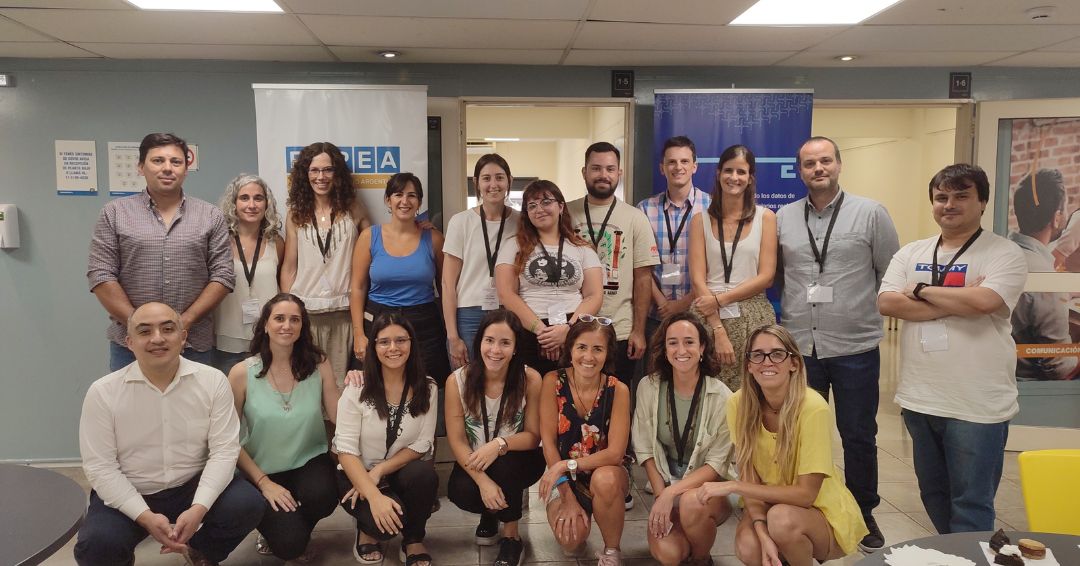
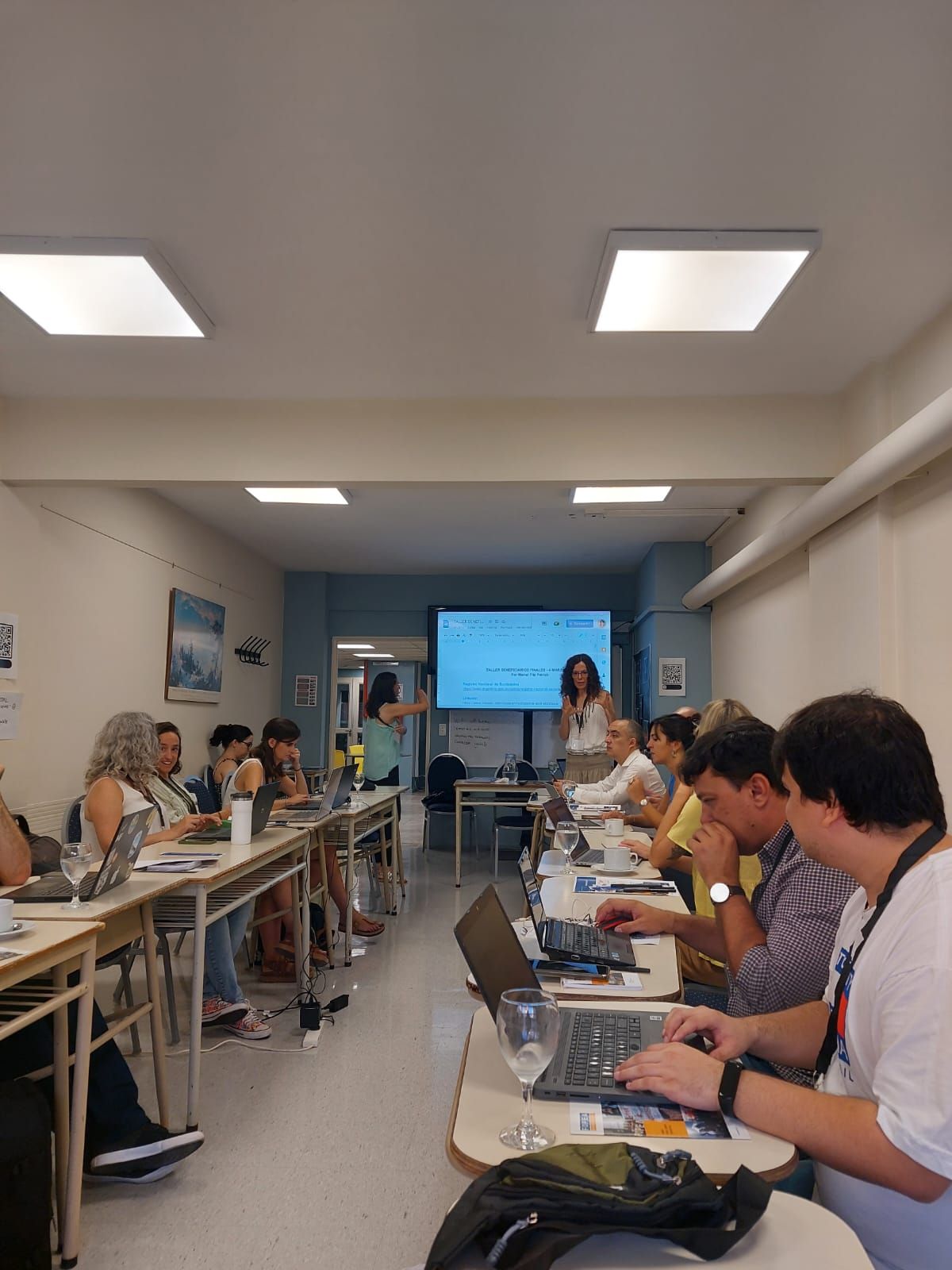
On March 3 and 4, we participated in the workshop on Final Beneficiaries of Companies in the extractive and energy sector of Argentina, held in the City of Buenos Aires. The event was organized by Opening Extractives (a program co-implemented by EITI and Open Ownership) and the Argentine Journalism Forum (FOPEA).

“Below, we offer a google translate version of the original article in Spanish. This translation may not be accurate but serves as a general presentation of the article. For more accurate information, please switch to the Spanish version of the website. In addition, feel free to directly contact in English the person mentioned at the bottom of this article with regards to this topic”.

The workshop had among its objectives to raise awareness about the importance of public information of the final beneficiaries, and at the same time, provide resources and materials to increase research, projects and analysis within this field.

In this sense, the training was divided into three modules: first, content and information on final beneficiaries was presented, from the theoretical to the legal and also practical, both nationally and internationally. Those who spoke in this first module were: Andrés Knobel from the Tax Justice Network; María Eugenia Marano, specialist in corporate law; Pamela Morales, Undersecretary of Mining Development of the Government of the Nation; Gonzalo Fernández of the Ministry of Mining Development of the Nation; and Lucía Cirimello from the Extractive Industries Transparency Initiative (EITI).

Secondly, civil society organizations had the opportunity to present their projects related to the theme. In this way, Edgardo Livitnoff (Red Ruido Coordinator) presented progress on the report “Lithium and transparency in Argentina” that we prepared together. For her part, Eugenia Rodríguez (Centro de Economía Política Argentina) shared details about the work of her organization: “The rich of Argentina”.

Finally, the third module consisted of a practical workshop given by Mariel Fitz Patricks, in which tools and resources were provided for approaching final beneficiaries. The journalist helped us, mainly, to access information and how, in this way, to enrich work carried out and to carry out on the subject.
This instance was very fruitful, not only in terms of knowledge and learning, but also in terms of the possibility of meeting peers from other civil society organizations, with whom one could work together in the near future.


More information:


Author

Maitén de los Milagros Fuma

Contact

Maria Victoria Sibilla, ninasibilla@fundeps.org

More than twenty organizations from Latin America and the United States addressed a letter to the president of the Inter-American Development Bank (IDB) Ilan Goldfajn. They ask that the Bank strengthen its work by committing itself to respect for Human Rights and the protection of the environment and that spaces be created for greater articulation with civil society.

“Below, we offer a google translate version of the original article in Spanish. This translation may not be accurate but serves as a general presentation of the article. For more accurate information, please switch to the Spanish version of the website. In addition, feel free to directly contact in English the person mentioned at the bottom of this article with regards to this topic”.

The organizations, members and allies of the Coalition for Human Rights in Development alluded in the letter to the commitment assumed by Goldfajn in his inaugural speech as president of the Bank to “take advantage of all opportunities for dialogue” and collaboration with governments, the sector private sector, academia and civil society to solve regional problems.

To strengthen the articulation with civil society, the organizations urged the Bank to open a space for dialogue with civil society at its Annual Meetings, not only because it is a good practice implemented by other multilateral organizations, but also because it is a unique opportunity. to include communities affected by projects.

Since 2017, the group of signatory organizations of the letter has been monitoring and enriching the Bank’s policies and projects that it hopes to continue carrying out. The organizations have contributed to the IDB Environmental and Social Policy Framework, updates to the Independent Consultation and Investigation Mechanism policy, and the Bank’s Access to Information Policy review process.

The organizations seek the IDB to ensure in its practices and operations the promotion and respect of Human Rights, particularly of indigenous peoples, and the protection of key ecosystems in the fight against climate change.

The next Annual Meeting of the Boards of Governors of the IDB and IDB Invest will be held in Panama from March 16 to 19.

Signatory organizations:

  1. Accountability Counsel
  2. AMATE El Salvador
  3. Articulación Salvadoreña de Sociedad Civil para la Incidencia en las Instituciones Financieras Internacionales (ASIFI)
  4. Asociación Ambiente y Sociedad
  5. Asociación Interamericana para la Defensa del Ambiente (AIDA)
  6. Bank Information Center
  7. Center for International Environmental Law (CIEL)
  8. Coalición para los Derechos Humanos en el Desarrollo
  9. Cohesión Comunitaria e Innovación Social A.C. (México)
  10. Conectas Direitos Humanos
  11. Derecho, Ambiente y Recursos Naturales (DAR, Perú)
  12. Ecoa – Ecologia e Ação
  13. Fundación para el Desarrollo de Políticas Sustentables (Fundeps)
  14. Fundación CAUCE: Cultura Ambiental – Causa Ecologista. (Argentina)
  15. Gender Action
  16. International Rivers
  17. International Accountability Project
  18. Mesa de Discapacidad y Derechos (Perú)
  19. Plataforma Internacional contra la Impunidad
  20. Protection International Mesoamérica
  21. Sociedad y Discapacidad – SODIS (Perú)
  22. Sustentarse (Chile)
  23. Wetlands International / Fundacion Humedales (Argentina)

Read the full letter here: Letter to IDB President


More Information

Read more

This interactive map presents 9 cases of projects that have the participation and financing of Chinese companies, which are monitored by the Regional Group on Financing and Infrastructure (GREFI) and the Regional Coalition for Transparency and Participation in Peru, Argentina, Colombia and Brazil.

The objective is to make known the basic information of the projects, the location, the current situation and the socio-environmental impacts that have generated or that could be generated if they are implemented.

From the Regional Group on Financing and Infrastructure (GREFI) we held the workshop in 2021: “Follow-up on relations between China and America America: exchange of experiences”. This space brought together different civil society organizations, academia, indigenous leaders and journalists from the region who monitor the relationship between China and Latin America, or have been impacted by investments from the Asian country.

The objective of the space was to identify common issues and key elements of discussion, based on the work and the experience of monitoring and advocacy that serves to promote greater articulation between the actors, identify the differences, limitations and opportunities for joint work.

After participating in a series of face-to-face and virtual public consultations, a group of Civil Society Organizations (CSOs) from the region sent comments and suggestions to the IDB in the framework of the revision of the Bank’s Access to Information Policy.

“Below, we offer a google translate version of the original article in Spanish. This translation may not be accurate but serves as a general presentation of the article. For more accurate information, please switch to the Spanish version of the website. In addition, feel free to directly contact in English the person mentioned at the bottom of this article with regards to this topic”.

On December 28, 2022, the deadline established by the Inter-American Development Bank (IDB) for sending comments on the draft of the institution’s new Access to Information Policy (PAI) ended. Thus concluded the Second Phase of the Public Consultation Process approved by the Bank and which lasted 90 days.

Within this framework, together with a group of Civil Society Organizations in the region, we sent a document with comments and recommendations in relation to the Draft Policy prepared by the Bank, which, although it incorporates some positive advances, is not enough to guarantee the right of access to information effectively in relation to the actions of the Bank and its customers.

Among the main recommendations and suggestions highlighted in the document, the following stand out:

  • Commitment to access to information as a fundamental human right. The Bank must establish clear commitments to guarantee respect for access to information as a fundamental human right. The right to information is also a key access right for the exercise of other fundamental rights, such as the consultation, participation and involvement of people and communities impacted by projects in decisions that affect or may have an impact on their ways of life. .
  • Implementation Guidelines. It is concerning that some criteria and parameters that will make the PAI effective are left to be addressed in the Implementation Guidelines. In this way, the effectiveness and force of the PAI will depend a lot on the Implementation Guidelines that do not require mandatory compliance as the PAI itself does. In turn, these Guidelines should be consulted through a meaningful participatory process with civil society.
  • Language ambiguity. The PAI contains a lot of ambiguous language and vague and diffuse commitments, which opens the door to different interpretations, including breaches and serious misconduct. Likewise, it prevents the establishment of clear requirements for the borrowers and also the responsibilities of the Bank itself. The Policy must avoid flexibility and ambiguity of language to prevent the use of discretion and non-compliance with respect to its guidelines.
  • Specification of what information is going to be published proactively, disclosure times, in what formats, channels and deadlines. The PAI must clearly establish what information it is going to proactively publish, through what channels or media, in what formats and in what terms. In turn, response times to requests for information are excessive, and the IDB reserves the right to extend these terms indefinitely. The Bank must define shorter and clearer terms in terms of its responses to requests for information, and must be aligned at least with the currently applicable international standards.
  • Country or customer proprietary information. Although the elimination of the “Exception specific information of countries” is celebrated, there is concern that other points of the policy may end up undermining the principle of maximum disclosure and the openness that is intended with such elimination.
  • Exceptions. The exceptions must be more precise and clear criteria must be established for their application, as well as the identification of the specific documents or information to which access will not be given under the exception.
  • Damage assessment. The inclusion of the assessment of the damage for the application of the exceptions is celebrated. However, clear criteria and scales must be specified to delimit its application. If an effort is not made to define these criteria and procedures in the body of the Policy (and leave them for the Implementation Guidelines), there is a risk that during their application discretionary use of exceptions will end up prevailing on the part of the Policy. of the Bank and borrowers. It is recommended to incorporate the criterion of public interest in the damage assessment, as a counterbalance to the damage, and to make the results of the damage assessment public in each specific case.
  • Open data, simple language, accessible formats and usability of the information. The information that is disclosed and published must be useful for those who request it, especially for the communities affected by IDB projects, paying attention to marginalized groups, such as indigenous peoples, Afro-descendants, people with disabilities, women, the LGBTIQ+ population, among others. others. The accessible format, the simple language and the generation of open data are related to the usability of the information. It is recommended that the IDB address the issue of accessible formats, simple language, and open data in more detail and in a transversal manner throughout the PAI, taking into account the importance of this aspect, especially for marginalized groups.

It should be noted that a large part of the recommendations and suggestions contained in the document were previously raised in the framework of the public consultations carried out by the IDB, both online and in person in Montevideo, Bogotá and Washington DC. Precisely, from Fundeps we participated in the face-to-face public consultation in Montevideo, Uruguay on November 15, 2022.

We hope that the inputs provided by civil society are considered by the Bank and contribute to strengthening the draft Access to Information Policy proposed by the institution, which is far from incorporating the highest standards in the matter.

To access the complete document with comments and suggestions sent to the IDB, access here


More Information

Contact

Gonzalo Roza, gon.roza@fundeps.org