• ES
  • EN
Fundeps
  • About Fundeps
  • Team
  • Working areas
    • Environment
    • Democracy
    • Gender
    • Global Gorvernance
    • Health
  • News
  • Publications
  • DONATE
  • Click to open the search input field Click to open the search input field Search
  • Menu Menu
Environment, News

The path of Civil Society towards the Escazú Agreement

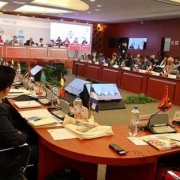
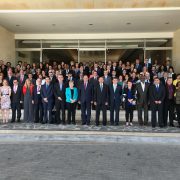
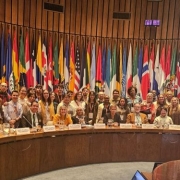
Together with other organizations of the Civil Society of Latin America and the Caribbean, we prepare a working document that reflects the contributions and lessons learned in the negotiation process of the Escazú Agreement.

“Below, we offer a google translate version of the original article in Spanish. This translation may not be accurate but serves as a general presentation of the article. For more accurate information, please switch to the Spanish version of the website. In addition, feel free to directly contact in English the person mentioned at the bottom of this article with regards to this topic”.

This document was carried out in the framework of the work of the Regional Observatory of Investments, Transparency and Human Rights (composed of various civil society organizations in Latin America and the Caribbean, many of them authors of this publication), as part of a collective effort for making known from our experience the contributions and lessons learned from the negotiation process of Principle 10 so that they can be incorporated into the current signature and ratification processes of the Escazú Agreement.

Thus, what is described in this document responds to the achievement of a regional aspiration: the Regional Agreement on Access to Information, Public Participation and Access to Justice in Environmental Matters in Latin America and the Caribbean, now the Agreement on Escazú, the first regional instrument of environmental rights, which represents a historic opportunity for the materialization of environmental democracy and the consolidation of citizenship, especially those groups that have been historically and systematically discriminated, such as indigenous peoples.

The publication summarizes the internal processes in various Latin American countries aimed at the approval of the Agreement, in particular, from Argentina, Brazil, Colombia, Mexico, Nicaragua and Peru.

More information

  • The path of civil society towards the Escazú Agreement in Latin America and the Caribbean

Contact

Juan Bautista Lopez, juanbautistalopez@fundeps.org
26 de February de 2020
Tags: Environment, Environmental Democracy
Share this entry
  • Share on Facebook
  • Share on X
  • Share on WhatsApp
  • Share on LinkedIn
  • Share by Mail
0 0 Comunicaciones Fundeps https://fundeps.org/wp-content/uploads/2026/04/logo-2026-300x120.png Comunicaciones Fundeps2020-02-26 21:24:062024-08-10 23:07:01The path of Civil Society towards the Escazú Agreement
You might also like
Judgment of the Appeals Chamber in favor of Potrerillo de Larreta
Report on Climate Change and the Rights of Women, Indigenous Peoples and Rural Communities in the Americas
Entre Ríos: going to school without agrochemicals
Exhibition of animals in stained glass: a prohibited but current practice
We participate in the preparation of the general guidelines of the Yolanda law
We have done observations on the Projects of provincial adhesion to the Yolanda Law
The Nation questions the updating of the forest regulations
Diagnosis – The effects of Climate Change in the province of Córdoba

Tags

Access to Information Access to Justice BID Chinese Investments Citizen Participation Democracy ENTs Environment Environmental Democracy Gender Global Governance Health Healthy nutrition IFIs Infrastructure Financing Legal Interruption of Pregnancy Sexual and Reproductive Rights Social and Environmental Standards Tobacco Control Transparency
See all tags

Acuerdo de Escazú

Emergencia Agroquímica

MOCI - monitoreo ciudadano en proyectos de infraestructura

{el entramado} Contamos historias. Acercamos Realidades.

Instagram

fundepsargentina

Trabajamos para que se garanticen los derechos humanos 🌱⚖️🗣️🌈💜🚭🍎
Promovemos la equidad de #genero, el derecho a la #salud y un #ambiente sano.

Y todo esto quedó en un papel? No. Ya hay avances. Y todo esto quedó en un papel? No. Ya hay avances. Pero tampoco está resuelto.

Hay plantas de tratamiento que comenzaron a funcionar, obras de cloacas terminadas y establecimientos que fueron auditados por posible contaminación.

➡️ También quedan medidas por cumplir y avances que necesitan seguimiento. Porque mostrar lo que se hizo también sirve para saber qué falta.

Para seguir acompañando este proceso y sosteniendo el trabajo que todavía queda, necesitamos tu apoyo.

Doná hoy.
La Justicia no solo dijo que el lago está contamin La Justicia no solo dijo que el lago está contaminado. También ordenó qué tiene que hacer el Estado para empezar a sanearlo.

La sentencia establece medidas concretas, con plazos y obligaciones que involucran a la Provincia y a los municipios de la cuenca.

Entre ellas: avanzar con las obras cloacales, controlar los vertidos contaminantes, fortalecer la fiscalización y garantizar espacios de participación y transparencia.

Deslizá para conocer qué tiene que pasar para que el saneamiento avance.

Ayudanos a seguir trabajando para que estas medidas se cumplan. Doná hoy.
Hoy, 4 de septiembre, es el Día Mundial de la Salu Hoy, 4 de septiembre, es el Día Mundial de la Salud Sexual. Una fecha que nos invita a volver sobre las discusiones que atraviesan el acceso a la salud sexual y (no) reproductiva: condiciones de acceso para que sea integral y de calidad, desde un enfoque de derechos y con perspectiva de diversidad.

En el mes de junio nos encontramos en el 3° Encuentro Provincial de Redes de Compromiso y Cuidados: Salud sexual Integral con Perspectiva de Diversidad para poner en común experiencias y preguntas sobre estos desafíos.

Hoy recuperamos algunas de las voces que fueron parte de las exposiciones de ese encuentro para volver sobre dos preguntas que siguen abiertas:
¿Cuál es hoy el debate más urgente cuando hablamos de salud integral y diversidad?
¿Por qué es importante encontrarnos en este contexto?

Porque garantizar el derecho a la salud también implica seguir encontrándonos para pensar, discutir y construir respuestas colectivas.
🕰Han pasado 84 años… y seguimos hablando del Lago 🕰Han pasado 84 años… y seguimos hablando del Lago San Roque.
Bueno, no tanto. Pero sí llevamos más de cuatro años trabajando para que el saneamiento de la cuenca deje de ser una promesa y se convierta en una realidad.

En 2022 presentamos un amparo colectivo junto a la comunidad de la cuenca. En abril de 2025, la Justicia reconoció el daño ambiental y ordenó sanear el lago.

❗¿El problema? Un fallo no alcanza por sí solo. El Plan de Saneamiento ya está en marcha y todavía queda mucho por hacer.

En este carrusel te contamos qué pasó y por qué seguimos hablando del Lago San Roque.

Si querés que este trabajo continúe, podés sumarte con una donación. [link en bio]
Follow on Instagram

Twitter

Tweets por @fundeps

Newsletter Subscription

    Fundeps. Córdoba (CP X5000JZH), Argentina. info@fundeps.org
    • Link to X
    • Link to Facebook
    • Link to Instagram
    • Link to Mail
    • Link to Youtube
    • Link to LinkedIn
    • Link to TikTok
    Link to: Argentina will continue betting on the PPP contract modality? Link to: Argentina will continue betting on the PPP contract modality? Argentina will continue betting on the PPP contract modality? Link to: Analysis of the BRICS New Development Bank Link to: Analysis of the BRICS New Development Bank Analysis of the BRICS New Development Bank
    Scroll to top Scroll to top Scroll to top