The Inter-American Commission presents its annual report 2018
The Inter-American Commission on Human Rights (IACHR) presented its Annual Report 2018 at the end of last month, in which it reports the work carried out throughout the year. This report constitutes the main instrument of accountability of the IACHR, as well as monitoring the human rights situation in the region and following up on its recommendations.
“Below, we offer a google translate version of the original article in Spanish. This translation may not be accurate but serves as a general presentation of the article. For more accurate information, please switch to the Spanish version of the website. In addition, feel free to directly contact in English the person mentioned at the bottom of this article with regards to this topic”.
Chapter IV consists of a descriptive panorama on the situation of human rights in the member countries, with a special emphasis on the rights and issues prioritized by the IACHR, as well as on transversal axes of Democratic Institutionality, Institutionality in Human Rights, Access to Justice and Citizen Security; and Right to the Environment.
Together with lawyers from the Argentine Northwest on Human Rights and Social Studies (ANDHES), we presented a shadow report on these axes in December of the last year in the subjects we work on.
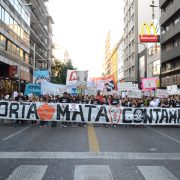
In the report for Argentina, the Commission took the matters reported in the shadow report. In the general considerations, it paid particular attention to the concern shown regarding the bill on collective processes; the situation of the right to protest; mobilizations regarding the debate regarding access to women’s sexual and reproductive rights, as well as possible reforms that would restrict the scope of the sex education law. Reference is also made to the clashes between public authorities and indigenous communities; the economic and financial situation in general and its possible impact on human rights, and in particular. Special considerations were made about the situation of poverty that affects children; the appointment of a child advocate that is still pending; expulsions of migrants; and the conditions of detention that prevail in police stations.
In turn, regarding issues related to human rights institutions, the IACHR highlighted our concern about the lack of nomination of a titular person in the Office of the Ombudsman of the Nation, a position that remains vacant since 2009. He also collected our concern about the economic and financial situation of the country and its effects on institutions regarding the allocation of resources and the functioning of the various State entities responsible for the protection of human rights.
Regarding access to justice, the Commission took note of the concern we expressed regarding the Collective Processes Bill prepared by the Ministry of Justice and Human Rights of the Nation, which, if successful, could seriously limit the use and effectiveness of collective actions, by restricting the possibility of suing the State and companies in defense of collective rights.
Regarding the situation of women’s rights, the IACHR welcomed the approval of the protocol for the investigation and litigation of femicides in Argentina, celebrated the approval and entry into force of Law No. 27,452 “Brisa Law” that grants economic reparations to sons and daughters of victims of femicide in Argentina and welcomed the approval of the “Micaela Law”, which aims to train officials in gender violence.
However, the Commission stated that “it has continued to monitor the various obstacles that women, girls and adolescents continue to face in the exercise of their sexual and reproductive rights, as well as the mobilization and legislative debate to exercise them. “In addition, he pointed out that” given the resurgence of the debate on the reform of the Sexual Education Law (Law No. 6,150), proposals have also emerged to revise and reform it, some of which would have the purpose of limiting its scope and eliminating mentions dedicated to diversity of gender and sexual diversity, topics that are follow-up by the Commission in order to ensure that the reviews are carried out in line with the inter-American standards on the matter. ”
With respect to the right to the environment, the Commission stated that the State informed it about a National Plan of Action to Combat Desertification and that the Secretariat of Environment and Sustainable Development of the Nation has developed several communication channels within the framework of the National Law No. 25,831 in order to guarantee the right of access to environmental information. He also indicated that “the National Strategy for Environmental Education is being developed, a public policy that guides the bases for the construction of intersectoral programs in the theme to promote the action of individuals, groups and society as a whole for environmental care in its entirety. He also indicated that a National Cabinet on Climate Change has been formed, which is currently working on the articulation of mitigation and adaptation measures on the implementation of the National Determined Contributions of the country. Finally, there is also the generation of indicators for the management of biosphere reserves and private initiatives for the conservation of biodiversity. ”
Nonetheless, the IACHR was alerted to the use of agrochemicals, which is one of the most worrisome issues for the country, particularly because of the harmful effects on the lungs and skin; as well as the increase of conditions such as depression, seizures, immune and endocrine disorders. Inclusive attention was drawn to the increase in the number of people with cancer in the Cordovan town of Monte Maíz in the fumigation season.
For its part, the Special Rapporteurship on Economic, Social, Cultural and Environmental Rights (REDESCA) of the Commission presented its own report, highlighting the main data collected as concerns, regarding the situation of the DESCA considered in its generality in all the countries of the region. There, the Rapporteurship mentions again the situations reported in the shadow report related to the right to the environment and the right to health, particularly sexual and reproductive rights.
We celebrate the conclusions prepared by the IACHR and the Rapporteurship on DESCA and that have echoed the reports sent from civil society. We hope that the State has appropriated these recommendations and incorporates them in its design of public policies to improve the human rights situation in our country.