• ES
  • EN
Fundeps
  • About Fundeps
  • Team
  • Working areas
    • Environment
    • Democracy
    • Gender
    • Global Gorvernance
    • Health
  • News
  • Publications
  • DONATE
  • Click to open the search input field Click to open the search input field Search
  • Menu Menu
Environment, News

Agrochemicals continue to affect the communities of Córdoba

During the month of October, we worked with the communities of Colonia Tirolesa and Falda del Carmen, two towns in Cordoba that for years suffer the consequences of the indiscriminate use of agrochemicals near populated areas. We accompany and support your claim trying to empower affected communities in the protection of health rights and a healthy environment.

“Below, we offer a google translate version of the original article in Spanish. This translation may not be accurate but serves as a general presentation of the article. For more accurate information, please switch to the Spanish version of the website. In addition, feel free to directly contact in English the person mentioned at the bottom of this article with regards to this topic”.

We participated in the “Agrochemicals, Health and Environment” Conference in Colonia Tirolesa

At the beginning of October, the “Agrochemicals, Health and Environment” conference was held in Colonia Tirolesa, a town located 27 km from the city of Córdoba, dedicated to agricultural activities, in particular to the production of potatoes, soybeans and corn.
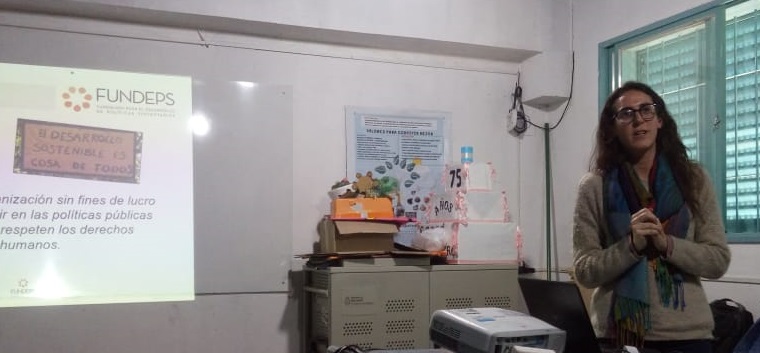
The meeting was a good opportunity to continue learning from the communities that live near fields that are frequently sprayed with agrochemicals. During this meeting, members of the community had the opportunity to express their concerns and feelings about this problem, including the diseases that affect them.

In addition, members of the “Epidemiology Group of the Digna Science” of Córdoba and Buenos Aires, showed the results of the survey carried out through Socioenvironmental Health Surveys, carried out in May 2017 in the neighborhood of the Colonia Tirolesa station, in around 76 homes. The aim of the surveys is to contribute to the visibility of the health problems presented by populations exposed to socio-environmental risks and damages, thereby strengthening the fight against the hegemonic model of agricultural production.

One of the most striking results was that, in the last 20 years, the biggest causes of death in the neighborhood are malignant tumors (30%) and respiratory causes (22%), with cardiovascular diseases being the third (19 %), being that at the national level the latter is the main cause of death.

We participate in the meeting through the development of community capacities regarding their right to health and a healthy environment. María, Coordinator of the Environment area, was in charge of teaching these rights and the different ways in which members of the community are able to claim them.

An agronomist was also present at this multidisciplinary event. There, he explained to the community that there are alternative forms of production, which do not imply any damage to health or the environment. His talk focused on agroecological practices and how to apply those practices in the field.

It was a very mobilizing event, because although residents of Colonia Tirolesa knew that the excessive and uncontrolled use of agrochemicals could affect their health and environment, they had not taken real dimension of the problem, until they were shown the results of the health surveys. It was a good opportunity for them to take a real awareness of the dangers of being permanently exposed to these agricultural chemicals.

Visit to Falda del Carmen

In October, we also met with neighbors of Falda de Carmen, a small city near Córdoba Capital, which for some years has been demanding a municipal ordinance that creates an Environmental Conservation Zone to prohibit the use of agrochemicals in the fields to populated areas.
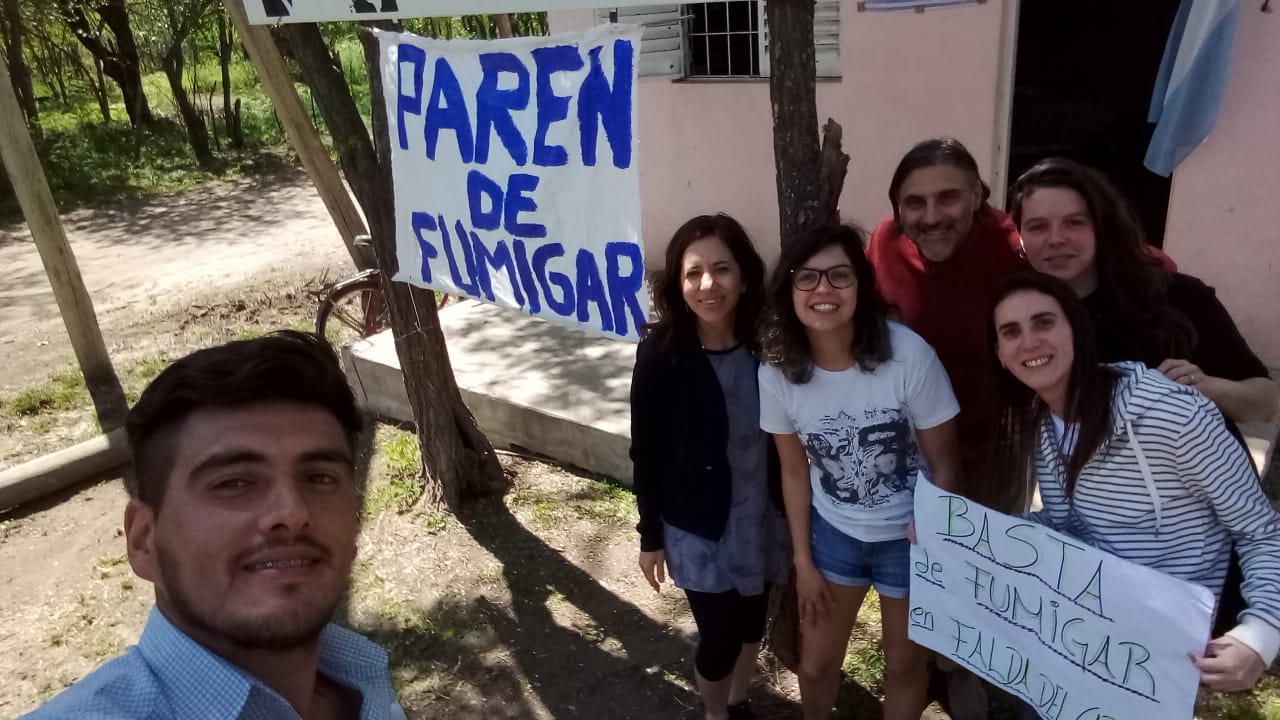
During the visit, they told us about their beginnings in this fight against rural entrepreneurs and agrochemicals, how they were organized in the Neighborhood Environmental Commission and the different actions taken to raise awareness and raise awareness in the commune about this problem that affects them.

From FUNDEPS we committed to help the community of Falda del Carmen in the development of advocacy strategies and to support their claims in order to strengthen their human rights to health and a healthy environment.

Contact

María Pérez Alsina, mariaperezalsina@fundeps.org
28 de November de 2018
Tags: Agrochemicals
Share this entry
  • Share on Facebook
  • Share on X
  • Share on WhatsApp
  • Share on LinkedIn
  • Share by Mail
0 0 Comunicaciones Fundeps https://fundeps.org/wp-content/uploads/2026/04/logo-2026-300x120.png Comunicaciones Fundeps2018-11-28 17:23:412024-06-30 16:03:07Agrochemicals continue to affect the communities of Córdoba
You might also like
We launched the website “Emergencia Agroquímica”
LETTER TO THE INTENDENT MARTÍN LLARYORA: We need policies that address the problems of our city
Complaint for illegal environmental activities in Alta Gracia
Report on the human rights situation in Argentina before the IACHR
Help us Protect Communities Affected by Agrochemical Use
The creation of the Agroecology Directorate at the national level was made official
A brake on agrochemicals
Agrochemicals, an environmental and public health problem

Tags

Access to Information Access to Justice BID Chinese Investments Citizen Participation Democracy ENTs Environment Environmental Democracy Gender Global Governance Health Healthy nutrition IFIs Infrastructure Financing Legal Interruption of Pregnancy Sexual and Reproductive Rights Social and Environmental Standards Tobacco Control Transparency
See all tags

Acuerdo de Escazú

Emergencia Agroquímica

MOCI - monitoreo ciudadano en proyectos de infraestructura

{el entramado} Contamos historias. Acercamos Realidades.

Instagram

fundepsargentina

Trabajamos para que se garanticen los derechos humanos 🌱⚖️🗣️🌈💜🚭🍎
Promovemos la equidad de #genero, el derecho a la #salud y un #ambiente sano.

TE NECESITAMOS 🧡 Para seguir de cerca el Plan de TE NECESITAMOS 🧡

Para seguir de cerca  el Plan de Saneamiento del Lago San Roque, hay que mirar de cerca todo el proceso. Revisamos información técnica, hacemos seguimiento de la causa y elaboramos informes públicos sobre el cumplimiento del Plan.

Sostener este trabajo en el tiempo requiere recursos. Tu aporte hace posible que continúe.

Doná hoy! (link en bio)
Y todo esto quedó en un papel? No. Ya hay avances. Y todo esto quedó en un papel? No. Ya hay avances. Pero tampoco está resuelto.

Hay plantas de tratamiento que comenzaron a funcionar, obras de cloacas terminadas y establecimientos que fueron auditados por posible contaminación.

➡️ También quedan medidas por cumplir y avances que necesitan seguimiento. Porque mostrar lo que se hizo también sirve para saber qué falta.

Para seguir acompañando este proceso y sosteniendo el trabajo que todavía queda, necesitamos tu apoyo.

Doná hoy.
La Justicia no solo dijo que el lago está contamin La Justicia no solo dijo que el lago está contaminado. También ordenó qué tiene que hacer el Estado para empezar a sanearlo.

La sentencia establece medidas concretas, con plazos y obligaciones que involucran a la Provincia y a los municipios de la cuenca.

Entre ellas: avanzar con las obras cloacales, controlar los vertidos contaminantes, fortalecer la fiscalización y garantizar espacios de participación y transparencia.

Deslizá para conocer qué tiene que pasar para que el saneamiento avance.

Ayudanos a seguir trabajando para que estas medidas se cumplan. Doná hoy.
Hoy, 4 de septiembre, es el Día Mundial de la Salu Hoy, 4 de septiembre, es el Día Mundial de la Salud Sexual. Una fecha que nos invita a volver sobre las discusiones que atraviesan el acceso a la salud sexual y (no) reproductiva: condiciones de acceso para que sea integral y de calidad, desde un enfoque de derechos y con perspectiva de diversidad.

En el mes de junio nos encontramos en el 3° Encuentro Provincial de Redes de Compromiso y Cuidados: Salud sexual Integral con Perspectiva de Diversidad para poner en común experiencias y preguntas sobre estos desafíos.

Hoy recuperamos algunas de las voces que fueron parte de las exposiciones de ese encuentro para volver sobre dos preguntas que siguen abiertas:
¿Cuál es hoy el debate más urgente cuando hablamos de salud integral y diversidad?
¿Por qué es importante encontrarnos en este contexto?

Porque garantizar el derecho a la salud también implica seguir encontrándonos para pensar, discutir y construir respuestas colectivas.
Follow on Instagram

Twitter

Tweets por @fundeps

Newsletter Subscription

    Fundeps. Córdoba (CP X5000JZH), Argentina. info@fundeps.org
    • Link to X
    • Link to Facebook
    • Link to Instagram
    • Link to Mail
    • Link to Youtube
    • Link to LinkedIn
    • Link to TikTok
    Link to: We present an annual report to INAM and we express concern about its inactivity Link to: We present an annual report to INAM and we express concern about its inactivity We present an annual report to INAM and we express concern about its inacti... Link to: We assume the coordination of the Free Alliance of Smoke of Argentina Link to: We assume the coordination of the Free Alliance of Smoke of Argentina We assume the coordination of the Free Alliance of Smoke of Argentina
    Scroll to top Scroll to top Scroll to top