The fight for decent food in Argentina: perspectives and challenges
In situations of multidimensional crisis, such as the one our country is going through, those who suffer the most are the lower-income sectors and, in particular, girls, boys and adolescents. The withdrawal of the State and economic deregulation imply greater lack of protection. Guaranteeing the basic right to adequate food, in this context, becomes urgent. So we ask ourselves again: what can and what should we demand from the State in terms of food? Does it make sense to question what kind of food we want in our pots? Or do we have to settle for “what there is”?
“Below, we offer a google translate version of the original article in Spanish. This translation may not be accurate but serves as a general presentation of the article. For more accurate information, please switch to the Spanish version of the website. In addition, feel free to directly contact in English the person mentioned at the bottom of this article with regards to this topic”.
In Argentina, inflation continues to rise. The index of the Social Debt Observatory of the UCA (Argentine Catholic University) showed that the population that does not cover its basic food needs went from 9.4% at the end of the third quarter of 2023, to 15% in January , and that poverty affects 57% of the people in this country. In turn, Indec reported that the Basic Food Basket (BCA) increased 18.6% in January and 296.4% in the last twelve months, above inflation (254.2%). While, according to the Neighborhood Price Index (IBP) of the Social, Economic and Citizen Policy Research Institute (ISEPCi), food prices increased by up to 69.7% since last December. These figures reflect a noticeable increase in indigence and poverty.
To this information, we add that which already alerted us: the quality of life of the Argentine population has been progressively deteriorating. 73.4% of deaths are due to Chronic Non-Communicable Diseases, these are responsible for 52% of the years of life lost due to premature death and 76% of the years of life adjusted for disability. Proper nutrition is one of the main risk factors.
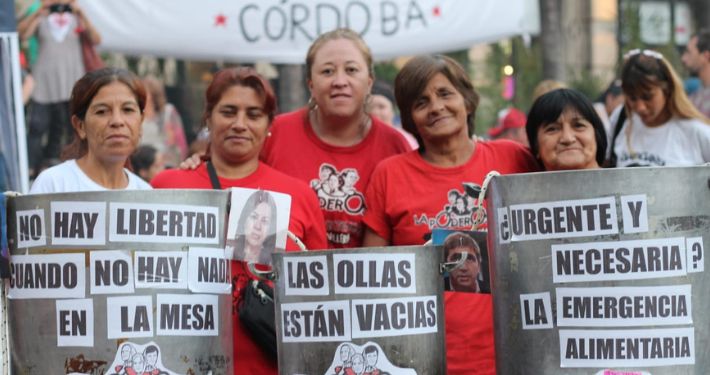
Despite the statistics and the context, the national government, a few days before the start of the year 2024, decided to completely interrupt the supply of food to soup kitchens. Numerous organizations daily denounce that “the pots are empty”, “the food emergency is urgent and necessary” and “there is no freedom when there is nothing on the table”, as well as the double burden they must bear: at times when they least have to offer, is when more people come looking for a plate of food.
This framework encourages us to reflect on the minimum conditions that we must guarantee, such as life and human dignity, for it to make sense to talk about rights such as freedom. Also talk again about the role that the State must play to guarantee these rights. The notion that a present State is necessarily abusive collides with what reality exposes: rights lack satisfaction in the absence of a State that ensures their protection through effective policies.
Food is one of the most basic human needs and is closely linked to people’s life and health. Given its essential and indispensable nature, it was recognized as a fundamental human right in various international human rights treaties that today enjoy constitutional hierarchy in our country. This normative consecration gives rise to imperative and enforceable legal obligations on the head of the State to: respect, protect and guarantee the effective fulfillment of this right.
Food policies in Argentina
In our country, food problems, unfortunately, are not new. When doing a retrospective analysis, it is possible to observe in different historical periods great crises and political tensions regarding the role of the State as guarantor of this right.
Prior to the constitutional reform of 1994, the development of the right to food was largely subordinated to labor law and the living wage, since a privatized reading of food rights and obligations prevailed. However, in the 1980s a different political-social approach began to take hold. Given the context of need that was experienced after the years of military dictatorship, people began to talk about a food emergency, a paradigm based on welfare policies that has prevailed to this day.
Its regulatory consolidation occurred in 2002 when, in response to one of the most acute crises that our country has suffered, the National Food Emergency recognized by Decree No. 108 (01/15/2002) was declared, which has been extended without interruptions until current situation, and which was arranged in order to meet the basic food needs of the population in conditions of vulnerability and with subsistence risks.
Shortly thereafter, Law 25,724 on the Declaration of National Food Emergency was passed, which instituted the National Nutrition and Food Program, known as the National Food Security Plan “The Most Urgent Hunger” (PNSA), intended to cover the minimum nutritional requirements of groups in situations of extreme vulnerability. This law constitutes to this day the main food policy of our country.
From the food emergency to adequate nutrition
More than 20 years after its entry into force, there is plenty of evidence and bibliography to account for the important limitations and deficiencies presented by this paradigm, which limits the treatment of the food issue to a basic level of satisfaction of minimum caloric needs. And, therefore, its inability to generate structural transformations that allow progress towards a state of food security and sovereignty. Also the serious impact on health that can imply that the food programs that have been established, both at the national and provincial levels, do not have good nutritional criteria and standards. This has to do with the fact that emergency strategies tend to ignore the multiple facets that the food problem encompasses in its complexity, including the so-called “triple burden” of malnutrition: hunger and malnutrition, generalized deficiency of micronutrients and malnutrition due to excess. This needs to be addressed as a health problem linked to the consumption of ultra-processed food products with excess critical nutrients.
This lack came to be questioned by Law 27,642 on the Promotion of Healthy Eating, sanctioned in 2021.
The extensive legislative process that was promoted to achieve the enactment of this law generated a fundamental movement in the public debate on food in our country. This law has been established as a bridge between policies that address historical food problems, such as hunger and malnutrition; and those that seek to reverse modern food problems, linked to excess malnutrition and chronic diseases that are caused by the poor quality of the food products consumed today. The latter affects the entire population since it is linked to the transformation of dietary patterns, although surveys indicate that the highest prevalence is found in lower-income economic sectors. For its part, the problem of hunger is directly linked to poverty.
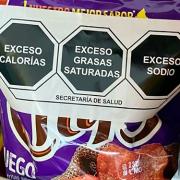
The Law for the Promotion of Healthy Eating, although it does not directly address the problem of lack of food, does establish measures that are fundamental for the transformation of food systems that, directly or indirectly, contribute to greater food security and sovereignty. and generate an improvement in the quality of food assistance. For example, it requires the State that public purchases of food that are destined for soup kitchens where children and adolescents attend, to state agencies and food programs, be made up of healthy foods that do not present warning seals (that is, that they do not have excess sugar, sodium, fat, sweetener or caffeine). It also establishes the importance of encouraging the development of family, peasant and indigenous agriculture.
In this way, the law is positioned, on the one hand, as a valuable instrument to positively impact the health of the most vulnerable sectors of the population, who are those most exposed to the consumption of processed and ultra-processed products. And on the other, to begin to transform the way in which the Argentine State, historically, has constructed its food policies and, more specifically, in its most urgent aspect, that is, hunger. Finally, when thinking about what those who have the least eat, the need to incorporate nutritional criteria and not just the amount of calories was put on the table.
In this framework, key questions were asked about what we are eating; about how the food that reaches our table is produced; about the relationship that exists between what we consume and the diseases we contract, at an increasingly younger age. Questions about what is offered to children and adolescents in schools, which in many cases constitutes the basis of their diet. The question is also enabled about who the State’s suppliers are and what type of production we want to support.
This debate and the conquest of this law, which has had civil society as its protagonist, has meant immense progress in the discussions and food policies of our country, and above all, it provides technical and legal tools to achieve better protection of rights to adequate food and health of the entire population. Society in general echoed the idea that it is no longer about filling bellies but rather about nourishing healthy bodies and minds, nourishing ourselves culturally and emotionally again. And according to the human rights instruments adopted by our country, it is the State that must guarantee that this is the case.
Demand the minimums without giving up the maximums
Currently, these historic advances are at serious risk, just as access to food by a large part of the population is also at risk due to the economic crisis that the country is going through and, above all, due to the shortage policies that they have been suffering. community kitchens and food assistance programs.
The subjugation of social rights seeks to reverse the progress achieved in recent years regarding the debate on food quality because, in the absence of minimum food conditions, immediate needs prevail and the need for structural transformations remain in the background flat.
Now: Is it possible that even in crisis contexts we can think about the food problem in a comprehensive and non-linear way? Is it possible to demand that emergency food policies be urgently implemented and at the same time prioritize the purchase of healthy food for soup kitchens? Of course. It is not only possible but necessary. Fighting for the minimum without giving up the maximum is the way to defend the progress achieved, the rights achieved.
The health effects of purely palliative food policies are irreversible for millions of people who have contracted chronic diseases and disabilities of different types. Today we know the serious consequences on health that come with the consumption of certain products with excess critical nutrients, as well as the lack of variety in the daily diet, the low consumption of fruits and vegetables. For this reason, we cannot settle for “what there is”, we cannot renounce the rights achieved and the progress made in the debate on the type of food we need to develop and live with dignity.
Satisfaction of the right to health, to adequate food, to a decent life cannot be left in the hands of the market, and food cannot be treated as a commodity. It is urgent that the State guarantee that all people can access decent, quality food in sufficient quantity. Quality food should be a right and not a privilege.
*Image source: Colectivo Diciembre
Authors
Maga Merlo Vijarra
María Laura Fons
Contact
Maga Merlo Vijarra, magamerlov@fundeps.org