Following the preliminary draft of Penal Code 2018, a group of professionals and civil society organizations sent a letter to Minister Germán Garavano requesting that he suspend articles 95 and 96 of the preliminary draft because they are regressive for the rights of pregnant persons.
“Below, we offer a google translate version of the original article in Spanish. This translation may not be accurate but serves as a general presentation of the article. For more accurate information, please switch to the Spanish version of the website. In addition, feel free to directly contact in English the person mentioned at the bottom of this article with regards to this topic”
Together with a group of professionals and civil society organizations that work in defense of human rights, we sent a letter to Germán Garavano, Minister of Justice and Human Rights, requesting that he suspend articles 95 and 96 of the preliminary draft because they are regressive for human rights. of pregnant people.
The text proposed in the Draft of Penal Code 2018 does not accept the important modifications approved in the Chamber of Deputies of the Nation in the recent treatment of the bill that decriminalized and legalized the interruption of pregnancy on a voluntary basis until the 14th week of gestation.
1. The proposed wording does not substantially change the conditions and guidelines set forth in arts. 85 and next. of the current penal code in force since 1921, although it uses different expressions and, on the contrary, may be regressive.
2. The fundamental change foreseen in the legal reform debated and approved in Deputies is not contemplated, that is, that the abortion is not punishable when the woman voluntarily decides to interrupt the pregnancy in the first 14 weeks of gestation. Consequently, the grounds for exemption from punishment in the preliminary draft under analysis remain the same as those currently in force: danger to the life and health of women and in case of violation.
3. The new proposed text qualifies health in its physical and mental aspect, while in the current penal code in force, as well as in the project approved in Deputies, only “Health” is spoken, which we consider more correct, because enables the development of the broad concept according to WHO guidelines that does not limit the concept of health to physical and mental aspects only. Therefore, the change is limiting and can be interpreted restrictively, generating greater obstacles when it comes to accessing the legal interruption of pregnancy for this reason, as it is currently planned.
4. The enumeration proposed by the preliminary bill in relation to the grounds for exemption from punishment is also restrictive insofar as it does not expressly contemplate the possibility of deciding to terminate the pregnancy when there is a diagnosis of non-viability of extra-uterine life of the fetus (for example in the case of anencephaly ), as today is accepted and admitted by the jurisprudence for decades, and was expressly consigned in the project that had half sanction.
5. In relation to the amount of the penalties provided for the crime of abortion instead of the current one from 1 to 4 years, it is established from 1 to 3 years, thus reducing the maximum in one year, which may mean greater possibilities that the prison sentence is not effective, although it depends on the judicial criterion since as a general principle in the Preliminary Draft the penalties are effective compliance. It should be noted that the project with a half sanction established a substantially lower penalty: from 3 months to a year with the possibility of being left in suspense at the discretion of the judiciary criteria.
6. In the Preliminary Draft the possibility of suspension is extended and even the benefit is extended with the possibility that the judge decides to leave the penalty without effect, but it should be noted that in addition to being substantially greater than in the project with half sanction, there was a judicial process that occurred when the termination of pregnancy was practiced only after the week 14, ie, from week 15 of pregnancy – and provided that the other causes that do not have a deadline of expiration-, which substantially reduced the universe of cases caught in the criminal sphere.
The circumstance that this Draft incorporates this figure of suspension of punishment or exemption from punishment at the discretion of the criminal judges intervening in proceedings against women, does not improve the clearly punitive and persecutory issue that this crime involves for women. In addition to continuing to prosecute, women are subject to the discretion and discretion of criminal judges, who will graduate the sentence and decide discretionally on its amount, suspension or exemption.
7. We consider it necessary to emphasize that the evolution of comparative law and the most modern tendencies in the criminal field and in the international law of human rights, which permeates and especially affects sexual and reproductive rights in the 21st century, point not only to decriminalization and legalization of the IVE during the first weeks of pregnancy, but consider that the criminal appeal is disproportionate, discriminatory against women and only applicable as a measure of last resort (ultima ratio).
8. As a result, legal systems abandon criminalization and resort to other measures outside the criminal context. Compared legislations abstain from incorporating into the codes new norms that suppose the creation of new crimes or criminal types, such as, for example, abortion in its culpable form, which this preliminary draft incorporates.
The preliminary draft that concerns us deepens this regressive path, creating more criminal figures directly linked to abortion that until now was always contemplated in its intentional form (ie with intention). Creating the crime of wrongful abortion not only strengthens the punitive path, but it also constitutes a direct threat to the professionals involved in health practices, who see a new criminal figure that involves them beyond other criminal figures that will be applied to them. the commission of harmful acts due to malpractice, which are already contemplated.
9. Wrongful abortion is a very scarce figure in comparative legislation. Very few penal codes outside Spain (Article 146 with a prison sentence of three to five months alternative with fine and disqualification in your case from one to three years), where non-punishable abortion is contemplated before 14 weeks of pregnancy; only three countries in Latin America contemplate it – two of them with serious maternal mortality problems – such as Guatemala (article 139 with one to three years imprisonment); Costa Rica (Article 122 sixty to one hundred and twenty days of fine) and El Salvador (Article 137 prison from six months to two years). The Preliminary Draft adopts for this figure the same penalty as El Salvador, one of the Central American countries with the highest criminalization against women.
10. Therefore, we consider it necessary to suppress the crime of miscarriage of the criminal code proposed in the preliminary draft in art. 87 inc.2, which is also public action may be seriously intrusive to the privacy of women.
11. On the same path of punitive increase directly related to the sexual and reproductive rights of women, the preliminary draft incorporates two new offenses: injury to the fetus, called “injury to the unborn person”, in its willful and guilty manner. Nor do we find reception of these figures in comparative law, more than the few examples offered by the laws of Peru that includes the fraudulent figure and Spain, El Salvador and Colombia that admit both intentional and culpable. In the rest of the legislation these criminal types are not contemplated. It could be understood that this crime gives the fetus a certain legal status, alien and different to the body of the woman or pregnant person, trying to equate it with a person already born. This question has been the object of deep analysis in the jurisprudence, in particular by the Supreme Court of Justice of the Nation in the previous FAL and by the Inter-American Court in the Artavía Murillo case whose conclusions do not validate the criterion that informs this crime, but quite the opposite.
12. On the other hand, in the preliminary projects that were made in our country so far this century (2006 and 2014), these figures that are reproduced here are incorporated (in 2006 only the malicious form was included), with many criticisms and observations, including the dissidence presented by one of the members of the Drafting Commission to art. 96 of the Preliminary Draft of the reform created by Dto.678 / 2012, to which we refer (See “Draft of the Criminal Code of the Nation – Det. PEN 678/2012”, Dissident Dra. María Elena Barbagelata). On both occasions, the Public Ministry of Defense also held that in the face of any pretension to incorporate the crime of injury to the fetus, it will be essential to bear in mind that these proposals frequently violate women’s right to choose, encourage social control policies of the pregnancy and motherhood and unjustifiably expand the punishable area (See “Opinion for the preparation of the new Criminal Code of the Nation with a gender perspective” Dra. Stella Maris Martínez – General Office of the National Ombudsman).
For the above, we advise the deletion of arts. 95 and 96 of the preliminary draft of the penal code 2018, especially taking into account that these crimes are also public action. (Articles 71 and following of the Draft).
PEOPLE AND INSTITUTIONS THAT SUBSCRIBED THE DOCUMENT:
ASOCIACIÓN DE ABOGADOS DE BUENOS AIRES (AABA)–
Dras. María del Carmen Besteiro
Dra. Gabriela Nasser
Dra. María Elena Barbagelata
Dra. Julieta Bandirali
Dra. Nelly Minyersky
Dra. Nina Brugo Marcó
Dra. Sandra Mónica González
Dra. Verónica Heredia
Dra. Natalia Ferrari
Dra. Cristina Raquel López
Dr. Ricardo Huñis
Dr. Guillermo Goldstein
Dr. Carlos Alberto López de Belva
Dra. Alba Rocío Cuellar Murillo
FUNDACION MUJERES EN IGUALDAD (MEI)
Sra. Monique Altschul
CEDEM- (Centro de Estudios de la Mujer)
Lic. María Luisa Storani
AMNISTÍA INTERNACIONAL (AI)
Lic. Paola García Rey
CENTRO DE ESTUDIOS LEGALES Y SOCIALES (CELS)
Dra. Edurne Cárdenas
EQUIPO LATINOAMERICANO DE JUSTICIA Y GÉNERO (ELA)
Dra. Natalia Gherardi
UNR- FACULTAD DE DERECHO- PROGRAMA GÉNERO Y SEXUALIDADES
Dra. Analía Aucía
CLADEM ARGENTINA
Lic. Milena Páramo
INTEGRANTES DE LA COMISIÓN DE LOS DERECHOS DE LA MUJER DE LA F.A.C.A:
Dra. Silvia Pedretta
Dra. Marisa Eisaguirre
Dra. Mariela Jesús
Dra. Mabel López
ASOCIACIÓN DE MUJERES PENALISTAS DE ARGENTINA (AMPA)
Dra. Mariana Barbitta
CATOLICAS POR EL DERECHO A DECIDIR
CUERPO DE ABOGADAS FEMINISTAS DE CÓRDOBA (CAF)
FUNDACIÓN PARA EL DESARROLLO DE POLÍTICAS SUSTENTABLES (FUNDEPS)
XUMEK (ASOCIACION PARA LA PROMOCIÓN Y PROTECCIÓN DE LOS DERECHOS HUMANOS (MENDOZA).
MUJERES X MUJERES
MULTISECTORIAL DE MUJERES DE SANTA FE
ALIANZA POR LOS DERECHOS HUMANOS DE LAS MUJERES (RED QUE AGRUPA MAS DE 300 ABOGADAS DE TODO EL PAIS)
Dra. Mariana Romanelli
Dra. Mariana Vargas
Dra. Daniela Fagioli
Dra. María Elisa Vilca
Dra. Mariana Hellin
Dra. Laura Julieta Casas
Dra. Susana Chiarotti
Dra. Mónica Menini
Dra. Soledad Deza
Dra. María Urueña Russo
Dra. Mariana Soledad Alvarez
Dra. Raquel Asensio
Dra. Paula Condrac
Dra. Larisa Moris
Dra. María Renée Carrizo
Dra. Karina Selva Andrade
Dra. Alejandra Perez Scalzi
Dra. Silvia Juliá
Dra. Manuela G. González
Dra. Lucía Puyol
Dra. Mariana Ripa
Dra. Sabrina Frydman
Dra. Patricia Bustamante Quintero
Mg. Cecilia Russo
Dra. Analía Mas
Dra. Andrea Caleri
Dra. Eleonora Lamm
Dra. Lucila Puyol
Dra. Valentina Tarqui Lucero
Dra. María Gabriela Pellegrini Salas (AAMJUS)
Lic. Dora Barrancos
Dra. Celeste Perosino
Lic. Mónica Tarducci
Sra. Marta Alanis
Sra. Julia Martin
Lic. Dolores Fenoy
Lic. Victoria Tesoriero

FUNDEPS and ARCOR met in conciliation hearing before consumer association
The campaign “Your fair share” contradicts the right of consumers to receive information and violates the right to health
In mid-September of this year, Arcor launched the campaign that states that “a healthy life is a balanced life in which giving yourself a taste and taking care of your health go hand in hand”. As part of that campaign, a green front label with the phrase “Your fair share” was stamped on several products of the company, indicating “what is the recommended daily portion of what you like and what makes you good”.
FUNDEPS stated before ADCOIN that the campaign contradicts the guarantee of the consumers to receive adequate and truthful information contemplated in art. 4 of the Consumer Defense Law No. 24,240, in art. 1100 of the Civil and Commercial Code and in art. 42 of the National Constitution. In addition, it considers that the message that hides the advertising campaign is misleading, since it induces a false idea regarding the products. The choice of the word “fair” and the green color generate in the person who approaches the product an idea of ”health” very far from what really involves the consumption of ultra-processed foods such as those promoted by the campaign. In this way, it promotes and induces its consumption, exaggerating its virtues or suggesting some actually nonexistent. It is a case of false advertising, and more specifically, misleading advertising.
The representatives of Arcor affirmed in the hearing that the program “Your Fair Share” is respectful of the current legislation and that it was designed, precisely, to contribute to promote a healthy diet. They indicated that the creation of the “slogan” and the campaign had been consulted with experts in the field, “with the objective of helping the consumer limit the intake of optional consumer foods to a fair measure.”
However, both FUNDEPS and ADCOIN argued that although the campaign claims to be providing information to the consumer, the truth is that there is no recommended portion of consumption of these products. The World Health Organization (WHO) considers that ultra-processed foods “are the engine of the obesity epidemic in Latin America” and should be avoided. The Arcor campaign goes in the opposite direction.
Despite the lack of a specific regulatory framework regarding labeling, FUNDEPS insists that there is a violation of the right to receive true, accurate and detailed information. The campaign does not discourage the consumption of these products or mark the maximum limit, but promotes it. Given Arcor’s insistence on the campaign’s intention to generate a tool for consumers to identify a portion and thus recognize the maximum limit, FUNDEPS requested the marketing studies and the scientific foundations on which the campaign was designed, as well as the contacts of nutritionists and professionals who supported it, in order to better understand the scientific evidence mentioned by the company. For its part, Arcor requested to know better the arguments that found the position of the Foundation and of the organizations of the region that supported the claim.
Both parties decided to continue the dialogue in the extrajudicial conciliatory scope, for which a new hearing was scheduled for the first days of December.
Lack of regulation on labeling
The nutritional labeling that is shown in the food packages should provide the consumers with the necessary information that will allow them to know the amount of critical nutrients, such as sugar, grease or sodium that they are consuming. In this way, the Pan American Health Organization (PAHO) recommends implementing a front labeling, which applies to processed and ultra processed foods, including beverages, and that provides information directly, easily and quickly. In addition, you should warn about the high content of nutrients associated with health problems, such as sugar, fat and salt, according to a nutrient profile. The implementation of these warnings should include the restriction to the use of slogans, images and colors that may suggest characteristics that those products do not have. Likewise, these policies should be accompanied by campaigns aimed at promoting a more conscious purchase, using labeling.
It is evident that current legislation is ineffective in adequately protecting the right to health and food, which leaves room for companies to take advantage of these legal gaps, confuse consumers and consumers, and limit their choices.
In this way, the State fails to comply with its obligation to protect the human right to health that requires that the actions of third parties not affect the effective enjoyment of this right. This situation demonstrates the need to strengthen the existing regulation and the implementation of effective mechanisms aimed at restricting these deceptive marketing practices and preparing a nutritional label that provides the necessary information to ensure the right of consumers and consumers to clear and truthful information, contributing to the choice of healthier options.
Children and teenager: main affected
The message contained in the products advertised by Arcor violates the rights of children and adolescents, because they are the main consumers of this type of food. The cartoons, the characters, the designs and the colors that illustrate the packages of these products are childish, with a clear intention to get their attention.
Because it is a vulnerable group, with fewer tools to decide what kind of food to choose for a balanced diet, FUNDEPS made a presentation to the Children’s and Adolescents’ Advocacy of the Province of Córdoba, requesting that the necessary means be found to respond to this campaign and to enable mechanisms for the dissemination of correct and scientific information on healthy eating.
The same proposal was made together with FIC Argentina before the Ombudsman’s Office of the Province of Buenos Aires, by Walter Martello. On that occasion, the organizations asked the defender to urge the national authorities to intimidate the company to withdraw from the communication channels, point of sale and market in general, the “Your Fair Share” campaign and to urge the Executive Branch and the National Legislature to strengthen the regulatory framework to prevent commercial actions such as this one from being carried out, which violate the right to health, food and information of consumers, especially children and adolescents.
Contacts
Agustina Mozzoni, agustinamozzoni@fundeps.org
Mayca Balaguer, maycabalaguer@fundeps.org
Business activity and women’s rights in the United Nations agenda
We participated in the call of the Working Group on the Gender Perspective in the United Nations Guiding Principles on Business and Human Rights, in order to comment from our experience on the relationship between business activities and women’s rights.
“Below, we offer a google translate version of the original article in Spanish. This translation may not be accurate but serves as a general presentation of the article. For more accurate information, please switch to the Spanish version of the website. In addition, feel free to directly contact in English the person mentioned at the bottom of this article with regards to this topic”.
The Working Group on the issue of human rights and transnational corporations and other companies, operating within the framework of the United Nations, made a call for civil society organizations to send their comments on the relevant issues regarding impact. of business activity in the human rights of women. For this, we elaborate comments from the point of view of our work agendas, to comment on the situation of health impacts, on the participation of women in companies, and on women and the media.
First, we address how women experience the impact of human rights abuses related to companies differently and disproportionate, exposing the cases of the tobacco industry and breast milk substitutes. Both industries, with their particularities, have aggressive marketing strategies. The tobacco industry especially targets young women in cigarette consumption through strategies such as flavored cigarettes or “light” or sponsorship of fashion events. On the side of the breast-milk substitution industry, they also operate with misleading marketing and labeling strategies on the characteristics of the products, as well as having great interference in public policies – in a situation of conflict of interest – discouraging breastfeeding. maternal and its replacement by the formula from an early age.
On the other hand, financing for development provided by international financial institutions to the private sector also has environmental, social, health, access to infrastructure and housing, and indigenous rights, which affect women in particular. The IFIs in general have difficulties and failures in the implementation of their policies, and particularly in the design and application of gender policies. We emphasize then that policies in general, and particularly those on gender, should be strengthened so that they establish clear guidelines for clients (especially companies and other private entities) to apply differentiated impact assessments, and also strengthen accountability mechanisms to give effective remedies when there are negative impacts.
The SCJ rejected the plans of the “Portal de Belén” in the cause of non-punishable abortion
“Below, we offer a google translate version of the original article in Spanish. This translation may not be accurate but serves as a general presentation of the article. For more accurate information, please switch to the Spanish version of the website. In addition, feel free to directly contact in English the person mentioned at the bottom of this article with regards to this topic”
Resolution No. 106 of the highest court of the Province of Cordoba is issued on three issues:
On this point, the TSJ states that the allegation was made out of time. But also, said that “the supposed alleged novelty became a mere particular legal interpretation rehearsed by the plaintiff on a political-legislative decision of the Congress of the Nation”, prima facie, far exceed “What is specifically discussed in these cars, with the independence of the integral weighting that has been done in the final judgment “. “I have not had a place.” Finally, this request will be rejected as manifestly inadmissible and dilatory.
2. The recusal without cause to the cameraman Sánchez Torres.
Given that three of the seven “natural” members of the TSJ will not resolve in this case due to licenses or excuses (Carlos García Allocco, María Marta Cáceres de Bollati and Sebastián López Peña), the three vacant places will be completed by female judges from a list of 16 judges conformed through Regulatory Agreement No. 1434 – Series “A” of 07/11/2017. The association Portal de Belén opposed that Judge Julio Ceferino Sánchez Torres joined the court through a challenge without expression of cause.
To this request the Court responded that “the recusal without expression of cause is not possible, in Córdoba, in an amparo trial, such as the one dealt with in these proceedings, in accordance with Law No. 4915 (Article 16) . However, even if by mere hypothesis it is admitted that the parties have such an attribution for subsidiary application of the CPCC, the Bethlehem Portal proposal should also be rejected as untimely “, since it took more than three days, which is the deadline for this type of orders. Consequently, it is clear that the attempt of Portal de Belén to prevent Sánchez Torres from joining the Tribunal was only a delaying strategy.
3. The recusal with expression of cause to the four natural vowels of the SCJ.
The plaintiff argued that the four original vowels of the SCJ should be set aside because the deadlines for failure are “overdone”. However, the Court considered that this assertion “has no basis […] and seems rather aimed at delaying and making impossible that this TSJ can finally be issued.”
The court affirms that the departures attempted by “Portal de Belén” are inadmissible, “even more in the context and in connection with the battery of incidents promoted by the plaintiff, which, if they are linked, demonstrate the will to prevent the integration of this court ”
“The broad exercise of the right of defense can not be confused or made compatible – much less tolerated – with the articulation of ostensible and evidently dilatory incidents, as is clear if each of the presentations made by “Portal de Belén” are connected,” concluded the Court.
Consequently, the final sentence will be dictated by the “original” members of the Superior Court Aida Tarditti, Domingo Sesin, Luis Enrique Rubio and Mercedes Blanc de Arabel, as well as by the chambers Claudia Zalazar, Julio Ceferino Sánchez Torres and Silvana María Chiapero.
The situation of the Legal Interruption of Pregnancy in Córdoba
In 2012, after the pronouncement of the Supreme Court of Justice of the Nation in the ruling “FAL s / autosatisfactivas measures”, the Ministry of Health of the Province of Córdoba approved the resolution 93/12 and the Guide of abortion care not punishable in order to guarantee rapid and safe access to the practice of non-punishable abortions in the provincial public health services. Thirteen days later, Portal de Belén – Civil association filed an appeal against the Province of Córdoba, requesting that the resolution and guidance be declared unconstitutional and, as a precautionary measure, the suspension of the same.
In the first instance, the judge in the case made the precautionary measure stating that the guide could not be applied in its entirety, specifically with regard to access to legal interruption of pregnancy in cases of rape. In second instance, the Civil Chamber resolved the amparos presented for the purposes of appealing the first sentence, making room for it. Since 2013, the Superior Court of Justice must resolve the appeals filed and rule on the merits of the case.
Access to the Legal Interruption of Pregnancy is a recognized human right in our national and international legal framework. It is necessary to consolidate an institutional framework in which the rights to health, sexuality and reproductive security are respected, eliminating all the judicial and administrative barriers that obstruct access to this right.
After more than 6 years of the judicialization of the guide, it is time for the court to be issued in this case that, in its own words, “has the maximum social significance and public interest.”
More Information:
Writer: Mayca Balaguer
The Network of Organizations Against Corruption met
“Below, we offer a google translate version of the original article in Spanish. This translation may not be accurate but serves as a general presentation of the article. For more accurate information, please switch to the Spanish version of the website. In addition, feel free to directly contact in English the person mentioned at the bottom of this article with regards to this topic”
In the month of December 2017, Poder Ciudadano, the Center for Research and Prevention of Economic Crime (CIPCE), the Civil Association for Equality and Justice (ACIJ), Fundación Nuestra Mendoza, Latin American Center for Human Rights (CLADH), Acción Ciudadana Areco, Foundation for the Development of Sustainable Policies (FUNDEPS), Transparencia Ciudadana Foundation and, the Transparent Salta Foundation; we are the Network of Organizations Against Corruption.
The purpose of this alliance is to advance in the struggle and political advocacy on corruption issues at the national and provincial levels. Particularly, among the topics that are to be addressed are transparency, access to public information, public ethics, financing of politics, conflicts of interest, among others. We want to promote State policies that ensure an institutionalization made available for government accountability and transparency of government actions. This September the members of the ROCC met to outline upcoming joint actions and lines of action to address from now on.
Contact
Agustina Palencia
agustinapalencia@fundeps.org
The right to life according to the UN Human Rights Committee
“Below, we offer a google translate version of the original article in Spanish. This translation may not be accurate but serves as a general presentation of the article. For more accurate information, please switch to the Spanish version of the website. In addition, feel free to directly contact in English the person mentioned at the bottom of this article with regards to this topic”
This pronouncement focused on certain issues such as the abolition of the death penalty, the importance of having solid methods of accountability, the protection of the rights of persons deprived of their liberty and the protection of defenders. of human rights against reprisals. The Committee opposed a restrictive interpretation of the right to life and stressed that people have the right to enjoy a life with dignity. In addition, its members highlighted the link between the right to life and the obligation of States to prohibit war propaganda and hate speech.
The right to life before the interruption of pregnancy
With regard to States and their power to adopt measures regulating the termination of pregnancy, the Committee noted that such measures “should not result in the violation of the pregnant woman’s right to life or her other rights under the Covenant,” such as the prohibition of cruel, inhuman or degrading treatment or punishment. Therefore, all legal restrictions that limit women’s ability to undergo an abortion should not, among other things, endanger their lives or expose them to physical or mental pain or suffering. ”
In addition, it indicated that States parties should “facilitate safe access to abortion to protect the life and health of pregnant women” and “should not regulate pregnancy or abortion in a manner contrary to their duty to ensure that women do not they have to resort to dangerous abortions. “In this sense, the Committee understands that States” should not adopt measures such as penalizing the pregnancies of single women, nor apply penal sanctions to women who undergo an abortion or to the doctors who perform them. they attend to do it “.
In addition, she said that “excessive or humiliating requirements should not be established for women who wish to have an abortion,” and concluded that “[t] he obligation to protect the lives of women against the health risks related to dangerous abortions requires States parties to guarantee women and men, and adolescents in particular, access to information and education about reproductive options and a whole range of contraceptive methods. States parties should also ensure that pregnant women have access to adequate health care services, both prenatally and post-abortion. ”
International human rights organizations in tune
This statement is added to a list of expressions that different human rights organizations have had throughout the year regarding the situation of abortion in our country and in the world.
On June 1, the Committee on the Rights of the Child, the body that oversees compliance with the Convention on the Rights of the Child, issued its Final Observations for Argentina. There, he was forceful in urging the State to ensure “access to safe abortion services and postabortion care for adolescents, ensuring that their opinions are always heard and duly taken into account as part of the decision-making process.”
In the same vein, before the bill of voluntary interruption of pregnancy was discussed in the Chamber of Deputies on June 13, the Working Group on the issue of discrimination against women in legislation and in the practice of the UN through a letter congratulated Congress for its consideration of a bill that decriminalizes the termination of pregnancy in the first fourteen weeks, and urged that this project be approved. “We welcome the important step that is being taken to guarantee women all their human rights, including the rights to equality, dignity, autonomy, information and bodily integrity and respect for privacy and the highest possible level of health. , including sexual and reproductive health without discrimination, as well as the right to a life free of violence and not to suffer torture and cruel, inhuman or degrading treatment, “the Working Group had expressed.
After the legislative debate, the same Working Group deeply regretted that the Argentine Senate rejected the bill that would have legalized abortion in the first 14 weeks of pregnancy, and described the decision as a missed opportunity to promote women’s rights in the country.
Something similar happened with the Committee of Experts of the Follow-up Mechanism of the Convention of Belém do Pará (MESECVI) that greeted and congratulated the Chamber of Deputies of the Argentine Nation for the approval of the bill in the month of June. After the rejection of the project by the Senate, the MESECVI expressed its regret and argued that “[t] he approval of this law would have constituted a significant advance in the consolidation of women’s rights in accordance with the spirit of the Convention of Belém do Pará, since it not only sought to guarantee their sexual and reproductive rights, but also to protect women’s lives, their physical and mental integrity, and their fundamental freedoms. ”
Finally, just over a month ago, the United Nations Committee on Economic, Social and Cultural Rights concluded the fourth report of Argentina on its implementation of the International Covenant on Economic, Social and Cultural Rights. There he highlighted the high numbers of dangerous abortions in Argentina and the obstacles to access to abortion in the causes foreseen by the current law, such as the lack of adequate medicines and the negative impact of the conscientious objection of health professionals. In addition, it recommended the provision of contraceptive methods throughout the territory, as well as the adoption of effective measures for the implementation of causes of non-punishable abortion in all provinces (as established in the FAL ruling) and access to medicines that allow a safe interruption of pregnancy. It also recommended the regulation of conscientious objection in order not to obstruct the rapid and effective access to abortion, with dignified treatment by health professionals for patients seeking access to abortion services, as well as not criminalizing women who resort to abortion. practice.
All these pronouncements published in 2018 are added to a long list. For years, international human rights organizations have called attention to Argentina and the rest of the world on the standards of protection they must comply with regarding the sexual and reproductive rights of women and pregnant women. It is important to understand the dimension of these expressions: international experts are pointing us the way towards legislation on abortion that respects the commitments assumed in each of the pacts and treaties that Argentina has ratified.
Writter:
Mayca Balaguer
Organizations request spaces for participation in the Federal Council for Transparency.
“Below, we offer a google translate version of the original article in Spanish. This translation may not be accurate but serves as a general presentation of the article. For more accurate information, please switch to the Spanish version of the website. In addition, feel free to directly contact in English the person mentioned at the bottom of this article with regards to this topic”
Poder Ciudadano, the Center for Research and Prevention of Economic Crime (CIPCE), the Latin American Center for Human Rights (CLADH), Foundation for the Development of Sustainable Policies (FUNDEPS), Transparencia Ciudadana Foundation, Nuestra Mendoza Foundation, the Civil Association for equality and justice (ACIJ) Acción Ciudadana Areco and Fundación Salta Transparente – Organizations member of the Network of Organizations against Corruption (ROCC) – presented to the president of the Federal Council for Transparency, Dr. Eduardo Bertoni, a letter requesting the means for the establishment of spaces for consultation, participation and discussion that involve civil society organizations are arbitrated. The Federal Council for Transparency, created by the Law of Access to Public Information, was constituted as a technical cooperation space, made up of representatives of the Executive Power of each province of the country and of the Autonomous City of Buenos Aires, created for the promotion of public policies on transparency and access to public information throughout the country.
However, the member organizations of the ROCC pointed out that the Federal Council for Transparency does not have a space for articulation and exchange of ideas with key actors, such as civil society organizations, that allow for the nourishment of a space in which discuss and specify public policies of utmost importance for society. The public administration must always take into account that for the design of any public policy of such relevance to society, it is essential to ensure the inclusion of the voices of citizens, which can provide a different point of view and sometimes more consistent with reality from day to day. This type of space is fundamental to achieve a strategic and effective resolution of conflicts related to transparency and access to public information. The Network of Anti-Corruption Organizations is made up of a group of civil society organizations that want a present, transparent, accountable state with the highest standards of integrity. That is why we ask the Federal Council for Transparency to allow dialogue and the participation of Civil Society Organizations since together they can design public policies and action plans much more effective and with greater strength.
Access the note here: LINK
The 4th session for the discussion of a binding treaty on companies and human rights ended.
“Below, we offer a google translate version of the original article in Spanish. This translation may not be accurate but serves as a general presentation of the article. For more accurate information, please switch to the Spanish version of the website. In addition, feel free to directly contact in English the person mentioned at the bottom of this article with regards to this topic”
A draft text for the ‘Binding Treaty on Business and Human Rights’ was finally submitted in mid July. This document was launched in Geneva, within the framework of the mandate of the Intergovernmental Working Group on Business and Human Rights, which indicated that a binding treaty on this matter should be developed. The sessions in October, took as a starting point for the debate, that ‘Zero Draft’.
The immediate antecedent of this draft was the document known as “Elements of the Treaty” that circulated at the end of 2017 and was discussed at the third session of the Intergovernmental Group in October of that same year. Subsequently, these ‘Elements’ were submitted for public consultation and comments were received until February 2018. Once the process was closed, the construction of a text for the 4th session was left.
About the ‘Zero Draft’
At first glance, the essential difference between both documents (the treaty and the elements), is the disappearance of the term ‘other companies’ when it refers to the subjects susceptible of judicial responsibility. The debate over the inclusion of other companies besides those of a transnational nature was strongly opposed. This, since it was considered that this treaty should only focus on those companies that have activities in two or more national jurisdictions because those that only acted in one State, were subject to national regulatory regimes. However, it should be noted that Article 4 of the draft defines ‘transnational business activities’ as any productive or commercial activity that takes place in two or more national jurisdictions. This reference could also be interpreted for those business activities carried out in a single State but that could be transnationalized due to their inclusion in a value chain.
Likewise, the preamble of the document does not include in its entirety what had been proposed in the draft elements of the treaty. The document published at the end of last year mentioned, among other things, the importance of referencing the Guiding Principles, the rules on the responsibility of transnational corporations and the pressing situation regarding the negative impacts of business activity on human rights. The draft treaty, in its preamble, fails to recognize all the elements that frame the process of creating this binding instrument.
In a second instance, it is important to mention that the draft text highlights the responsibility of the State as the first and only protector of Fundamental Rights in the face of corporate actions, although it ignores the possible damage caused to the commercial activity of nations. In this sense, those commercial activities that are supported by the States (generally public private investments) do not have a reception in this treaty.
The draft also surprises because of the relevance given to the remediation of damages and the rights of the victims, given the urgent need to prevent companies from violating human rights. This disparity between the remedy and prevention was noted by civil society in the ‘Elements’ document, and criticized as it is necessary that the damages caused by business activity be prevented in the same way as the provision of compensation to the victims.
Despite the strong focus on the ‘effective remedy’, the draft adopts an article on prevention; in which it is important to mention the obligation to establish legislation that obliges companies to take due diligence actions. Including environmental and human rights assessments to analyze their activities and take the necessary actions to prevent damage.
Now, it is clear that the draft proposes a binding component for the States, in the sense that it forces them to adopt legislation that ensures respect for Human Rights against business activity. However, the text does not evidence the responsibility of the companies and this is because the treaty will not make them obligated subjects but through the laws that the States will implement. In this regard, the possibility of creating a ‘tribunal’ or another similar institution that has the capacity to judge and penalize the actions of transnational companies disappears.
The draft of the treaty did not include the chapter on ‘Obligations of companies’ that was found in the ‘Elements’; nor were the obligations of international organizations included.
An important element that appears in the draft is the ‘International Fund for Victims’, whose objective is to collaborate with the effective remediation to the damages caused by the business activity.
About the 4th session
After the 4th session of the Intergovernmental Working Group, the polarization of opinions between the countries of the ‘north’ and the global ‘south’ has become evident.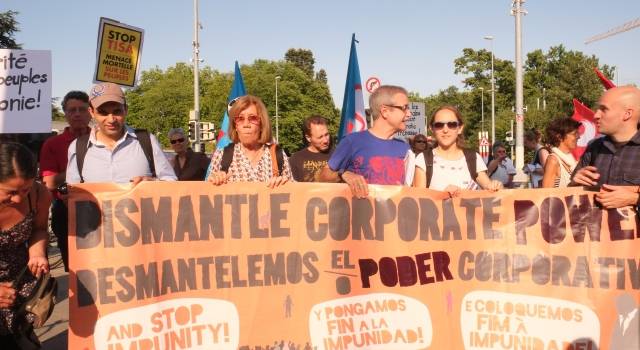 The countries belonging to the BRICS block, together with most of the African continents and Latin American; have shown a positive response to the initiative of a legally binding instrument. However, representatives of the European Union, the United States of America, Japan, Australia and Canada, in addition to not having been present at the negotiations, have made clear their refusal to endorse the creation of the aforementioned treaty.
This polarization has relevant effects on the effective force that an instrument of these characteristics can have. Since most of the transnational corporations that would be forced by this text, stay in the States that today pronounce themselves in a manner opposite to the treaty, the protection of human rights against the activity of transnational corporations would not be completely insured .
There are still no certainties about how the process will continue after this fourth session and it is also not clear how civil society will be included in it. According to the ‘Global Campaign to Stop Corporate Impunity’, the following are the points recommended to the Intergovernmental Group, to give continuity to the negotiations:
Writer:
Agustina Palencia
Contacts:
More Information:
We present comments on the draft treaty on business and human rights.
Advancing towards a binding treaty on transnational corporations and human rights.
Zero Draft Binding Treaty
Considerations on the crime of abortion and injuries to the unborn person in the preliminary draft reform of the Penal Code
“Below, we offer a google translate version of the original article in Spanish. This translation may not be accurate but serves as a general presentation of the article. For more accurate information, please switch to the Spanish version of the website. In addition, feel free to directly contact in English the person mentioned at the bottom of this article with regards to this topic”
Together with a group of professionals and civil society organizations that work in defense of human rights, we sent a letter to Germán Garavano, Minister of Justice and Human Rights, requesting that he suspend articles 95 and 96 of the preliminary draft because they are regressive for human rights. of pregnant people.
The text proposed in the Draft of Penal Code 2018 does not accept the important modifications approved in the Chamber of Deputies of the Nation in the recent treatment of the bill that decriminalized and legalized the interruption of pregnancy on a voluntary basis until the 14th week of gestation.
1. The proposed wording does not substantially change the conditions and guidelines set forth in arts. 85 and next. of the current penal code in force since 1921, although it uses different expressions and, on the contrary, may be regressive.
2. The fundamental change foreseen in the legal reform debated and approved in Deputies is not contemplated, that is, that the abortion is not punishable when the woman voluntarily decides to interrupt the pregnancy in the first 14 weeks of gestation. Consequently, the grounds for exemption from punishment in the preliminary draft under analysis remain the same as those currently in force: danger to the life and health of women and in case of violation.
3. The new proposed text qualifies health in its physical and mental aspect, while in the current penal code in force, as well as in the project approved in Deputies, only “Health” is spoken, which we consider more correct, because enables the development of the broad concept according to WHO guidelines that does not limit the concept of health to physical and mental aspects only. Therefore, the change is limiting and can be interpreted restrictively, generating greater obstacles when it comes to accessing the legal interruption of pregnancy for this reason, as it is currently planned.
4. The enumeration proposed by the preliminary bill in relation to the grounds for exemption from punishment is also restrictive insofar as it does not expressly contemplate the possibility of deciding to terminate the pregnancy when there is a diagnosis of non-viability of extra-uterine life of the fetus (for example in the case of anencephaly ), as today is accepted and admitted by the jurisprudence for decades, and was expressly consigned in the project that had half sanction.
5. In relation to the amount of the penalties provided for the crime of abortion instead of the current one from 1 to 4 years, it is established from 1 to 3 years, thus reducing the maximum in one year, which may mean greater possibilities that the prison sentence is not effective, although it depends on the judicial criterion since as a general principle in the Preliminary Draft the penalties are effective compliance. It should be noted that the project with a half sanction established a substantially lower penalty: from 3 months to a year with the possibility of being left in suspense at the discretion of the judiciary criteria.
6. In the Preliminary Draft the possibility of suspension is extended and even the benefit is extended with the possibility that the judge decides to leave the penalty without effect, but it should be noted that in addition to being substantially greater than in the project with half sanction, there was a judicial process that occurred when the termination of pregnancy was practiced only after the week 14, ie, from week 15 of pregnancy – and provided that the other causes that do not have a deadline of expiration-, which substantially reduced the universe of cases caught in the criminal sphere.
The circumstance that this Draft incorporates this figure of suspension of punishment or exemption from punishment at the discretion of the criminal judges intervening in proceedings against women, does not improve the clearly punitive and persecutory issue that this crime involves for women. In addition to continuing to prosecute, women are subject to the discretion and discretion of criminal judges, who will graduate the sentence and decide discretionally on its amount, suspension or exemption.
7. We consider it necessary to emphasize that the evolution of comparative law and the most modern tendencies in the criminal field and in the international law of human rights, which permeates and especially affects sexual and reproductive rights in the 21st century, point not only to decriminalization and legalization of the IVE during the first weeks of pregnancy, but consider that the criminal appeal is disproportionate, discriminatory against women and only applicable as a measure of last resort (ultima ratio).
8. As a result, legal systems abandon criminalization and resort to other measures outside the criminal context. Compared legislations abstain from incorporating into the codes new norms that suppose the creation of new crimes or criminal types, such as, for example, abortion in its culpable form, which this preliminary draft incorporates.
The preliminary draft that concerns us deepens this regressive path, creating more criminal figures directly linked to abortion that until now was always contemplated in its intentional form (ie with intention). Creating the crime of wrongful abortion not only strengthens the punitive path, but it also constitutes a direct threat to the professionals involved in health practices, who see a new criminal figure that involves them beyond other criminal figures that will be applied to them. the commission of harmful acts due to malpractice, which are already contemplated.
9. Wrongful abortion is a very scarce figure in comparative legislation. Very few penal codes outside Spain (Article 146 with a prison sentence of three to five months alternative with fine and disqualification in your case from one to three years), where non-punishable abortion is contemplated before 14 weeks of pregnancy; only three countries in Latin America contemplate it – two of them with serious maternal mortality problems – such as Guatemala (article 139 with one to three years imprisonment); Costa Rica (Article 122 sixty to one hundred and twenty days of fine) and El Salvador (Article 137 prison from six months to two years). The Preliminary Draft adopts for this figure the same penalty as El Salvador, one of the Central American countries with the highest criminalization against women.
10. Therefore, we consider it necessary to suppress the crime of miscarriage of the criminal code proposed in the preliminary draft in art. 87 inc.2, which is also public action may be seriously intrusive to the privacy of women.
11. On the same path of punitive increase directly related to the sexual and reproductive rights of women, the preliminary draft incorporates two new offenses: injury to the fetus, called “injury to the unborn person”, in its willful and guilty manner. Nor do we find reception of these figures in comparative law, more than the few examples offered by the laws of Peru that includes the fraudulent figure and Spain, El Salvador and Colombia that admit both intentional and culpable. In the rest of the legislation these criminal types are not contemplated. It could be understood that this crime gives the fetus a certain legal status, alien and different to the body of the woman or pregnant person, trying to equate it with a person already born. This question has been the object of deep analysis in the jurisprudence, in particular by the Supreme Court of Justice of the Nation in the previous FAL and by the Inter-American Court in the Artavía Murillo case whose conclusions do not validate the criterion that informs this crime, but quite the opposite.
12. On the other hand, in the preliminary projects that were made in our country so far this century (2006 and 2014), these figures that are reproduced here are incorporated (in 2006 only the malicious form was included), with many criticisms and observations, including the dissidence presented by one of the members of the Drafting Commission to art. 96 of the Preliminary Draft of the reform created by Dto.678 / 2012, to which we refer (See “Draft of the Criminal Code of the Nation – Det. PEN 678/2012”, Dissident Dra. María Elena Barbagelata). On both occasions, the Public Ministry of Defense also held that in the face of any pretension to incorporate the crime of injury to the fetus, it will be essential to bear in mind that these proposals frequently violate women’s right to choose, encourage social control policies of the pregnancy and motherhood and unjustifiably expand the punishable area (See “Opinion for the preparation of the new Criminal Code of the Nation with a gender perspective” Dra. Stella Maris Martínez – General Office of the National Ombudsman).
For the above, we advise the deletion of arts. 95 and 96 of the preliminary draft of the penal code 2018, especially taking into account that these crimes are also public action. (Articles 71 and following of the Draft).
PEOPLE AND INSTITUTIONS THAT SUBSCRIBED THE DOCUMENT:
ASOCIACIÓN DE ABOGADOS DE BUENOS AIRES (AABA)–
Dras. María del Carmen Besteiro
Dra. Gabriela Nasser
Dra. María Elena Barbagelata
Dra. Julieta Bandirali
Dra. Nelly Minyersky
Dra. Nina Brugo Marcó
Dra. Sandra Mónica González
Dra. Verónica Heredia
Dra. Natalia Ferrari
Dra. Cristina Raquel López
Dr. Ricardo Huñis
Dr. Guillermo Goldstein
Dr. Carlos Alberto López de Belva
Dra. Alba Rocío Cuellar Murillo
FUNDACION MUJERES EN IGUALDAD (MEI)
Sra. Monique Altschul
CEDEM- (Centro de Estudios de la Mujer)
Lic. María Luisa Storani
AMNISTÍA INTERNACIONAL (AI)
Lic. Paola García Rey
CENTRO DE ESTUDIOS LEGALES Y SOCIALES (CELS)
Dra. Edurne Cárdenas
EQUIPO LATINOAMERICANO DE JUSTICIA Y GÉNERO (ELA)
Dra. Natalia Gherardi
UNR- FACULTAD DE DERECHO- PROGRAMA GÉNERO Y SEXUALIDADES
Dra. Analía Aucía
CLADEM ARGENTINA
Lic. Milena Páramo
INTEGRANTES DE LA COMISIÓN DE LOS DERECHOS DE LA MUJER DE LA F.A.C.A:
Dra. Silvia Pedretta
Dra. Marisa Eisaguirre
Dra. Mariela Jesús
Dra. Mabel López
ASOCIACIÓN DE MUJERES PENALISTAS DE ARGENTINA (AMPA)
Dra. Mariana Barbitta
CATOLICAS POR EL DERECHO A DECIDIR
CUERPO DE ABOGADAS FEMINISTAS DE CÓRDOBA (CAF)
FUNDACIÓN PARA EL DESARROLLO DE POLÍTICAS SUSTENTABLES (FUNDEPS)
XUMEK (ASOCIACION PARA LA PROMOCIÓN Y PROTECCIÓN DE LOS DERECHOS HUMANOS (MENDOZA).
MUJERES X MUJERES
MULTISECTORIAL DE MUJERES DE SANTA FE
ALIANZA POR LOS DERECHOS HUMANOS DE LAS MUJERES (RED QUE AGRUPA MAS DE 300 ABOGADAS DE TODO EL PAIS)
Dra. Mariana Romanelli
Dra. Mariana Vargas
Dra. Daniela Fagioli
Dra. María Elisa Vilca
Dra. Mariana Hellin
Dra. Laura Julieta Casas
Dra. Susana Chiarotti
Dra. Mónica Menini
Dra. Soledad Deza
Dra. María Urueña Russo
Dra. Mariana Soledad Alvarez
Dra. Raquel Asensio
Dra. Paula Condrac
Dra. Larisa Moris
Dra. María Renée Carrizo
Dra. Karina Selva Andrade
Dra. Alejandra Perez Scalzi
Dra. Silvia Juliá
Dra. Manuela G. González
Dra. Lucía Puyol
Dra. Mariana Ripa
Dra. Sabrina Frydman
Dra. Patricia Bustamante Quintero
Mg. Cecilia Russo
Dra. Analía Mas
Dra. Andrea Caleri
Dra. Eleonora Lamm
Dra. Lucila Puyol
Dra. Valentina Tarqui Lucero
Dra. María Gabriela Pellegrini Salas (AAMJUS)
Lic. Dora Barrancos
Dra. Celeste Perosino
Lic. Mónica Tarducci
Sra. Marta Alanis
Sra. Julia Martin
Lic. Dolores Fenoy
Lic. Victoria Tesoriero
Transparency and accountability in electoral campaigns
“Below, we offer a google translate version of the original article in Spanish. This translation may not be accurate but serves as a general presentation of the article. For more accurate information, please switch to the Spanish version of the website. In addition, feel free to directly contact in English the person mentioned at the bottom of this article with regards to this topic”
In July of this year, a preliminary judicial investigation was opened based on revelations that journalist Juan Amorín published on the website El Destape regarding the 2017 legislative campaign of Cambiemos in the province of Buenos Aires. According to the information, more than 200 beneficiaries of social plans appear as contributors to that coalition, as well as many people who appear as affiliated to the Pro and who denounce never having affiliated to that group. The case was initiated by the federal prosecutor with electoral competence, Jorge Di Lello and then turned over to the court with Buenos Aires electoral competence that is under the jurisdiction of Judge Adolfo Ziulu.
Simultaneously, the National Electoral Chamber as the highest authority for the application of political-electoral legislation, through an internal audit objected to the accountability of the electoral campaign of Change for the 2017 elections. In addition, the audit warned of other irregularities such as contributions made by companies or entities prohibited by law. In this way, the entity advised Federal Judge Adolfo Ziulu not to approve the accountability of the change campaign in the face of the primary elections of last year.
Also, as a result of the aforementioned publication, two other causes were initiated. One of them is instructed by Judge Sebastián Casanello and prosecutor Carlos Stornelli, and the alleged money laundering is investigated when the origin of the funds is unknown. The other began with the denounce of the deputy Teresa García (FPV) for the possible commission of acts of identity theft, forgery of documents, money laundering, and violation of secrets and privacy. It was in the court of Ernesto Kreplak.
As a result, the government of Mauricio Macri hastened to send to the National Congress a project to reform the financing system of political parties, with the aim – among others – to prohibit the contribution of cash in electoral campaigns and to enable the contribution of legal persons.
The Center for the Implementation of Public Policies for Equity and Growth (CIPECC), an independent, non-profit, non-partisan organization, argues that since the national electoral reform of 2009, Argentina has a system of financing parties and campaigns national elections that are based mainly on public contributions. The norm, until now, was applied in three electoral processes and served as a framework for the exercise of ordinary financing of the parties.
CIPECC analyzes that the balance of that accumulated experience is uneven. On the one hand, an equity floor is guaranteed by allowing all parties and candidates to access the mass media. On the other, there are strong indications that most party and campaign spending occurs informally, either in the form of undeclared contributions and expenditures or the abuse of public resources for partisan purposes. This informality has detrimental effects on the transparency and integrity of democratic institutions: it interferes with the right of every voter to make an informed vote; it facilitates the capture or influence on the part of the interests of particular groups and generates the risk that partisan and electoral politics will be financed with money coming from illicit activities.
The importance of accountability in electoral campaigns denotes the need to have an open government in this regard. An open government is a transparent government, that is, a government that encourages and promotes accountability to citizens and that provides information about what it is doing and about its action plans. Also, it is a collaborative government which implies a government that commits citizens and other actors, internal and external to the administration, in their own work. Finally, a participatory government, which means that it favors the right of citizens to participate actively in the shaping of public policies and encourages the administration to benefit from the knowledge and experience of citizens.
Transparency does not bring value by itself if it is not linked to accountability. Thus, while transparency privileges an informative condition, the rendering of accounts implies the presentation of evidence that leads to argumentation to justify the exercise of authority or the assigned responsibility.
There are organizations that work to promote this transparency. The Open Government Partnership, in English known as OGP (Open Government Partnership), is a multilateral initiative that involves governments and civil society organizations to promote transparency, participation and government innovation. Argentina joined in 2012 and today has its third Action Plan underway. Among the agreed commitments is the preparation of a bill for the financing of political parties that addresses the problems identified and guarantees access to information by citizens. The aim is to guarantee the visibility of the origin and destination of the funds destined to finance the policy, the knowledge on the part of citizens online and in real time of the transactions made with the campaign funds in the campaign and the citizen control over how the parties are financed. .
What happened in the legislative electoral campaign in 2017 demonstrates the immaturity stage of our democracy. In view of the 2019 elections, then, it is imperative that citizens be alert and demand that accountability be present at all times. The results of the research, emerged from a source accessible to the whole society, open data that we had at our disposal. This finally shows that it is the responsibility of the citizens to appropriate the information that the State publishes to control the acts of government.
Author:
Stefania Piñedo
UN Committee ends report on Economic, Social and Cultural Rights in Argentina
“Below, we offer a google translate version of the original article in Spanish. This translation may not be accurate but serves as a general presentation of the article. For more accurate information, please switch to the Spanish version of the website. In addition, feel free to directly contact in English the person mentioned at the bottom of this article with regards to this topic”
Main conclusions
One of the central issues addressed by the Committee was the financial crisis, because in a context where poverty rates continue, policies to reduce social programs have been implemented, deepening the vulnerability of some social groups. The Argentine State was also questioned about the situation faced by its government institutions, the degradation of some ministries to secretariats, and about the appointment of the Ombudsman.
On the other hand, he expressed his concern for the repression of social protest and access to the land of native peoples. In addition, although the Committee congratulated the adoption of the Gender Identity and Equal Marriage Law in the country, it drew attention to the lack of access to work and harassment in the educational system for LGBTI people, people with disabilities, migrants and women. He also asked the State about youth unemployment, informal work, and several issues related to education (school dropout, sexual and reproductive education and teaching of native languages).
Find more information on public education and comprehensive sex education.
Equality between men and women
Argentine women are affected by the unpaid work of family care, the low rate of labor participation, lack of universal provision of social services and low representation in senior positions in various sectors (particularly justice and the private sector). Therefore, the Committee recommends strengthening legislative provisions and public policies with assigned budgets, aimed at achieving equal rights for men and women, including a public system of comprehensive care, the implementation of measures against social stereotypes that affect women and the promotion of reconciliation policies between work and family life.
On equal opportunities for women and LGBTI people in media organizations, you may be interested in the following link.
Sexual and reproductive rights
and the obstacles to access to abortion in the causes foreseen by the current law, such as the lack of adequate medicines and the negative impact of conscientious objection by health professionals. He also highlighted the lack of a normative and institutional framework to guarantee adequate health services for intersex people.
Among its recommendations in this area, are the provision of contraceptive methods throughout the territory, as well as the adoption of effective measures for the effective implementation of the causes of non-punishable abortion in all provinces – under the provisions of the FAL ruling – and access to medications that allow a safe pregnancy termination. It also recommended the regulation of conscientious objection in order not to obstruct the rapid and effective access to abortion, with dignified treatment by health professionals for patients seeking access to abortion services, as well as not criminalizing women who resort to abortion. practice. Finally, it recommended adopting a normative and institutional framework to guarantee adequate health services for intersex people.
Violence against women
The Committee is concerned about the seriousness of violence against women and girls, with 251 femicides in 2017, despite some progress (such as the inclusion of the figure of femicide in the Criminal Code and the law of Integral Protection). For this, he urged the State to consider the needs of victims of gender violence in the judiciary, to implement free and specialized sponsorship services for women and to improve measures to guarantee the investigation, punishment and reparation of acts of violence , in order to achieve full protection for women and their children.
Feeding
He also expressed concern about the increase in the rates of overweight and obesity, the absence of state measures to reduce the consumption of sugary drinks and the lack of adequate regulation to restrict the advertising of unhealthy foods.
In this sense, its main recommendations were to adopt a normative framework that expressly recognizes the right to food and that guides public policies that ensure a healthy, nutritious and sufficient diet, especially for disadvantaged groups. This includes ensuring the effective implementation of the Family Farming Law and taking effective measures to discourage the consumption of foods and beverages harmful to health. At this point, it was even recommended to increase the tax on sugary drinks, strengthening the regulation of the Argentine Food Code in terms of front labeling of foods, including information on sugar in the products, and implement restrictions on the advertising of food and drinks harmful to health, particularly those intended for children and adolescents.
Learn more about food labeling and consumption of sugary drinks.
Health and tobacco use
The high consumption of tobacco has a great negative impact on the health of people in Argentina. The regulation of taxes on tobacco is insufficient and the regulation on advertising campaigns is precarious, so the Committee recommended to our State to adopt more robust measures for the prevention of consumption. Among these, mention is made of the tax increase at a level sufficient to have a deterrent effect on tobacco consumption, the prohibition on advertising, and information campaigns on the negative impact of tobacco on health, with emphasis on the protection of tobacco products. children and youth
In addition, he urged the State to ratify the WHO Framework Convention on Tobacco Control and to adjust the internal regulations on the advertising of tobacco products to the standards established in this Agreement.
Here you can read more about the tobacco control framework agreement.
Mining and the environment
Agriculture, healthy environment and health
The increase in the use of pesticides and herbicides that include glyphosate is worrisome, despite the serious adverse impacts on health and the environment of many of them, indicated as probably carcinogenic by the International Agency for Research on Cancer (IARC). ) of the World Health Organization.
In this regard, the Committee recommended that Argentina adopt a regulatory framework that includes the application of the precautionary principle regarding the use of harmful pesticides and herbicides, particularly those that include glyphosate, to prevent negative health impacts from its use and in the degradation of the environment.
On the application of agrochemicals, you may be interested in the following link.
Writer: Mayca Balaguer
Collective actions, a tool to guarantee access to justice.
“Below, we offer a google translate version of the original article in Spanish. This translation may not be accurate but serves as a general presentation of the article. For more accurate information, please switch to the Spanish version of the website. In addition, feel free to directly contact in English the person mentioned at the bottom of this article with regards to this topic”.
The Supreme Court urged Congress to regular collective proceedings. In the Justice 2020 initiative of the Ministry of Justice, a proposal was drawn up that restricts the possibility of using it as a tool to guarantee rights. Therefore, Congress must bear in mind that this is a debate in which all sectors that may be affected must have participation. From the civil society we bring some brief notes to encourage debate, and the content that could have a future law of collective actions that promote human rights and users and users.
This document was prepared by:
Civil Association for Equality and Justice (ACIJ), Collective of Rights of Children and Adolescents, Legislative Directory, Foundation for the Study and Research of Women (FEIM), Women in Equality, Kaleidos Foundation, Collective Justice, ANDHES, Center for The Implementation of Constitutional Rights, ABOSEX, 100% Diversity and Rights, Fundación Huésped, Fundación Sur Argentina, Poder Ciudadano, FUNDEPS, Homosexual Community Argentina (CHA), FARN, Abogadxs Culturales, Amnesty International Argentina, ELA- Latin American Justice and Gender Team and the Center for Legal and Social Studies (CELS).
Acclamation in the Public Defender’s Office continues: new Provisional Director
“Below, we offer a google translate version of the original article in Spanish. This translation may not be accurate but serves as a general presentation of the article. For more accurate information, please switch to the Spanish version of the website. In addition, feel free to directly contact in English the person mentioned at the bottom of this article with regards to this topic”
The decision to appoint a Provisional Defender was agreed by the ruling party with ignorance of the opposition. The Commission meeting was convened to deal with the anomalous situation that the Public Defender suffers and to be able to analyze the appointment process. The designation itself was not part of the agenda. The surprise then, was the designation of Alonso, whom the majority of the Commission did not know: neither his name, nor his career, nor his curriculum, nor the reasons why he proposes him as Provisional Defender.
Finally, as the designation did not take place, the deputies of all the blocks agreed on the appointment of Alonso, which will remain in force until the titular Defender is appointed, within a period of 60 days. It should be noted that since the Chair of the Commission it was clarified that the provisional designation is intended to fulfill the operational and administrative functions of the Public Defender’s Office and can not take any resolution of an institutional nature.
For now, the only thing that is known about the new Public Defender is that he is a young lawyer of 32 years who, with the assumption of the new management in 2015, went to work in the General Secretariat of the Presidency.
The Public Defender’s Office for Audiovisual Communication has been unaccompanied since November 14, 2016 when, before the end of the mandate of Lic. Cynthia Ottaviano, the Bicameral Commission of the Congress decided not to appoint a new defender or renew the mandate of the outgoing defender. From that moment, the lawyer María José Guembe, Director of Protection of Rights of the Ombudsman, was an interim reference.
The institution of the Public Defender’s Office is essential because it acts as an intermediary between the communication actors and the public, representing the interests and rights of the audiences. In recent weeks, we have carried out a report of media violence against the entity. From the Public Defender’s Office, they informed us that they have problems to respond to the procedures and claims and clarify that “The delay is due to the Bicameral Commission of promotion and monitoring of audiovisual communication, telecommunications technologies and digitalization of the which depends on this body, has decided to appoint a new person in charge of the Public Defender’s Office until the situation of acefalía is regularized and a new Public Defender is elected. ”
In this way, the continuity of this acclamation since 3 years ago, is a violation of the citizenship since their rights can not be fully enforced without the full action of this body. Until a new Public Defender is selected and appointed, the rights of the audiences remain at risk.
Writer: Emilia Pioletti
Contact: