
Together with Comunicar Igualdad, we present the results of an investigation carried out in 2018 on the advertising sector, from educational institutions, trade unions, professional associations and advertising agencies in Córdoba and Buenos Aires.
Tag Archive for: Gender
The editorial “Girls mothers with capital letters” of the newspaper La Nación begins extrapolating the struggle of the “green scarves” (in reference to the Campaign for the legalization of abortion) with the example of girls who decided to carry out their pregnancies.
“Below, we offer a google translate version of the original article in Spanish. This translation may not be accurate but serves as a general presentation of the article. For more accurate information, please switch to the Spanish version of the website. In addition, feel free to directly contact in English the person mentioned at the bottom of this article with regards to this topic”.
The text abounds in stereotyped notions of motherhood, speaking of “mother instinct” and “what is natural in women”. In addition, minimizes and naturalizes sexual abuse in childhood, describing as “nothing desired or desirable” the “way in which pregnancies were born”, but extolling those girls who took them forward, highlighting that it is “admirable and exciting to see unfold the maternal instinct. “
“Admiration towards the mothers girls, madrazas by the way. Sadness for the “abortionist grandmothers” who happily did not achieve their criminal purpose, “the text continues, describing as” criminals “those” grandmothers “(mothers of rape victims) who make effective the right of their daughters to access the legal interruption of the pregnancy due to the violation.
It should be noted that shortly after the note was published, numerous organizations and organizations of civil society expressed their rejection. Amnesty International Argentina stated that the publisher is unaware of the human rights of the girls and that most of the girls under 15 in our country “are forced child pregnancies as a consequence of situations of sexual abuse and violence that seriously affect the physical and mental integrity of girls. ”
In the same sense, UNICEF said that “pregnancy in childhood is not linked to the” maternal instinct “, it is sexual abuse and therefore pregnancy is forced. Adults (family, State, institutions) are responsible for protecting girls and boys from sexual abuse. “
The General Advisor to the City of Buenos Aires, Yael Bendel, also made public his position and said: “It is very serious that in times where girls’ infanticide, sexual abuse and as a result, pregnancies resulting from these abuses , there are editorials like these that banalize and romanticize these serious crimes. As a body for the protection of rights, we repudiate all the terms of this note. Because they violate rights. Because more than celebrating the dramatic consequences corresponds to prevent violence and punish criminal behavior.
Also, many workers in the media expressed their rejection of the note and manifested in their personal networks stating: “As a worker of LA NACION I reject the words of the editorial” Girls Mothers with capital letters “. A pregnant girl is a raped girl. # GirlsNoMothers “.
The same medium through his digital newspaper was expressed hours later listing the aforementioned criticism and rejection of the publisher in question. “The NATION regrets that the text has been interpreted as a somewhat tolerant message towards child abuse, something that, as the editorial itself pointed out, is obviously repugnant,” concludes the note, which far from making a request for Appropriate apology with the corresponding rectification, attributes the discriminatory, stereotypical and apologetic message of the editorial to the mere interpretation of the reader.
In the document that is attached, all the violences in which the editorial note is incurred are exposed, as well as the abusive reproduction of notions contrary to human rights. These behaviors carried out by the media are constituted as media and symbolic violence, and are a dangerous tool to misinform and create behavioral values that are harmful to citizens.
Document Criticism based on the note “Mothers girls with capital letters”
Contact
Mayca Balaguer, maycabalaguer@fundeps.org
Virginia Pedraza, vir.pedraza@fundeps.org
The document highlights the violence committed by the editorial note of the newspaper La Nación, as well as the abusive reproduction of notions contrary to human rights. These behaviors carried out by the media are constituted as media and symbolic violence, and are a dangerous tool for misinform and create behavioral values that are harmful to citizens.
The Ombudsman’s Office responded to the complaint we made against “El Show de la Mañana”, broadcast on Channel 12, for content that spectacularized a situation of clear violence towards a 12-year-old girl.
“Below, we offer a google translate version of the original article in Spanish. This translation may not be accurate but serves as a general presentation of the article. For more accurate information, please switch to the Spanish version of the website. In addition, feel free to directly contact in English the person mentioned at the bottom of this article with regards to this topic”.
On July 19, in the program “El Show de la Mañana”, a content was recorded that recorded an episode of violence suffered by a 12-year-old girl by a woman on public roads.
The Ombudsman said that, “although, as expressed in the query, a critical and condemnatory view of the violent acts by the program’s members is observed, the video exhibition under the modality in which it is carried out, redounds in the spectacularization of an event of serious violence suffered by a girl.”
As a corollary to the complaint and the process initiated, the Ombudsman’s Office proposed to conduct a training activity aimed at the program’s members, and all those who wish to participate in the channel, based on the activities they carry out in the programs . The training took place at the Canal 12 facilities on December 7.
During the activity, they were trained in particular on the guidelines for the issuance of content in time suitable for all public, in order to protect the rights of children in journalistic approaches, since that was what initially motivated the claim. However, the Ombudsman took advantage of the instance with the members of the program, as well as all the personnel of Canal 12 who would like to join to train on other issues related to the rights of the audiences.
In particular, recommendations were provided for the coverage of events related to violence against women. The topic of non-discrimination on the grounds of gender or sexual orientation was deepened in order to denaturalize the discourses that reproduce inequality. Finally, issues related to mental health and suicide were also addressed.
The actions of the Public Defender’s Office are very important, as it acts as a link between the citizens and the audiovisual media, through dialogue with different actors, to motivate the reflection on the themes, as well as to find solutions and mechanisms of reparation for the rights affected. Its actions provide legal guarantees for radio and television audiences, as well as community media, peasant groups and indigenous peoples.
The body is in the same situation of acefalía since 2016, which almost three years ago does not allow it to implement all of its functions. While there is a temporary holder, designated until March 2019, the Ombudsman’s Office continues to carry out its work, in a prudential time, contemplating the rights of the audiences and promoting an inclusive communication and human rights. However, the situation of acefalía not only puts at risk the rights of the hearings, but also harms the public policies that promote communication from a local and community perspective. We hope that the Bicameral Commission responsible for the designation of a defender, will act and appoint a suitable person for this function, enabling the full functioning of this body.
More information
Nota Defensoría del Público -612-2018
Contact
Virginia Pedraza, vir.pedraza@fundeps.org
In the last weeks, a case of non-punishable abortion in the city of Concordia was reported to a girl victim of rape. Health professionals from the hospital where the practice was performed made the case public, violating the professional secrecy and the right to privacy of the patient. A short time later a sentence of the Civil and Commercial Chamber of Paraná was known that condemned the State to pay compensation to a woman who was denied the practice of non-punishable abortion, having to continue with a pregnancy that resulted, after childbirth , in a cerebrovascular accident (CVA) that left sequels to him for life.
“Below, we offer a google translate version of the original article in Spanish. This translation may not be accurate but serves as a general presentation of the article. For more accurate information, please switch to the Spanish version of the website. In addition, feel free to directly contact in English the person mentioned at the bottom of this article with regards to this topic”.
Abortion in Argentina is legal on grounds
Since 1921, according to Article 86 of the Penal Code and ratified by the Supreme Court of Justice of the Nation in the ruling “F.A.L” of 2012, abortion is legal in the following cases, regardless of the weeks of gestation:
If it represents a risk to life or to the physical, emotional and social well-being of the pregnant person;
If it is the product of a violation.
The same ruling urges the provincial states to provide the necessary conditions to carry out legal interruptions of pregnancies in a fast, accessible and safe manner.
Entre Ríos is one of the 10 jurisdictions that have adhered to the National Protocol or have protocols that meet the criteria established by the ruling F.A.L. At the end of last year the Ministry of Health of the province, through resolutions 2383 and 3616/17, updated its “Protocol for the comprehensive care of people with the right to legal interruption of pregnancy,” repealing the previous guide that was restrictive , and adhering to the National Protocol.
Falsedades around a practice framed in the law
A 13-year-old girl who is pregnant as a result of a rape agreed to her right to interrupt her pregnancy. The practice was carried out on November 10 at the Hospital Masvernat de Concordia, thanks to health and judicial professionals who guaranteed the practice in a safe manner, applying the current regulations.
Anti-right groups used this situation to conduct campaigns based on fallacies and distortion of the facts, to harass and intimidate those who complied with the law by carrying out the medical procedure. They said that the fetus survived 10 hours and also circulated a video in which an apparent human fetus is seen, inside the gestational sac. Then they clarified that the video does not correspond to the case but they did not establish to which medical practice it corresponded.
However, the Ministry of Health clarified in a press release that it is not possible for survival to occur within the conditions established by the protocol, as it did not happen in this case. In addition, he said that he is analyzing the possible occurrences of violation of professional secrecy, the Patient Law and his duties as public officials and indicated that medical secrecy is a key element of the patient’s rights.
They condemned the State for preventing a legal abortion
On December 9, the ruling of Chamber II of the Civil and Commercial Chamber of Paraná was announced, confirming the first instance ruling issued by Civil and Commercial Judge No. 7, Martín Furman. This sentence had condemned the State to pay compensation for the damage caused to a woman who suffered a cerebrovascular accident as a result of childbirth after having denied the legal interruption of pregnancy.
The patient suffers from a congenital disease called Tetralogy of Fallot. In 2005, after 5 spontaneous abortions, she requested a tubal ligation, which was authorized because of the danger that pregnancy meant for her health and her life. He was admitted to perform the tubal ligation, but the operation was not performed because the operating room was not in condition, and it was never reprogrammed.
In 2011, she attended the San Roque Hospital, studying a 10-week pregnancy. He was prescribed medical studies and after meeting the Hospital Multidisciplinary Ateneo, he was advised to stop the pregnancy. The patient consented and the intervention (cesarean section) was scheduled for the following week at the San Martín Hospital, due to the need to have a highly complex institution. When she was admitted for the pre-surgical studies, she also signed the informed consent for the tubal ligation after the interruption of the pregnancy.
That same day, a cardiologist from the hospital burst into his room and managed to get the surgery interrupted, arguing that “what they were going to do to him is a crime.” Then a resident doctor intervened, who ruled the suspension of the cesarean and ordered the referral of the patient to the Posadas Hospital in Buenos Aires. There she was hospitalized for a few weeks until delivery by caesarean section. Eight days later he suffered a stroke with serious consequences: paralysis on the left side of his body and difficulties in reasoning.
The judgment of first instance, confirmed by the Chamber, considers proven the nexus of causality between the non-interruption of the pregnancy and the cerebrovascular accident. In addition, he affirms that the doctors acted guilty because by preventing the surgery, they did not do everything that they should have done to avoid the damage. He also attributes the responsibility to the State, which through doctors of public hospitals “made the plaintiff change a decision that he had already taken legitimately to protect his health and life, also violating his human right to health and, thus, It caused a vascular brain accident.”
Thus, the Justice made room for the lawsuit filed by the patient against the State and sentenced him to pay him an amount of more than $ 400,000 for damages.
However, there was no reproach towards the doctors.
A right of all
It is essential to remember the normative framework in force in our country and promote respect for the right of women and pregnant women to the legal interruption of pregnancy, which has been in force for almost 100 years. The State must not allow dilatory and hindering maneuvers, but arbitrate the means for effective access to this legal practice. The malicious actions of anti-rights groups that misinform the population and refuse to respect the laws in force endanger the health and life of women and pregnant people.
Access to legal interruption of pregnancy without delay or obstacle is a recognized human right in our national and international legal framework. The State must consolidate an institutional framework in which the rights to health, sexuality and reproductive security are respected, eliminating all the judicial and administrative barriers that obstruct access to this right.
Contact
Mayca Balaguer, <maycabalaguer@fundeps.org>
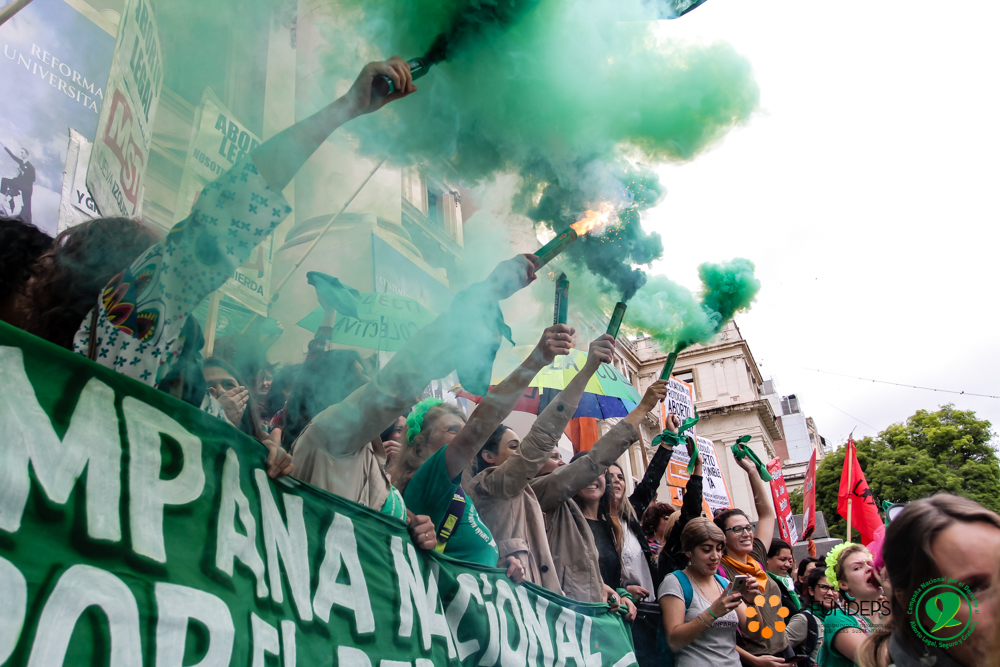
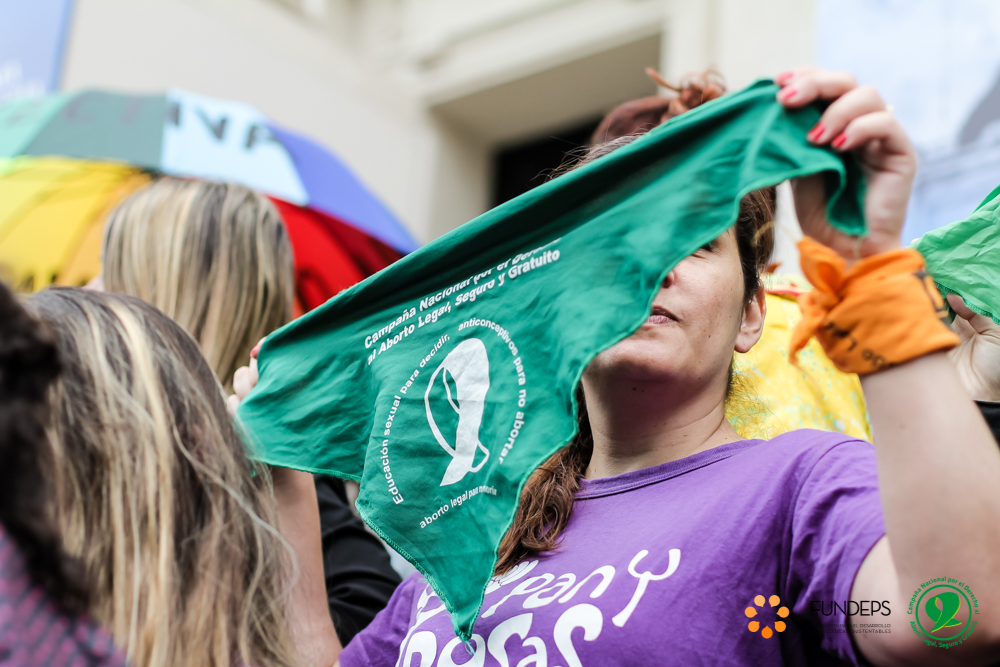
After a judicial process of more than 6 years, the Superior Court of Justice of Cordoba rejected the action of amparo filed by the Portal de Belén association that objected the guide that regulates non-punishable abortions, confirming its constitutionality and providing its full force.
“Below, we offer a google translate version of the original article in Spanish. This translation may not be accurate but serves as a general presentation of the article. For more accurate information, please switch to the Spanish version of the website. In addition, feel free to directly contact in English the person mentioned at the bottom of this article with regards to this topic”.
Background
On March 30, 2012, and following the guidelines of the Supreme Court in the FAL ruling, the government of the province of Córdoba, through the Ministry of Health, approved Resolution 93/12 and the Guide to the care of non-punishable abortions. with the purpose of guaranteeing a fast and safe access to the practice of non-punishable abortions in the provincial public health services.
On April 12 of that year, the Asociación Civil Portal de Belén filed a collective action against the government of the Province of Córdoba. He requested that the ministerial resolution be declared inapplicable as unconstitutional and that the legal figure of non-punishable abortion contained in art. 86 of the Criminal Code. As a provisional measure, he also requested that the suspension of the application of the guide be ordered. The Civil Association for the Right to Decide (Catholics for the Right to Decide) appeared in the case as a third co-defendant in defense of women’s human rights.
The precautionary measure
On April 13, 2012, the first instance judge, Federico Ossola, partially granted the provisional measure requested by Portal de Belén ordering the suspension of the application of the guide, but only for the case provided for cases of violation. On October 3 of the same year, the Third Chamber of Appeals confirmed the precautionary measure.
However, because the application of the Guide was suspended, even in that only case, women and pregnant persons in Córdoba could not access any kind of non-punishable abortion in provincial hospitals, since the judicialization of the protocol generated misinformation in professionals of health and public opinion.
The background: the constitutionality of the resolution and the guide
On the other hand, in the argument for the unconstitutionality of the ministerial resolution (main file), in the judgment of August 24, 2012 Judge Ossola ruled in favor of the constitutionality of the resolution and the procedures provided by the guide, but he questioned the presentation of an affidavit of the rape victim to access the abortive practice without other collection. He argued that, being an exception, the sworn statement was insufficient to guarantee that punishable abortions are not committed. In May 2013, the Appeals Chamber held that the resolution and the guidance were unconstitutional for contradicting local public law.
In May 2014, the file was sent to the Superior Court, which had to decide on the constitutionality, conventionality and application of the ministerial resolution and the non-punishable abortion care guide. In 2016, on the second occasion that the Court arranged for it, FUNDEPS presented itself as amicus curiae together with other organizations supporting the defense of the sexual and reproductive rights of the women of Córdoba and contributing arguments of international human rights law.


Sentence
The Superior Court of Justice considered that there was no judicial case that allowed it to examine the constitutionality of Resolution No. 93/12, since Portal de Belén had only raised a “mere subjective discrepancy” with the provisions of the Criminal Code in the art. 86, which grants exceptional permission to abort without punitive consequences for women.
He considered that Portal de Belén wanted the State to ignore said article, based on “the only support of his personal opinion“, with the aspiration that “the Province does not recognize the authorization or permission recognized by the basic law to every woman victim of a violation (according to the interpretation made by the CSJN), which would imply establishing a prohibition-against legem-where criminal law does not institute it. “
The majority vote, dictated by Aida Tarditti, Domingo Sesin, Mercedes Blanc de Arabel and Silvana María Chiapero, gave rise to the cassation appeal promoted by the Province and revoked the judgment of the House that had declared the ministerial resolution unconstitutional. Consequently, it rejected the amparo action promoted by Portal de Belén, which sought what the Chamber had resolved at the time, a decision that has now been annulled, so that the resolution remains fully valid.
In summary, he concluded that there is no collective judicial case in the terms proposed by Portal de Belén for the following reasons:
1) The National Legislative Power is the only one with competence to sanction substantive norms with general reach and has already resolved the constitutional dilemma between fundamental legal rights at stake that involves any violation that leads to the victim’s pregnancy through art. 86, subsection 2, of the Criminal Code. The same can be said when the interruption of pregnancy is enabled if there is danger to the life or health of the woman (Article 86, paragraph 1, of the Penal Code).
2) It is not possible to address the analysis of the guide without first doing the same with regard to the Criminal Code that serves as support for the guide, which far exceeds the procedural margins of an amparo. But, also, because this would mean republishing what has already been resolved in the case “F., A. L.” by the Supreme Court.
3) It is not possible to collectivize, in block, non-transferable situations in their configuration and significance without affecting the personal rights of the victims of said unlawful act.
4) An indivisible collective good is not at stake, nor can one hypothesize about how each woman could react and decide about the possibility provided by article 86, paragraph 2. That is why there is no collective legitimacy with repercussions on a right of personal exercise for which the guide aims to establish a procedure to guarantee this exercise.
The implementation of the protocol: a debt with equality
In this context and after years of waiting, it is necessary to ensure the effective implementation of the provincial protocol. From FUNDEPS, we celebrate this judicial decision and the statements of the highest authority of the Ministry of Health of the Province.
More Information
Authors
Virginia Pedraza
Mayca Balaguer
Contact
Mayca Balaguer maycabalaguer@fundeps.org
After a judicial process of more than 6 years, the Superior Court of Justice of Cordoba rejected the action of amparo filed by the Portal de Belén association that objected the guide that regulates non-punishable abortions, confirming its constitutionality and providing its full force.
On October 30, the Inter-American Commission on Human Rights (IACHR) published a communiqué inviting civil society organizations and other interested social actors of the Organization of American States (OAS) to send information on the situation. of human rights in the region. This information will be used for the preparation of chapter IV A of the annual report of the IACHR corresponding to the year 2018 that will be presented to the General Assembly of the OAS.
“Below, we offer a google translate version of the original article in Spanish. This translation may not be accurate but serves as a general presentation of the article. For more accurate information, please switch to the Spanish version of the website. In addition, feel free to directly contact in English the person mentioned at the bottom of this article with regards to this topic”.
On October 30, the Inter-American Commission on Human Rights (IACHR) published a communiqué inviting civil society organizations and other interested social actors of the Organization of American States (OAS) to send information on the situation. of human rights in the region. This information will be used for the preparation of chapter IV A of the annual report of the IACHR corresponding to the year 2018 that will be presented to the General Assembly of the OAS.
“Below, we offer a google translate version of the original article in Spanish. This translation may not be accurate but serves as a general presentation of the article. For more accurate information, please switch to the Spanish version of the website. In addition, feel free to directly contact in English the person mentioned at the bottom of this article with regards to this topic”.
Each year, the Commission produces an annual report on the human rights situation in the region, reflecting the trends, challenges, advances and good practices that have occurred in the area of human rights in the OAS member states during the year.
For the Annual Report of 2018, the Commission will emphasize the following axes: Democratic Institutionalization, Institutionality in Human Rights, Access to Justice, Citizen Security and Right to the Environment.
Together with lawyers and lawyers from the Argentine Northwest on Human Rights and Social Studies (ANDHES) we present a report on these axes in the areas we work on:
Institutionality in human rights
1. Hierarchical reduction of National Ministries of Environment, Culture, Health, Labor and Modernization and Communication
2. National Budget 2019
3. Comprehensive Sexual Education Law in danger
Access to justice
1. Preoccupation with the draft bill on collective processes
2. Access to the right to abortion in Argentina – Delay of justice in the case of Portal de Belén (by non-punishable abortion protocol in the province of Córdoba)
3. Access to justice for the elderly
Citizen security
1. Institutional Violence in Tucumán
2. Absence of mechanisms to prevent torture in Tucumán
Right to the Environment
1. Affectations to the right to health caused by the use of agrochemicals
2. Concern over project to amend the seed law
3. Failure to comply with the consultation and free, prior and informed consent of provincial law No. 5,915 to the detriment of the environment and the right to life and territory of indigenous communities in Jujuy.
4. Chinchillas Mining Project and the Pozuelos Lagoon in Jujuy
5. The indigenous community of Solco Yampa and the indiscriminate felling of trees in the province of Tucumán
6. Murder of Javier Chocobar in Tucumán
The cases presented in this report give an account of a general situation of regression of the fulfillment of human rights by the Argentine State. The exposed situations of vulnerability are particularly worrisome because they are part of a regional socio-political crisis context. In order to avoid the impact of cuts, the noncompliance with international standards and the promotion of public policies that do not attack the roots of structural inequality impact fully on the populations that are already in a situation of vulnerability, we ask the IACHR to publicly express concern about the state of compliance with human rights in the country.
More information
Contact
Mayca Balaguer, maycabalaguer@fundeps.org
The civil society organizations representing the Argentine provinces in the Ad Honorem Advisory Council of INAM on November 10 presented the situation reports. We also regret the inactivity of the Council during the year and the little interaction of INAM with its members.
“Below, we offer a google translate version of the original article in Spanish. This translation may not be accurate but serves as a general presentation of the article. For more accurate information, please switch to the Spanish version of the website. In addition, feel free to directly contact in English the person mentioned at the bottom of this article with regards to this topic”.
The civil society organizations representing the Argentine provinces in the Ad Honorem Advisory Council of INAM on November 10 presented the situation reports. Likewise, we regret the inactivity of the Council during the year and the little interaction of the INAM with its members. Since last year, FUNDEPS has been part of the Ad Honorem Advisory Council of the INAM, a space for collaboration between the government and organizations committed to the struggle for equality. women. This Council, created under article 9 of the comprehensive protection law 26.485, is composed of organizations from all provinces and the Autonomous City of Buenos Aires and its main function is to advise and recommend courses of action to address the problem of gender violence. However, since the meeting held in October of last year, the Council organizations have not been able to establish an active communication with the INAM, nor has progress been made in the preparation of the operating regulations of the Council.
Even so, complying with the commitments assumed as advisors, from FUNDEPS we present the annual report of the situation of Córdoba in relation to the implementation of the National Action Plan for the Prevention, Assistance and Eradication of Violence against Women 2017-2019.
In this regard, it should be noted that our province does not adhere to the National Plan, which we warn as the main warning regarding the commitments assumed by the country in the fight against violence against women, through the signing of the Conventions of Human rights that address the problem, such as the Convention on the Elimination of All Forms of Discrimination against Women CEDAW (for its acronym in English) and the Inter-American Convention of Belem Do Pará.
Likewise, we made information requests to the corresponding provincial bodies, in order to respond to the information required by the INAM, orders that were not answered within the deadlines established by law. In this sense, we resort to the information gathered through our fieldwork, as well as the data available online in the official sites of the province.
The lack of access to information is another important warning that we warn, mainly given the seriousness of the problem in our province, which already has more than 11 femicides, until August, so far in 2018.
In the report presented, activities were reported in the areas of health, education, media, as well as access to justice and work.
The lamentable inactivity of the Council and the INAM
During the month of September, FUNDEPS along with other advisory organizations presented a request for information to the INAM to understand what the operating guidelines of the Consultative Council are, in order to be able to fulfill the assumed commitments.
During the inaugural meeting of the space, the advisory organizations and the officials of the INAM agreed that during the current year we would be prepared to elaborate the regulations for the purposes of the functioning of the organ. This regulation was never drafted, nor were the consultations and questions of the Councilors answered by INAM.
Also, as part of our work of constant monitoring of media, we have made a report of media violence by the statements of Nicolás Repetto, who in an interview with a young victim of public transport abuse questioned the type of clothing that was using at that time. For this reason, we initiated the corresponding claim process before the INAM, but we did not have a timely or adequate response to our complaint.
Fully recognizing the efforts of INAM to increase transparency and accountability on the implementation of the National Action Plan for the Prevention, Assistance and Eradication of Violence against Women 2017-2019, carried out within the framework of its commitment to open government, the Lack of interaction and response to civil society is contradictory.
It is also important to analyze the economic context of the country, mainly from the forecast of the funds for the fight for equality and against the violence carried out by INAM. As ELA points out, in its report on the 2019 budget, “INAM had achieved a total of $ 211.5 billion pesos for 2018, as a result of the budget reallocations achieved during the year. For 2019, a total of $ 234,394,881 will be awarded. Although this represents an 11% increase in nominal terms, taking into account the average inflation used by the Executive Power itself in the preparation of the budget (34.8%), this implies a fall of 18% in real terms in relation to to the previous year”.
In a context where the economic crisis and the consequent budget cuts impact especially on women, organizations that do not have a voice to express their opinions and complaints or find an answer in the authorities responsible for promoting gender equality policies in all spheres, worrying.
Without prejudice to the complex reality of INAM, the advisory organizations comply with our commitments, and we hope that next year we will be able to advance in the consolidation of real spaces for public participation, with the guarantee of being consulted and listened to when designing and implementing the public policies to fight against violence against women.-
More information
Contact
Virginia Pedraza, vir.pedraza@fundeps.org
We participated in the call of the Working Group on the Gender Perspective in the United Nations Guiding Principles on Business and Human Rights, in order to comment from our experience on the relationship between business activities and women’s rights.
“Below, we offer a google translate version of the original article in Spanish. This translation may not be accurate but serves as a general presentation of the article. For more accurate information, please switch to the Spanish version of the website. In addition, feel free to directly contact in English the person mentioned at the bottom of this article with regards to this topic”.
The Working Group on the issue of human rights and transnational corporations and other companies, operating within the framework of the United Nations, made a call for civil society organizations to send their comments on the relevant issues regarding impact. of business activity in the human rights of women. For this, we elaborate comments from the point of view of our work agendas, to comment on the situation of health impacts, on the participation of women in companies, and on women and the media.
First, we address how women experience the impact of human rights abuses related to companies differently and disproportionate, exposing the cases of the tobacco industry and breast milk substitutes. Both industries, with their particularities, have aggressive marketing strategies. The tobacco industry especially targets young women in cigarette consumption through strategies such as flavored cigarettes or “light” or sponsorship of fashion events. On the side of the breast-milk substitution industry, they also operate with misleading marketing and labeling strategies on the characteristics of the products, as well as having great interference in public policies – in a situation of conflict of interest – discouraging breastfeeding. maternal and its replacement by the formula from an early age.
On the other hand, financing for development provided by international financial institutions to the private sector also has environmental, social, health, access to infrastructure and housing, and indigenous rights, which affect women in particular. The IFIs in general have difficulties and failures in the implementation of their policies, and particularly in the design and application of gender policies. We emphasize then that policies in general, and particularly those on gender, should be strengthened so that they establish clear guidelines for clients (especially companies and other private entities) to apply differentiated impact assessments, and also strengthen accountability mechanisms to give effective remedies when there are negative impacts.
Finally, we also exposed all the difficulties and barriers that women face to participate in jobs in the private sector, with information obtained through our research on equal opportunities for women and LGTTBIQ + people in companies, unions and universities. We also send recommendations on how media and advertising industries could fight against gender stereotypes and the disempowerment of women.
Carolina Tamagnini – carotamagnini@fundeps.org
On November 9, the Superior Court of Justice (SCJ) resolved the definitive integration of the court that will decide on the “Portal de Belén” case, in which the constitutionality of the “Procedural Guide for the care of patients who request non-punishable abortion practices “(Resolution No. 93/12, Ministry of Health). In addition, he urged the plaintiff party to avoid delays in the case.
“Below, we offer a google translate version of the original article in Spanish. This translation may not be accurate but serves as a general presentation of the article. For more accurate information, please switch to the Spanish version of the website. In addition, feel free to directly contact in English the person mentioned at the bottom of this article with regards to this topic”
Resolution No. 106 of the highest court of the Province of Cordoba is issued on three issues:
- The allegation by the Portal de Belén association that the rejection by the Senate of the project of decriminalization and legalization of the voluntary interruption of pregnancy constitutes a new fact to be taken into account by the court.
On this point, the TSJ states that the allegation was made out of time. But also, said that “the supposed alleged novelty became a mere particular legal interpretation rehearsed by the plaintiff on a political-legislative decision of the Congress of the Nation”, prima facie, far exceed “What is specifically discussed in these cars, with the independence of the integral weighting that has been done in the final judgment “. “I have not had a place.” Finally, this request will be rejected as manifestly inadmissible and dilatory.
2. The recusal without cause to the cameraman Sánchez Torres.
Given that three of the seven “natural” members of the TSJ will not resolve in this case due to licenses or excuses (Carlos García Allocco, María Marta Cáceres de Bollati and Sebastián López Peña), the three vacant places will be completed by female judges from a list of 16 judges conformed through Regulatory Agreement No. 1434 – Series “A” of 07/11/2017. The association Portal de Belén opposed that Judge Julio Ceferino Sánchez Torres joined the court through a challenge without expression of cause.
To this request the Court responded that “the recusal without expression of cause is not possible, in Córdoba, in an amparo trial, such as the one dealt with in these proceedings, in accordance with Law No. 4915 (Article 16) . However, even if by mere hypothesis it is admitted that the parties have such an attribution for subsidiary application of the CPCC, the Bethlehem Portal proposal should also be rejected as untimely “, since it took more than three days, which is the deadline for this type of orders. Consequently, it is clear that the attempt of Portal de Belén to prevent Sánchez Torres from joining the Tribunal was only a delaying strategy.
3. The recusal with expression of cause to the four natural vowels of the SCJ.
The plaintiff argued that the four original vowels of the SCJ should be set aside because the deadlines for failure are “overdone”. However, the Court considered that this assertion “has no basis […] and seems rather aimed at delaying and making impossible that this TSJ can finally be issued.”
The court affirms that the departures attempted by “Portal de Belén” are inadmissible, “even more in the context and in connection with the battery of incidents promoted by the plaintiff, which, if they are linked, demonstrate the will to prevent the integration of this court ”
“The broad exercise of the right of defense can not be confused or made compatible – much less tolerated – with the articulation of ostensible and evidently dilatory incidents, as is clear if each of the presentations made by “Portal de Belén” are connected,” concluded the Court.
Consequently, the final sentence will be dictated by the “original” members of the Superior Court Aida Tarditti, Domingo Sesin, Luis Enrique Rubio and Mercedes Blanc de Arabel, as well as by the chambers Claudia Zalazar, Julio Ceferino Sánchez Torres and Silvana María Chiapero.
The situation of the Legal Interruption of Pregnancy in Córdoba
In 2012, after the pronouncement of the Supreme Court of Justice of the Nation in the ruling “FAL s / autosatisfactivas measures”, the Ministry of Health of the Province of Córdoba approved the resolution 93/12 and the Guide of abortion care not punishable in order to guarantee rapid and safe access to the practice of non-punishable abortions in the provincial public health services. Thirteen days later, Portal de Belén – Civil association filed an appeal against the Province of Córdoba, requesting that the resolution and guidance be declared unconstitutional and, as a precautionary measure, the suspension of the same.
In the first instance, the judge in the case made the precautionary measure stating that the guide could not be applied in its entirety, specifically with regard to access to legal interruption of pregnancy in cases of rape. In second instance, the Civil Chamber resolved the amparos presented for the purposes of appealing the first sentence, making room for it. Since 2013, the Superior Court of Justice must resolve the appeals filed and rule on the merits of the case.
Access to the Legal Interruption of Pregnancy is a recognized human right in our national and international legal framework. It is necessary to consolidate an institutional framework in which the rights to health, sexuality and reproductive security are respected, eliminating all the judicial and administrative barriers that obstruct access to this right.
After more than 6 years of the judicialization of the guide, it is time for the court to be issued in this case that, in its own words, “has the maximum social significance and public interest.”
More Information:
Writer: Mayca Balaguer