Tag Archive for: Health

The Ministry of Health published a bibliographic review document of front labeling options. The highest health authority in our country explicitly recommends the frontal labeling of warnings. It is urgent to turn those recommendations into public policies.

“Below, we offer a google translate version of the original article in Spanish. This translation may not be accurate but serves as a general presentation of the article. For more accurate information, please switch to the Spanish version of the website. In addition, feel free to directly contact in English the person mentioned at the bottom of this article with regards to this topic”.

In our country, according to the National Survey of Risk Factors 2013 (ENFR 2013, Ministry of Health of the Nation), 57.9% of the adult population is overweight, 34.1% have high blood pressure and the daily average of portions of fruits or vegetables consumed is 1.9 per person. Added to this is the fact that salt consumption is twice as much and added sugar is three times the maximum recommended by the World Health Organization (WHO). This situation demonstrates the need to formulate public policies that tend to reduce the consumption of products with critical nutrients and to improve the dietary habits of the population in order to reduce overweight, obesity and other noncommunicable diseases.

In this sense, the World Health Organization has recognized a series of policies of proven effectiveness to prevent obesity, such as the restriction of advertising of unhealthy foods and beverages, a front labeling of food warnings, fiscal measures, among others. In addition, numerous human rights committees have recommended the implementation of food policies as a necessary element to protect the right to health of people.

Thus, in the concluding comments made in November of the current report to Argentina, the Committee on Economic, Social and Cultural Rights recommended “Taking effective measures to discourage the consumption of food and beverages harmful to health, including by increasing the tax on sugary drinks, strengthening the regulation of the Argentine Food Code in terms of front labeling of foods, including information on sugar in products, and implementing restrictions on the advertising of foods and beverages harmful to health, particularly those intended for children”. In the same sense, the Pan-American Health Organization (PAHO) proposes frontal labeling as one of its lines of action for the prevention of them because it facilitates the selection of healthier foods and encourages the industry to reformulate its products with the goal of making them healthier.

In Argentina there is no system of front labeling of foods established by law that informs consumers about high contents of critical nutrients (sugars, fats and sodium) nor is it mandatory to declare sugars in packaged products. For this reason and in accordance with the recommendations described, the National Program of Healthy Eating and Prevention of Obesity worked to promote a debate and positioning of the National Commission of Healthy Eating and Prevention of Obesity, regarding the type of frontal labeling to recommend for the Argentina. In this framework, 16 participating institutions voted on what type of frontal labeling and which nutrient profile system to adopt: 9 proposed warning labeling, 2 suggested Nutri-Score, 1 proposed the combination of both (warning plus Nutri- Score), 1 institution recommended a system of its own, 2 suggested the GDA with colors of the traffic light and 1 institution proposed “anyone other than the GDA”. Regarding the nutrient profile, 9 institutions proposed a profile of PAHO or an adaptation of it.

The researches examined showed the ineffectiveness of the GDA (daily feeding guides) labeling – which reports recommended percentages of daily energy or nutrient intake per serving or product – since it is generally not understood by adults or by adults. children, it takes a lot of time and is confusing even with nutritional knowledge. Despite this, this system was recommended by the Coordinator of the Food Products Industries (COPAL), an institution that declared conflicts of interest to receive financing from the industry, and by the Ministry of Production and Labor (Secretary of the Government of Agribusiness and Secretary of Commerce).
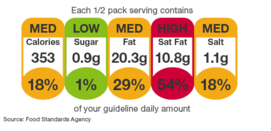
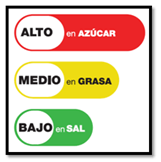
On the other hand, numerous publications explain why the frontal labeling type traffic light and the summary systems (Nutri-Score and HSR) do not influence the purchasing behavior, which is why they would not be appropriate to help the consumer in the choice of products healthy The semaphore problems to achieve this purpose, are linked to the confusion that generates in the nutritional interpretation. It has been proven that there is a compensation effect between green and red colors when they occur in the same product at the same time and that reporting on unfavorable attributes has a greater effect on the purchase decision than reporting favorable attributes. Therefore, we compare the confusion generated by the traffic light front labeling with the confusion that would generate for a motorist, that the traffic light keep its red and green lights on at the same time.
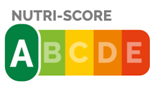
On the other hand, Nutri-Score classifies foods and beverages according to five categories of nutritional quality and a score is established assigning the product a letter and a color. The most nutritionally favorable product obtains a green “A” score and the nutritionally less favorable product obtains a red “E” score. Research showed that although it was useful to classify how healthy foods are, it was not effective to improve purchasing behavior due to the complexity generated by the combination of 5 letters with a gradient of 5 colors ranging from red to green. In addition, a food may have a high sugar content, but if it has fiber, its assessment will not necessarily be red. In this way, the consumer does not know that the food has a high content of sugar, fat or sodium, information that was shown to influence the purchasing behavior. This type of front labeling was recommended by the Center for Studies on Food Policy and Economics (CEPEA) and Center for Studies on Child Nutrition (CESNI), both institutions that expressed conflicts of interest in receiving financing from the industry.
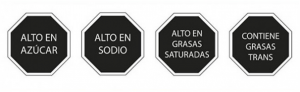
From FUNDEPS, we supported the recommendations made by 9 of the participating institutions, including the Health Ministry, who spoke in favor of the frontal warning labeling and the nutrient profile of OPS. Indeed, numerous studies have shown that this system is the most effective in identifying products with a high content of critical nutrients (sugars, saturated fats and sodium), provides better information for the consumer, in a shorter time and favors the selection of food. healthier. Likewise, this type of labeling is prioritized because it is the most understood by children and adolescents and people of lower educational level, which is central to contemplate the perspective of inequity in public policy and protect especially the groups in the most vulnerable situations. vulnerability, those who suffer the most from obesity, malnutrition and chronic diseases in general. 
On the other hand, the Government Health Secretariat recommended that “the frontal labeling system be implemented in a mandatory and gradual manner. Progressive implementation could be useful to give both consumers and industries time to adapt to changes. It is also proposed to accompany the strategy of front labeling with communication and awareness campaigns so that the population understands the labeling and has more information on nutrition and healthy eating. In addition, it is recommended that front labeling be used as a tool to define other healthy eating and obesity prevention policies. Thus, all those foods and beverages with a critical nutrient in excess, as established by the frontal labeling system, are subject to marketing restrictions, are excluded or are included in small quantities in social plans with a food component and are not offered in establishments. schoolchildren or community kitchens. “

We consider that the technical recommendations of the Ministry of Health for the design of food labeling policies are adequate to protect the right to health of the population. In effect, the warning labeling supplies the necessary information on critical nutrients in excess, whose consumption is sought to be reduced. Thus, it protects consumers in order to make informed decisions, and contributes to the prevention of noncommunicable diseases related to inadequate nutrition. In this context of the growth of chronic noncommunicable diseases linked to an inadequate diet, it is urgent that the recommendations of the Ministry of Health become public policies that enable effective protection of health.

More information

Nutritional front labeling of food

Author

Slavenka Zec

Contact

Agustina Mozzoni, agustinamozzoni@fundeps.org


On October 30, the Inter-American Commission on Human Rights (IACHR) published a communiqué inviting civil society organizations and other interested social actors of the Organization of American States (OAS) to send information on the situation. of human rights in the region. This information will be used for the preparation of chapter IV A of the annual report of the IACHR corresponding to the year 2018 that will be presented to the General Assembly of the OAS.

“Below, we offer a google translate version of the original article in Spanish. This translation may not be accurate but serves as a general presentation of the article. For more accurate information, please switch to the Spanish version of the website. In addition, feel free to directly contact in English the person mentioned at the bottom of this article with regards to this topic”.

On October 30, the Inter-American Commission on Human Rights (IACHR) published a communiqué inviting civil society organizations and other interested social actors of the Organization of American States (OAS) to send information on the situation. of human rights in the region. This information will be used for the preparation of chapter IV A of the annual report of the IACHR corresponding to the year 2018 that will be presented to the General Assembly of the OAS.

“Below, we offer a google translate version of the original article in Spanish. This translation may not be accurate but serves as a general presentation of the article. For more accurate information, please switch to the Spanish version of the website. In addition, feel free to directly contact in English the person mentioned at the bottom of this article with regards to this topic”.

Each year, the Commission produces an annual report on the human rights situation in the region, reflecting the trends, challenges, advances and good practices that have occurred in the area of ​​human rights in the OAS member states during the year.

For the Annual Report of 2018, the Commission will emphasize the following axes: Democratic Institutionalization, Institutionality in Human Rights, Access to Justice, Citizen Security and Right to the Environment.

Together with lawyers and lawyers from the Argentine Northwest on Human Rights and Social Studies (ANDHES) we present a report on these axes in the areas we work on:

Institutionality in human rights

1. Hierarchical reduction of National Ministries of Environment, Culture, Health, Labor and Modernization and Communication
2. National Budget 2019
3. Comprehensive Sexual Education Law in danger

Access to justice

1. Preoccupation with the draft bill on collective processes
2. Access to the right to abortion in Argentina – Delay of justice in the case of Portal de Belén (by non-punishable abortion protocol in the province of Córdoba)
3. Access to justice for the elderly

Citizen security

1. Institutional Violence in Tucumán
2. Absence of mechanisms to prevent torture in Tucumán

Right to the Environment

1. Affectations to the right to health caused by the use of agrochemicals
2. Concern over project to amend the seed law
3. Failure to comply with the consultation and free, prior and informed consent of provincial law No. 5,915 to the detriment of the environment and the right to life and territory of indigenous communities in Jujuy.
4. Chinchillas Mining Project and the Pozuelos Lagoon in Jujuy
5. The indigenous community of Solco Yampa and the indiscriminate felling of trees in the province of Tucumán
6. Murder of Javier Chocobar in Tucumán

The cases presented in this report give an account of a general situation of regression of the fulfillment of human rights by the Argentine State. The exposed situations of vulnerability are particularly worrisome because they are part of a regional socio-political crisis context. In order to avoid the impact of cuts, the noncompliance with international standards and the promotion of public policies that do not attack the roots of structural inequality impact fully on the populations that are already in a situation of vulnerability, we ask the IACHR to publicly express concern about the state of compliance with human rights in the country.

More information

Contact

Mayca Balaguer, maycabalaguer@fundeps.org

In the period that extended from September 12 to 21 of this year, our country had the visit of the Special Rapporteur of the United Nations, Hilal Elver, with the objective of evaluating the realization of the right to food in the country, to subsequently submit a final report to the United Nations Human Rights Council in 2019.

“Below, we offer a google translate version of the original article in Spanish. This translation may not be accurate but serves as a general presentation of the article. For more accurate information, please switch to the Spanish version of the website. In addition, feel free to directly contact in English the person mentioned at the bottom of this article with regards to this topic”.

The rapporteur, in her preliminary observations, emphasized:

  • Current crisis and its impact on the right to food: The Argentina faces a situation of economic and financial crisis, with
    great impact on the right to food of the population. In this At the moment, Argentina must use the maximum of its resources available to ensure the full realization of rights humans.
  • Interrelation of the right to food with other rights human rights: All human rights are interrelated, and the right to food can not be achieved without the right to a adequate housing, education, health for all and all included migrants, indigenous peoples, peasants, children and adults greater.
  • Reception of the right to food in the order Argentine legal system: Argentina, as a State party to the Pact International of Economic, Social and Cultural Rights, has the obligation to respect, protect and guarantee the right to feeding. It is also part of other international treaties fundamental principles on human rights, and they all include provisions related to the right to food adequate There is no explicit constitutional protection of the right to food at the national level and, therefore, the issues related to the right to food so integral and multidimensional. For all these reasons, it highlights the need for comprehensive framework law, with guidelines to promote and implement this right that includes food sovereignty for all.
  • Lack of update on statistical data: Argentina does not has up-to-date official data and other statistical materials that can provide reliable data on hunger and poverty in the last almost 10 years. The latest survey on food and nutrition habits was carried out in 2004-2005, and the latest survey of agricultural sector in 2002, which is not acceptable from the point of view to understand the needs and limitations of related policies with food security.
  • Food consumption in Argentina and its relationship with NCDs: El consumption in the country of fruit and vegetables is low, with only 6% of the population that consumes the amount of fruits and vegetables recommended by the WHO Food Guide. It is the country of the region that consumes the largest number of ultra-processed products and leads the consumption of soda The country includes the highest rates of obesity between children and adults. Currently, 40% of the children and adolescents and 60% of adults are overweight, and 7.3% of Children under the age of five are obese, it is the most important Elevated Childhood Obesity in Latin America It is crucial that nutrition policies are comprehensive, address all forms of malnutrition and have adequate financial support.
  • Marketing and regulation techniques. Although Argentina has with regulations on the content of advertising, have not been applied in an effective way to address the problems of obesity and poor nutrition. There are no specific rules in relation with advertising of food and drinks addressed to children, nor restrictions in relation to nutritional criteria.
  • Breastfeeding and marketing of milk formulas: the rapporteur mentions misleading advertising and growing concern about the health impacts of breast milk substitutes. Insists in the control of advertising and the implementation of strategies for promote and encourage breastfeeding, particularly during the first six months of life.
  • Family Farming: To achieve the objective of a diet adequate and healthy, considers it necessary to strengthen the family farming programs to support and protect this sector of crucial importance. Efforts should be made to promote family farming as a priority. It is the only way to achieve a balance between current industrial agriculture and the development of agroecological production systems. The achievement of this balance would be the only way to achieve a sustainable and just solution for the Argentine people.
  • School Dining Rooms: The current economic crisis seems to have a negative impact on the quality of the food in the different school canteens for the increase in prices. These dining rooms are essential for children and should be strengthened further to ensure they have access to a adequate nutrition and food.
  • Social Programs: Your concern is based on the fact that some of the social benefits exclude certain marginalized groups and disadvantaged and that these programs are not sufficient for the changing economic context.
  • Environment: Suggests that a law or program be implemented to reduce the use of pesticides in agricultural production. In relation to the Protection of Forests, the Organization of the United Nations for Agriculture and Food ranked Argentina among the countries that had lost more forests between 2010 and 2015. Warns that deforestation continues in areas where it is prohibited, and that the national government has shown a lack of interest considerable in applying the law, which is reflected in the lack of funds necessary to finance  conservation policies.
  • Use of Pesticides and Breastfeeding: The widespread use of pesticides with such frequency and intensity has generated concern regarding the exposure of women of reproductive age and of pregnant women who, in turn, can expose children to through breastfeeding. The National Institute of Industrial Technology (INTI) conducted a study of mothers who gave birth in hospitals of the metropolitan area of ​​Buenos Aires. The study determined that milk of these mothers contained levels of pesticides that were 15% more higher than the levels considered safe by law.

More information:

Preliminary Observations Special Rapporteur on the right to food, Hilal Ever, on her mission to the Argentina 12-21 September 2018

Author

Andrea Melissa Hill

Contact:

Agustina Mozzoni, agustinamozzoni@fundeps.org


Supported by public health organizations from across the region, FUNDEPS files a complaint against the Arcor campaign “Your fair share” with the Ombudsman for Children and Adolescents.

In mid-September of this year, Arcor launched the advertising campaign called “Your fair share” which states that “a healthy life is a balanced life in which to take a liking and take care of health go hand in hand.” In this way, a green front label with the phrase “Your fair share” was stamped on several products of the company, indicating “what is the recommended daily portion of what you like and it does you good”.

These types of messages have been criticized by public health specialists for being deceitful and risky, and for contradicting recommendations of human rights organizations and public health organizations such as the World Health Organization (WHO) and the Pan American Health Organization ( OPS). Commercial strategies of this kind in practice promote products with high concentrations of critical nutrients (sodium, sugar, fats) whose regular consumption has a harmful effect on health. In fact, Argentina leads the rates of childhood obesity in Latin America.

This commercial strategy violates the right to health and food for children and adolescents. That is why we decided to make a complaint to the Ombudsman for the Rights of Children and Adolescents of the Province of Córdoba, as a public body in charge of protecting the rights of these groups. Our presentation asks:

  • that the means to respond to Arcor’s advertising campaign “Your Fair Share” be determined for the impact on the rights to health and food of children and adolescents;
  • that mechanisms be put in place for the dissemination of correct and scientific information on healthy eating and in particular regarding this campaign;
  • that the Executive and Legislative Power of the Province be urged to strengthen the regulatory framework to prevent commercial actions such as this one from being carried out, which violate the right to health and food of children and adolescents.

Argentina’s current regulations related to food labeling and marketing techniques are ineffective in adequately protecting the right to health and food, which leaves room for companies to take advantage of these legal gaps, confuse consumers and consumers, and limit their choices.

In this way, the State fails to comply with its obligation to protect the human right to health, which requires that the actions of third parties not affect the effective enjoyment of the right to health of a group of people. This implies a violation of human rights obligations as long as the State fails to comply with the recommendations of monitoring bodies on how to deal with the obesity epidemic. Different organs and specialized offices such as the Committee on Economic, Social and Cultural Rights, the Committee on the Rights of the Child or the Rapporteurs for the right to health or the right to food have marked that the epidemic of obesity is definitely a human rights problem.

This situation demonstrates the need to strengthen the existing regulation and the implementation of effective mechanisms aimed at restricting these deceptive marketing practices and preparing a nutritional label that provides the necessary information to ensure the right of consumers and consumers to clear and truthful information, contributing to the choice of healthier options.

Furthermore, considering that this marketing strategy does not facilitate access to information, it directly targets children and generates confusion about critical aspects of these products, since FUNDEPS is investigating a possible violation of the legal framework of consumer protection. This could imply a breach of the company’s duty to provide adequate and accurate information, and the prohibition of misleading advertising, affecting the right to health and healthy eating of consumers, fundamentally in children and adolescents

Beyond these considerations on the need to improve the current regulatory framework and on an eventual violation of consumer protection regulations, the presentation before the Ombudsman’s Office aims to limit a strategy that affects the rights to health and nutrition. boys and girls. In this sense, Juan Carballo, Executive Director of FUNDEPS, argues that this proposal seeks that an agency in charge of looking after the interests of children and adolescents, pay special attention to a campaign that affects their rights. “We hope that Arcor can be aligned with the practices recommended by specialized health agencies. In addition, in this way it would not fall into a double standard depending on the country in which its products are sold ”

While in Argentina the same product is promoted with the label “your fair measure”, in Chile it receives the triple warning of product “high in saturated fats”, “high in calories” and “high in sugars”:

Arguments against the campaign:

  • The campaign promotes ultra-processed foods in the context of health emergency due to the high prevalence of overweight and obesity in NNyA
  • The campaign uses deceptive marketing techniques
  • The campaign puts the health of children and adolescents at risk
  • The campaign emphasizes individual responsibility
  • The campaign violates the right to information of consumers
  • The campaign is presented in products of “small portions” and not for 100 grams
  • The campaign is based only on calories

Adhere:

  • Dirección General de Enfermedades Crónicas No Transmisibles – Ministerio de Salud de la Provincia de Córdoba
  • Coalición Latinoamérica Saludable (CLAS)
  • Fundación Interamericana del Corazón y sus afiliadas en México, Argentina, Bolivia y Caribe
  • CISPAN Centro de Investigaciones Sobre Problemáticas Alimentarias Nutricionales (UBA), Argentina
  • IFMSA (International Federation of Medical Students Associations) y su sede nacional de Argentina, IFMSA-Argentina
  • Consumers International Latinoamérica
  • ACT Promoción de la Salud, Brasil
  • El Poder del Consumidor, México
  • Alianza por la Salud Alimentaria, México
  • Instituto de Investigaciones en Salud y Nutrición (ISYN), Quito, Ecuador
  • Alianza para el Control de ECNT Chile
  • Frente por un Chile Saludable
  • Fundación EPES, Santiago, Chile
  • Guillermo Paraje, Profesor titular de Economía, Escuela de Negocios, Universidad Adolfo Ibáñez, Chile
  • Alianza ENT-Uruguay
  • Centro de Investigación para la Epidemia de Tabaquismo, CIET-Uruguay
  • Asociación Uruguaya de Dietistas y Nutricionistas – Uruguay
  • Instituto Nacional de Cáncer, Uruguay
  • Instituto Brasileiro de Defesa do Consumidor – IDEC, Brasil
  • FEMAMA, Porto Alegre, Brasil
  • Educar Consumidores, Colombia
  • Fundación Colombiana de Obesidad (FUNCOBES))
  • Mesa por las ENT Colombia
  • Corporate Accountability, Colombia
  • Alianza ENT-Perú
  • COLAT (Comisión Nacional Permanente de Lucha Antitabáquica). Perú
  • ESPERANTRA (Asociación de Pacientes y Usuarios de Servicios de Salud de Perú)
  • SLACOM Sociedad Latinoamericana y del Caribe de Oncología Médica
  • Coalición México Salud-Hable, México
  • Salud Crítica, México
  • Contrapeso, México
  • Public Health Institute

Contact:

Juan Martin Carballo – juanmcarballo@fundeps.org

Agustina Mozzoni – agustinamozzoni@fundeps.org

“Regional Agreement on Access to Information, Public Participation and Access to Justice in Environmental Matters in Latin America and the Caribbean” was approved in Escazú, Costa Rica, on March 4, 2018, officially opens to the signature of the 33 countries of Latin America and the Caribbean. It requires that 11 countries sign and ratify it to enter into force.

“Below, we offer a google translate version of the original article in Spanish. This translation may not be accurate but serves as a general presentation of the article. For more accurate information, please switch to the Spanish version of the website. In addition, feel free to directly contact in English the person mentioned at the bottom of this article with regards to this topic”.

On the day of the date, the Escazú Agreement is opened for signature at the 73rd General Assembly of the United Nations, in New York. The agreement adopted by 24 countries of the region on March 4, will be open for signature by the 33 countries of Latin America and the Caribbean (LAC) until September 26, 2020 and will need the ratification of 11 countries to enter into force.

The treaty seeks to guarantee the full and effective application of Principle 10, embodied in the Rio Declaration on Environment and Development of 1992, in Latin America and the Caribbean. For its part, Principle 10 seeks to ensure that everyone has access to information, participates in decision-making and accesses justice in environmental matters, in order to guarantee the right to a healthy and sustainable environment of present generations and future.

The importance of the Escazú Agreement is that it is the first of its kind in the world that includes specific binding provisions for the protection of individuals, groups and organizations that promote and defend human rights in environmental matters. Likewise, it is the only binding treaty issued by the UN Conference on Sustainable Development (Rio + 20).

In particular, for Argentina, which is characterized by having the highest deforestation rates in the world, as well as the lack of access to environmental information and the lack of participatory public policies, the entry into force of this binding regional agreement will allow the strengthening of access rights in environmental matters.

In the same sense, it will allow preventing the environmental costs of the decisions that have to do with the economic development and to improve the management of the multiple socio-environmental conflicts existing in the territory.

For these reasons, we present a letter to the former Ministry of Environment and Sustainable Development and another to the Ministry of Foreign Affairs and Worship, urging the signature and adhesion of the Argentine government to the Escazú Agreement.

Also, through a press release, UN human rights experts urge the States in Latin America and the Caribbean to sign and ratify, as soon as possible, a pioneering environmental treaty for the region.

The experts added that States should adopt, in their strategies to achieve the UN Sustainable Development Goals, an approach that encompasses society as a whole. They also noted that an essential aspect of States’ international human rights obligations is to ensure the protection, respect and support of individuals who raise concerns about the negative impact on human rights, including in the context of the development of human rights. projects that involve companies

“By signing and promptly ratifying this innovative treaty, the Latin American and Caribbean States will reinforce their firm commitment to environmental protection and human rights, and above all, they will send an unequivocal message in favor of multilateralism, solidarity, equality and regional integration, while promoting collaboration with other regions, “they said.

We believe that the entry into force of the regional agreement will be a fundamental step towards achieving a true environmental democracy. Therefore, we urge Argentina and other countries of Latin America and the Caribbean to sign and ratify, as soon as possible, this historic treaty for the region.


More information

Contact

María Pérez Alsina – mariaperezalsina@fundeps.org

Agustina Palencia – agustinapalencia@fundeps.org

Through a letter addressed to the former Ministry of Environment and Sustainable Development and another to the Ministry of Foreign Affairs and Worship, we request the signature and adhesion of the Argentine government to the Escazú Agreement. The agreement will be open for signature from September 27, 2018 and needs 11 countries in the region to sign and ratify to enter into force.

“Below, we offer a google translate version of the original article in Spanish. This translation may not be accurate but serves as a general presentation of the article. For more accurate information, please switch to the Spanish version of the website. In addition, feel free to directly contact in English the person mentioned at the bottom of this article with regards to this topic”

The Escazú Agreement is the “Regional Agreement on Access to Information, Public Participation and Access to Justice in Environmental Matters in Latin America and the Caribbean,” adopted in Escazú, Costa Rica, on March 4, 2018 , by 24 countries in Latin America and the Caribbean, including Argentina. After a negotiation process that formally began in 2012 at the Rio +20 Conference with the Declaration on the Application of Principle 10 of the Rio Declaration on Environment and Development in Latin America and the Caribbean, it was adopted an agreement that seeks to guarantee the effective implementation of access rights: access to information, public participation and access to justice in environmental matters. It will be open for signature by the 33 countries of Latin America and the Caribbean at the United Nations headquarters in New York, from September 27, 2018 to September 26, 2020, and will be subject to subsequent ratification, acceptance or approval of the States that have signed it. At least 11 countries must sign and ratify it so that it can enter into force. In order to achieve the entry into force of the Escazú Agreement, we presented a letter addressed to the former Minister of Environment and Sustainable Development, Rabbi Sergio Bergman, and another letter to the Minister of Foreign Affairs and Worship, Jorge Marcelo Faurie, requesting the signature and adhesion of the Argentine government to the regional agreement. At the same time, we urge you to support the efforts of the governments and civil society organizations of Latin America and the Caribbean to invite the other governments of the region to sign this important treaty. In the letter addressed to the national authorities we highlighted the importance of the regional agreement since it is the first treaty on environmental issues in Latin America and the Caribbean, as well as the first in the world to guarantee the protection and safety of people, groups and organizations defending human rights in environmental matters. We hope that Argentina, as well as the other countries of the region, will sign and ratify the regional agreement on Principle 10. In this way we will have an international instrument to reaffirm the right of all people to a healthy environment and sustainable development, the fight against inequality and discrimination, as well as ensuring the participation of citizens in decisions that affect their lives and environment.


More Information:

Writer: Ananda Lavayen

Coctact:

María Pérez Alsina: mariaperezalsina@fundeps.org

FUNDEPS, in collaboration with the O’Neill Institute for National and Global Health Law at Georgetown University and the Faculty of Law of the National University of Córdoba, announces renewal of the internship program.

Internship rented in the months of January, February and March 2018 at the O’Neill Institute for National and Global Health Law at Georgetown University in Washington DC.

Calling institutions:

– O’Neill Institute for National and Global Health Law at Georgetown University Law Center

– Facultad de Derecho y Ciencias Sociales de la Universidad Nacional de Córdoba

– FUNDEPS – Fundación para el Desarrollo de Políticas Sustentables

Requirements for the presentation:

– Be enrolled as a regular student of the career of Advocacy in the Faculty of Law and Social Sciences of the National University of Córdoba.

– Have passed or are pursuing International Public Law.

– Have a general average, with postponements, of 7 or more points.

– Have an excellent command of the written and oral English language.

Selection mechanism:

– Deadline for submission of applications: September 26, 2018.

– A Selection Committee of the UNC will choose a list of between five and seven pre-selected people, who will be called to an interview to be developed in English on September 28, 2018, instead of confirming.

– On October 1, 2018, the UNC Selection Committee will send a list of three to five people to the O’Neill Institute for National, whose team will decide the person selected for the internship.

– The selected person must participate, during the months of October, November and December, in activities related to the human right to health, in the FUNDEPS team.

Documentation to present:
– Letter of motivation in English justifying the application to the internship program of the O’Neill Institute
– Curriculum vitae detailed in English, in no more than 3 pages
– Scanned copy of the analytical certificate (not electronic version)
* The materials must be sent in digital format in a single file in Acrobat Reader format (.pdf) to the address: info@fundeps.org, indicating in the subject: Call O’Neill – “Name of the candidate”.

Selection criteria:
– Average.
– Interest in the area of ​​right to health or human rights.
– Academic research experience.
– Work experience in civil society organizations.
– English level.

Financing:
– The compensation granted by the O’Neill Institute during the months of the rented internship (January, February and March) allows to cover accommodation and living expenses during those months as well as the tickets from Cordoba to Washington, DC.
– FUNDEPS offers a credit of honor for those who need support to face the anticipated cost of the air ticket payment, in conditions to be determined.

Queries:

info@fundeps.org

More information:

Instituto O´Neill: http://www.law.georgetown.edu/oneillinstitute

The Final Report of the Interministerial Working Group on Good Practices in the Field of Phytosanitary Applications was submitted to public consultation from July 20 to August 20. From FUNDEPS we present our observations and objections to it.

“Below, we offer a google translate version of the original article in Spanish. This translation may not be accurate but serves as a general presentation of the article. For more accurate information, please switch to the Spanish version of the website. In addition, feel free to directly contact in English the person mentioned at the bottom of this article with regards to this topic”.

Through Joint Resolution No. 1/2018, the Ministries of Agribusiness and Environment and Sustainable Development of the Nation created an Interministerial Working Group on Good Practices in the Field of Phytosanitary Applications.
The objectives of the working group were:
• Elaborate the principles for ordering national public policies on phytosanitary applications, especially in buffer zones, and
• Make recommendations regarding how to improve the adoption, control and monitoring of good practices in the application of phytosanitary products.

The Working Group is made up of representatives of both ministries, the National Service of Agrifood Health and Quality (SENASA) and the National Institute of Agricultural Technology (INTA), who had two representatives each. In addition, the Ministry of Health, the Ministry of Science, Technology and Productive Innovation, the Federal Council of the Environment (COFEMA) and the Federal Agricultural Council (CFA), who participated with only one representative, formed a part. He met six times between April 5 and July 5, 2018.

The final result was a document that proposes 12 principles and 23 recommendations, which was open to public consultation for a month through a web platform with consultative status. The participation of the society was very low, only 180 people left settled their contributions, which accounts for the little publicity that was given to the report and the public consultation carried out by both ministries.

From FUNDEPS we make some considerations and objections to the document, including:
– The Interministerial Working Group is composed mostly of representatives of agriculture;
– Absence of participation in the work process of qualified technical professionals, universities, NGOs and civil society in general.
– The need for a law as a public health issue is not analyzed;

– It is not taken into account that sprays can not be controlled. No matter how much “good agricultural practices” are adopted and climatic conditions are taken into account, the chemical products that are used have persistence in the environment and are mobilized through water and air even after the application is made;
– There is no clarity regarding the technical criteria that would be used to delimit the “buffer zones”, nor how they would be respected;
– The carrying out of epidemiological surveys from the Ministry of Health is not effectively ensured in order to know the situation of the populations near cultivation areas;
– It does not consider the principles of the General Environmental Law No. 25,675 that governs any national environmental policy, in particular the principles of prevention and precaution;
– It does not contemplate an inescindible sanctioning regime to the control and monitoring of “good agricultural practices”, among others.
One of the proposals presented in the report is to promote a national law on the application of phytosanitary products, complementary to the regulation on product registration and the law on empty pesticide containers. From FUNDEPS we support the enactment of a national law of minimum budgets referred to the application of agrochemicals guided by the precautionary principle and to establish a reference framework that protects the fundamental rights to the environment, health and quality of life of people .

More information:

Observaciones al informe sobre buenas prácticas en aplicaciones de Fitosanitarios

Grupo_Interministerial_Fitosanitarios

Authors:

Lourdes Aparicio, Juan Bautista López y María Pérez Alsina

Contact:

María Pérez Alsina – mariaperezalsina@fundeps.org

Report prepared by the Healthy Latin American Coalition (CLAS) was presented in the framework of a public consultation opened by the Special Rapporteurship on Economic, Social, Cultural and Environmental Rights (REDESCA) of the Inter-American Commission on Human Rights (CIDH), with the to prepare a thematic report on inter-American standards in the area of ​​business and human rights.

“Below, we offer a google translate version of the original article in Spanish. This translation may not be accurate but serves as a general presentation of the article. For more accurate information, please switch to the Spanish version of the website. In addition, feel free to directly contact in English the person mentioned at the bottom of this article with regards to this topic”.

The growing number of cases of human rights abuses and violations committed by companies has led to the treatment of the problem by the international community for some years now. In this context and within the framework of the inter-American system, the IACHR considered gathering information from different interested parties for the purpose of preparing a report that considers the regional reality, and that analyzes and systematizes the inter-American obligations and standards, in order to finally make recommendations on the matter.

Report presented by CLAS, a network that groups around 300 organizations in Latin America of which FUNDEPS is a part, focuses specifically on analyzing the link between companies and chronic noncommunicable diseases (NCDs).

Thus, first, the report provides information on the impact of these diseases in the region, with special mention to the involvement of vulnerable groups. Secondly, the power of influence of companies in the process of formulation of norms and public policies is analyzed, as an obstacle when adopting, executing and advancing in health policies to prevent and reduce the impact of chronic noncommunicable diseases. . In this regard, the cases of the tobacco industry, the food industry and the alcoholic beverage industry are cited as examples.

The document also warns that the current regulations and action plans sanctioned by governments focus on the prevention of the risk factors of these diseases, without including a more general perspective on human rights and companies. It observes that only some countries have made slight progress in this regard, despite the fact that international evidence shows that the most effective measures to reduce the consumption of unhealthy products are those that control the actions of the companies that manufacture and promote these products; especially in relation to marketing and promotion strategies.

Beyond the efforts of Latin American governments to move forward with legislation for the prevention of NCDs, the intervention of companies in the design and implementation of public policies, as well as the lobby of the industry, constitute a great obstacle to effective implementation of norms that prevent the population from the health consequences of consuming unhealthy products.

Currently, at the international level, there are non-binding instruments and mechanisms that aim to protect human rights from the irresponsible actions of companies. These include: the United Nations (UN) Guiding Principles on Business and Human Rights, the OECD guidelines and the UN Working Group on Business and Human Rights. Similarly, the work of the IACHR has focused on the search for the prevalence of fundamental rights against the power of corporations; and that is why this thematic report takes on a fundamental character. In this context, also, in the last three years, at the initiative of some States, it has begun to debate the possibility of having an international treaty that effectively forces companies to comply with and guarantee respect for human rights. We believe that an instrument with these characteristics would reinforce the existing regulations, while at the same time ending the abuses perpetrated.

More information

Report presented by CLAS

Contact

Agustina Mozzoni, <agustinamozzoni@fundeps.org>

On June 18, 2018, within the framework of the Project AJuV- for the Promotion of Access to Justice of Vulnerable Groups- of the Office of Human Rights and Justice of the Judicial Branch of Córdoba – Argentina, an external consultation session was held. on access to justice for the elderly in the province of Córdoba, which included the participation of numerous organizations that work locally to promote the human rights of older people, including FUNDEPS.

The AJuV Project aims to develop contextual action strategies that allow access to justice for vulnerable groups. These actions consist of: virtual training courses for all judicial personnel, publication of normative compendiums with summaries in simple language for the social dissemination of rights, awareness-raising events to address the legal culture in relation to vulnerable sectors and the preparation of action protocols for judicial personnel.

The latter will be the daily consultation tool for those who provide justice in cases involving people belonging to the vulnerable group.

In order to enrich the assembly of the protocols, the Discussion generated a space for communication and debate with relevant organizations and actors for the promotion of access to justice, discussing obstacles, good practices and cross-cutting recommendations to different groups in conditions of vulnerability in Córdoba.

It is expected that this type of initiative can generate measurement indices about the levels of effectiveness of the policies implemented and that those responsible be established to monitor and comply with the policies that guarantee the access of the elderly person to justice.

Author

Laura Alesso

Contact

Agustina Mozzoni, agustinamozzoni@fundeps.org

Fuente: Bien Directo – Canal C