Towards a regional agreement on environmental human rights
“Below, we offer a google translate version of the original article in Spanish. This translation may not be accurate but serves as a general presentation of the article. For more accurate information, please switch to the Spanish version of the website. In addition, feel free to directly contact in English the person mentioned at the bottom of this article with regards to this topic”
In 2015, negotiations began on the regional agreement on access to information, participation and justice in environmental matters. From that moment on, meetings of the Negotiating Committee took place, in which the text proposals of the countries regarding the preliminary document of the regional agreement were discussed, reviewed and approved. This document consists of a preamble and twenty-five articles.
This process was initiated at the United Nations Conference on Sustainable Development (Rio + 20) in 2012, with the Declaration on the Application of Principle 10 of the Rio Declaration on Environment and Development. In November 2014, the countries approved the Santiago Decision, through which they began the negotiation of a regional instrument on access to information, public participation and access to justice in environmental matters in Latin America and the Caribbean. . This, with significant public participation and the support of ECLAC, in its capacity as Technical Secretariat. The Declaration currently has 24 signatory countries, with the recent incorporation of Saint Lucia and is open to the accession of all the countries of Latin America and the Caribbean.
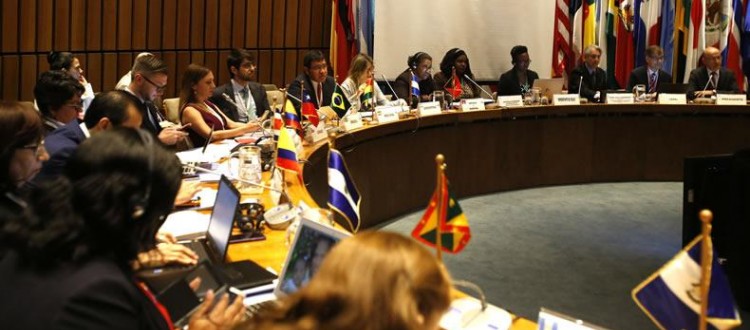
In the Seventh Meeting of the Committee, held in Buenos Aires from July 31 to August 4, 2017, the articles on Access to Information and Public Participation (6th, 7th and 8th) were agreed upon. However, representatives of society were quick to show their concern about the serious setback in the progress of the negotiations. After this seventh meeting, civil society made the following recommendations to be able to guarantee the correctness of the negotiations:
1. The participation of the UN and IACHR rapporteurs related to these rights, since the standards of the Inter-American Human Rights System on the rights of access to information, participation and environmental justice could be weakened by the agreements to which they are arriving in the negotiations of Principle 10.
2. The evaluation by governments and ECLAC of the degree of progress and regressivity of the text that has been negotiated so far between the countries, since standards achieved at the national level in some countries and at the regional level have been reduced.
3. Link the Regional Agreement of Principle 10 and the 2030 Agenda, so that there is integration and coordination of both initiatives. Therefore, it is necessary that there are reports of compliance with the SDGs in our countries where information related to actions for the better implementation of Principle 10 is included.
4. Do not go back on the regime of exceptions that has been introduced into the text, which allows States more possibilities to deny information to citizens, but to guarantee the dissemination of the greatest amount of environmental information, such as pollutant emissions and studies. of environmental impact. In addition, recognize indigenous monitoring and monitoring, as a form of legitimate participation, an indispensable preventive measure to avoid environmental damage. Also, recognize the broad active legitimacy, which allows any person or group access to justice to protect the environment.
5. Include in the text, the duty of the states to GUARANTEE the rights of access to information, participation and environmental justice, and not use verbs such as “facilitate, promote and encourage”, thus contravening the current standards of rights humans.
6. A Regional Agreement on Principle 10 that is BINDING, that clearly incorporates the intercultural and gender approach in favor of vulnerable populations, especially indigenous peoples, and human rights defenders, in recognition of the reality of violence that they are facing in our countries of Latin America and the Caribbean.
In this regard, at the opening of the eighth meeting, Andrea Sanhueza elected representative of the public, said: “We have reached a turning point. This is the last opportunity to amend the course and return to the original spirit of the process. We can not allow environmental and social rights to remain the poor relatives of sustainable development. That is also why the agreement must ensure the protection of environmental defenders.”
Finally, that was one of the main results of the meeting, as the countries agreed to consecrate the protection of people who fight for the defense of human rights in environmental matters in the future regional agreement.
This means that the signatory countries were obliged to guarantee the recognition, protection and promotion of their rights to freedom of opinion, freedom of assembly, peaceful association, freedom of movement and the free exercise of their rights. The situation of defenders Environmental impacts in Latin America have been getting worse as the years have gone by. During 2016, more than 200 environmental defenders lost their lives in an effort to demand their rights violated. 60% of these cases were registered in the Latin American region. The fact that during the last negotiations of the Regional Agreement, it has been possible to incorporate an article that protects these people, is fundamental when it comes to advancing towards the effective guarantee of Human Rights.
At the meeting, other important advances were made on the final text of the regional instrument. Among them were articles on access to justice in environmental matters, and on capacity building and cooperation, and also approved most of the general obligations.
In addition, the main objective of the Agreement was approved, which seeks to “guarantee the full and effective implementation in Latin America and the Caribbean of the rights of access to environmental information, public participation in decision making and access to justice in environmental matters. , as well as the creation and strengthening of capacities and cooperation, contributing to the protection of the right of each person and of present and future generations to live in a healthy environment and sustainable development “.
On the occasion of the meeting, experts from the UN issued a communiqué urging governments to adopt a firm agreement on environmental rights. “It is crucial that the governments of the region act in solidarity and accept legally binding norms to protect human rights and the environment,” they said.
At the end of the eighth meeting, the participants recognized the significant consensus and definitions reached on the text compiled by the Board of Directors in this week of negotiations and agreed to continue with the discussion of the articles still pending from the legal document (11 to 25) during the following meeting, which will be held in the first quarter of 2018 in San José, Costa Rica.
More information
– Pronouncement of civil society organizations
– Press release from the Office of the United Nations High Commissioner for Human Rights
– Message from the elected representatives of the public – Principle 10
Authors
Noelia Salvia
Agustina Palencia
Contact
María Perez Alsina <mariaperezalsina@fundeps.org>