• ES
  • EN
Fundeps
  • About Fundeps
  • Team
  • Working areas
    • Environment
    • Democracy
    • Gender
    • Global Gorvernance
    • Health
  • News
  • Publications
  • DONATE
  • Click to open the search input field Click to open the search input field Search
  • Menu Menu
Gender, News

The gender wage gap and the struggle for equal pay
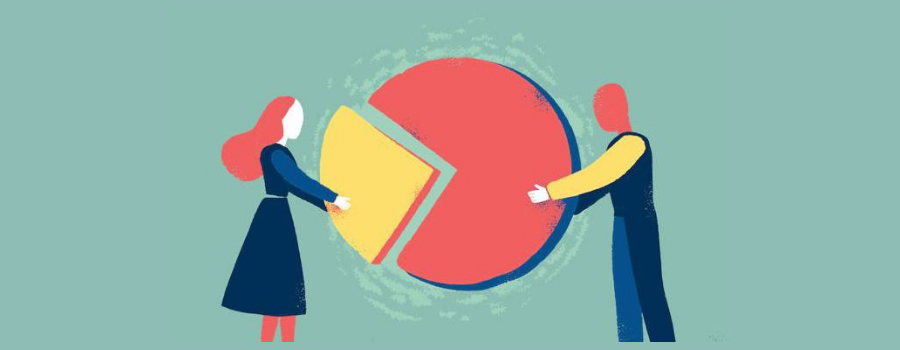
Although women are half of the world’s adult population, men continue to occupy leadership positions, hierarchical positions and better paid jobs. The salary difference in your favor is one of the most difficult injustices to make visible and change.

“Below, we offer a google translate version of the original article in Spanish. This translation may not be accurate but serves as a general presentation of the article. For more accurate information, please switch to the Spanish version of the website. In addition, feel free to directly contact in English the person mentioned at the bottom of this article with regards to this topic”.

In Argentina, according to the indices provided by the INDEC and the Ministry of Labor, Employment and Social Security of the Nation, the gender wage gap in 2018 was 27.5%. Therefore, the women had to work one year and three months to get the same as them in just one year. And that gap is even greater if we talk about unregistered workers, since in those cases the difference reaches 36% less compared to the salaries of informal workers.

No work environment is excluded from the aforementioned statistics. This is demonstrated by the reports on the Media and Advertising Agencies carried out by the Fundeps Gender team, in which it was possible to establish what were some of the causes that generated this gap.

According to the data collected in our research on gender and media, only the Clarín Group recognized a 20% wage gap between men and women, while the other companies, both public and private, said that for the same task is paid equal remuneration. Although this was not manifested by almost half of the workers, they did observe discretionary situations in the allocation of salaries. The most common cases we could see were: “radio operators who charge more than their female colleagues on private radios; men who occupy the best rankings in public media, or promotions that do not respect professional careers but are based on gender identities” (see full report).

Regarding the advertising agencies, we observed that women received 21% lower salaries in the hierarchical positions and that in relation to the positions of male employees the total gap amounted to 46% (see full report). This gap it deepens and aggravates more if we take into account that the advertising industry has a female participation parity.

When we ask ourselves why there is a gender wage gap, we understand that they are a bunch of factors that cause it to reproduce and affect us. Within the scope of the media and advertising agencies, several of these factors were identified: the forms of hiring that imply a precarious employment especially for women; the glass ceiling that prevents them from accessing positions of higher rank and salary; That same lack of women in leadership positions that demotivates others to try to aspire to them and the allocation of issues that are not remunerated by media companies.

The sexual division of labor that assigns to women the tasks of care and the home, is one of the biggest sources of wage gap between men and women. Since they spend the most time on reproductive work (invisible and unpaid), they have less time to study, train and work outside the home. This poverty of time makes it difficult for them to access full-time contracts, extended working hours (overtime), which are what often mark the salary difference, in many cases they must accept more flexible jobs (usually precarious and worse payments) and, usually, they end up facing a double working day: they work inside and outside the house.

These causes are transversal and can be observed in other work areas. It is for all this that, in reference to the day of equal pay, we demand economic policies with a gender perspective, which help to close the wage gap and that fight in this way the historical injustice suffered by working women.

Author

Valentina Montero

Contact

Cecilia Bustos Moreschi, cecilia.bustos.moreschi@fundeps.org
12 de April de 2019
Tags: Gender, Gender and participation, Human Rights and Companies
Share this entry
  • Share on Facebook
  • Share on X
  • Share on WhatsApp
  • Share on LinkedIn
  • Share by Mail
https://fundeps.org/wp-content/uploads/2019/04/encabezado-pag-web-73_3.png 350 900 Comunicaciones Fundeps https://fundeps.org/wp-content/uploads/2026/04/logo-2026-300x120.png Comunicaciones Fundeps2019-04-12 19:15:372024-08-10 22:41:02The gender wage gap and the struggle for equal pay
You might also like
Cutting resources to combat gender violence
Debates around the Feminist Economy from the sustainability of life
Update of the national protocol for the Legal Interruption of Pregnancy
What has been the impact of COVID-19 on the Sustainable Development Goals?
Gender, media companies and unions: Where are we and where are we going?
Good practices in the care of pregnancy termination
We denounce TN for media and symbolic violence
New 2015 Annual Report

Tags

Access to Information Access to Justice BID Chinese Investments Citizen Participation Democracy ENTs Environment Environmental Democracy Gender Global Governance Health Healthy nutrition IFIs Infrastructure Financing Legal Interruption of Pregnancy Sexual and Reproductive Rights Social and Environmental Standards Tobacco Control Transparency
See all tags

Acuerdo de Escazú

Emergencia Agroquímica

MOCI - monitoreo ciudadano en proyectos de infraestructura

{el entramado} Contamos historias. Acercamos Realidades.

Instagram

fundepsargentina

Trabajamos para que se garanticen los derechos humanos 🌱⚖️🗣️🌈💜🚭🍎
Promovemos la equidad de #genero, el derecho a la #salud y un #ambiente sano.

Nuevo curso: La información como herramienta. Una Nuevo curso: La información como herramienta.

Una formación de Aprender con Fundeps para aprender a ejercer el derecho de acceso a la información pública y usarlo como una herramienta para monitorear decisiones, defender derechos e impulsar procesos de incidencia.
Disponible 100% online y a tu ritmo.

Inscribite en aprender.fundeps.org
La Legislatura de Córdoba otorgó a Fundeps un bene La Legislatura de Córdoba otorgó a Fundeps un beneplácito por el Tercer encuentro Redes de compromiso y cuidados: “Acceso a la salud sexual integral. Debates urgentes”. El encuentro se realizó el pasado 20 de junio y reunió a más de cien profesionales de toda la provincia.

La mención (aprobada por unanimidad) fue iniciativa de la Legisladora Karen Acuña, en coautoría con las legisladoras Silvina Jurich, Ariela Szpanin, Doris Mansilla y Julieta Rinaldi. La misma expresa: “iniciativas con estas características, impulsadas por organizaciones de la sociedad civil, resultan fundamentales para fortalecer la protección y el ejercicio efectivo de los derechos ciudadanos, al tiempo que contribuyen a la construcción de una sociedad más justa, inclusiva e igualitaria".

Recibir este reconocimiento nos llena de orgullo y fortalece sin dudas los vínculos y el camino conjunto en pos del acceso a derechos en nuestra provincia.
Este viernes 31 de julio realizamos un nuevo encue Este viernes 31 de julio realizamos un nuevo encuentro de formación en derechos sexuales y (no) reproductivos. 

En articulación con el Consultorio de Salud Integral y con el aval de la DAJA, compartimos la jornada de capacitación con profesionales del Hospital Vicente Agüero de Jesús María.

Más de 15 profesionales de diversas disciplinas se dieron cita, para conocer diferentes aspectos de la práctica de AMEU y fortalecer su trabajo diario, en pos del acceso al aborto legal, seguro y gratuito.

Como en cada instancia, celebramos el compromiso de cada participante y agradecemos especialmente a la Dra. Kenia Torres y al Director del Hospital, Dr. Javier Díaz, por la predisposición para recibirnos.
La información como herramienta ya está disponible La información como herramienta ya está disponible en Aprender con Fundeps.

Aprendé a ejercer el derecho de acceso a la información pública y a usarlo para defender derechos, monitorear decisiones e impulsar procesos de incidencia.

En este curso vas a aprender:

📌 Cómo hacer solicitudes de acceso a la información pública.
📌 Qué hacer cuando un organismo no responde.
📌 Cómo acceder a información sobre proyectos financiados por organismos internacionales.

💻 Curso virtual, gratuito y autoadministrado.
🔗 Inscribite en aprender.fundeps.org
Follow on Instagram

Twitter

Tweets por @fundeps

Newsletter Subscription

    Fundeps. Córdoba (CP X5000JZH), Argentina. info@fundeps.org
    • Link to X
    • Link to Facebook
    • Link to Instagram
    • Link to Mail
    • Link to Youtube
    • Link to LinkedIn
    • Link to TikTok
    Link to: The law in the face of health challenges in Latin America Link to: The law in the face of health challenges in Latin America The law in the face of health challenges in Latin America Link to: The Inter-American Commission presents its annual report 2018 Link to: The Inter-American Commission presents its annual report 2018 The Inter-American Commission presents its annual report 2018
    Scroll to top Scroll to top Scroll to top