Explosions in La Calera Natural Defense Reserve: a brief analysis
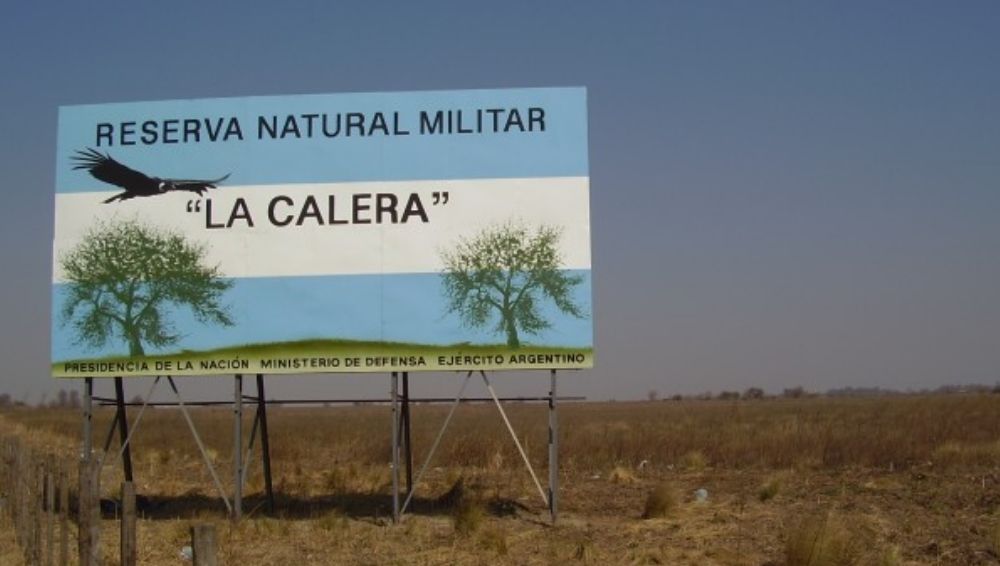
Throughout the month of January, the Explosives Brigade of the Police of the province of Córdoba will detonate eight tons of explosives in the La Calera Natural Defense Reserve. According to reports, the explosions were ordered by a federal court as part of a legal case.
“Below, we offer a google translate version of the original article in Spanish. This translation may not be accurate but serves as a general presentation of the article. For more accurate information, please switch to the Spanish version of the website. In addition, feel free to directly contact in English the person mentioned at the bottom of this article with regards to this topic”.
The La Calera reserve is a Natural Defense Reserve. This category of protected area is not exclusively intended for conservation, such as national parks. However, due to its high value for the conservation of biodiversity, the preservation and protection of its natural characteristics is sought. These are properties that belong to the Argentine Army, used for defense purposes, but due to their ecosystem importance, cultural or natural heritage, they enter into a protection regime.
These areas are administered by a Mixed Local Committee, made up of representatives of the National Parks Administration and the Armed Forces. Two functions are fulfilled in these territories. On the one hand, those associated with military tasks, and on the other, those linked to the conservation of biodiversity. Military activities have priority over the latter, according to the regulatory framework that regulates these areas. It is important to clarify that although these areas belong to the National State for the development of its functions, they are not exempt from compliance with environmental regulations of both national and provincial minimum budgets. Let us remember that the powers of regulation, authorization and control in environmental matters within the provincial territory, belong to the province, even in those places that are of national utility, as long as the functions of these establishments are not affected by the exercise of those faculties.
However, the General Environmental Law No. 25,675 requires that any activity that may degrade the environment, any of its components or affect the quality of life of the population, must undergo the environmental impact assessment procedure prior to its execution.
For its part, Provincial Law 10,208, makes this procedure mandatory for those activities that are included in its ANNEX I, among which is any activity to be carried out within a territorial portion included in the regime of the Law of Areas Provincial Natural Areas or those with similar or equivalent national regulations, or areas with assets of archaeological or historical-cultural value (as in the La Calera Reserve).
Based on this analysis, it is possible to note that any activity carried out in the La Calera Defense Reserve must undergo an Environmental Impact Assessment before the provincial authority, as long as this does not interfere with the military functions carried out there.
The detonation of 8 tons of explosives by the Provincial Police, without a doubt, is not part of the military function of the Armed Forces.
Given this scenario, it is possible to conclude that the explosions should have been subjected to the Environmental Impact Assessment procedure prior to their realization, and obtain the corresponding authorization from the local authority. Well, it is an activity subject to this procedure by provincial regulations, which would not interfere with the military function, since the detonation is not due to an activity of the Armed Forces, but rather responds to the activity of the provincial police force.
It should be noted that the communities that live in the area did not have the opportunity to access information on the detonations, nor provide their opinion on the matter, as guaranteed by the Escazú Agreement and local laws.
The most striking aspect of the case is that the National Parks Administration itself, which is involved in the management of the Reserve, seems to have made no reservations about the detonations and their possible negative impacts, nor have the provincial authorities -Secretariat of the Environment, Police Environmental-. It is also possible to question the judicial origin of the measure and the obligation to analyze the possible impacts of its actions. In this regard, it should be remembered that environmental regulations are mandatory for all State authorities and it is their duty to preserve the environment, as well as to apply the rules of minimum environmental budgets.
In short, the Calera Reserve has fundamental ecosystem functions. Its flora regulates rainfall, guarantees the recharge of the Suquía River, prevents the impact of rains on outlying neighborhoods, constitutes a green corridor between the Quebrada del Condorito National Park and the Pampa de Achala Reserve, in addition to guarding archaeological heritage and a large cluster of species of flora and fauna (325 native species, 7 threatened). Not evaluating the potential environmental impact of the detonations not only violates local environmental regulations, but also puts the communities that live nearby at risk and, above all, seriously affects the environmental services that the Reserve provides.
Due to the importance of this type of area, it is a priority for the State to guarantee the application of current regulations on environmental matters. In addition, this category of protected areas must be institutionalized through the sanction of a law that accurately outlines the applicable regime and the restrictions on its use, for the efficient achievement of conservation objectives, as many current bills intend. parliamentary status in the National Congress.
Links of interest:
Cooperation Framework Agreement
Protocol for the creation of the La Calera Defense Reserve
Contact:
juanbautistalopez@fundeps.org