• ES
  • EN
Fundeps
  • About Fundeps
  • Team
  • Working areas
    • Environment
    • Democracy
    • Gender
    • Global Gorvernance
    • Health
  • News
  • Publications
  • DONATE
  • Click to open the search input field Click to open the search input field Search
  • Menu Menu
Gender, News

Aborting is legal and accompanying too
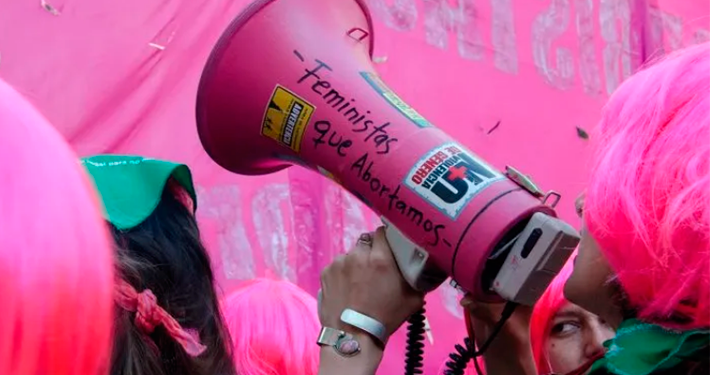
A few days after the second anniversary of the enactment of the Voluntary Interruption of Pregnancy Law, a new episode of persecution of the reproductive freedom of pregnant people occurred. This time in the city of Villa María, where 4 lifeguards and a doctor were arrested.

“Below, we offer a google translate version of the original article in Spanish. This translation may not be accurate but serves as a general presentation of the article. For more accurate information, please switch to the Spanish version of the website. In addition, feel free to directly contact in English the person mentioned at the bottom of this article with regards to this topic”.

Arbitrary raids and arrests

During the afternoon of Wednesday, December 21, two members of the Socorristas en Red organization and a health professional were arrested after a series of raids were carried out, at the request of the Public Prosecutor’s Office, for the alleged crime of illegal practice of medicine. , a crime that, according to the Penal Code of the Nation (art. 208), is releaseable. In turn, two more people had an arrest warrant but were not in the country at the time, which is why, through their lawyer, they made themselves available to justice and began to return to the country. Despite this, the prosecutor’s office issued arrest warrants for no reason, which led to their arrest at Ezeiza upon entering the country, on Christmas Eve.

By virtue of the appeal that the defense attorney presented before the Control Court, on Friday, December 23, the release of the health professional was ordered and the following Monday the other four detainees were released. Along with the request for release made by the defender, multiple civil society organizations appeared before the Court spontaneously expressing their concern for the case in a context in which access to the interruption of pregnancy is a recognized right at the national level. and especially because of the type of measures adopted in the framework of the criminal investigation, which were clearly intimidating and disproportionate.

First aid is health

Since its inception in 2012, Socorristas en Red was established as an articulation of collectives that, throughout the country, provide information and openly accompany people who decide to terminate their pregnancies, so that they do so safely and cared for, in accordance with the law and international health and human rights standards.

The practice of the socorristas consists of informing and accompanying the decisions of those who decide to abort, through listening that accommodates the needs and desires of the people who come to them. First aid supports and demands the dignity and justice of abortions, whether self-managed or in the health system. In their daily work, they produce their own materials with information on the practice, communication campaigns and dissemination of rights, and systematizations on the cases they accompany. Their work is public and visible, and its objective is to work for cultural changes that contribute to eradicating shame, fear, and stigma around abortions, so that they are a free and careful practice.

Within the framework of Law 27,610, the delivery of information and accompaniment in the pregnancy termination process carried out by lifeguards is legal and should not be penalized. So much so, that at the international level it is recognized that community accompaniment for transit through pregnancy interruptions is of great importance to improve the safety, effectiveness and individual experience of this process.

Legal abortion in the hospital and anywhere

Since the enactment of the Law on Access to Voluntary Interruption of Pregnancy and Postabortion Care in December 2020, deciding to terminate a pregnancy freely is a right of all people with the capacity to gestate. The law also recognizes the right to request and access care for this practice in the health system services. Therefore, all health personnel (including administrative and security) are responsible for guaranteeing and not obstructing the right to terminate a pregnancy, without prejudice to the fact that these practices can be carried out self-managed.

According to the Protocol for the comprehensive care of people with the right to voluntary and legal termination of pregnancy (IVE/ILE), the care model centered on people adopted by Law 27,610 recognizes the performance of pregnancy terminations with the assistance of health personnel and self-managed. Self-managed practices are considered safe by the World Health Organization (WHO) if they are carried out with adequate information and the methods indicated according to the gestational age and clinical history of the pregnant person. In this way, the preferences and individual aspirations of the users of the services are taken into account and the cultural practices and values ​​of their communities are considered.

These self-managed practices are carried out through the use of medications, such as misoprostol alone or combined with mifepristone. Widespread practice and numerous investigations have shown that performing the medication procedure on an outpatient and self-managed basis is a safe and effective option. Likewise, it is chosen by many women or other people with the capacity to gestate, because it allows them to start the interruption process at the time and place that is most comfortable for them and gives them greater peace of mind.
We do not return to hiding

Two years after the sanction of Law 27,610, which abandoned the criminal paradigm, and recognized the right of women and other people with the capacity to gestate to interrupt their pregnancies, we repudiate this judicial offensive, which is added to a series of strategies that are implemented by conservative sectors to oppose the rights won. We demand that the criminal investigation continue in accordance with the principles that govern human rights and considering the impact that this case has on access to a fundamental health service. The persecution of those who accompany abortions deepens the stigma about the practice, perpetuates stereotypes and endangers access to the right to health.

Support from civil society

On Monday, December 26, about 50 social organizations appeared before the Control Court to express their concern regarding the deprivation of liberty of the 4 lifeguards who were still detained:  Amnistía Internacional Argentina, Centro de Estudios Legales y Sociales (CELS), Centro de Estudio de Estado y Sociedad (CEDES), Católicas por el Derecho a Decidir (CDD), Equipo Latinoamericano de Justicia y Género (ELA), MxM, Fundación ECoS Espacio Córdoba Salud, Consorcio Latinoamerciano en Contra del Aborto Inseguro (CLACAI), Biblioteca Popular Julio Cortázar/ Radio Comunitaria La Quinta Pata, Fundación GEMA – Género y Masculinidad, Centro de Apoyo y Protección de los Derechos Humanos – Surkuna, Centro de Derechos Reproductivos, Movimiento Campesino de Córdoba, Consultorio de Salud Integral, Centro de Investigación y Formación de los Movimientos Sociales Latinoamericanos (CIFMSL), La Tinta, Ni Una Menos, Asociación Civil por la Igualdad y la Justicia (ACIJ), Instituto Laico de Estudios Contemporáneos (ILEC), Fundación para Estudio e Investigación de la Mujer (FEIM), Fundación Siglo 21, Fundación Mujeres en Igualdad (MEI), Fundación Derechos Humanos, Equidad y Género (Fundheg), Movimiento Socialista y del Trabajo (MST), Unión de Trabajadores de Salud, Cooperativa Luna Nueva, Cooperativa Soberanía alimentaria, Cooperativa Podemos, Cooperativa Construyendo Dignidad, Cooperativa Macollando, Asociacion Civil Construyendo Dignidad, Asociación Cordobesa de Medicina Familiar y General (A.C.O.M.F.Y.G), Comisión Provincial de la Memoria de Córdoba, Familiares de detenidos y desaparecidos por razones políticas de Córdoba, Observatorio de Género, Diversidades y Disidencias CPP, Tierra Violeta, REDAAS, Ipas Latinoamérica y el Caribe (Ipas LAC), Fundación Huésped, FUSA A.C., Colectivo de Educadorxs Desde el Sur, Lesbodramas, Colectivo de Acción Contra las Violencias de Géneros de Misiones, Adultxs Protectorxs contra el Abuso Sexual en la Infancia, Docentes por el derecho al Aborto. Misiones, Ñanduti Agrupación Feminista de El Dorado, Colectiva feministas Las Azucenas (La Plata), Consejo Asesor de la Dirección Nacional de Salud Sexual y Reproductiva. 

Authors

Luz Baretta

Mayca Balaguer

Contact

Mayca Balaguer, maycabalaguer@fundeps.org

9 de January de 2023
Tags: Gender, Legal Interruption of Pregnancy, Sexual and Reproductive Rights, Voluntary Termination of Pregnancy
Share this entry
  • Share on Facebook
  • Share on X
  • Share on WhatsApp
  • Share on LinkedIn
  • Share by Mail
https://fundeps.org/wp-content/uploads/2023/01/Abortal-es-legal-y-acompanar-tambien.png 375 710 Admi2024FunDEPS https://fundeps.org/wp-content/uploads/2026/04/logo-2026-300x120.png Admi2024FunDEPS2023-01-09 15:36:242024-11-14 13:14:32Aborting is legal and accompanying too
You might also like
Criticism based on the note “Mothers girls with capital letters”
Civil society organizations and academics reject before the Senate the candidacy of Lijo and García-Mansilla to the CSJN
MAR 8: FUNDEPS accompanies the International Women’s Strike
We accompany La Casita Trans in a lawsuit for discriminatory content
The IDB’s Gender Policy and the International Standards on Women’s Rights: A Comparative Analysis
The SCJ rejected the plans of the “Portal de Belén” in the cause of non-punishable abortion
The Inter-American Commission presents its annual report 2018
Mapping of training needs of the Popular, Feminist, Social and Solidarity Economy.

Tags

Access to Information Access to Justice BID Chinese Investments Citizen Participation Democracy ENTs Environment Environmental Democracy Gender Global Governance Health Healthy nutrition IFIs Infrastructure Financing Legal Interruption of Pregnancy Sexual and Reproductive Rights Social and Environmental Standards Tobacco Control Transparency
See all tags

Acuerdo de Escazú

Emergencia Agroquímica

MOCI - monitoreo ciudadano en proyectos de infraestructura

{el entramado} Contamos historias. Acercamos Realidades.

Instagram

fundepsargentina

Trabajamos para que se garanticen los derechos humanos 🌱⚖️🗣️🌈💜🚭🍎
Promovemos la equidad de #genero, el derecho a la #salud y un #ambiente sano.

TE NECESITAMOS 🧡 Para seguir de cerca el Plan de TE NECESITAMOS 🧡

Para seguir de cerca  el Plan de Saneamiento del Lago San Roque, hay que mirar de cerca todo el proceso. Revisamos información técnica, hacemos seguimiento de la causa y elaboramos informes públicos sobre el cumplimiento del Plan.

Sostener este trabajo en el tiempo requiere recursos. Tu aporte hace posible que continúe.

Doná hoy! (link en bio)
Y todo esto quedó en un papel? No. Ya hay avances. Y todo esto quedó en un papel? No. Ya hay avances. Pero tampoco está resuelto.

Hay plantas de tratamiento que comenzaron a funcionar, obras de cloacas terminadas y establecimientos que fueron auditados por posible contaminación.

➡️ También quedan medidas por cumplir y avances que necesitan seguimiento. Porque mostrar lo que se hizo también sirve para saber qué falta.

Para seguir acompañando este proceso y sosteniendo el trabajo que todavía queda, necesitamos tu apoyo.

Doná hoy.
La Justicia no solo dijo que el lago está contamin La Justicia no solo dijo que el lago está contaminado. También ordenó qué tiene que hacer el Estado para empezar a sanearlo.

La sentencia establece medidas concretas, con plazos y obligaciones que involucran a la Provincia y a los municipios de la cuenca.

Entre ellas: avanzar con las obras cloacales, controlar los vertidos contaminantes, fortalecer la fiscalización y garantizar espacios de participación y transparencia.

Deslizá para conocer qué tiene que pasar para que el saneamiento avance.

Ayudanos a seguir trabajando para que estas medidas se cumplan. Doná hoy.
Hoy, 4 de septiembre, es el Día Mundial de la Salu Hoy, 4 de septiembre, es el Día Mundial de la Salud Sexual. Una fecha que nos invita a volver sobre las discusiones que atraviesan el acceso a la salud sexual y (no) reproductiva: condiciones de acceso para que sea integral y de calidad, desde un enfoque de derechos y con perspectiva de diversidad.

En el mes de junio nos encontramos en el 3° Encuentro Provincial de Redes de Compromiso y Cuidados: Salud sexual Integral con Perspectiva de Diversidad para poner en común experiencias y preguntas sobre estos desafíos.

Hoy recuperamos algunas de las voces que fueron parte de las exposiciones de ese encuentro para volver sobre dos preguntas que siguen abiertas:
¿Cuál es hoy el debate más urgente cuando hablamos de salud integral y diversidad?
¿Por qué es importante encontrarnos en este contexto?

Porque garantizar el derecho a la salud también implica seguir encontrándonos para pensar, discutir y construir respuestas colectivas.
Follow on Instagram

Twitter

Tweets por @fundeps

Newsletter Subscription

    Fundeps. Córdoba (CP X5000JZH), Argentina. info@fundeps.org
    • Link to X
    • Link to Facebook
    • Link to Instagram
    • Link to Mail
    • Link to Youtube
    • Link to LinkedIn
    • Link to TikTok
    Link to: Comments to strengthen the IDB’s Access to Information Policy Link to: Comments to strengthen the IDB’s Access to Information Policy Comments to strengthen the IDB’s Access to Information Policy Link to: Training to guarantee careful practices of Voluntary and Legal Interruption of Pregnancy in towns of Córdoba Link to: Training to guarantee careful practices of Voluntary and Legal Interruption of Pregnancy in towns of Córdoba Training to guarantee careful practices of Voluntary and Legal Interruption...
    Scroll to top Scroll to top Scroll to top