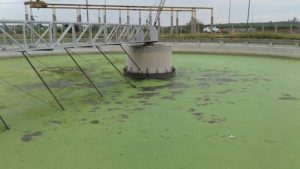
The Municipality of Córdoba once again extended the environmental and sanitary emergency in the Wastewater Treatment Plant (E.D.A.R.) of Bajo Grande and in the downstream areas. It did so through Decree No. 3413 and the measure governs for 180 days. Neighboring Chacras de la Merced claim that the actions committed are not being met.
“Below, we offer a google translate version of the original article in Spanish. This translation may not be accurate but serves as a general presentation of the article. For more accurate information, please switch to the Spanish version of the website. In addition, feel free to directly contact in English the person mentioned at the bottom of this article with regards to this topic”.
On November 1, Mayor Ramón J. Mestre signed Decree 3413, which reinstates this part of the city of Córdoba in a state of environmental and sanitary emergency, by virtue of the status of the Bajo Grande plant.
The measure is in force for a period of 180 days, from the expiration of the terms of Decree N ° 15 dated January 12, 2018 (which extended the environmental and health emergency prepared in April 2017). Therefore, the deadline for the different departments of the Municipality to carry out all the actions contemplated in the Mitigation Plan would have ended last November.
This new emergency declaration recognizes the complex situation due to the contamination of the Suquía River, which continues to receive sewage effluents with minimal treatment or directly without treatment. For this reason, and the same determination had begun to take the municipality at least since 2014.
The decision was made after a court ruling that ordered the municipality and the province to implement a series of measures to mitigate the effects of pollution produced by the plant on the population, particularly in the Suquía and surrounding areas. Then, the measure was extended by Decrees No. 1220/15, 3745/15, 1292/2017, 015/18, and now by Decree No. 3413 in order to continue the mitigation plan for environmental and health effects. proposed for the Bajo Grande plant, located in the Chacras de la Merced neighborhood.
On the other hand, work continues on the expansion of the plant that according to the information provided by the Province once completed will benefit some 960 thousand Cordoban. These works would conclude in the second half of the year 2019.
Information requests: no satisfactory answers
In the month of March, and within the framework of the emergency decreed by the municipal government, together with Las Omas, civil association of neighbors of the Chacras de las Merced district, we made several presentations before the Secretariat of Government, Citizen Participation and Social Development, the General Secretariat, the Public Services Secretariat, the Ministry of Health and the Secretariat of Planning and Infrastructure of the Municipality of Córdoba. The orders requested information about the progress of the mitigation plan in Bajo Grande and downstream areas. Given the lack of response from the municipal administration, we present a prompt dispatch in the month of June.
The Ministry of Health was the only division that answered, but it did so incompletely and with information that contradicts what was reported by the people from the plant. While the municipality maintains that in the health centers of the area there is no shortage of stock and supplies and that human resources are sufficient to respond to the problems and affections of the neighborhood, the neighbors complain that “there are never enough medicines, ambulances do not want to enter the neighborhood because of the state of the roads and that there is only one doctor in the area who can not cope. In addition, the neighborhood health center only attends in the morning and when the doctor does not go, there is no replacement. ”
As reported by the Municipality of Córdoba, cases of Acute Diarrheal Disease (EDA) decreased between 2012 and 2017. However, in the Health Center No. 84 of the Chacras de la Merced District, in 2017 the cases of diarrhea increased with respect to 2015 and 2016, which shows that diseases that could be the product of water pollution persist and continue to affect the community.
Regarding this, Alida Weht, president of Las Omas, states that “the conditions did not diminish, what happens is that due to the large number of cases there are, people begin to naturalize them and stop consulting the health centers of the sector, for the lack of response and medicines for the treatment of these diseases. ”
The sanitary actions contemplated in the Mitigation Plan are: continue with the weekly evaluations of tracer pathologies (diarrhea, hepatitis, conjunctivitis, meningoencephalitis, HUS and others); ensure the provision of medicines and nursing supplies in a timely and sufficient manner; guarantee the availability of human resources for the care of patients in the affected area, with accompaniment and participation of the community; continue with networking with other nearby Health Centers and Institutions, among others.
However, Alida Weht, stated that there are currently numerous cases of gastroenteritis, dermatitis, conjunctivitis, skin and eye irritation, respiratory diseases and that the actions committed in the mitigation plan would not be fulfilled. “They are diseases typical of the area, having pneumonia every year is a normality,” he adds.
The situation of vulnerability that lives in the community located next to the purification station is, today, unsustainable and degrading. Similarly, the malfunction of the plant has persisted for years, even the employees of the plant have acknowledged that they have reached almost 100% of the untreated liquids in the Suquía River.
From FUNDEPS we are concerned about the continuity of a situation of environmental degradation and violation of human rights. As Juan Carballo, Executive Director of FUNDEPS, expresses, “the situation is very worrying: a context of serious and continuous environmental impacts would require minimum of the authorities to report on the situation permanently. That does not happen at present; an expansion of the plant without adequate citizen participation, a deficient operation but without certain data and unanswered information requests further aggravate the situation “.
The situation is even more worrisome, if we take into account that there are eight municipal officials charged by the federal justice for the situation of the Suquía River, there could be evidence that the contamination has reached the mouth of the Rio Primero in the Laguna de Mar Chiquita.
This demonstrates the failure of the mitigation plans assumed each time the environmental emergency has been decreed since 2014. It has also been clear that the actions implemented have not been sufficient to mitigate the effects of the contamination of the Suquía River; and the situation of lack of protection suffered by the people of the Chacras de la Merced neighborhood.
We renew once again the claim for a definitive solution to the pollution of the Suquía River and, especially, for the guarantee of the rights of those who have been and continue to be affected.
More information:
https://eldoce.tv/sociedad/de-rio-cloaca-preocupa-la-contaminacion-del-suquia-planta-bajo-grande-chacras-de-la-merced-municipalidad-de-cordoba_68471
Contact:
María Pérez Alsina – mariaperezalsina@fundeps.org
Agustina Palencia – agustinapalencia@fundeps.org

Entre Ríos and the right to abortion
“Below, we offer a google translate version of the original article in Spanish. This translation may not be accurate but serves as a general presentation of the article. For more accurate information, please switch to the Spanish version of the website. In addition, feel free to directly contact in English the person mentioned at the bottom of this article with regards to this topic”.
Abortion in Argentina is legal on grounds
Since 1921, according to Article 86 of the Penal Code and ratified by the Supreme Court of Justice of the Nation in the ruling “F.A.L” of 2012, abortion is legal in the following cases, regardless of the weeks of gestation:
If it represents a risk to life or to the physical, emotional and social well-being of the pregnant person;
If it is the product of a violation.
The same ruling urges the provincial states to provide the necessary conditions to carry out legal interruptions of pregnancies in a fast, accessible and safe manner.
Entre Ríos is one of the 10 jurisdictions that have adhered to the National Protocol or have protocols that meet the criteria established by the ruling F.A.L. At the end of last year the Ministry of Health of the province, through resolutions 2383 and 3616/17, updated its “Protocol for the comprehensive care of people with the right to legal interruption of pregnancy,” repealing the previous guide that was restrictive , and adhering to the National Protocol.
Falsedades around a practice framed in the law
A 13-year-old girl who is pregnant as a result of a rape agreed to her right to interrupt her pregnancy. The practice was carried out on November 10 at the Hospital Masvernat de Concordia, thanks to health and judicial professionals who guaranteed the practice in a safe manner, applying the current regulations.
Anti-right groups used this situation to conduct campaigns based on fallacies and distortion of the facts, to harass and intimidate those who complied with the law by carrying out the medical procedure. They said that the fetus survived 10 hours and also circulated a video in which an apparent human fetus is seen, inside the gestational sac. Then they clarified that the video does not correspond to the case but they did not establish to which medical practice it corresponded.
However, the Ministry of Health clarified in a press release that it is not possible for survival to occur within the conditions established by the protocol, as it did not happen in this case. In addition, he said that he is analyzing the possible occurrences of violation of professional secrecy, the Patient Law and his duties as public officials and indicated that medical secrecy is a key element of the patient’s rights.
They condemned the State for preventing a legal abortion
On December 9, the ruling of Chamber II of the Civil and Commercial Chamber of Paraná was announced, confirming the first instance ruling issued by Civil and Commercial Judge No. 7, Martín Furman. This sentence had condemned the State to pay compensation for the damage caused to a woman who suffered a cerebrovascular accident as a result of childbirth after having denied the legal interruption of pregnancy.
The patient suffers from a congenital disease called Tetralogy of Fallot. In 2005, after 5 spontaneous abortions, she requested a tubal ligation, which was authorized because of the danger that pregnancy meant for her health and her life. He was admitted to perform the tubal ligation, but the operation was not performed because the operating room was not in condition, and it was never reprogrammed.
In 2011, she attended the San Roque Hospital, studying a 10-week pregnancy. He was prescribed medical studies and after meeting the Hospital Multidisciplinary Ateneo, he was advised to stop the pregnancy. The patient consented and the intervention (cesarean section) was scheduled for the following week at the San Martín Hospital, due to the need to have a highly complex institution. When she was admitted for the pre-surgical studies, she also signed the informed consent for the tubal ligation after the interruption of the pregnancy.
That same day, a cardiologist from the hospital burst into his room and managed to get the surgery interrupted, arguing that “what they were going to do to him is a crime.” Then a resident doctor intervened, who ruled the suspension of the cesarean and ordered the referral of the patient to the Posadas Hospital in Buenos Aires. There she was hospitalized for a few weeks until delivery by caesarean section. Eight days later he suffered a stroke with serious consequences: paralysis on the left side of his body and difficulties in reasoning.
The judgment of first instance, confirmed by the Chamber, considers proven the nexus of causality between the non-interruption of the pregnancy and the cerebrovascular accident. In addition, he affirms that the doctors acted guilty because by preventing the surgery, they did not do everything that they should have done to avoid the damage. He also attributes the responsibility to the State, which through doctors of public hospitals “made the plaintiff change a decision that he had already taken legitimately to protect his health and life, also violating his human right to health and, thus, It caused a vascular brain accident.”
Thus, the Justice made room for the lawsuit filed by the patient against the State and sentenced him to pay him an amount of more than $ 400,000 for damages.
However, there was no reproach towards the doctors.
A right of all
It is essential to remember the normative framework in force in our country and promote respect for the right of women and pregnant women to the legal interruption of pregnancy, which has been in force for almost 100 years. The State must not allow dilatory and hindering maneuvers, but arbitrate the means for effective access to this legal practice. The malicious actions of anti-rights groups that misinform the population and refuse to respect the laws in force endanger the health and life of women and pregnant people.
Access to legal interruption of pregnancy without delay or obstacle is a recognized human right in our national and international legal framework. The State must consolidate an institutional framework in which the rights to health, sexuality and reproductive security are respected, eliminating all the judicial and administrative barriers that obstruct access to this right.
Contact
Mayca Balaguer, <maycabalaguer@fundeps.org>
Bajo Grande again in environmental and health emergency
“Below, we offer a google translate version of the original article in Spanish. This translation may not be accurate but serves as a general presentation of the article. For more accurate information, please switch to the Spanish version of the website. In addition, feel free to directly contact in English the person mentioned at the bottom of this article with regards to this topic”.
On November 1, Mayor Ramón J. Mestre signed Decree 3413, which reinstates this part of the city of Córdoba in a state of environmental and sanitary emergency, by virtue of the status of the Bajo Grande plant.
The measure is in force for a period of 180 days, from the expiration of the terms of Decree N ° 15 dated January 12, 2018 (which extended the environmental and health emergency prepared in April 2017). Therefore, the deadline for the different departments of the Municipality to carry out all the actions contemplated in the Mitigation Plan would have ended last November.
This new emergency declaration recognizes the complex situation due to the contamination of the Suquía River, which continues to receive sewage effluents with minimal treatment or directly without treatment. For this reason, and the same determination had begun to take the municipality at least since 2014.
The decision was made after a court ruling that ordered the municipality and the province to implement a series of measures to mitigate the effects of pollution produced by the plant on the population, particularly in the Suquía and surrounding areas. Then, the measure was extended by Decrees No. 1220/15, 3745/15, 1292/2017, 015/18, and now by Decree No. 3413 in order to continue the mitigation plan for environmental and health effects. proposed for the Bajo Grande plant, located in the Chacras de la Merced neighborhood.
On the other hand, work continues on the expansion of the plant that according to the information provided by the Province once completed will benefit some 960 thousand Cordoban. These works would conclude in the second half of the year 2019.
Information requests: no satisfactory answers
In the month of March, and within the framework of the emergency decreed by the municipal government, together with Las Omas, civil association of neighbors of the Chacras de las Merced district, we made several presentations before the Secretariat of Government, Citizen Participation and Social Development, the General Secretariat, the Public Services Secretariat, the Ministry of Health and the Secretariat of Planning and Infrastructure of the Municipality of Córdoba. The orders requested information about the progress of the mitigation plan in Bajo Grande and downstream areas. Given the lack of response from the municipal administration, we present a prompt dispatch in the month of June.
The Ministry of Health was the only division that answered, but it did so incompletely and with information that contradicts what was reported by the people from the plant. While the municipality maintains that in the health centers of the area there is no shortage of stock and supplies and that human resources are sufficient to respond to the problems and affections of the neighborhood, the neighbors complain that “there are never enough medicines, ambulances do not want to enter the neighborhood because of the state of the roads and that there is only one doctor in the area who can not cope. In addition, the neighborhood health center only attends in the morning and when the doctor does not go, there is no replacement. ”
As reported by the Municipality of Córdoba, cases of Acute Diarrheal Disease (EDA) decreased between 2012 and 2017. However, in the Health Center No. 84 of the Chacras de la Merced District, in 2017 the cases of diarrhea increased with respect to 2015 and 2016, which shows that diseases that could be the product of water pollution persist and continue to affect the community.
Regarding this, Alida Weht, president of Las Omas, states that “the conditions did not diminish, what happens is that due to the large number of cases there are, people begin to naturalize them and stop consulting the health centers of the sector, for the lack of response and medicines for the treatment of these diseases. ”
The sanitary actions contemplated in the Mitigation Plan are: continue with the weekly evaluations of tracer pathologies (diarrhea, hepatitis, conjunctivitis, meningoencephalitis, HUS and others); ensure the provision of medicines and nursing supplies in a timely and sufficient manner; guarantee the availability of human resources for the care of patients in the affected area, with accompaniment and participation of the community; continue with networking with other nearby Health Centers and Institutions, among others.
However, Alida Weht, stated that there are currently numerous cases of gastroenteritis, dermatitis, conjunctivitis, skin and eye irritation, respiratory diseases and that the actions committed in the mitigation plan would not be fulfilled. “They are diseases typical of the area, having pneumonia every year is a normality,” he adds.
The situation of vulnerability that lives in the community located next to the purification station is, today, unsustainable and degrading. Similarly, the malfunction of the plant has persisted for years, even the employees of the plant have acknowledged that they have reached almost 100% of the untreated liquids in the Suquía River.
From FUNDEPS we are concerned about the continuity of a situation of environmental degradation and violation of human rights. As Juan Carballo, Executive Director of FUNDEPS, expresses, “the situation is very worrying: a context of serious and continuous environmental impacts would require minimum of the authorities to report on the situation permanently. That does not happen at present; an expansion of the plant without adequate citizen participation, a deficient operation but without certain data and unanswered information requests further aggravate the situation “.
The situation is even more worrisome, if we take into account that there are eight municipal officials charged by the federal justice for the situation of the Suquía River, there could be evidence that the contamination has reached the mouth of the Rio Primero in the Laguna de Mar Chiquita.
This demonstrates the failure of the mitigation plans assumed each time the environmental emergency has been decreed since 2014. It has also been clear that the actions implemented have not been sufficient to mitigate the effects of the contamination of the Suquía River; and the situation of lack of protection suffered by the people of the Chacras de la Merced neighborhood.
We renew once again the claim for a definitive solution to the pollution of the Suquía River and, especially, for the guarantee of the rights of those who have been and continue to be affected.
More information:
https://eldoce.tv/sociedad/de-rio-cloaca-preocupa-la-contaminacion-del-suquia-planta-bajo-grande-chacras-de-la-merced-municipalidad-de-cordoba_68471
Contact:
María Pérez Alsina – mariaperezalsina@fundeps.org
Agustina Palencia – agustinapalencia@fundeps.org
Córdoba has a non-punishable abortion
“Below, we offer a google translate version of the original article in Spanish. This translation may not be accurate but serves as a general presentation of the article. For more accurate information, please switch to the Spanish version of the website. In addition, feel free to directly contact in English the person mentioned at the bottom of this article with regards to this topic”.
Background
On March 30, 2012, and following the guidelines of the Supreme Court in the FAL ruling, the government of the province of Córdoba, through the Ministry of Health, approved Resolution 93/12 and the Guide to the care of non-punishable abortions. with the purpose of guaranteeing a fast and safe access to the practice of non-punishable abortions in the provincial public health services.
On April 12 of that year, the Asociación Civil Portal de Belén filed a collective action against the government of the Province of Córdoba. He requested that the ministerial resolution be declared inapplicable as unconstitutional and that the legal figure of non-punishable abortion contained in art. 86 of the Criminal Code. As a provisional measure, he also requested that the suspension of the application of the guide be ordered. The Civil Association for the Right to Decide (Catholics for the Right to Decide) appeared in the case as a third co-defendant in defense of women’s human rights.
The precautionary measure
On April 13, 2012, the first instance judge, Federico Ossola, partially granted the provisional measure requested by Portal de Belén ordering the suspension of the application of the guide, but only for the case provided for cases of violation. On October 3 of the same year, the Third Chamber of Appeals confirmed the precautionary measure.
However, because the application of the Guide was suspended, even in that only case, women and pregnant persons in Córdoba could not access any kind of non-punishable abortion in provincial hospitals, since the judicialization of the protocol generated misinformation in professionals of health and public opinion.
The background: the constitutionality of the resolution and the guide
On the other hand, in the argument for the unconstitutionality of the ministerial resolution (main file), in the judgment of August 24, 2012 Judge Ossola ruled in favor of the constitutionality of the resolution and the procedures provided by the guide, but he questioned the presentation of an affidavit of the rape victim to access the abortive practice without other collection. He argued that, being an exception, the sworn statement was insufficient to guarantee that punishable abortions are not committed. In May 2013, the Appeals Chamber held that the resolution and the guidance were unconstitutional for contradicting local public law.
In May 2014, the file was sent to the Superior Court, which had to decide on the constitutionality, conventionality and application of the ministerial resolution and the non-punishable abortion care guide. In 2016, on the second occasion that the Court arranged for it, FUNDEPS presented itself as amicus curiae together with other organizations supporting the defense of the sexual and reproductive rights of the women of Córdoba and contributing arguments of international human rights law.
Sentence
The Superior Court of Justice considered that there was no judicial case that allowed it to examine the constitutionality of Resolution No. 93/12, since Portal de Belén had only raised a “mere subjective discrepancy” with the provisions of the Criminal Code in the art. 86, which grants exceptional permission to abort without punitive consequences for women.
He considered that Portal de Belén wanted the State to ignore said article, based on “the only support of his personal opinion“, with the aspiration that “the Province does not recognize the authorization or permission recognized by the basic law to every woman victim of a violation (according to the interpretation made by the CSJN), which would imply establishing a prohibition-against legem-where criminal law does not institute it. “
The majority vote, dictated by Aida Tarditti, Domingo Sesin, Mercedes Blanc de Arabel and Silvana María Chiapero, gave rise to the cassation appeal promoted by the Province and revoked the judgment of the House that had declared the ministerial resolution unconstitutional. Consequently, it rejected the amparo action promoted by Portal de Belén, which sought what the Chamber had resolved at the time, a decision that has now been annulled, so that the resolution remains fully valid.
In summary, he concluded that there is no collective judicial case in the terms proposed by Portal de Belén for the following reasons:
1) The National Legislative Power is the only one with competence to sanction substantive norms with general reach and has already resolved the constitutional dilemma between fundamental legal rights at stake that involves any violation that leads to the victim’s pregnancy through art. 86, subsection 2, of the Criminal Code. The same can be said when the interruption of pregnancy is enabled if there is danger to the life or health of the woman (Article 86, paragraph 1, of the Penal Code).
2) It is not possible to address the analysis of the guide without first doing the same with regard to the Criminal Code that serves as support for the guide, which far exceeds the procedural margins of an amparo. But, also, because this would mean republishing what has already been resolved in the case “F., A. L.” by the Supreme Court.
3) It is not possible to collectivize, in block, non-transferable situations in their configuration and significance without affecting the personal rights of the victims of said unlawful act.
4) An indivisible collective good is not at stake, nor can one hypothesize about how each woman could react and decide about the possibility provided by article 86, paragraph 2. That is why there is no collective legitimacy with repercussions on a right of personal exercise for which the guide aims to establish a procedure to guarantee this exercise.
The implementation of the protocol: a debt with equality
In this context and after years of waiting, it is necessary to ensure the effective implementation of the provincial protocol. From FUNDEPS, we celebrate this judicial decision and the statements of the highest authority of the Ministry of Health of the Province.
More Information
Publication
Authors
Virginia Pedraza
Mayca Balaguer
Contact
Mayca Balaguer maycabalaguer@fundeps.org
Córdoba has a non-punishable abortion
After a judicial process of more than 6 years, the Superior Court of Justice of Cordoba rejected the action of amparo filed by the Portal de Belén association that objected the guide that regulates non-punishable abortions, confirming its constitutionality and providing its full force.
What the G20 summit in Argentina left us
“Below, we offer a google translate version of the original article in Spanish. This translation may not be accurate but serves as a general presentation of the article. For more accurate information, please switch to the Spanish version of the website. In addition, feel free to directly contact in English the person mentioned at the bottom of this article with regards to this topic”.
The G-20 leaders summit organized this year by Argentina as president “pro tempore” of the forum took place in a context marked mainly by the trade war between the United States and China; and the internal difficulties that a large part of the leaders of the countries that make up the group are facing. Among them, undoubtedly highlight the civil protests that check the government of Emmanuel Macron in France, the accusations against Saudi Crown Prince Mohammed Bin Salman for the death of a journalist; and even the economic crisis facing the national government in Argentina, to which were added also the internal and external doubts regarding the capacity of the government of Mauricio Macri to organize an event of the magnitude of the G-20.
In any case, once the summit was concluded, the organization of the summit was considered a success by the government, and a final document was even signed (although its commitments are very lukewarm) despite the few probabilities that existed of achieving a consensus among member countries. The Declaration of the G20 2018 leaders emphasizes equitable and sustainable development as a challenge that all States face. Among the issues mentioned in the Declaration are the pillars on which the summit worked on a priority basis this year, at the decision of the Argentine government itself, namely: the Future of Work, Infrastructure for Development, Food Security and a perspective gender mainstreaming that covered the entire G20 agenda. The Declaration also mentions in certain passages certain international commitments regarding Climate Change and the Paris Agreement (although the United States expressed in the Declaration its decision to withdraw from the Agreement); international financial institutions and the need to strengthen the IMF and the World Bank; gender equality and access to health, among others. Regarding Infrastructure, the Declaration states: “In order to address the persistent infrastructure financing gap, we reaffirm our commitment to attract private capital for investment in infrastructure. To achieve this, we endorsed the Roadmap to Infrastructure As an Asset Class “
Recall that the G20 is an international forum that is composed of 19 states and the European Union: Germany, Saudi Arabia, Argentina, Australia, Brazil, Canada, China, South Korea, the United States, France, India, Indonesia, Italy, Japan , Mexico, Russia, United Kingdom, South Africa and Turkey. Spain is a permanent guest. In addition, the country that chairs the forum elects other guests, and for this year Argentina invited Chile and the Netherlands.
The work areas of the G-20 are: finance, agriculture, anticorruption, trade and investment, development, digital economy, education, employment, health, climate sustainability and energy transitions.
Although the Summit in Buenos Aires did not produce resonant agreements at the multilateral level, the event was without doubt positive for the national government, which comes out strengthened by the organization without major inconveniences of the event; and above all, by the agenda of meetings and bilateral agreements with other nations that took place in the framework of the Summit. Thus, the government of Cambiemos managed several bilateral meetings and closed a series of investment and commercial agreements with the purpose of promoting the country’s economic development. Thus, of the 17 bilateral meetings that the government carried out and the more than 50 agreements signed, the following stand out:
30 commercial agreements between China and Argentina that represent around 5000 million dollars. The Joint Action Plan signed covers issues related to investments, infrastructure, railways, thermal energy, solar, wind, mining, health, transportation and education, among others. They include the commercial contract to reactivate the San Martín Cargas railroad, whose initial investment will be 1089 million dollars and will be in charge of the Chinese company CRCC (China Railway Construction Corporation Limited); and the signing of protocols for the entry of standing equines, sheep and goats from Patagonia to China and a sanitary protocol to export Argentine cherries.
In turn, with China, investment agreements were also signed for projects of Public-Private Partnerships (PPPs) in the area of energy and transport (routes); and it was agreed to expand the swap (exchange) of currencies in the amount of 60 billion yuan (equivalent to 8,600 million dollars) that will be used to strengthen the reserves of the Central Bank.
With the United States, the most relevant agreement was reached with the letters of intent signed with the investment agency of the United States, Overseas Private Investment Corporation (OPIC), which is expected to mobilize more than 3 billion dollars. Some of these letters of intent with the OPIC contemplate the financial backing for the PPP project of the C Corridor section (Buenos Aires-Mendoza); and projects on solar energy (the Ullum I, II and III projects); wind energy (North Chubut III and IV); wind energy (Cañadón León wind farm in Santa Cruz); and works for a gas pipeline in Vaca Muerta.
With France, a financing agreement for 360 million dollars was made to recover the capacity of maritime naval patrols, and agreements in the cultural and educational field.
With the European Investment Bank, it was agreed to finance expansion and improvement works in potable water services for the metropolitan area and the suburbs of Buenos Aires; and the consolidation of the Integral Management of Residues and Energy Valorization in Jujuy.
With the Russian Federation, a Fisheries and Aquaculture Agreement and a strategic document on the cooperation between Argentina and Russia in the field of the peaceful use of nuclear energy were signed.
Beyond the Summit
It is worth remembering that the Summit held in Buenos Aires was just the end of a much more extensive process that began at the end of November 2017 when Argentina assumed the “pro tempore” presidency of the G-20 at the end of November 2017 and culminated with the transfer of it to Japan. During the course of this year numerous meetings and events were held within the framework of the G20, as well as intense work in each of the affinity groups of the forum: Business 20 (B20, which encompasses the private sector); Civil 20 (C20, which includes civil society); Labor 20 (L20, which includes unions and workers); Science 20 (S20, which encompasses the scientific community) Think 20 (T20, which includes Think Tanks and the academic community); Women 20 (W20, which includes women) and Youth 20 (Y-20, which includes young people).
In the case of FUNDEPS, we actively participate in Civil 20, where we co-coordinate, together with Eurodad, one of the 8 working groups of the C20 for this year: the Investment and Infrastructure group. During the course of the year the group worked virtually and even met twice, both for the meeting of working groups and for the Summit of the C-20 held in Buenos Aires in April and August respectively. The result of the work of the working groups of the C20 was reflected in a document with policy recommendations, which was delivered to President Macri during the C20 Summit and constituted an input from civil society for the discussions that took place in the frame of the G-20.
More information
Declaración de Líderes del G20. Construyendo consenso para un desarrollo equitativo y sostenible
Página oficial del G-20
Página Oficial del C20
Policy Pack: Recomendaciones del C20 al G20 de 2018
Documento del sub-grupo sobre Financiamiento de Infraestructura
Documento del sub-grupo sobre Conducta Empresarial Responsable
La sociedad civil presenta recomendaciones al G20 en la Cumbre del Civil-20 – FUNDEPS – 15/08/2018
La sociedad civil se reunió en el C20 – FUNDEPS – 17/04/2018
G20 dejó acuerdos con intención de inversiones por u$s 8.000 millones – ámbito.com
Expectativa y realidad de los acuerdos económicos de Argentina en el G20 – Noticias
Authors
Macarena Mustafá – Sofía Brocanelli
Contact
Gonzalo Roza / Coordinador del Área de Gobernabilidad Global
gon.roza@fundeps.org
Frontal labeling of warnings: a necessary policy to protect the right to health
“Below, we offer a google translate version of the original article in Spanish. This translation may not be accurate but serves as a general presentation of the article. For more accurate information, please switch to the Spanish version of the website. In addition, feel free to directly contact in English the person mentioned at the bottom of this article with regards to this topic”.
In our country, according to the National Survey of Risk Factors 2013 (ENFR 2013, Ministry of Health of the Nation), 57.9% of the adult population is overweight, 34.1% have high blood pressure and the daily average of portions of fruits or vegetables consumed is 1.9 per person. Added to this is the fact that salt consumption is twice as much and added sugar is three times the maximum recommended by the World Health Organization (WHO). This situation demonstrates the need to formulate public policies that tend to reduce the consumption of products with critical nutrients and to improve the dietary habits of the population in order to reduce overweight, obesity and other noncommunicable diseases.
In this sense, the World Health Organization has recognized a series of policies of proven effectiveness to prevent obesity, such as the restriction of advertising of unhealthy foods and beverages, a front labeling of food warnings, fiscal measures, among others. In addition, numerous human rights committees have recommended the implementation of food policies as a necessary element to protect the right to health of people.
Thus, in the concluding comments made in November of the current report to Argentina, the Committee on Economic, Social and Cultural Rights recommended “Taking effective measures to discourage the consumption of food and beverages harmful to health, including by increasing the tax on sugary drinks, strengthening the regulation of the Argentine Food Code in terms of front labeling of foods, including information on sugar in products, and implementing restrictions on the advertising of foods and beverages harmful to health, particularly those intended for children”. In the same sense, the Pan-American Health Organization (PAHO) proposes frontal labeling as one of its lines of action for the prevention of them because it facilitates the selection of healthier foods and encourages the industry to reformulate its products with the goal of making them healthier.
In Argentina there is no system of front labeling of foods established by law that informs consumers about high contents of critical nutrients (sugars, fats and sodium) nor is it mandatory to declare sugars in packaged products. For this reason and in accordance with the recommendations described, the National Program of Healthy Eating and Prevention of Obesity worked to promote a debate and positioning of the National Commission of Healthy Eating and Prevention of Obesity, regarding the type of frontal labeling to recommend for the Argentina. In this framework, 16 participating institutions voted on what type of frontal labeling and which nutrient profile system to adopt: 9 proposed warning labeling, 2 suggested Nutri-Score, 1 proposed the combination of both (warning plus Nutri- Score), 1 institution recommended a system of its own, 2 suggested the GDA with colors of the traffic light and 1 institution proposed “anyone other than the GDA”. Regarding the nutrient profile, 9 institutions proposed a profile of PAHO or an adaptation of it.
The researches examined showed the ineffectiveness of the GDA (daily feeding guides) labeling – which reports recommended percentages of daily energy or nutrient intake per serving or product – since it is generally not understood by adults or by adults. children, it takes a lot of time and is confusing even with nutritional knowledge. Despite this, this system was recommended by the Coordinator of the Food Products Industries (COPAL), an institution that declared conflicts of interest to receive financing from the industry, and by the Ministry of Production and Labor (Secretary of the Government of Agribusiness and Secretary of Commerce).
On the other hand, numerous publications explain why the frontal labeling type traffic light and the summary systems (Nutri-Score and HSR) do not influence the purchasing behavior, which is why they would not be appropriate to help the consumer in the choice of products healthy The semaphore problems to achieve this purpose, are linked to the confusion that generates in the nutritional interpretation. It has been proven that there is a compensation effect between green and red colors when they occur in the same product at the same time and that reporting on unfavorable attributes has a greater effect on the purchase decision than reporting favorable attributes. Therefore, we compare the confusion generated by the traffic light front labeling with the confusion that would generate for a motorist, that the traffic light keep its red and green lights on at the same time.
On the other hand, Nutri-Score classifies foods and beverages according to five categories of nutritional quality and a score is established assigning the product a letter and a color. The most nutritionally favorable product obtains a green “A” score and the nutritionally less favorable product obtains a red “E” score. Research showed that although it was useful to classify how healthy foods are, it was not effective to improve purchasing behavior due to the complexity generated by the combination of 5 letters with a gradient of 5 colors ranging from red to green. In addition, a food may have a high sugar content, but if it has fiber, its assessment will not necessarily be red. In this way, the consumer does not know that the food has a high content of sugar, fat or sodium, information that was shown to influence the purchasing behavior. This type of front labeling was recommended by the Center for Studies on Food Policy and Economics (CEPEA) and Center for Studies on Child Nutrition (CESNI), both institutions that expressed conflicts of interest in receiving financing from the industry.
From FUNDEPS, we supported the recommendations made by 9 of the participating institutions, including the Health Ministry, who spoke in favor of the frontal warning labeling and the nutrient profile of OPS. Indeed, numerous studies have shown that this system is the most effective in identifying products with a high content of critical nutrients (sugars, saturated fats and sodium), provides better information for the consumer, in a shorter time and favors the selection of food. healthier. Likewise, this type of labeling is prioritized because it is the most understood by children and adolescents and people of lower educational level, which is central to contemplate the perspective of inequity in public policy and protect especially the groups in the most vulnerable situations. vulnerability, those who suffer the most from obesity, malnutrition and chronic diseases in general.
On the other hand, the Government Health Secretariat recommended that “the frontal labeling system be implemented in a mandatory and gradual manner. Progressive implementation could be useful to give both consumers and industries time to adapt to changes. It is also proposed to accompany the strategy of front labeling with communication and awareness campaigns so that the population understands the labeling and has more information on nutrition and healthy eating. In addition, it is recommended that front labeling be used as a tool to define other healthy eating and obesity prevention policies. Thus, all those foods and beverages with a critical nutrient in excess, as established by the frontal labeling system, are subject to marketing restrictions, are excluded or are included in small quantities in social plans with a food component and are not offered in establishments. schoolchildren or community kitchens. “
We consider that the technical recommendations of the Ministry of Health for the design of food labeling policies are adequate to protect the right to health of the population. In effect, the warning labeling supplies the necessary information on critical nutrients in excess, whose consumption is sought to be reduced. Thus, it protects consumers in order to make informed decisions, and contributes to the prevention of noncommunicable diseases related to inadequate nutrition. In this context of the growth of chronic noncommunicable diseases linked to an inadequate diet, it is urgent that the recommendations of the Ministry of Health become public policies that enable effective protection of health.
More information
Nutritional front labeling of food
Author
Slavenka Zec
Contact
Agustina Mozzoni, agustinamozzoni@fundeps.org
Report on the human rights situation in Argentina before the IACHR
“Below, we offer a google translate version of the original article in Spanish. This translation may not be accurate but serves as a general presentation of the article. For more accurate information, please switch to the Spanish version of the website. In addition, feel free to directly contact in English the person mentioned at the bottom of this article with regards to this topic”.
We present a report on the human rights situation in Argentina before the IACHR
“Below, we offer a google translate version of the original article in Spanish. This translation may not be accurate but serves as a general presentation of the article. For more accurate information, please switch to the Spanish version of the website. In addition, feel free to directly contact in English the person mentioned at the bottom of this article with regards to this topic”.
Each year, the Commission produces an annual report on the human rights situation in the region, reflecting the trends, challenges, advances and good practices that have occurred in the area of human rights in the OAS member states during the year.
For the Annual Report of 2018, the Commission will emphasize the following axes: Democratic Institutionalization, Institutionality in Human Rights, Access to Justice, Citizen Security and Right to the Environment.
Together with lawyers and lawyers from the Argentine Northwest on Human Rights and Social Studies (ANDHES) we present a report on these axes in the areas we work on:
Institutionality in human rights
1. Hierarchical reduction of National Ministries of Environment, Culture, Health, Labor and Modernization and Communication
2. National Budget 2019
3. Comprehensive Sexual Education Law in danger
Access to justice
1. Preoccupation with the draft bill on collective processes
2. Access to the right to abortion in Argentina – Delay of justice in the case of Portal de Belén (by non-punishable abortion protocol in the province of Córdoba)
3. Access to justice for the elderly
Citizen security
1. Institutional Violence in Tucumán
2. Absence of mechanisms to prevent torture in Tucumán
Right to the Environment
1. Affectations to the right to health caused by the use of agrochemicals
2. Concern over project to amend the seed law
3. Failure to comply with the consultation and free, prior and informed consent of provincial law No. 5,915 to the detriment of the environment and the right to life and territory of indigenous communities in Jujuy.
4. Chinchillas Mining Project and the Pozuelos Lagoon in Jujuy
5. The indigenous community of Solco Yampa and the indiscriminate felling of trees in the province of Tucumán
6. Murder of Javier Chocobar in Tucumán
The cases presented in this report give an account of a general situation of regression of the fulfillment of human rights by the Argentine State. The exposed situations of vulnerability are particularly worrisome because they are part of a regional socio-political crisis context. In order to avoid the impact of cuts, the noncompliance with international standards and the promotion of public policies that do not attack the roots of structural inequality impact fully on the populations that are already in a situation of vulnerability, we ask the IACHR to publicly express concern about the state of compliance with human rights in the country.
More information
Contact
Mayca Balaguer, maycabalaguer@fundeps.org
We assume the coordination of the Free Alliance of Smoke of Argentina
“Below, we offer a google translate version of the original article in Spanish. This translation may not be accurate but serves as a general presentation of the article. For more accurate information, please switch to the Spanish version of the website. In addition, feel free to directly contact in English the person mentioned at the bottom of this article with regards to this topic”.
ALIAR is a coalition constituted by civil society organizations and referents in the field, which works to promote legislation on tobacco control throughout the Argentine territory. Its main objective is the protection of the health of the population against exposure to second-hand smoke, as well as the reduction and disincentive of their consumption.
This alliance has been working for ten years through a cooperative and interdisciplinary approach. “Among the fundamental achievements of ALIAR are the participation in the elaboration of the national law 26.867 of regulation of advertising, promotion and consumption of tobacco, as well as regulation No. 1203/07 of the provincial law of Tierra del Fuego, one of the greatest advances in matters of public health, when establishing the express prohibition of the exhibition of tobacco products in points of sale “, explains the lawyer Patricia Croci, who had an active participation in the process carried out in Tierra del Fuego. In addition, the coalition has focused in recent years on the generation of evidence for the adoption of effective policies, carrying out surveys in various cities of the country regarding compliance with the regulations on smoke-free environments (HLA) and publicity.
We need to continue working on the advancement of tobacco control policies. In this sense, networks such as ALIAR play a fundamental role by allowing the articulation of references from different parts of the country and the consolidation of work agendas and common objectives, which make it possible to enhance the impacts of our actions.
Author
Maga Merlo Vijarra
Contact
Agustina Mozzoni, agustinamozzoni@fundeps.org
Agrochemicals continue to affect the communities of Córdoba
“Below, we offer a google translate version of the original article in Spanish. This translation may not be accurate but serves as a general presentation of the article. For more accurate information, please switch to the Spanish version of the website. In addition, feel free to directly contact in English the person mentioned at the bottom of this article with regards to this topic”.
We participated in the “Agrochemicals, Health and Environment” Conference in Colonia Tirolesa
At the beginning of October, the “Agrochemicals, Health and Environment” conference was held in Colonia Tirolesa, a town located 27 km from the city of Córdoba, dedicated to agricultural activities, in particular to the production of potatoes, soybeans and corn.
The meeting was a good opportunity to continue learning from the communities that live near fields that are frequently sprayed with agrochemicals. During this meeting, members of the community had the opportunity to express their concerns and feelings about this problem, including the diseases that affect them.
In addition, members of the “Epidemiology Group of the Digna Science” of Córdoba and Buenos Aires, showed the results of the survey carried out through Socioenvironmental Health Surveys, carried out in May 2017 in the neighborhood of the Colonia Tirolesa station, in around 76 homes. The aim of the surveys is to contribute to the visibility of the health problems presented by populations exposed to socio-environmental risks and damages, thereby strengthening the fight against the hegemonic model of agricultural production.
One of the most striking results was that, in the last 20 years, the biggest causes of death in the neighborhood are malignant tumors (30%) and respiratory causes (22%), with cardiovascular diseases being the third (19 %), being that at the national level the latter is the main cause of death.
We participate in the meeting through the development of community capacities regarding their right to health and a healthy environment. María, Coordinator of the Environment area, was in charge of teaching these rights and the different ways in which members of the community are able to claim them.
An agronomist was also present at this multidisciplinary event. There, he explained to the community that there are alternative forms of production, which do not imply any damage to health or the environment. His talk focused on agroecological practices and how to apply those practices in the field.
It was a very mobilizing event, because although residents of Colonia Tirolesa knew that the excessive and uncontrolled use of agrochemicals could affect their health and environment, they had not taken real dimension of the problem, until they were shown the results of the health surveys. It was a good opportunity for them to take a real awareness of the dangers of being permanently exposed to these agricultural chemicals.
Visit to Falda del Carmen
In October, we also met with neighbors of Falda de Carmen, a small city near Córdoba Capital, which for some years has been demanding a municipal ordinance that creates an Environmental Conservation Zone to prohibit the use of agrochemicals in the fields to populated areas.
During the visit, they told us about their beginnings in this fight against rural entrepreneurs and agrochemicals, how they were organized in the Neighborhood Environmental Commission and the different actions taken to raise awareness and raise awareness in the commune about this problem that affects them.
From FUNDEPS we committed to help the community of Falda del Carmen in the development of advocacy strategies and to support their claims in order to strengthen their human rights to health and a healthy environment.
Contact
María Pérez Alsina, mariaperezalsina@fundeps.org
We present an annual report to INAM and we express concern about its inactivity
“Below, we offer a google translate version of the original article in Spanish. This translation may not be accurate but serves as a general presentation of the article. For more accurate information, please switch to the Spanish version of the website. In addition, feel free to directly contact in English the person mentioned at the bottom of this article with regards to this topic”.
The civil society organizations representing the Argentine provinces in the Ad Honorem Advisory Council of INAM on November 10 presented the situation reports. Likewise, we regret the inactivity of the Council during the year and the little interaction of the INAM with its members. Since last year, FUNDEPS has been part of the Ad Honorem Advisory Council of the INAM, a space for collaboration between the government and organizations committed to the struggle for equality. women. This Council, created under article 9 of the comprehensive protection law 26.485, is composed of organizations from all provinces and the Autonomous City of Buenos Aires and its main function is to advise and recommend courses of action to address the problem of gender violence. However, since the meeting held in October of last year, the Council organizations have not been able to establish an active communication with the INAM, nor has progress been made in the preparation of the operating regulations of the Council.
Even so, complying with the commitments assumed as advisors, from FUNDEPS we present the annual report of the situation of Córdoba in relation to the implementation of the National Action Plan for the Prevention, Assistance and Eradication of Violence against Women 2017-2019.
In this regard, it should be noted that our province does not adhere to the National Plan, which we warn as the main warning regarding the commitments assumed by the country in the fight against violence against women, through the signing of the Conventions of Human rights that address the problem, such as the Convention on the Elimination of All Forms of Discrimination against Women CEDAW (for its acronym in English) and the Inter-American Convention of Belem Do Pará.
Likewise, we made information requests to the corresponding provincial bodies, in order to respond to the information required by the INAM, orders that were not answered within the deadlines established by law. In this sense, we resort to the information gathered through our fieldwork, as well as the data available online in the official sites of the province.
The lack of access to information is another important warning that we warn, mainly given the seriousness of the problem in our province, which already has more than 11 femicides, until August, so far in 2018.
In the report presented, activities were reported in the areas of health, education, media, as well as access to justice and work.
The lamentable inactivity of the Council and the INAM
During the month of September, FUNDEPS along with other advisory organizations presented a request for information to the INAM to understand what the operating guidelines of the Consultative Council are, in order to be able to fulfill the assumed commitments.
During the inaugural meeting of the space, the advisory organizations and the officials of the INAM agreed that during the current year we would be prepared to elaborate the regulations for the purposes of the functioning of the organ. This regulation was never drafted, nor were the consultations and questions of the Councilors answered by INAM.
Also, as part of our work of constant monitoring of media, we have made a report of media violence by the statements of Nicolás Repetto, who in an interview with a young victim of public transport abuse questioned the type of clothing that was using at that time. For this reason, we initiated the corresponding claim process before the INAM, but we did not have a timely or adequate response to our complaint.
Fully recognizing the efforts of INAM to increase transparency and accountability on the implementation of the National Action Plan for the Prevention, Assistance and Eradication of Violence against Women 2017-2019, carried out within the framework of its commitment to open government, the Lack of interaction and response to civil society is contradictory.
It is also important to analyze the economic context of the country, mainly from the forecast of the funds for the fight for equality and against the violence carried out by INAM. As ELA points out, in its report on the 2019 budget, “INAM had achieved a total of $ 211.5 billion pesos for 2018, as a result of the budget reallocations achieved during the year. For 2019, a total of $ 234,394,881 will be awarded. Although this represents an 11% increase in nominal terms, taking into account the average inflation used by the Executive Power itself in the preparation of the budget (34.8%), this implies a fall of 18% in real terms in relation to to the previous year”.
In a context where the economic crisis and the consequent budget cuts impact especially on women, organizations that do not have a voice to express their opinions and complaints or find an answer in the authorities responsible for promoting gender equality policies in all spheres, worrying.
Without prejudice to the complex reality of INAM, the advisory organizations comply with our commitments, and we hope that next year we will be able to advance in the consolidation of real spaces for public participation, with the guarantee of being consulted and listened to when designing and implementing the public policies to fight against violence against women.-
More information
Contact
Virginia Pedraza, vir.pedraza@fundeps.org
Preliminary observations of the Special Rapporteur on the Law to food
“Below, we offer a google translate version of the original article in Spanish. This translation may not be accurate but serves as a general presentation of the article. For more accurate information, please switch to the Spanish version of the website. In addition, feel free to directly contact in English the person mentioned at the bottom of this article with regards to this topic”.
The rapporteur, in her preliminary observations, emphasized:
great impact on the right to food of the population. In this At the moment, Argentina must use the maximum of its resources available to ensure the full realization of rights humans.
More information:
Preliminary Observations Special Rapporteur on the right to food, Hilal Ever, on her mission to the Argentina 12-21 September 2018
Author
Andrea Melissa Hill
Contact:
Agustina Mozzoni, agustinamozzoni@fundeps.org