Tag Archive for: Environmental Democracy

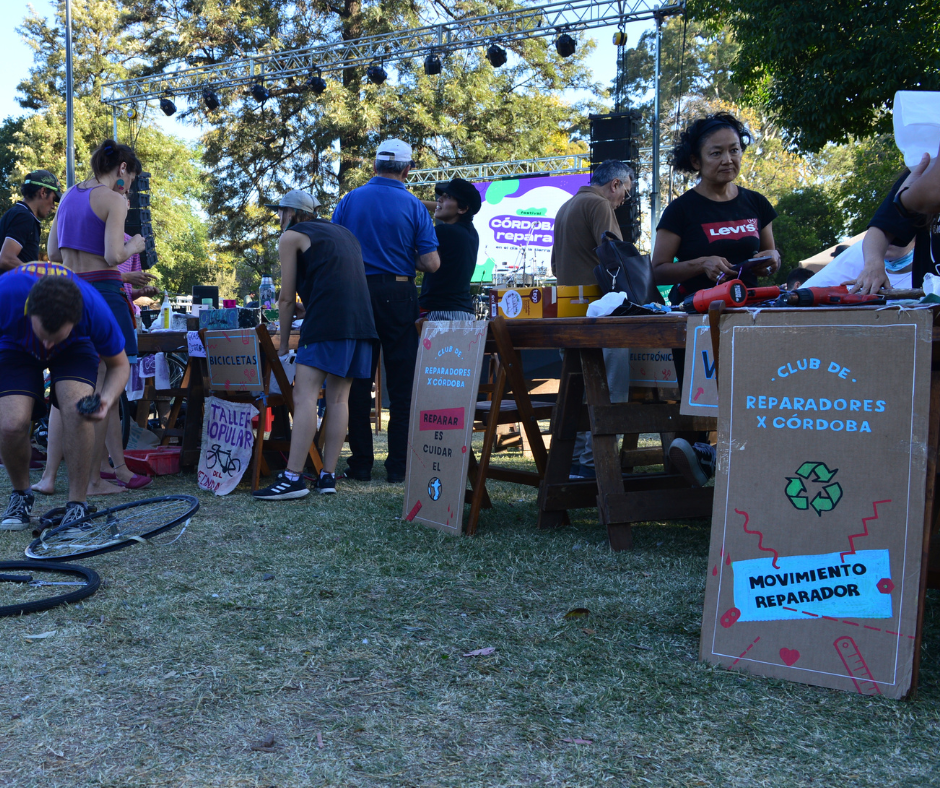
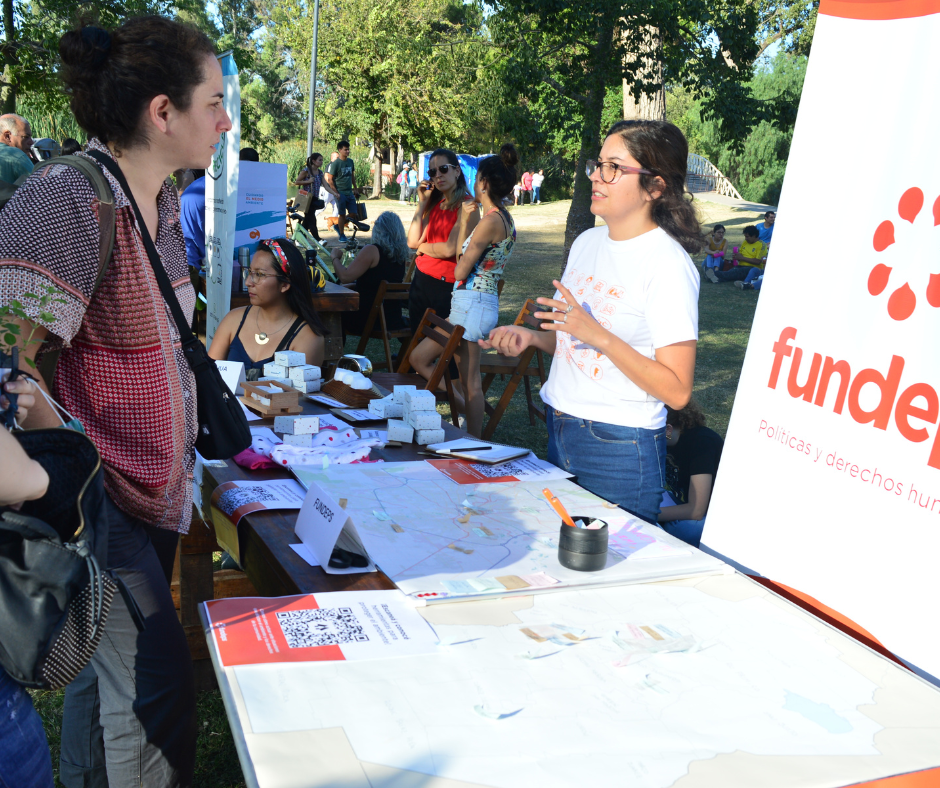
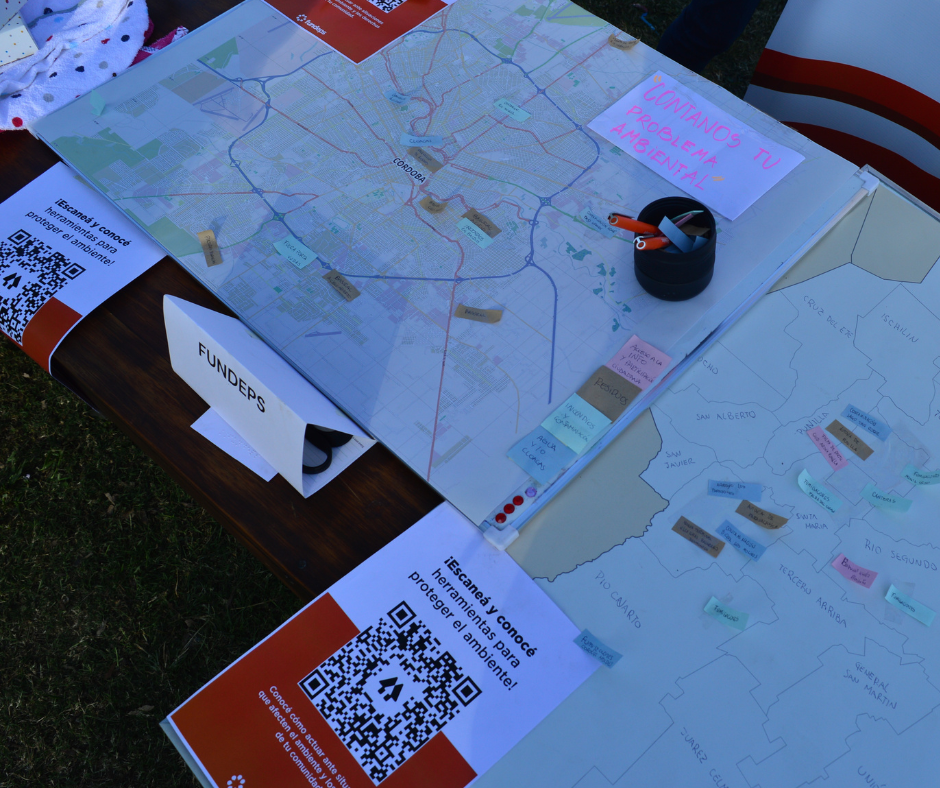
Last Sunday, April 24, 2022, within the framework of Earth Day, the “Córdoba Repara” Festival was held on the Enchanted Island of Sarmiento Park and Fundeps was part of it through a stand with an interactive and collaborative proposal. with the audience.

“Below, we offer a google translate version of the original article in Spanish. This translation may not be accurate but serves as a general presentation of the article. For more accurate information, please switch to the Spanish version of the website. In addition, feel free to directly contact in English the person mentioned at the bottom of this article with regards to this topic”.

The event organized by the Youth Directorate of the Municipality of Córdoba and the Free University of the Environment in conjunction with environmental organizations in the city, aimed to raise awareness about caring for the environment, reduction, reuse, recycling and recovery of waste and objects and the consumption of sustainable products made by local entrepreneurs. All this was manifested through different activities such as live shows, spaces for dialogue, organization stands, vegan, vegetarian and agroecological food stalls, reception of recyclables, collection of blankets and coats to donate and a space dedicated exclusively to the Club of Repairers x Córdoba.

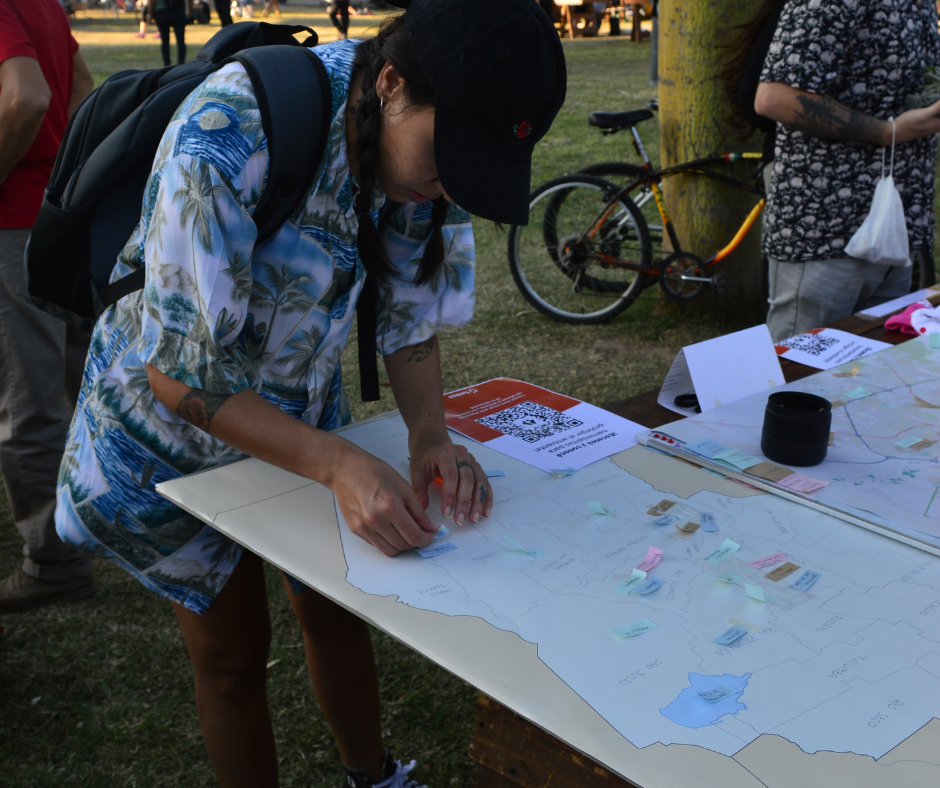
Our proposal consisted of collectively building two maps, one of the city of Córdoba and another of the province, where the people who circulated indicated what environmental problems they knew (or suffered from). From the dialogue with each one of the people and from our maps, environmental problems emerged that are repeated throughout the city and the province, and that are also reiterated over time.

The community that participated, mostly residents of different neighborhoods and areas of the city, identified very similar problems, such as the lack of differentiated waste collection, the existence of open-air dumps throughout the city and especially in the area of bypass, the lack or malfunction of sewers and sanitation in general, the contamination of the Suquía River and neighborhood streams, the contamination produced by Porta Hermanos, the poor/lacking urban planning, the existence of neighborhoods in Córdoba without drinking water, among others. For their part, those who live on the outskirts of the city or other localities such as Mendiolaza, Villa Carlos Paz, Villa Allende, Río Ceballos, La Calera, Río Primero, Segundo, Tercero and Cuarto, Juarez Celman, Punilla, Coronel Moldes, Bell Ville , among others, stated that the main environmental problems are related to clearing, fumigation with agrochemicals, quarrying, contamination of water resources, open-air dumps, fires, floods, and conflicts arising from the Punilla and Paravachasca highways.

At the same time, the lack of citizen participation in environmental matters that manifests itself in all problems also emerged as a concern. They also noted the existing barriers whether in access to public information, access to justice or in the decision-making process.

We were able to observe and analyze that despite the extension and diversity that the city and the province of Córdoba have, the environmental problems are very similar and are repeated in each territory, in addition, that none of them is new, on the contrary, they are repeated and they are accentuated with the passing of the years. For these reasons, we believe that it is necessary to continue working to find alternatives to the form of “development” that has been carried out, while it is imperative and fundamental to strengthen the mechanisms of citizen participation and that the State assumes a true commitment in that sense.


More Information


Author

Ananda Lavayen

Contact

Juan Bautista Lopez, juanbautistalopez@fundeps.org

From April 19 to 22, at ECLAC headquarters, Santiago de Chile, the first Conference of the Parties to the Escazú Agreement (COP1) was held. The States Parties met there in order to design and adopt important rules for the implementation of Escazú.

“Below, we offer a google translate version of the original article in Spanish. This translation may not be accurate but serves as a general presentation of the article. For more accurate information, please switch to the Spanish version of the website. In addition, feel free to directly contact in English the person mentioned at the bottom of this article with regards to this topic”.

COP 1 had the participation of the Latin American and Caribbean States that today are obliged to comply with it. These are: Antigua and Barbuda, Bolivia, Ecuador, Guyana, Mexico, Nicaragua, Panama, Saint Vincent and the Grenadines, Saint Kitts and Nevis, Saint Lucia, Uruguay and the Republic of Argentina.

A noteworthy point was that the Conference not only had the face-to-face participation of representatives of the public, but also interested people could participate online or follow its live broadcast on YouTube.

During the second day, two fundamental issues were discussed on the road to the implementation of the treaty. First, the draft Rules of Procedure of the Conference of the Parties were discussed. In addition, the modality for the significant participation of the public was discussed, as established by article 15.4 of the treaty.

Here it is worth highlighting the incorporation of a simple mechanism to select representatives of the public who will be able to participate in the COP and who, according to the provisional project, would have two seats enabled at the table in the room. In addition, one of the representatives will be part of the Board of Directors, the body in charge of presiding over the meetings.

Second, the Rules of composition and operation of the Committee to Support Application and Compliance (art. 18) were discussed. It should be noted that according to the revised project (later approved), the Committee constitutes a key body for monitoring the implementation of the Escazú Agreement by the States.

A key point in this latest regulation is the one that incorporates a communication mechanism for the public in the event of any non-compliance by the States. This constitutes a fundamental tool since it allows exposing the violation of the treaty, and after an internal procedure, the Committee must adopt the conclusions and recommendations for the “denounced” party, and must then report the case to the COP.

Finally, a draft decision on Human Rights Defenders in Environmental Matters was discussed. Around this problem that seriously affects the region, the Conference planned an open-ended ad hoc working group on human rights defenders, to develop an action plan; and a forum to prepare a final report as input.

Although there were tensions around the role of public participation based on the position of certain States, the truth is that the goals set and the regulations approved meet adequate and innovative standards (although they can be improved) in relation to any treaty. till the date. It provides tools of practical utility whose dissemination and use should be promoted, even when the participation of groups of people in situations of vulnerability has not been really significant.


More Information


Links of Interest


Contact

Juan Bautista López, juanbautistalopez@fundeps.org

*Picture of Diario Perfil

Summoned by the Legal Empowerment Network, numerous NGOs from Latin America participated in a meeting in the city of Santiago de Chile.

Below, we offer a google translate version of the original article in Spanish. This translation may not be accurate but serves as a general presentation of the article. For more accurate information, please switch to the Spanish version of the website.

During the first week of April, an event was held that sought to exchange learning on Access to Environmental Justice issues. Together with civil society organizations from Latin America, we participated in conferences that addressed issues related to community empowerment, access to environmental information, public participation, and environmental justice.

From the work experience of the organizations, we talked about the problems that the entire continent is going through in the topics worked on, as well as the various strategies of approach and incidence. Even with the different realities observed, the common pattern that crosses the Latin American States regarding the barriers to access to information, public participation and environmental justice was glimpsed; as well as the threats that environmental defenders must face.

Members of ECLAC and those in charge of implementing the Escazú Agreement participated in one of the sessions. They shared their views on the treaty and possible regulations ahead of the first Conference of the Parties.

Throughout the conference, the different contributions and experiences were collected to guide the joint work of those who make up the Legal Empowerment Network. Undoubtedly, a significant experience in pursuit of guaranteeing access to environmental justice throughout the region.

Contact

Juan Bautista López, juanbautistalopez@fundeps.org

Within the framework of the project “Strengthening the capacities of civil society in the exercise of the right to public information through the Escazú Agreement”, we shared the debates and reflections on the effective fulfillment of this right.

During the months of October and November, together with the participation of professionals and specialists in On the matter, three synchronous virtual meetings were held where different points related to access to public environmental information and the tools provided by the Escazú Agreement were addressed. Having finished and culminated the project, thanks to the information provided by the participants, the exchanges and debates that took place, we made a series of reflections and questions about the effective fulfillment and exercise of this right.

“Below, we offer a google translate version of the original article in Spanish. This translation may not be accurate but serves as a general presentation of the article. For more accurate information, please switch to the Spanish version of the website. In addition, feel free to directly contact in English the person mentioned at the bottom of this article with regards to this topic”.

The first of the three workshops featured a lecture by María Laura Foradori, lawyer and specialist in Environmental Education, the second with Ana Di Pangracio, lawyer and Executive Director of Farn, and the third, eminently practical, was directed and accompanied by members from the Fundeps team.

During the meetings, by virtue of the expressions and comments that were given, it was possible to notice a great unsatisfied demand from groups of people and civil society organizations that seek to access information associated with numerous environmental problems. Also, indirectly, there is an escalation in socio-environmental conflict, a growing awareness in relation to the importance of caring for the environment and the need to get involved in its protection.

Those demands, in part, are consolidated from the ignorance of the tools and instruments that allow access to public information in general, and environmental information in particular. On the other hand, they can also originate from disbelief in institutional functioning, based on experiences with a high degree of non-compliance when receiving responses. In addition, the need to resort most of the time to legal claims has repercussions on the will of the citizenry, thereby delegitimizing the institutional design that guarantees access to environmental information.

Faced with this scenario, we believe that it is necessary to make institutional adjustments through public policies that make known and bring the tools for access to environmental information to the public. Likewise, it is imperative that improvements be made to ensure that the State complies with its obligation to provide responses.

To make this possible, we propose a series of recommendations and suggestions to the authorities, including updating the Law on Access to Public Information in the province of Córdoba, the creation of an Agency or Office with competence in the matter, improvements in the information request mechanisms so that they are easy to understand and access for citizens, improvement in the response rate to requests for information that are made, training authorities on access to public information as a human right and the implementation of specialized agencies and entities in environmental matters for the monitoring and inspection of all requests for information.

In turn, it is necessary to adapt the regulations for minimum environmental budgets in terms of access to information to the standards of the Escazú Agreement since this reaffirms and reinforces the rights of people to access and participate in environmental matters, environmental democracy and commits the international responsibility of the Argentine State in the event of any breaches.

Finally, we must also highlight the fundamental role assumed by organized civil society and citizens in the exercise of this right. On the one hand, in continuing to provide tools and get involved in exercising this right responsibly and, at the same time, offering alternative solutions to the authorities so that they guarantee the rights contemplated in the Escazú Agreement.

Download report tips and recommendations

More information

Autor

Ananda Lavayén

Contact

Juan Bautista López, juanbautistalopez@fundeps.org


Aimed at organizations, assemblies, associations and interested people in general, on Friday, October 15 and 29 at 4:00 p.m. we will carry out two virtual meetings, which will aim to provide theoretical and practical tools on access to public environmental information.

“Below, we offer a google translate version of the original article in Spanish. This translation may not be accurate but serves as a general presentation of the article. For more accurate information, please switch to the Spanish version of the website. In addition, feel free to directly contact in English the person mentioned at the bottom of this article with regards to this topic”.

The first workshop will have as main speaker Laura Foradori, lawyer, researcher, specialist in Environmental Education and university professor. It will focus on the importance of access to public environmental information, its regulatory framework and the obligations of the State. In addition, there will be a space for dialogue and exchange of experiences with the people present.

The second workshop will have as speaker Ana Di Pangracio, lawyer, Counselor of the International Union for the Conservation of Nature (IUCN) and Deputy Executive Director of the Environment and Natural Resources Foundation (FARN). The talk will address the Escazú Agreement and the tools it provides to guarantee the right of access to public information as a fundamental component of an environmentally committed citizenry.

Throughout the cycle, practical activities will be carried out and tools will be provided to make requests for access to information on environmental matters, with subsequent support from Fundeps.

Registration is free and free through this form and you can participate in the full cycle or in each of the meetings individually.

I WANT TO REGISTER

Contact

Juan Bautista Lopez, juanbautistalopez@fundeps.org

On September 13, we participated in the Virtual Public Hearing held by the Ministry of the Environment of the Province for the expansion of Piedras Blancas.

“Below, we offer a google translate version of the original article in Spanish. This translation may not be accurate but serves as a general presentation of the article. For more accurate information, please switch to the Spanish version of the website. In addition, feel free to directly contact in English the person mentioned at the bottom of this article with regards to this topic”

The project aims to expand the “Piedras Blancas” solid waste disposal center located near the town of Bouwer. This has been in operation since 2010 and is about to exhaust its capacity. Waste from 20 locations is deposited there, including the city of Córdoba.

From Fundeps we present various observations about the project. We warn of the suspicion of a case of environmental discrimination, given that the area has received numerous impacts for a long time, a situation that is not assessed by the Environmental Impact Study. The citizens of the towns of Bouwer and Santa Ana for a long time have been demanding and questioning the decision of the authorities to accumulate environmental impacts in the territory. It should be noted that the Piedras Blancas property is added to the projected Cormecor Environmental Center, the State Potrero, the Hijacked Vehicle Deposit, the Taym Hazardous Waste Treatment Plant, among other impacts, which allow a ” environmental sacrifice zone ”.

Likewise, the hearing made it possible to highlight the historical deficiency in the integral management of waste in the city of Córdoba, which undoubtedly has an impact on the impact and the need to have larger areas for burial. This compromises any political responsibilities at stake.

The expansion of the property can constitute a quick and economical solution to the problem of solid waste. However, it is necessary to implement comprehensive waste management policies that reduce the environmental impact from a circular and comprehensive approach, which, above all, does not jeopardize the future of certain neglected communities in pursuit of the supposed general welfare.


Contact

Juan Bautista López, juanbautistalopez@fundeps.org

In conjunction with Fundación TierraVida and Ecohouse Córdoba, we formulate contributions for the formulation of general guidelines for conducting training within the framework of the Yolanda Law.

“Below, we offer a google translate version of the original article in Spanish. This translation may not be accurate but serves as a general presentation of the article. For more accurate information, please switch to the Spanish version of the website. In addition, feel free to directly contact in English the person mentioned at the bottom of this article with regards to this topic”

In a note addressed to the Secretary of the Environment of the Province of Córdoba, we presented guidelines for the design of the general guidelines within the framework of the Yolanda law. These guidelines allow directing the methodology and content that will be part of the training received by people who exercise public functions within the framework of the regulations.

The contributions focus mainly on those primary content, procedural and methodological, operational and epistemological issues. Each of the points provided, present the reasons why we believe that they should be taken into account for the purposes of an efficient application, which allows the appropriate approach in accordance with the objective of the law.

We trust that the participatory instances will enrich the guidelines, and consequently the trainings that are ultimately dictated. Likewise, it is valuable that those pillars on which the training is based enjoy legitimacy on the part of civil society organizations and citizens in general.

More information

Contact

Juan Bautista López, juanbautistalopez@fundeps.org

On April 22, the Regional Agreement on Access to Information, the Public Participation and Access to Justice in Environmental Matters in America Latin America and the Caribbean- “Escazú Agreement”. On the occasion of world environment day. We present a resource of the rights guaranteed by Escazú.

“Below, we offer a google translate version of the original article in Spanish. This translation may not be accurate but serves as a general presentation of the article. For more accurate information, please switch to the Spanish version of the website. In addition, feel free to directly contact in English the person mentioned at the bottom of this article with regards to this topic”

The main objective of the Agreement is to facilitate access to information, to citizen participation and justice in environmental matters, this being fundamental to strengthen democracy, sustainable development and care for the environment. Their Provisions include a gender perspective, open government, and criteria for priority in its application linked to people and groups in the condition of vulnerability. Finally, it incorporates a chapter specifically aimed at protection of human rights defenders in environmental matters.

The principles, rules and norms contained in the treaty are added to the broad and robust range of environmental laws in force in Argentina, reinforcing the rights and duties that govern in this matter. Most of these despite being in force, are systematically breached and injured by the powers of the authorities, particularly with regard to access to information, to the citizen participation and justice.

From Fundeps we elaborated a resource on the Escazú Agreement with information about its content, principles and rights that it guarantees. In addition, incorporates tools for legal information and for access to information environmental.

Faced with a scenario of constant violations of the right of access, it is It is important to know and disseminate the rights that Escazú guarantees to achieve their effective respect and application.

DOWNLOAD RESOURCE

Contact

Juan Bautista Lopez, juanbautistalopez@fundeps.org

This resource is intended to publicize the content, the rights it guarantees and the obligations of the State that govern the Regional Agreement on Access to Information, Public Participation and Access to Justice in Environmental Matters in Latin America and the Caribbean – called the Escazú Agreement. In addition, it incorporates in its annexes tools and models to exercise these rights before the authorities.

On May 20, we accompanied the Argentina Fair, Eco Casa, Córdoba Environment Assembly, Córdoba Environmental Forum and Córdoba Climate Forum in a call to demand the sanction of the Punilla highway project. The complaint was made within the framework of the last day of the project’s public hearing.

“Below, we offer a google translate version of the original article in Spanish. This translation may not be accurate but serves as a general presentation of the article. For more accurate information, please switch to the Spanish version of the website. In addition, feel free to directly contact in English the person mentioned at the bottom of this article with regards to this topic”

The result of the public hearings held via the web was overwhelming. 90% of those who participated will express their rejection. Among some of the fundamentals, it is worth mentioning the one that shows that the project crosses 16 water courses, affecting the water bodies of any water dependent on access to drinking water in the communities. Likewise, if it indicates that it involves the affectation of 172 hectares of native forest -red category-, negatively impacting the functions of the ecosystems and the fauna that inhabits there.

In addition, the Environmental Impact Assessment procedure was carried out with notorious deficiencies, affecting citizen participation, a fundamental requirement to grant any authorization. In addition, in the face of this scenario of rejection by the communities, the national State issued Decree No. 295/2021 on May 3, through which it approves its approval for the construction of the highway. This is less problematic, as the Environmental Impact Assessment process is in the middle of the development process.

The EIA process must consider and review all observations. The rejection of the road was the driver of the exhibitions that were held in the public hearing, and must be evaluated at the time of issuing an administrative act. It is not possible to grant an environmental license due to a social license.

Photo: Tomás Medina

More information

Contact

Juan Bautista López, juanbautistalopez@fundeps.org

Within the framework of said treatment, the Environment Commission has held a number of open meetings with certain civil society organizations and people dedicated to the defense of the environment, in order to hear their opinion. Although the call to these people was not open to those who wanted to make their opinions known, the truth is that a new mechanism of citizen participation was generated, perhaps limited by the time that the agenda demands.

“Below, we offer a google translate version of the original article in Spanish. This translation may not be accurate but serves as a general presentation of the article. For more accurate information, please switch to the Spanish version of the website. In addition, feel free to directly contact in English the person mentioned at the bottom of this article with regards to this topic”

This process is a good practice to be carried out. However, today with the entry into force of the Escazú Agreement, such spaces already constitute an obligation of the provincial State and not only the exercise of political good will. Adequate publicity and convocation, as well as the organization and distribution of time, fostering broad participation, must be considered in pursuit of a true environmental democracy.

In the framework of the participatory process, we refer to the Environmental Commission of the provincial Legislature, which we consider are necessary adjustments for a regulation that exceeds the national one. Thus, observations were made regarding the way in which an enforcement authority should be designed in accordance with the objectives of the law, the process of creating and evaluating training programs and content for people who exercise public functions, as well as also the introduction of complaint or claim mechanisms that allow citizens to effectively monitor and control compliance with environmental training.

We believe that a provincial regulation can be surpassed, if it incorporates mechanisms aimed at guaranteeing greater participation both in its gestation stage and in the monitoring and implementation processes.

More information

The Chamber of Deputies approved the Yolanda Law

Contact

Juan Bautista López, juanbautistalopez@fundeps.org